


Overview
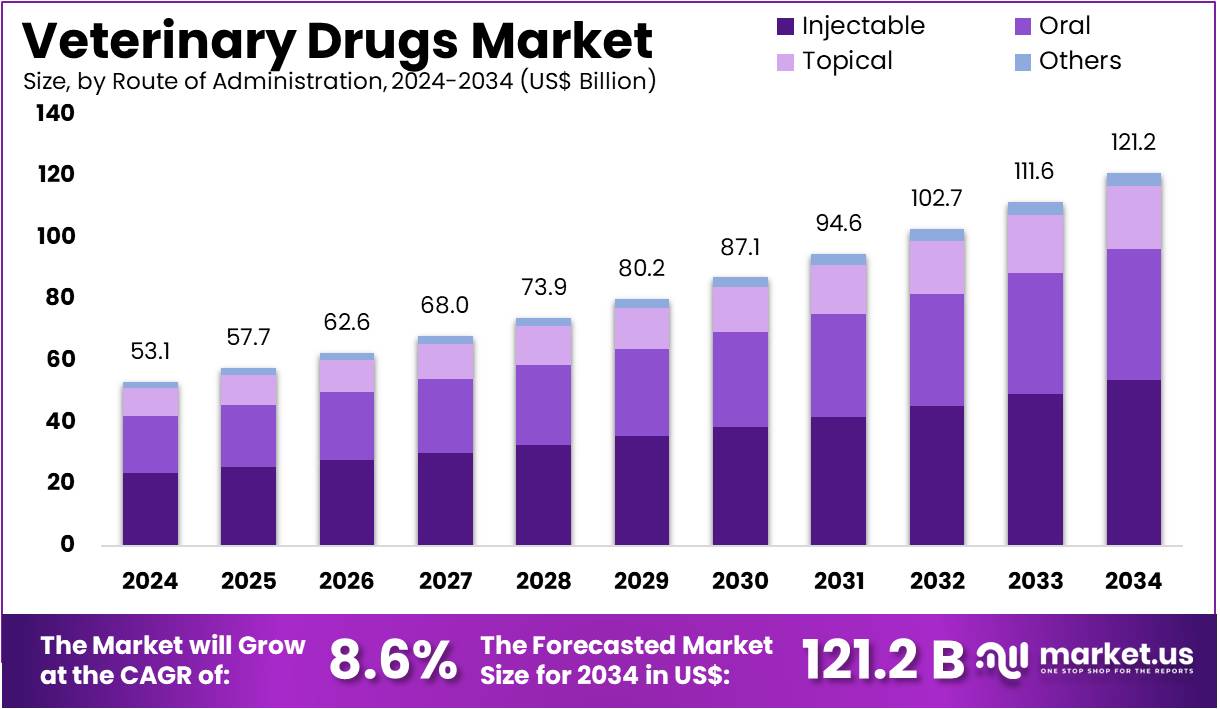
New York, NY – June 23, 2026 – The Veterinary Drugs Market size is expected to be worth around US$ 121.2 billion by 2034 from US$ 53.1 billion in 2024, growing at a CAGR of 8.6% during the forecast period 2025 to 2034.
Veterinary drugs constitute a critical segment of the global animal healthcare industry, encompassing pharmaceutical products used for the prevention, diagnosis, and treatment of diseases in livestock and companion animals. These products include vaccines, parasiticides, antibiotics, anti-inflammatory agents, and feed additives designed to enhance animal health and productivity.
The growth of the veterinary drugs market can be attributed to the rising demand for animal-derived food products, increasing prevalence of zoonotic diseases, and expanding pet ownership globally. Strengthening regulatory frameworks and advancements in veterinary biotechnology have further supported product innovation and safety standards.
The market is witnessing a gradual shift toward preventive healthcare solutions, including vaccines and biologics, driven by the need to reduce antibiotic resistance and improve herd health management. In addition, increased investments in research and development activities by pharmaceutical companies are accelerating the introduction of novel therapeutic solutions.
Continuous innovation in veterinary pharmaceuticals, coupled with growing government initiatives for animal disease control programs, is expected to strengthen market expansion. The integration of digital animal health monitoring and precision medicine approaches is further anticipated to improve treatment outcomes and enhance overall livestock productivity and welfare worldwide.
Key Takeaways
- In 2024, the veterinary drugs market generated a revenue of US$ 53.1 billion and is projected to expand at a CAGR of 8.6%, reaching approximately US$ 121.2 billion by 2034.
- Based on product type, the market is segmented into biologics, pharmaceuticals, and medicated feed additives. Pharmaceuticals dominated the segment in 2023, accounting for a market share of 47.6%.
- In terms of route of administration, the market is categorized into oral, topical, injectable, and others. Among these, the injectable segment held a notable position, capturing 44.3% of the market share.
- With respect to animal type, the market is divided into production animals and companion animals. The production animals segment remained the leading contributor, representing 56.7% of total market revenue.
- Regarding distribution channels, the market is classified into veterinary hospitals & clinics, offline retail stores, e-commerce, and others. Veterinary hospitals & clinics emerged as the dominant channel, accounting for a revenue share of 52.8%.
- Regionally, North America led the global veterinary drugs market in 2023, securing a market share of 41.1%.
Regional Analysis
North America dominated the veterinary drugs market with a revenue share of 41.1% in 2023, supported by a rapidly growing pet population, rising pet humanization trends, and increasing investments in animal healthcare. According to the American Veterinary Medical Association (AVMA), the dog population in the United States reached 89.7 million in 2024, compared to 80.1 million in 2023, while cat ownership also continued to rise. This expanding companion animal base has significantly increased demand for veterinary pharmaceuticals.
Key industry players reported strong performance, with Zoetis recording a 4% increase in US revenue in Q4 2024, driven by dermatology and parasiticides products. Merck Animal Health reported a 10% growth in companion animal sales in 2024, while Elanco Animal Health achieved 3% organic constant currency growth, reflecting steady portfolio performance.
The Asia Pacific region is expected to register the highest CAGR during the forecast period, driven by rising pet ownership, improving veterinary infrastructure, and increasing disposable income. China and India are witnessing strong growth in pet populations, further supporting demand for advanced veterinary drugs and therapies.
Emerging Trends
- Rise in Customized Medications for Pets: Customized veterinary medications are increasingly used to address individual animal needs. Compounded drugs are prepared when standard formulations are unsuitable. This approach improves treatment outcomes in pets with allergies, dosage sensitivity, or chronic conditions requiring personalized therapeutic solutions and better compliance.
- Development of Next-Generation Biologics: Veterinary healthcare is shifting toward advanced biologics such as monoclonal antibodies and engineered vaccines. These therapies provide targeted disease control with fewer side effects. They are increasingly used for complex conditions, improving treatment precision and expanding options for chronic and resistant diseases.
- Environmental and Ethical Considerations: Sustainability concerns are influencing veterinary drug development, especially in livestock applications. Efforts are being made to reduce environmental residues and ecological damage. Ethical considerations regarding animal testing and safer parasitic treatments are also driving innovation toward greener, more responsible pharmaceutical solutions.
- Integration of Technology in Drug Use: Artificial intelligence and digital platforms are transforming veterinary drug management. AI supports diagnosis and treatment selection, while telehealth enables remote monitoring. These technologies improve prescription accuracy, reduce errors, and enhance treatment efficiency through real-time data tracking and digital healthcare systems.
Use Cases
- Control of Parasites: Veterinary drugs are widely used to control fleas, ticks, and intestinal worms in animals. These medications prevent disease transmission and discomfort. Regular preventive treatments, combined with proper hygiene practices, help maintain animal health while minimizing environmental impact from excessive chemical usage.
- Hormonal and Reproductive Treatments: Hormonal veterinary drugs assist in managing reproduction, breeding cycles, and related disorders in animals. They support fertility control, pregnancy management, and endocrine conditions. These treatments are carefully regulated and used under veterinary supervision to ensure safe reproductive health outcomes.
- Support for Serious and Rare Conditions: Advanced veterinary drugs, including biologics, are increasingly used for rare and severe diseases. These therapies target immune disorders, cancers, and genetic conditions. They offer improved precision, reduced side effects, and better survival outcomes when diagnosed early and treated under specialist care.
- Stress and Behavioral Management: Veterinary drugs are used to manage anxiety, aggression, and stress-related behaviors in pets. These medications help animals cope with environmental triggers such as travel or noise. Combined with behavioral training, they improve emotional stability and enhance overall pet wellbeing and safety.
Frequently Asked Questions on Veterinary Drugs
- What are the major types of veterinary drugs?
Veterinary drugs are broadly categorized into anti-infectives, anti-parasitics, vaccines, analgesics, and growth promoters. Each category is designed to address specific animal health needs, ensuring disease control, improved immunity, and enhanced production efficiency in livestock and companion animals. - What are the key applications of veterinary drugs?
Veterinary drugs are applied in disease prevention, therapeutic treatment, vaccination programs, and reproductive health management. They are widely used in livestock farming, poultry production, aquaculture, and companion animal healthcare to maintain overall animal wellbeing and productivity. - How is the quality and safety of veterinary drugs regulated?
Regulatory frameworks for veterinary drugs ensure safety, efficacy, and quality standards before market approval. Agencies evaluate clinical data, manufacturing practices, and residue limits, maintaining animal health safety and protecting human consumers through food chain integrity. - What does the veterinary drugs market include?
The veterinary drugs market encompasses the development, manufacturing, and commercialization of medicines used for animal health management. It includes pharmaceuticals, biologics, and feed additives distributed through veterinary clinics, pharmacies, and livestock supply chains. - What factors are driving the veterinary drugs market growth?
Market growth is primarily driven by rising livestock population, increasing zoonotic disease concerns, and higher demand for animal protein. Technological advancements in drug formulation and preventive healthcare practices further support industry expansion globally. - What are the key trends and future outlook of the market?
Key trends in the veterinary drugs market include growing adoption of biologics, precision veterinary medicine, and preventive care solutions. The market outlook remains positive, supported by increasing investments in animal healthcare infrastructure and innovation.
Conclusion
The veterinary drugs market is experiencing sustained growth, driven by rising demand for animal protein, increasing pet ownership, and growing concerns over zoonotic diseases. The industry is evolving from traditional therapeutic treatments toward preventive care, biologics, and precision veterinary medicine. Strong regulatory support, technological integration, and continuous R&D investments are further enhancing product innovation and safety standards.
Regional expansion, particularly in North America and Asia Pacific, reflects diverse growth opportunities across developed and emerging economies. Overall, the market is expected to maintain a strong upward trajectory, supported by advancements in animal healthcare infrastructure and increasing focus on animal welfare and productivity worldwide.
Discuss your needs with our analyst
Please share your requirements with more details so our analyst can check if they can solve your problem(s)




