


Overview
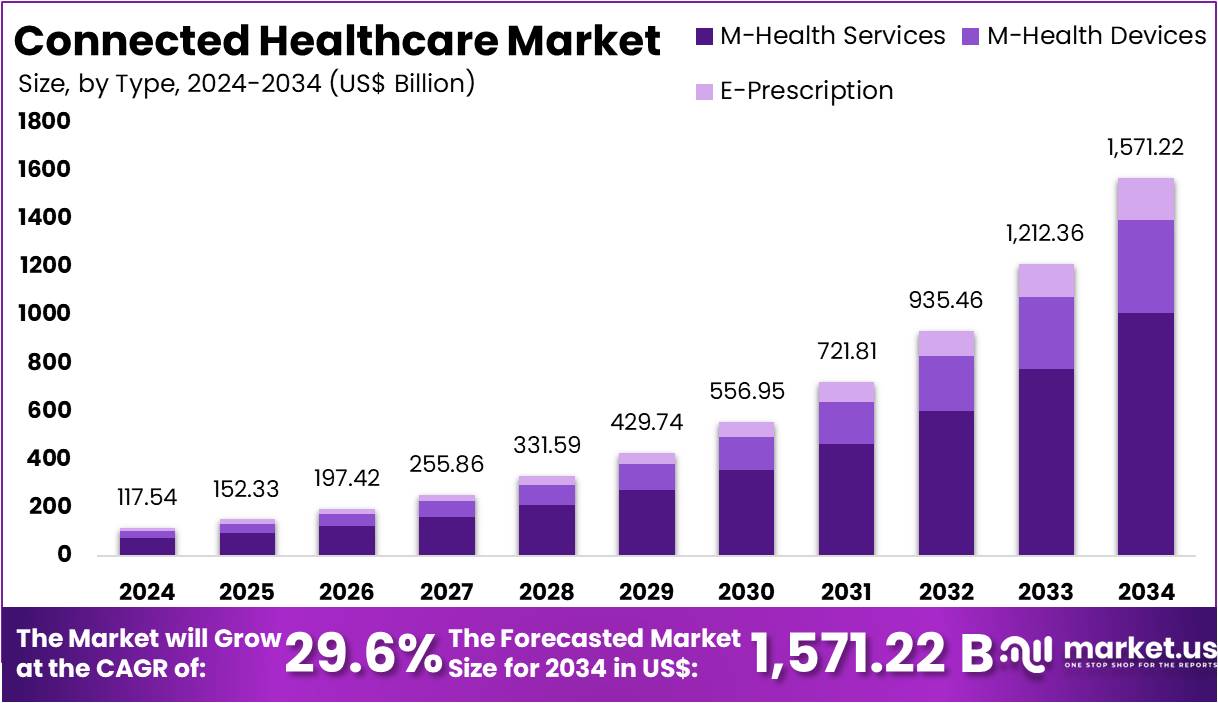
New York, NY – July 08, 2026 – The Connected Healthcare Market size is expected to be worth around US$ 1,571.22 Billion by 2034 from US$ 117.54 Billion in 2024, growing at a CAGR of 29.6% during the forecast period 2025 to 2034. North America held a dominant market position, capturing more than a 38.80% share and holds US$ 46.78 Billion market value for the year.
Connected healthcare refers to the integration of digital technologies, medical devices, healthcare systems, and communication platforms to enable the secure exchange of health information and improve the delivery of patient care. By leveraging technologies such as the Internet of Things (IoT), cloud computing, artificial intelligence (AI), wearable devices, and telehealth solutions, connected healthcare supports real-time monitoring, remote consultations, and data-driven clinical decision-making.
The increasing prevalence of chronic diseases, growing demand for remote patient monitoring, expanding adoption of digital health solutions, and rising healthcare expenditure are driving the adoption of connected healthcare worldwide. Healthcare providers are utilizing connected systems to enhance patient engagement, improve treatment outcomes, reduce hospital readmissions, and optimize operational efficiency. In addition, supportive government initiatives promoting digital health infrastructure and advancements in wireless connectivity are contributing to market expansion.
Connected healthcare solutions are widely used across hospitals, clinics, home healthcare settings, and ambulatory care centers. These systems facilitate seamless communication among patients, physicians, caregivers, and healthcare organizations while enabling continuous monitoring of vital health parameters. The integration of electronic health records, mobile health applications, and connected medical devices further enhances care coordination and personalized treatment.
As healthcare systems continue to prioritize accessibility, efficiency, and preventive care, connected healthcare is expected to play an increasingly important role in transforming healthcare delivery. Ongoing technological innovation and the growing focus on value-based care are anticipated to support the continued expansion of the connected healthcare market during the coming years.
Key Takeaways
- In 2024, the Connected Healthcare market was valued at US$ 54 billion and is projected to reach US$ 1,571.22 billion by 2034, expanding at a CAGR of 29.6% during the forecast period.
- Based on component, the market is segmented into M-Health, M-Health Devices, and E-Prescription. Among these, M-Health services accounted for the largest market share of 64.3%, supported by their cost-effectiveness and the growing use of smartphones for healthcare access.
- By function, the market is categorized into remote patient monitoring, clinical monitoring, telemedicine, home monitoring, assisted living, and others. Telemedicine emerged as the leading segment, capturing 35.4% of the market, owing to its increasing adoption and patient preference for remote healthcare services.
- Based on application, the market is divided into diagnosis and treatment, monitoring, education and awareness, wellness and prevention, and others. The wellness and prevention segment held the largest share of 42.5%, driven by rising health consciousness and the growing adoption of digital health solutions.
- By end user, the market is segmented into hospitals & clinics, government & regulatory bodies, healthcare institutions, research & academia, private & commercial sectors, and others. Hospitals & clinics dominated the market with a 49.9% revenue share, attributed to the widespread implementation of connected healthcare technologies.
- North America accounted for the largest regional share of the Connected Healthcare market, representing 38.80% of the global market in 2024.
Connected Healthcare Statistics
Adoption and Utilization of Connected Healthcare
- Only 28% of consumers in the United States currently use connected healthcare solutions, indicating that overall adoption remains relatively low.
- Approximately 45% of individuals in the United States do not participate in routine health screenings. The proportion is higher in the United Kingdom (68%), Germany (67%), and Sweden (71%).
- Around 40% of U.S. adults used health applications in 2023, reflecting growing engagement with digital health platforms.
- In 2023, 35% of adults in the United States used wearable devices to monitor health-related metrics.
- Nearly 88% of U.S. healthcare organizations are investing in Remote Patient Monitoring (RPM) technologies to strengthen connected healthcare capabilities.
- About 67% of patients in the United States have either used telehealth services or expressed interest in using them, demonstrating increasing acceptance of virtual healthcare.
Healthcare Provider Experience and Operational Challenges
- Around 71% of healthcare providers in the United States report feeling overwhelmed by the large volume of data generated through connected healthcare systems.
- In the United Kingdom, 84% of healthcare providers experience significant data overload, representing the highest rate among surveyed countries.
- Approximately 47% of healthcare organizations implementing IoT solutions identify technical challenges as a major obstacle, limiting their ability to focus on analytics and return on investment.
Impact of Remote Patient Monitoring (RPM)
- Remote Patient Monitoring systems have contributed to a 49% improvement in patient outcomes, highlighting their clinical effectiveness.
- The adoption of RPM solutions has resulted in a 44% increase in patient compliance with prescribed treatment plans.
- Around 42% of patients report faster access to healthcare services through RPM technologies.
- Approximately 43% of patients experience more personalized healthcare after using RPM solutions.
- Nearly 42% of patients indicate that RPM technologies have improved their awareness of personal health conditions.
- About 37% of patients report greater control over managing their healthcare through RPM systems.
- When recommended by healthcare professionals, 52% of consumers successfully incorporate RPM solutions into their treatment plans.
Patient Preferences for Digital Healthcare
- Approximately 80% of patients prefer digital communication channels for appointment scheduling and follow-up interactions.
- Around 92% of patients expect healthcare providers to deliver personalized digital reminders and communications.
- In 2023, one-third of patients used online healthcare services to request repeat prescriptions.
- Approximately 23.4% of patients booked healthcare appointments through online platforms during 2023.
- Around 17.1% of patients accessed their medical records online in 2023, reflecting increasing patient engagement in healthcare management.
Market and Industry Trends
- The U.S. cardiac rhythm management (CRM) market was valued at approximately USD 6–7 billion in 2023.
- About 68% of healthcare institutions identify patient monitoring solutions as a strategic priority.
- Approximately 95% of healthcare organizations across 30 countries utilize HL7 standards for healthcare data exchange.
- As of 2021, 24% of healthcare companies had extensively implemented FHIR APIs to support healthcare interoperability.
- By 2023, 67% of healthcare providers and 61% of healthcare payers expected to deploy APIs at scale.
Consumer Behavior and Healthcare Decision-Making
- Social determinants, including housing stability and access to nutritious food, are estimated to influence up to 80% of overall health outcomes.
- Around 80% of consumers consider online reviews to be as influential as personal recommendations when selecting healthcare services.
- Approximately 83% of adult internet users search online for health-related information.
- Around 62% of smartphone users use their devices to research medical conditions.
- Nearly 57% of individuals report that social media influences their choice of healthcare provider.
- Approximately 72% of patients rely on online reviews when selecting healthcare providers.
- Patients who have negative healthcare experiences are three times more likely to change providers.
- Around 40% of patients indicated that they intend to continue using telehealth services after the pandemic.
Technology Adoption and Healthcare System Development
- Approximately 97% of healthcare executives believe that ongoing technological advancements have a greater influence on their organization’s long-term strategy than economic, political, or social factors.
- Since 2022, 43 Integrated Care Systems (ICSs) have been established across England to improve care coordination and service integration.
- During 2023, 340 virtual ward programs were introduced across England, collectively treating more than 100,000 patients.
- More than 400,000 patients in England have been waiting over one year for elective treatment, with the largest backlogs occurring in trauma and orthopedic services.
- The UK health software and IT services market recorded 21% growth in 2023.
- In June 2023, only 73% of patients attending Accident and Emergency (A&E) departments in England were treated within four hours, highlighting ongoing pressures on emergency healthcare services.
Emerging Trends
- Digital Transformation in Healthcare: Digital transformation is improving healthcare by connecting patients and providers through digital platforms that simplify communication, health record management, and clinical workflows. These technologies enhance service accessibility, support patient-centered care, improve operational efficiency, and contribute to better healthcare experiences and treatment outcomes.
- Integration of AI and Machine Learning: Artificial intelligence and machine learning are reshaping healthcare by supporting faster diagnostics, predictive analytics, personalized treatment planning, and automated clinical processes. These technologies improve decision-making, optimize resource utilization, reduce operational inefficiencies, and enhance patient outcomes through accurate data-driven insights.
- Adoption of Cloud and SaaS in Healthcare: Healthcare organizations are increasingly adopting cloud computing and Software-as-a-Service solutions to strengthen data storage, accessibility, and cybersecurity. These scalable platforms simplify information sharing, improve regulatory compliance, support interoperability, and enable healthcare providers to deliver more efficient and flexible patient care services.
- Advancements in Telehealth: Telehealth technologies continue expanding healthcare access by enabling remote consultations, virtual follow-ups, and continuous patient monitoring. These solutions improve healthcare availability in underserved regions, reduce travel requirements, enhance convenience for patients, and support consistent management of chronic and acute medical conditions.
- Ambient Health Monitoring Technologies: Ambient health monitoring technologies use sensors and connected devices to continuously assess patient health without invasive procedures. These systems provide real-time alerts, support early disease detection, improve elderly care, reduce caregiver workload, and enable proactive healthcare interventions through continuous monitoring.
- Big Tech’s Involvement in Healthcare: Leading technology companies are expanding healthcare investments by developing advanced digital platforms, data management systems, and AI-powered solutions. Their innovations improve interoperability, regulatory compliance, operational efficiency, patient engagement, and healthcare delivery while accelerating digital transformation across medical and healthcare organizations.
Use Cases
- Remote Patient Monitoring: Remote patient monitoring enables healthcare providers to track patient health through connected devices and digital applications. It supports chronic disease management, post-treatment recovery, early intervention, and continuous care while reducing hospital visits and expanding healthcare access in remote and underserved communities.
- Virtual Health Assistants: AI-powered virtual health assistants automate appointment scheduling, medication reminders, patient inquiries, and administrative workflows. These intelligent tools improve operational efficiency, enhance patient engagement, reduce staff workload, streamline healthcare services, and allow medical professionals to dedicate more time to direct patient care.
- Data-Driven Personalized Treatment Plans: Healthcare providers use advanced analytics and patient health data to develop personalized treatment plans tailored to individual medical conditions. This approach improves treatment precision, supports better clinical decisions, enhances patient satisfaction, and delivers more effective healthcare outcomes through customized medical interventions.
- Extended Reality for Medical Training: Extended reality technologies, including virtual and augmented reality, provide immersive medical education and surgical simulation experiences. These solutions enhance clinical training, improve procedural accuracy, strengthen practical skills, reduce training risks, and prepare healthcare professionals for complex medical procedures effectively.
- Smart Health Wearables: Smart health wearables continuously monitor vital signs, physical activity, and patient health metrics through connected sensors. These devices enable real-time health tracking, facilitate timely medical interventions, support preventive healthcare, improve chronic disease management, and encourage proactive patient participation in health monitoring.
Regional Analysis
North America dominated the Connected Healthcare market, accounting for the largest revenue share due to its advanced healthcare infrastructure, widespread internet connectivity, and high adoption of digital health technologies. Strong government support for healthcare digitalization, favorable regulatory policies, and increasing investments in remote patient monitoring and telehealth solutions continue to strengthen the region’s market position.
Europe represented the second-largest regional market, supported by the growing use of smartphones, increasing adoption of telemedicine, and rising demand for remote patient monitoring services. The expansion of digital healthcare initiatives across hospitals and healthcare organizations has further accelerated market growth throughout the region.
Asia-Pacific is expected to register the fastest growth during the forecast period. The rapid adoption of smart wearable devices, expanding mobile health (M-Health) services, improving healthcare infrastructure, and increasing healthcare investments are driving regional demand. Meanwhile, Latin America and the Middle East & Africa are anticipated to experience moderate growth due to comparatively lower digital health adoption, limited awareness, and infrastructure constraints in several developing economies.
Frequently Asked Questions on Connected Healthcare
- What is the connected healthcare market?
The connected healthcare market comprises technologies, solutions, and services that facilitate digital healthcare delivery through connected medical devices, telemedicine platforms, mobile health applications, and healthcare information systems. Market growth is driven by increasing digitalization, rising chronic disease prevalence, and the growing demand for remote healthcare services worldwide. - What are the key drivers of the connected healthcare market?
The market is primarily driven by increasing adoption of telemedicine, growing demand for remote patient monitoring, rising healthcare costs, expanding use of wearable devices, and advancements in artificial intelligence, cloud computing, and IoT technologies. Government initiatives promoting digital health infrastructure also support long-term market expansion. - Which technologies are used in connected healthcare?
Connected healthcare utilizes advanced technologies such as the Internet of Things (IoT), artificial intelligence (AI), cloud computing, wearable medical devices, electronic health records (EHRs), mobile health applications, and wireless communication networks. These technologies enable continuous monitoring, secure data sharing, and improved healthcare accessibility. - What are the major applications of connected healthcare?
Connected healthcare is widely applied in telemedicine, remote patient monitoring, clinical monitoring, wellness and preventive care, chronic disease management, and home healthcare. These applications improve healthcare accessibility, reduce hospital visits, enable early disease detection, and support personalized treatment plans for better patient outcomes. - Which end-user segment dominates the connected healthcare market?
Hospitals and clinics represent the leading end-user segment because they extensively adopt connected healthcare solutions for patient monitoring, electronic health records, telemedicine, and workflow optimization. Increasing investments in digital healthcare infrastructure further strengthen the adoption of connected technologies across healthcare facilities. - Which region leads the connected healthcare market?
North America holds the largest share of the connected healthcare market due to its advanced healthcare infrastructure, widespread adoption of digital health technologies, favorable reimbursement policies, and strong government support for healthcare digitalization. High internet penetration and growing telehealth adoption further reinforce regional market leadership. - What is the future outlook for the connected healthcare market?
The connected healthcare market is expected to experience strong long-term growth as healthcare providers increasingly invest in digital transformation. Expanding telehealth services, rapid adoption of smart wearable devices, continuous technological innovation, and the growing focus on value-based care are anticipated to create significant market opportunities worldwide.
Conclusion
The connected healthcare market is witnessing rapid expansion, supported by increasing digital transformation, growing adoption of telemedicine, remote patient monitoring, artificial intelligence, cloud computing, and wearable health technologies. Rising chronic disease prevalence, expanding healthcare investments, and supportive government initiatives continue to accelerate market growth across developed and emerging economies.
Healthcare providers are leveraging connected solutions to improve patient outcomes, enhance operational efficiency, and enable personalized, data-driven care. North America remains the leading regional market, while Asia-Pacific is expected to record the fastest growth. Continuous technological innovation and the shift toward value-based, patient-centric healthcare are expected to sustain long-term market development globally.
Discuss your needs with our analyst
Please share your requirements with more details so our analyst can check if they can solve your problem(s)




