


Overview
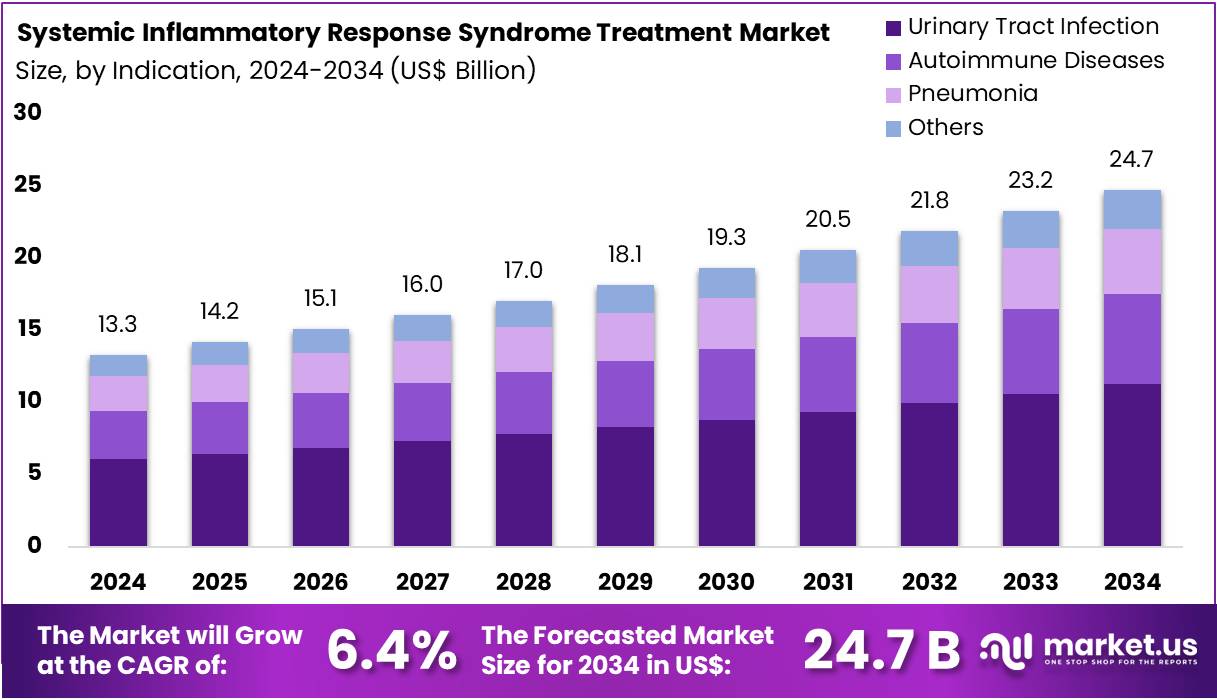
New York, NY – July 10, 2026 –The Global Systemic Inflammatory Response Syndrome Treatment Market size is expected to be worth around US$ 24.7 billion by 2034 from US$ 13.3 billion in 2024, growing at a CAGR of 6.4% during the forecast period 2025 to 2034.
Systemic Inflammatory Response Syndrome (SIRS) is a serious medical condition characterized by an excessive inflammatory response throughout the body. It may be triggered by infection, trauma, burns, surgery, pancreatitis, or other significant health events. SIRS can affect multiple organ systems and may progress rapidly, making timely diagnosis and treatment essential.
Treatment for SIRS focuses on identifying and addressing the underlying cause while providing supportive care to stabilize the patient. If infection is suspected, healthcare providers may administer antibiotics or antiviral medications as appropriate. In cases related to trauma or other noninfectious causes, treatment is directed toward controlling the source of inflammation and preventing further complications.
Supportive care may include intravenous fluids to maintain blood pressure and hydration, oxygen therapy or mechanical ventilation for breathing support, and medications to support cardiovascular function when necessary. Close monitoring of vital signs, organ function, and laboratory markers is critical to guide treatment decisions and assess the patient’s response to therapy.
Advances in critical care medicine have improved the management of SIRS, emphasizing early recognition, prompt intervention, and coordinated multidisciplinary care. Public awareness of symptoms such as fever, rapid heart rate, rapid breathing, and changes in mental status can help encourage timely medical evaluation and improve patient outcomes.
Key Takeaways
- The systemic inflammatory response syndrome treatment market generated revenue of US$ 13.3 billion in 2024 and is projected to reach US$ 24.7 billion by 2034, growing at a CAGR of 6.4%.
- By indication, the market is segmented into urinary tract infection, autoimmune diseases, pneumonia, and others.
- Urinary tract infection accounted for the largest indication segment in 2023, holding a 45.6% market share.
- Based on end user, the market is categorized into hospitals, ambulatory surgical centers, specialty clinics, and others.
- Hospitals represented the leading end-user segment, capturing a 55.7% market share.
- North America dominated the market in 2023, accounting for a 41.8% market share.
Regional Analysis
North America accounted for the largest share of the systemic inflammatory response syndrome (SIRS) treatment market, capturing 41.8% in 2023. The region’s strong market position is supported by the high incidence of severe infections and sepsis, which are major triggers for SIRS, as well as continuous advancements in critical care and rising healthcare expenditure.
According to the Centers for Disease Control and Prevention (CDC), sepsis affects at least 1.7 million Americans annually, with approximately 350,000 adults who develop sepsis in hospitals either dying or being discharged to hospice care. This substantial disease burden has increased the demand for effective SIRS treatment and management solutions. In addition, efforts to improve early diagnosis and sepsis management in hospitals are further supporting market growth.
The Asia Pacific region is expected to register the highest CAGR during the forecast period. Growth in this region is driven by a large patient population, increasing prevalence of infectious and chronic diseases, and expanding healthcare infrastructure. Improved access to healthcare and enhanced diagnostic capabilities are expected to increase the number of patients receiving timely treatment for severe inflammatory conditions.
Governments across Asia Pacific are also investing in critical care capacity and healthcare system strengthening, creating favorable opportunities for companies offering advanced therapeutic and medical technology solutions for SIRS management.
Emerging Trends
- Multidisciplinary sepsis and SIRS management: The CDC’s Hospital Sepsis Program Core Elements promote coordinated care through sepsis committees, antimicrobial stewardship, and data-driven feedback. These measures have been associated with lower hospital mortality, shorter lengths of stay, and reduced healthcare costs.
- Time-sensitive supportive interventions: Current CDC guidance emphasizes rapid administration of broad-spectrum antibiotics when infection is suspected and SIRS is identified. Early fluid resuscitation with 20–30 mL/kg crystalloids within three hours helps maintain organ perfusion and prevent progression to multiple organ dysfunction syndrome.
- Extracorporeal blood purification: Cytokine hemoadsorption devices, such as CytoSorb, are being investigated as adjunctive therapies for hyperinflammatory states. Early studies have shown reductions in circulating cytokine levels, including IL-6, and these technologies are now under evaluation in numerous countries.
- Biomarker-guided immunomodulation: Measurement of inflammatory biomarkers such as IL-6, C-reactive protein, and ferritin is increasingly used to identify patients who may benefit from adjunctive therapies. Clinical trials are evaluating biomarker thresholds to optimize treatment timing and effectiveness.
Use Cases
- Early goal-directed supportive care: In patients with severe SIRS progressing toward sepsis, prompt administration of broad-spectrum antibiotics and timely fluid resuscitation have been associated with reduced progression to organ failure and lower mortality rates in retrospective analyses.
- Cytokine hemoadsorption in septic shock: In critically ill patients with COVID-19-associated hyperinflammation, cytokine hemoadsorption has been reported to reduce median IL-6 levels and improve oxygenation, as measured by the PaO2/FiO2 ratio, without significant device-related complications.
- Multisystem inflammatory syndrome in children (MIS-C): MIS-C presents as a SIRS-like condition following SARS-CoV-2 infection. Treatment protocols involving intravenous immunoglobulin and corticosteroids have been associated with rapid resolution of cardiovascular inflammation and recovery of normal cardiac function.
Frequently Asked Questions on Systemic Inflammatory Response Syndrome Treatment
- What is systemic inflammatory response syndrome (SIRS)?
Systemic inflammatory response syndrome (SIRS) is a widespread inflammatory reaction that occurs when the body responds to infection, trauma, burns, surgery, or other serious conditions. It can affect multiple organ systems and requires prompt medical evaluation. - What are the common causes of SIRS?
SIRS may be triggered by severe infections, sepsis, pneumonia, urinary tract infections, autoimmune diseases, pancreatitis, trauma, burns, or major surgery. Identifying the underlying cause is essential for selecting the most appropriate treatment approach. - How is SIRS diagnosed?
SIRS is diagnosed through clinical assessment, including evaluation of temperature, heart rate, respiratory rate, white blood cell count, and the patient’s overall condition. Additional laboratory tests and imaging studies may help identify the underlying cause. - What treatments are commonly used for SIRS?
Treatment for SIRS focuses on addressing the underlying cause while providing supportive care. Common interventions include antibiotics for infections, intravenous fluids, oxygen therapy, medications to support blood pressure, and close monitoring of organ function. - Why is early treatment important in SIRS?
Early treatment is important because SIRS can progress rapidly and lead to complications such as organ dysfunction or sepsis. Prompt recognition and intervention improve the likelihood of stabilizing the patient and reducing the risk of severe outcomes. - What is the systemic inflammatory response syndrome treatment market?
The systemic inflammatory response syndrome treatment market includes pharmaceuticals, medical devices, diagnostic tools, and supportive care solutions used to manage SIRS and its underlying causes. The market is influenced by disease prevalence and healthcare infrastructure. - What factors are driving market growth?
Market growth is driven by the increasing incidence of severe infections and sepsis, advancements in critical care medicine, rising healthcare expenditures, and growing awareness of the importance of early diagnosis and treatment of inflammatory conditions. - Which region leads the SIRS treatment market?
North America leads the systemic inflammatory response syndrome treatment market, supported by advanced healthcare infrastructure, high sepsis incidence, strong research and development activities, and increased adoption of innovative critical care therapies.
Conclusion
In conclusion, systemic inflammatory response syndrome (SIRS) remains a critical medical condition that requires rapid diagnosis, treatment of the underlying cause, and comprehensive supportive care. Advances in critical care, early sepsis management, biomarker-guided therapies, and multidisciplinary treatment approaches have improved patient outcomes and reduced complications.
The growing burden of infections, sepsis, and chronic inflammatory conditions is driving demand for effective SIRS treatment solutions worldwide. North America currently leads the market, while Asia Pacific is expected to experience the fastest growth due to expanding healthcare infrastructure and rising disease prevalence. Continued innovation and timely intervention will remain essential for improving survival and quality of care.
Discuss your needs with our analyst
Please share your requirements with more details so our analyst can check if they can solve your problem(s)




