


Overview
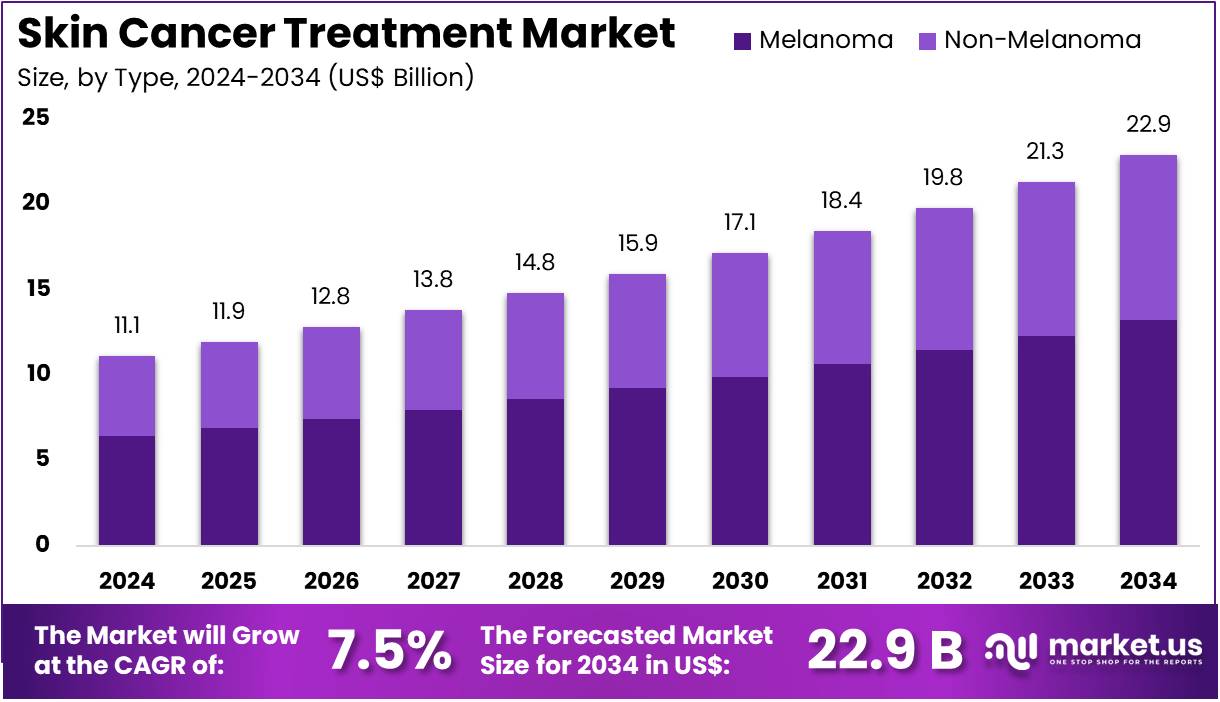
New York, NY – June 30, 2026 – The Skin Cancer Treatment Market Size is expected to be worth around US$ 22.9 billion by 2034 from US$ 11.1 billion in 2024, growing at a CAGR of 7.5% during the forecast period 2025 to 2034.
Skin cancer treatment focuses on removing or destroying cancerous cells while preserving as much healthy tissue as possible. The choice of treatment depends on the type of skin cancer, its size, location, stage, and the overall health of the patient. Early diagnosis and timely intervention significantly improve treatment outcomes and survival rates.
Common treatment options include surgical excision, Mohs micrographic surgery, cryotherapy, curettage and electrodesiccation, radiation therapy, chemotherapy, immunotherapy, targeted therapy, and topical medications for selected early-stage cases. Surgical procedures remain the primary treatment for most basal cell carcinoma and squamous cell carcinoma, while advanced melanoma may require a combination of surgery and systemic therapies, including immunotherapy or targeted treatments.
Recent advancements in precision medicine and immunotherapy have transformed the management of advanced skin cancers by improving response rates and extending patient survival. Continuous research and clinical trials are supporting the development of innovative therapies with enhanced effectiveness and reduced side effects.
Preventive measures, such as minimizing excessive ultraviolet (UV) exposure, using broad-spectrum sunscreen, wearing protective clothing, and undergoing regular skin examinations, play a vital role in reducing the risk of skin cancer and enabling early detection. Public awareness campaigns and improved access to dermatological care have further contributed to better diagnosis and treatment outcomes. As healthcare systems continue to adopt advanced diagnostic technologies and personalized treatment approaches, the outlook for skin cancer patients continues to improve, supporting better long-term disease management and quality of life.
Key Takeaways
- The skin cancer treatment market was valued at US$ 11.1 billion in 2024 and is projected to reach US$ 22.9 billion by 2034, expanding at a CAGR of 7.5% during the forecast period.
- Based on type, the market is segmented into melanoma and non-melanoma, with the melanoma segment accounting for the largest market share of 57.8%.
- By therapy, the market is categorized into targeted therapy, immunotherapy, and chemotherapy, with targeted therapy leading the segment by capturing a 45.0% revenue share.
- Based on the distribution channel, the market is segmented into hospital pharmacies, online providers, and retail pharmacies. Among these, hospital pharmacies dominated the market with a 56.4% revenue share.
- North America emerged as the leading regional market, accounting for 41.3% of the global skin cancer treatment market share.
Regional Analysis
North America dominated the skin cancer treatment market, accounting for 41.3% of the global revenue share. The region’s leadership is driven by the high incidence of melanoma and non-melanoma skin cancers and the strong adoption of advanced treatment options. In 2025, the United States is expected to report approximately 212,200 new melanoma cases, including 107,240 noninvasive and 104,960 invasive cases, while Canada recorded an estimated 11,300 new melanoma cases in 2024.
Continuous regulatory support has accelerated the availability of innovative therapies. In 2023, the U.S. FDA approved Zynyz (retifanlimab-dlwr) for metastatic or recurrent Merkel cell carcinoma, followed by the 2024 approval of lifileucel, a tumor-derived autologous T-cell therapy for advanced melanoma patients who had exhausted previous treatments. Strong commercial performance of immunotherapies, particularly Merck’s Keytruda, which generated US$29.48 billion in global sales in 2024, further reflects the region’s growing demand for effective skin cancer therapies.
Asia Pacific is projected to register the fastest CAGR during the forecast period due to increasing awareness of skin cancer, expanding healthcare infrastructure, and improved access to advanced diagnostics and therapies. Governments across countries such as China are strengthening cancer screening programs and treatment facilities, supporting earlier diagnosis and better patient outcomes. In addition, the growing adoption of immunotherapies, including Keytruda, alongside expanding pharmaceutical investments, is expected to drive significant market growth across the region.
Emerging Trends
- Shift Toward Personalized Medicine: Personalized medicine is transforming skin cancer treatment by using genetic testing and tumor profiling to create customized therapies. This approach improves treatment effectiveness, reduces side effects, and supports better outcomes, particularly for patients with rare, advanced, or aggressive skin cancers requiring individualized care strategies.
- Growing Use of Immunotherapy: Immunotherapy is becoming a preferred treatment for skin cancer by strengthening the body’s immune system to attack cancer cells. It is widely used for advanced melanoma, offers targeted action with fewer side effects, and continues expanding through successful clinical research and combination therapies.
- Adoption of AI and Smart Diagnostics: Artificial intelligence is improving skin cancer detection through advanced image analysis and smart diagnostic tools. AI helps identify suspicious lesions earlier, supports accurate clinical decisions, reduces diagnostic delays, and expands access to reliable screening services across different healthcare settings and patient populations.
- Rise of Non-Invasive and Minimally Invasive Treatments: Demand for non-invasive skin cancer treatments is increasing because they provide effective care with minimal discomfort and faster recovery. Techniques including cryotherapy, laser therapy, and topical medications are widely used for early-stage cancers while reducing surgical procedures and visible scarring.
- Targeted Therapy Advancements: Targeted therapies are advancing skin cancer treatment by blocking specific genetic mutations that drive tumor growth. These therapies improve precision, minimize damage to healthy cells, reduce treatment-related side effects, and offer effective options for patients with advanced melanoma and resistant cancers.
- Increased Public Awareness and Screening Campaigns: Public awareness campaigns are encouraging sun protection, regular skin examinations, and early diagnosis of skin cancer. Government initiatives, healthcare organizations, and educational programs are improving disease awareness, increasing screening participation, and supporting earlier treatment, resulting in better patient outcomes and survival rates.
- Expansion of Telemedicine for Dermatology: Telemedicine is expanding access to dermatology services by enabling virtual consultations, image sharing, and remote monitoring of suspicious skin lesions. This approach improves early diagnosis, reduces travel requirements, supports rural populations, and enhances overall access to timely skin cancer evaluation and care.
Use Cases
- Hospital-Based Cancer Treatment Programs: Hospitals provide comprehensive skin cancer treatment through multidisciplinary programs combining surgery, immunotherapy, radiation therapy, and advanced diagnostics. Personalized treatment planning, continuous monitoring, and specialist care ensure effective management of complex or advanced skin cancer cases while improving long-term patient outcomes.
- Outpatient Dermatology Clinics: Outpatient dermatology clinics treat early-stage skin cancers using minimally invasive procedures, topical medications, cryotherapy, and photodynamic therapy. These facilities offer convenient, cost-effective care with shorter recovery times while promoting early diagnosis, preventive education, and regular follow-up for patients at risk.
- Teledermatology for Remote Diagnosis: Teledermatology enables patients to submit images of suspicious skin lesions for remote specialist evaluation. This service supports faster diagnosis, reduces travel costs, improves healthcare access in underserved regions, and facilitates early intervention through timely referrals for additional testing or treatment.
- Pharmaceutical Innovations in Topical Drugs: Pharmaceutical companies are developing advanced topical therapies that effectively treat superficial skin cancers without surgery. Innovative creams and gels stimulate immune responses or directly destroy cancer cells, providing convenient home-based treatment options with fewer side effects and improved patient comfort and adherence.
- Mobile Screening Units for Rural Areas: Mobile screening units deliver skin cancer examinations to rural and underserved communities using trained professionals and portable diagnostic equipment. These services increase early detection, improve healthcare accessibility, strengthen public awareness initiatives, and facilitate timely referrals for specialized treatment when abnormalities are identified.
- Research and Clinical Trials: Research institutions and hospitals conduct clinical trials to evaluate innovative skin cancer treatments, including targeted therapies, immunotherapies, and personalized medicine. These studies advance scientific knowledge, improve future treatment options, provide patients with experimental therapies, and support continuous progress in cancer care.
Frequently Asked Questions on Skin Cancer Treatment
- What are the main treatment options for skin cancer?
The primary treatment options for skin cancer include surgical excision, Mohs micrographic surgery, cryotherapy, radiation therapy, chemotherapy, immunotherapy, and targeted therapy. The choice of treatment is determined by tumor characteristics, cancer stage, recurrence risk, and the overall health condition of the patient. - How effective is skin cancer treatment?
Skin cancer treatment is highly effective, particularly when the disease is diagnosed at an early stage. Basal cell carcinoma and squamous cell carcinoma generally have high cure rates, while advancements in immunotherapy and targeted therapies have significantly improved survival outcomes for advanced melanoma patients. - What factors influence the choice of skin cancer treatment?
Several factors influence treatment selection, including the type of skin cancer, tumor size, location, stage, patient age, overall health, and previous treatment history. Physicians also consider cosmetic outcomes, recurrence risk, and potential side effects before recommending an appropriate treatment strategy. - Can skin cancer return after treatment?
Skin cancer can recur even after successful treatment, particularly in individuals with a history of multiple skin cancers or significant ultraviolet exposure. Regular follow-up examinations, skin monitoring, and preventive measures help detect recurrence early and improve long-term patient outcomes. - Are new therapies improving skin cancer treatment?
Recent innovations in immunotherapy, targeted therapy, precision medicine, and minimally invasive surgical techniques have significantly improved skin cancer treatment outcomes. These advancements provide better disease control, reduced recurrence rates, and improved quality of life for patients with advanced or high-risk cancers. - What factors are driving the growth of the skin cancer treatment market?
The market is primarily driven by the increasing incidence of skin cancer, growing awareness regarding early diagnosis, technological advancements in treatment, rising healthcare expenditure, expanding adoption of immunotherapy, and ongoing investments in oncology research and clinical development worldwide. - Which treatment segment dominates the skin cancer treatment market?
Surgical treatment continues to hold a significant share of the skin cancer treatment market due to its high success rate in early-stage cancers. However, immunotherapy and targeted therapy segments are experiencing rapid growth because of their effectiveness in treating advanced melanoma. - Which regions lead the skin cancer treatment market?
North America represents the largest regional market owing to its advanced healthcare infrastructure, high disease awareness, strong reimbursement systems, and significant research investments. Europe also maintains a considerable market share, while Asia-Pacific is witnessing the fastest growth due to improving healthcare access. - What is the future outlook for the skin cancer treatment market?
The skin cancer treatment market is expected to witness sustained growth due to continuous innovation in immunotherapy, targeted medicine, artificial intelligence-assisted diagnostics, and personalized treatment approaches. Increasing healthcare investments and expanding clinical research activities are anticipated to create substantial future market opportunities.
Conclusion
The skin cancer treatment market is expected to experience steady growth over the forecast period, supported by the rising incidence of skin cancer, increasing awareness of early diagnosis, and continuous advancements in therapeutic technologies. The growing adoption of immunotherapy, targeted therapy, precision medicine, and AI-assisted diagnostics is improving treatment outcomes and expanding options for patients with advanced disease.
North America continues to lead the market due to its strong healthcare infrastructure and innovation, while Asia Pacific is emerging as the fastest-growing region. Ongoing research, supportive regulatory approvals, and expanding access to advanced care are expected to sustain long-term market growth and improve patient outcomes globally.
Discuss your needs with our analyst
Please share your requirements with more details so our analyst can check if they can solve your problem(s)




