


Overview
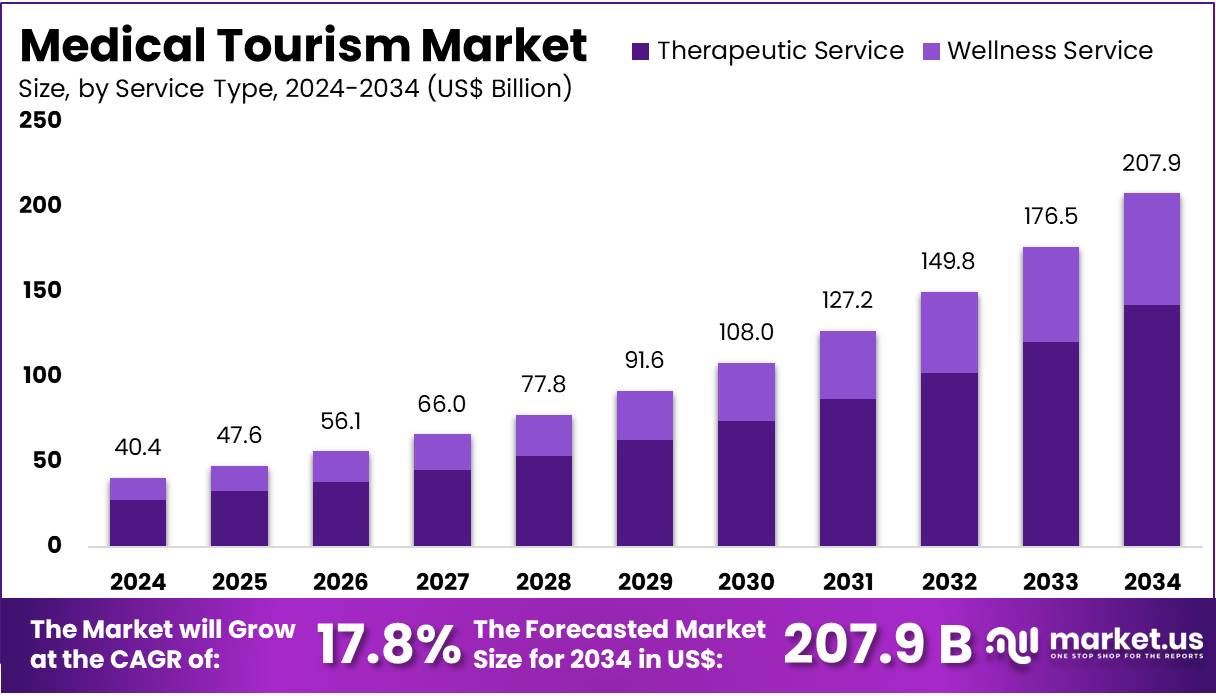
New York, NY – July 17, 2026 – Global Medical Tourism Market size is forecasted to be valued at US$ 207.9 Billion by 2034 from US$ 40.4 Billion in 2024, growing at a CAGR of 17.8% during the forecast period 2025 to 2034. North America held a dominant market position, capturing more than a 31% share and holds US$ 12.5 Billion market value for the year.
Medical tourism refers to the practice of traveling to another country to receive medical, dental, or surgical treatment. It has become a rapidly growing global industry due to the availability of high-quality healthcare services, advanced medical technologies, shorter waiting times, and cost-effective treatment options. Patients commonly seek procedures such as cardiac surgery, orthopedic treatments, cosmetic surgery, fertility treatments, dental care, and cancer therapies in leading medical tourism destinations.
The growth of medical tourism is being supported by increasing healthcare costs in developed countries, improved international connectivity, and the availability of internationally accredited hospitals with experienced healthcare professionals. Many healthcare providers also offer comprehensive medical tourism packages that include treatment, accommodation, transportation, and post-treatment support, enhancing the overall patient experience.
Countries such as India, Thailand, Turkey, Singapore, and Malaysia have emerged as prominent medical tourism hubs due to their advanced healthcare infrastructure, skilled medical workforce, and competitive treatment costs. Governments in these countries continue to promote the sector through supportive policies and investments in healthcare facilities.
As demand for affordable and high-quality healthcare continues to rise, medical tourism is expected to play an increasingly important role in the global healthcare industry. The sector also contributes to economic growth by generating healthcare revenue, creating employment opportunities, and supporting the hospitality, transportation, and tourism industries.
Key Takeaways
- The global medical tourism market generated revenue of US$ 40.4 billion in 2024 and is projected to reach US$ 207.9 billion by 2034, expanding at a CAGR of 17.8% during the forecast period.
- Among service types, the therapeutic services segment accounted for the largest market share of 68.3% in 2024.
- Private service providers emerged as the leading provider segment, capturing 57.5% of the global market in 2024.
- Based on booking channel, the online booking segment held the highest market share of 47.0% in 2024.
- By tourist type, international medical tourists dominated the market, representing 65.2% of the total market share in 2024.
- In terms of customer orientation, women accounted for the largest share, contributing 52.4% of the market in 2024.
- Based on duration of stay, the short-term stay segment led the market with a 72.8% share in 2024.
- By traveler type, individual travelers held the dominant position, accounting for 80.9% of the market in 2024.
- North America accounted for a significant share of the global medical tourism market, contributing approximately 31.0% in 2024.
Medical Tourism Statistics
- The global medical tourism market is expanding at a strong annual growth rate of 15% to 25%.
- Thailand, Mexico, India, Turkey, Malaysia, Costa Rica, and Singapore are among the leading destinations for international medical travelers.
- The global medical tourism industry generates an estimated more than USD 100 billion in annual economic value.
Key Drivers of Medical Tourism
- Patients can reduce healthcare expenses by 40% to 80% by seeking treatment abroad, with overall procedure costs typically 30% to 80% lower than in their home countries.
- Nearly 50% of medical tourists choose international destinations because of access to high-quality healthcare services.
- Around 30% of patients travel internationally to benefit from advanced medical technologies and innovative treatment options.
- Approximately 20% of medical tourists seek care overseas to avoid long waiting periods for medical procedures in their home countries.
Patient Demographics and Preferences
- Most medical tourists originate from the United States, Canada, the United Kingdom, and Western European countries.
- About 25% of patients travel abroad because certain medical procedures are not covered by their health insurance.
- Nearly 15% of medical tourists prefer destinations that provide greater privacy and confidentiality during treatment.
- Around 20% travel internationally to access specialized medical expertise that is unavailable or limited in their home countries.
- Approximately 10% of medical tourists seek alternative, complementary, or holistic healthcare treatments.
- Nearly 40% combine medical treatment with leisure or vacation activities, making wellness travel an important aspect of their journey.
- Recommendations from family members, friends, and healthcare professionals influence the treatment destination decisions of about 25% of medical tourists.
Popular Procedures in Medical Tourism
- Cosmetic and aesthetic surgeries, including breast augmentation and liposuction, account for approximately 25% of the medical tourism market.
- Dental procedures, such as dental implants, crowns, and teeth whitening, represent around 15% of international medical treatments.
- Orthopedic surgeries, including knee and hip replacements, contribute approximately 10% of medical tourism demand due to lower costs and quality care.
- Cardiac procedures, including bypass surgery and angioplasty, account for nearly 8% of the market, supported by affordable treatment and experienced specialists.
- Fertility treatments, particularly in vitro fertilization (IVF), represent about 12% of medical tourism because of greater accessibility and lower treatment costs.
- Bariatric surgeries contribute approximately 7% of the market, driven by increasing demand for specialized weight management procedures.
- Cancer treatments, including advanced oncology therapies, account for around 8% of medical tourism activity.
- Ophthalmic procedures, such as LASIK and cataract surgery, comprise nearly 10% of the market, supported by skilled specialists and advanced technology.
- Neurological treatments, including spine and brain surgeries, represent approximately 6% of medical tourism due to the availability of specialized expertise.
- Gastric procedures, including gastric bypass and related surgeries, account for about 5% of the global medical tourism market, supported by specialized healthcare facilities.
Regional Analysis
North America held a significant share of the global medical tourism market in 2024, accounting for approximately 31.0% of total revenue. The region continues to play a dual role as both a major source and destination for medical travelers. A large number of patients from the US seek affordable healthcare services in countries such as Mexico, Canada, and destinations across Central America, South America, and the Caribbean.
According to the US Department of Commerce, spending by international visitors on medical, educational, and short-term worker-related travel contributed 25% of total US travel and tourism exports in January 2024, reflecting the sector’s economic importance.
The Asia Pacific region is witnessing strong growth in medical tourism, driven by advanced healthcare infrastructure, skilled professionals, and cost-effective treatments. Countries including India, Thailand, Malaysia, and Singapore continue to attract international patients.
India welcomed approximately 7.3 million medical tourists in 2024 and is further strengthening its healthcare ecosystem through expanded medical education capacity and increased investment in healthcare infrastructure, supporting the region’s long-term market growth.
Emerging Trends
- Shift Toward Wellness and Preventive Care: Medical tourism is increasingly focused on preventive healthcare and wellness alongside traditional treatments. Patients are choosing destinations that offer comprehensive health screenings, lifestyle improvement programs, nutritional counseling, and wellness therapies, aiming to maintain long-term health, reduce disease risks, and improve overall quality of life.
- Technological Advancements: The adoption of telemedicine, artificial intelligence, robotic-assisted surgery, and virtual reality is transforming medical tourism. These technologies improve diagnostic accuracy, treatment precision, remote patient consultations, and surgical outcomes while enhancing patient confidence, convenience, and the overall healthcare experience throughout the treatment journey.
- Personalized and Genomic Medicine: Growing advancements in genomics and precision medicine are driving demand for personalized healthcare among medical tourists. Customized treatment plans based on genetic profiles improve treatment effectiveness, particularly for cancer and chronic diseases, enabling patients to receive targeted therapies with better clinical outcomes and reduced complications.
- Sustainable Practices: Environmental sustainability is becoming an important consideration in medical tourism as healthcare providers adopt eco-friendly practices. Hospitals are investing in energy-efficient infrastructure, waste reduction systems, and green technologies, attracting environmentally conscious patients seeking high-quality medical care delivered through sustainable healthcare facilities.
Use Cases
- Cost-Effective Treatment Options: Medical tourism enables patients to access affordable, high-quality healthcare services in international destinations. Expensive procedures, including cardiac surgeries, orthopedic treatments, and cosmetic procedures, are often available at significantly lower costs abroad, reducing financial burdens while maintaining internationally recognized standards of medical care.
- Access to Advanced Medical Technology: Many patients travel internationally to receive treatments supported by advanced medical technologies unavailable or unaffordable in their home countries. Leading destinations provide innovative diagnostic equipment, robotic surgeries, minimally invasive procedures, and specialized medical expertise, ensuring improved treatment quality and enhanced patient outcomes.
- No Wait Times and Immediate Treatment: Medical tourism helps patients avoid lengthy waiting periods associated with overloaded healthcare systems. International hospitals frequently offer faster appointments, shorter surgical schedules, and prompt access to specialists, enabling patients to receive timely treatments that improve recovery prospects and reduce delays in essential medical care.
- Availability of Specialized Treatments: Patients seek medical tourism destinations recognized for expertise in specialized treatments unavailable or limited in their home countries. Countries such as India offer internationally accredited facilities, experienced specialists, and advanced procedures in cardiac care, oncology, orthopedics, fertility treatments, and organ transplantation at competitive costs.
- Combination of Healthcare and Leisure: Medical tourism combines quality healthcare with leisure experiences, allowing patients to recover in attractive travel destinations. Hospitals often collaborate with hospitality providers to offer wellness retreats, rehabilitation services, and comfortable accommodations, creating a holistic recovery experience while enabling patients to explore local culture and attractions.
Frequently Asked Questions on Medical Tourism
- What is medical tourism?
Medical tourism refers to traveling to another country to receive medical treatment, surgical procedures, dental care, or wellness services. Patients often choose international destinations to access high-quality healthcare, advanced technologies, specialized expertise, shorter waiting times, and more affordable treatment options. - What factors are driving the growth of the medical tourism market?
The market is being driven by rising healthcare costs in developed countries, increasing availability of internationally accredited hospitals, technological advancements, shorter treatment waiting periods, and improved global connectivity. Growing awareness of affordable, high-quality healthcare is also contributing to market expansion. - Which medical treatments are commonly sought through medical tourism?
Medical tourists frequently seek treatments such as cardiac surgery, orthopedic procedures, cosmetic surgery, fertility treatments, dental care, oncology therapies, bariatric surgery, and organ transplantation. These procedures are often available at competitive costs while maintaining high standards of medical quality and patient care. - Which regions are leading the medical tourism market?
North America remains a significant market due to strong healthcare spending and outbound medical travel, while Asia Pacific has emerged as a major destination because of affordable treatment costs, advanced healthcare infrastructure, skilled medical professionals, and supportive government initiatives promoting medical tourism. - Who are the major participants in the medical tourism market?
The medical tourism market includes hospitals, specialty clinics, medical tourism facilitators, travel management companies, insurance providers, hospitality businesses, and government healthcare organizations. These stakeholders collaborate to deliver integrated healthcare and travel solutions for international patients. - What challenges does the medical tourism market face?
The market faces challenges including regulatory differences between countries, language barriers, post-treatment follow-up concerns, travel restrictions, medical liability issues, and varying insurance coverage. Addressing these challenges is essential to ensuring safe, efficient, and reliable cross-border healthcare services. - What is the future outlook for the medical tourism market?
The medical tourism market is expected to witness robust growth over the coming decade, supported by digital healthcare adoption, telemedicine integration, improved healthcare infrastructure, favorable government policies, and increasing demand for cost-effective, high-quality medical treatments across international destinations.
Conclusion
The global medical tourism market is experiencing strong growth, driven by rising healthcare costs, increasing demand for high-quality yet affordable treatments, and continuous advancements in medical technology. Countries with internationally accredited hospitals, skilled healthcare professionals, and supportive government initiatives continue to attract a growing number of international patients.
The integration of telemedicine, personalized medicine, and wellness-focused services is further strengthening the industry’s appeal. Despite challenges such as regulatory differences and post-treatment continuity of care, the market is expected to expand steadily. Growing global healthcare accessibility and improving patient experiences will continue to position medical tourism as a key segment of the international healthcare industry.
Discuss your needs with our analyst
Please share your requirements with more details so our analyst can check if they can solve your problem(s)




