


Overview
New York, NY – July 28, 2026 – The Global Digital Health in Neurology Market size is expected to be worth around US$ 296.3 Billion by 2034, from US$ 38 Billion in 2024, growing at a CAGR of 22.8% during the forecast period from 2025 to 2034. North America held a dominant market position, capturing more than a 39.2% share and holds US$ 14.9 Billion market value for the year.
The Digital Health in Neurology Market is expanding rapidly due to the increasing adoption of telemedicine, artificial intelligence (AI), wearable devices, mobile health applications, and remote monitoring technologies for neurological care. These digital solutions support early diagnosis, continuous disease tracking, personalized treatment planning, and improved access to specialist care for conditions such as epilepsy, Parkinson’s disease, stroke, multiple sclerosis, and dementia.
The rising global burden of neurological disorders is a major factor supporting the adoption of digital health technologies. According to the World Health Organization (WHO), neurological conditions affected more than one-third of the global population in 2021, making neurological disorders one of the leading causes of disability worldwide. The growing need for long-term monitoring and efficient disease management is increasing demand for technology-enabled healthcare solutions.
Shortages of neurological specialists are also encouraging healthcare systems to implement digital care models. Tele-neurology platforms, AI-based diagnostic tools, and remote patient monitoring systems help extend specialist services, improve clinical decision-making, and reduce delays in treatment. Advanced digital platforms are increasingly being integrated with electronic health records to support data-driven and coordinated care.
Government initiatives, healthcare digitization programs, and improved internet connectivity are further supporting market development. Regulatory approvals for AI-based neurological tools and expansion of telehealth reimbursement policies are accelerating adoption among healthcare providers. With increasing focus on accessible, efficient, and personalized neurological care, digital health technologies are expected to play a crucial role in transforming the future management of neurological disorders globally.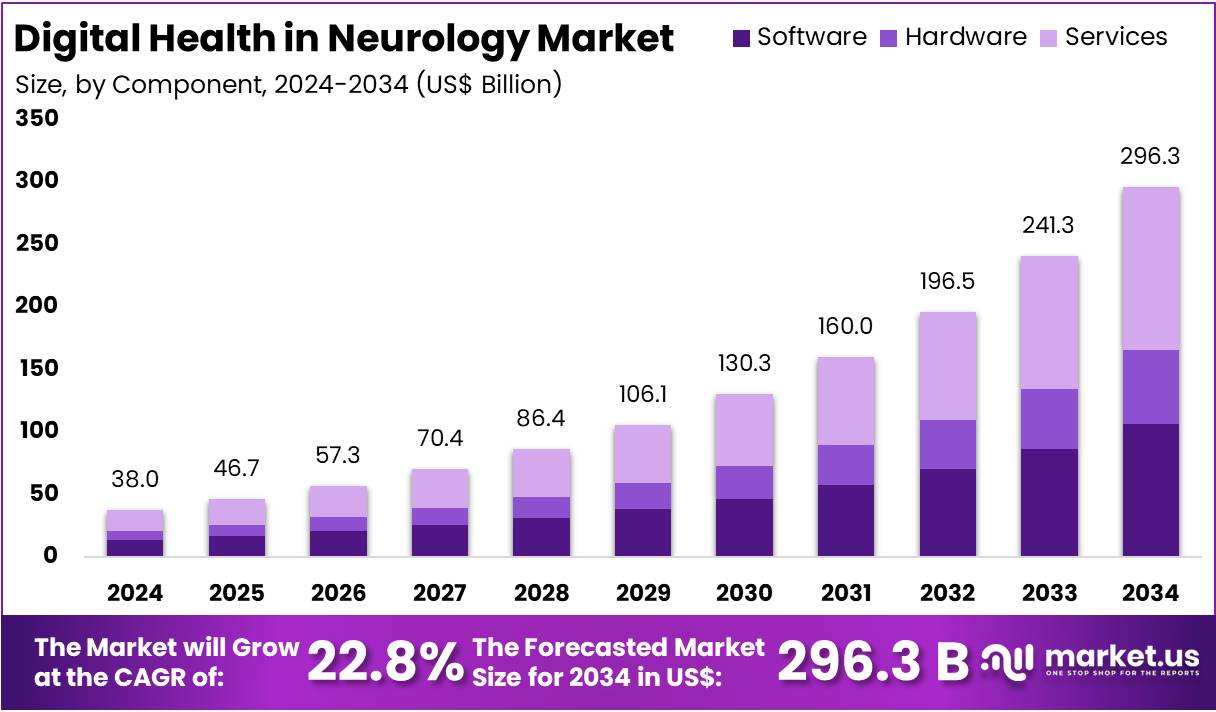
Key Takeaways
- The global Digital Health in Neurology Market is projected to reach US$ 296.3 billion by 2034, increasing from US$ 38 billion in 2024.
- The market is expected to expand at a CAGR of 22.8% between 2025 and 2034, indicating strong growth driven by increasing adoption of digital neurological care solutions.
- Based on component, the services segment dominated the Digital Health in Neurology Market in 2024, accounting for more than 44.1% of the total market share.
- By indication, Alzheimer’s disease held the leading position in 2024, capturing over 26.7% market share due to increasing demand for digital solutions supporting neurological disease management.
- Based on end user, the patients segment emerged as the largest segment in 2024, representing more than 35.5% market share, reflecting growing adoption of patient-focused digital health technologies.
- North America dominated the global Digital Health in Neurology Market in 2024, accounting for over 39.2% market share with a market value of US$ 14.9 billion.
Statistical Information
- Neurological Disease Burden Creates Demand for Digital Neurology Solutions: Neurological disorders represent a major global healthcare challenge. According to the World Health Organization (WHO), neurological conditions affected 57 million people with dementia in 2021, and nearly 10 million new dementia cases occur annually worldwide. This increasing disease burden supports demand for digital monitoring and management solutions.
- Neurological Disorders Are a Leading Cause of Disability Worldwide: A global analysis reported that neurological conditions affected approximately 3.4 billion people in 2021, making them one of the largest contributors to global health loss. The increasing burden highlights the need for technologies supporting early diagnosis, remote monitoring, and continuous neurological
- Limited Neurologist Availability Supports Tele-Neurology Adoption: The WHO Neurology Atlas reported that the global median density of adult neurologists is only 0.43 neurologists per 100,000 population. Low availability of specialists, especially in underserved regions, increases the importance of digital platforms that connect patients with neurological expertise remotely.
- Telemedicine Adoption Has Increased Among Patients: According to the U.S. National Health Interview Survey, 37% of U.S. adults used telemedicine in 2021. The increased acceptance of remote consultations has supported the expansion of digital healthcare models, including tele-neurology services for chronic neurological conditions.
- Older Adults Show Strong Telemedicine Usage: CDC data showed that telemedicine adoption increased with age. In 2021, 43.3% of adults aged 65 years and older reported telemedicine use compared with lower usage among younger age groups, supporting digital care adoption for age-related neurological diseases.
- Dementia Management Creates Need for Continuous Digital Monitoring: WHO reports that dementia affected 57 million people globally in 2021, with Alzheimer’s disease accounting for approximately 60–70% of dementia cases. Digital cognitive monitoring tools and remote care platforms are increasingly relevant for long-term disease management.
- Mobile Connectivity Supports Remote Healthcare Applications: ITU data shows continued growth in global digital connectivity, although 2.6 billion people remained offline in 2024. Expanding internet access and mobile infrastructure are important factors supporting broader implementation of digital health solutions.
- Global Internet Connectivity Enables Digital Neurology Expansion: The International Telecommunication Union (ITU) reported that 5.5 billion people were online in 2024, representing 68% of the global population. Increased connectivity provides a foundation for telemedicine, mobile health applications, and remote neurological monitoring systems.
Regional Analysis
North America dominated the global Digital Health in Neurology Market in 2024, accounting for over 39.2% market share
North America represents a leading region for digital health in neurology due to advanced healthcare infrastructure, strong adoption of telemedicine, electronic health records (EHRs), artificial intelligence (AI), and remote patient monitoring technologies. In the United States, nearly 96% of non-federal acute care hospitals had adopted certified EHR systems, supporting better data exchange and integration of digital neurological care solutions. The region also benefits from regulatory support through initiatives such as the FDA Digital Health Center of Excellence, which promotes innovation in software-based medical technologies.
The growing burden of neurological disorders further supports adoption. The CDC estimates that approximately 795,000 people experience a stroke annually in the United States, increasing demand for rapid diagnosis and AI-enabled neurological care solutions. Increasing telehealth acceptance, reimbursement support, and investment in neuroscience research continue to strengthen North America’s position in digital neurology adoption.
Emerging Trends
- Growing Adoption of AI-Based Neurological Diagnosis: Artificial intelligence is becoming an important trend in neurology by supporting faster diagnosis and clinical decision-making. The U.S. FDA has authorized AI-based tools such as Viz.ai for stroke detection, helping healthcare providers identify potential large vessel occlusion strokes more quickly and improve emergency response.
- Expansion of Tele-Neurology Services: Tele-neurology is expanding as healthcare systems seek better specialist access. According to CDC data, 37% of U.S. adults used telemedicine in 2021, demonstrating strong acceptance of virtual healthcare. Remote consultations are increasingly used for epilepsy, stroke follow-up, and chronic neurological disease management.
- Increasing Use of Wearable Monitoring Devices: Wearable devices are gaining importance for continuous neurological monitoring, including movement tracking, seizure detection, and Parkinson’s disease management. NIH-supported research highlights the role of digital biomarkers from wearable sensors in improving disease assessment and enabling personalized neurological care approaches.
- Integration of Digital Health With Electronic Health Records: Digital neurology platforms are increasingly integrating patient-generated data with electronic health records (EHRs). According to ONC, 96% of U.S. non-federal acute care hospitals adopted certified EHR systems, supporting better data exchange, coordinated care, and AI-assisted clinical decisions.
- Rising Focus on Remote Patient Monitoring: Remote patient monitoring is becoming a key trend for managing chronic neurological conditions. CMS continues supporting remote monitoring reimbursement programs, enabling providers to track symptoms, medication adherence, and disease progression outside hospitals while improving long-term patient management.
Use Cases
- AI-Assisted Stroke Detection and Emergency Care: AI-powered neurological tools are increasingly used for stroke detection by analyzing medical images and alerting specialists. The CDC reports approximately 795,000 stroke cases annually in the United States, creating demand for faster digital diagnostic solutions that support timely treatment decisions.
- Virtual Management of Epilepsy Patients: Digital platforms help epilepsy patients record seizures, monitor symptoms, and communicate with neurologists remotely. Wearable sensors and mobile applications support continuous tracking, reducing dependence on frequent hospital visits and improving long-term disease management through real-time health information.
- Remote Monitoring for Parkinson’s Disease: Digital health technologies support Parkinson’s disease management through wearable sensors, movement analysis, and remote symptom tracking. WHO reported that Parkinson’s disease affected more than 8.5 million people globally in 2019, increasing demand for continuous monitoring solutions.
- Digital Support for Alzheimer’s Disease Care: Digital tools are increasingly used for cognitive assessment, caregiver support, and remote monitoring of Alzheimer’s patients. WHO reports that dementia affects around 57 million people worldwide, creating demand for technology-based solutions that support long-term neurological care.
- Virtual Neurology Consultations in Underserved Areas: Tele-neurology platforms help overcome neurologist shortages by connecting patients with specialists remotely. WHO’s Neurology Atlas reported a global median density of only 0.43 adult neurologists per 100,000 population, highlighting the importance of digital solutions for expanding specialist access.
Frequently Asked Questions on Digital Health in Neurology
- Why is the Digital Health in Neurology Market growing?
The market is growing due to the increasing prevalence of neurological disorders, rising demand for remote healthcare services, shortage of neurologists, advancements in AI technologies, and growing adoption of digital solutions that support personalized and continuous neurological care. - What technologies are used in Digital Health in Neurology?
Major technologies include artificial intelligence, tele-neurology platforms, wearable monitoring devices, mobile health applications, digital therapeutics, electronic health records integration, and remote patient monitoring systems that enable better neurological disease tracking and clinical decision-making. - How does AI support neurological healthcare?
Artificial intelligence supports neurology by analyzing medical images, identifying disease patterns, assisting stroke detection, predicting patient risks, and improving clinical decisions. FDA-authorized AI tools are helping healthcare providers deliver faster and more accurate neurological assessments. - What are the major applications of Digital Health in Neurology?
Digital health solutions are used for stroke management, epilepsy monitoring, Parkinson’s disease tracking, Alzheimer’s care, multiple sclerosis management, cognitive assessment, remote consultations, and continuous monitoring of patients with chronic neurological conditions. - How do wearable devices benefit neurological patients?
Wearable devices help monitor movement, seizures, sleep patterns, and disease progression in neurological patients. These devices provide continuous health information, support remote monitoring, and allow physicians to personalize treatment plans based on real-time patient data. - Which neurological conditions benefit from digital health solutions?
Digital health technologies support various neurological conditions, including Alzheimer’s disease, Parkinson’s disease, epilepsy, stroke, multiple sclerosis, and dementia. These solutions enable early detection, symptom monitoring, treatment adjustments, and improved patient engagement. - How are electronic health records supporting digital neurology?
Electronic health records help integrate patient information from digital platforms, wearable devices, and monitoring systems. This improves data availability, supports coordinated care, enables clinical decision-making, and helps healthcare providers develop more personalized neurological treatment approaches. - What is the future outlook for the Digital Health in Neurology Market?
The future of digital health in neurology is expected to be influenced by AI innovation, expanding telehealth adoption, wearable technology development, and increasing demand for remote care solutions. These advancements will support more accessible and efficient neurological healthcare worldwide.
Conclusion
The Digital Health in Neurology Market is transforming neurological care by enabling faster diagnosis, continuous monitoring, and personalized treatment through technologies such as artificial intelligence, telemedicine, wearable devices, and remote patient monitoring. The rising burden of neurological disorders, limited availability of specialists, and increasing demand for accessible healthcare solutions are accelerating adoption worldwide.
Advancements in AI-based diagnostics, digital therapeutics, and electronic health record integration are improving clinical decision-making and patient outcomes. With strong regulatory support, expanding digital infrastructure, and growing healthcare technology adoption, digital health solutions are expected to play a crucial role in the future management of neurological disorders.
Discuss your needs with our analyst
Please share your requirements with more details so our analyst can check if they can solve your problem(s)




