


Overview
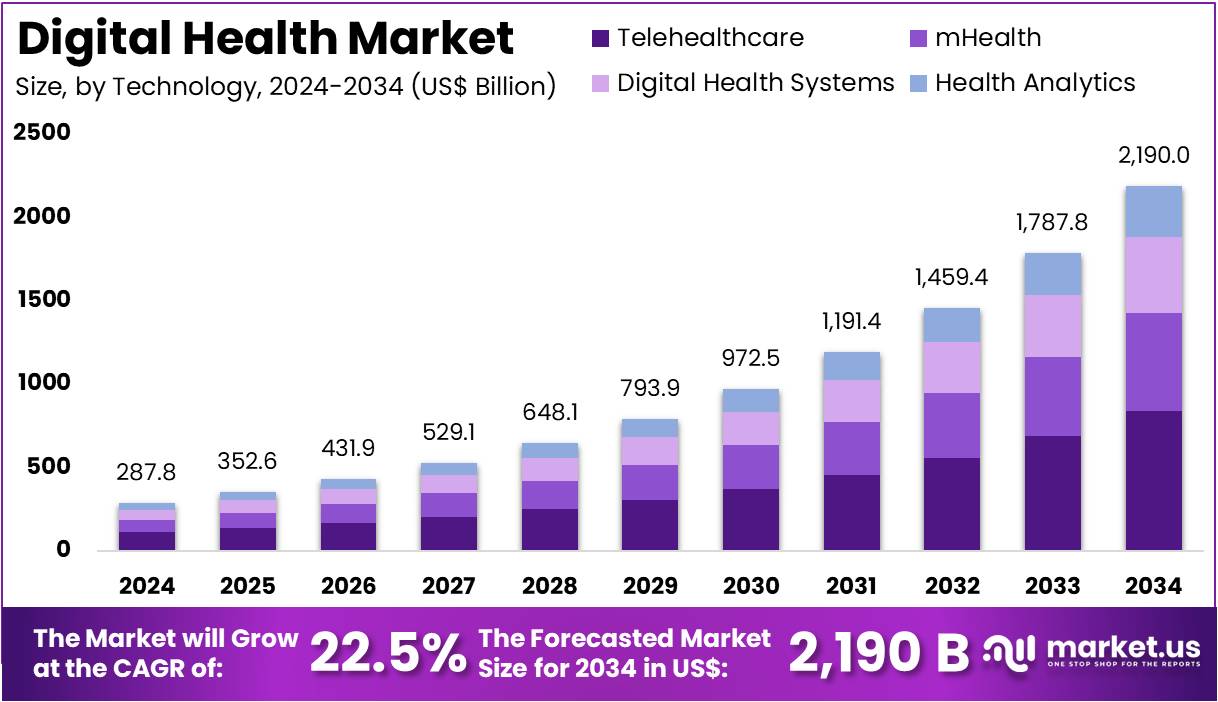
New York, NY – July 16, 2026 – The Global Digital Health Market size is expected to be worth around US$ 2190.0 Billion by 2034 from US$ 287.8 Billion in 2024, growing at a CAGR of 22.5% during the forecast period 2025 to 2034. North America held a dominant market position, capturing more than a 38.4% share and holds US$ 110.5 Billion market value for the year.
Digital health refers to the use of digital technologies to improve healthcare delivery, patient outcomes, and overall health system efficiency. It includes a wide range of solutions such as telemedicine, mobile health (mHealth) applications, wearable devices, electronic health records (EHRs), artificial intelligence (AI), remote patient monitoring, and digital therapeutics. These technologies enable healthcare providers to deliver personalized, accessible, and data-driven care while enhancing patient engagement and supporting informed clinical decision-making.
The growing adoption of smartphones, expanding internet connectivity, and increasing demand for remote healthcare services have accelerated the development of the digital health sector. Healthcare organizations are increasingly integrating digital solutions to improve operational efficiency, reduce healthcare costs, and enhance the quality of patient care. In addition, advancements in cloud computing, big data analytics, and AI have strengthened the ability to collect, analyze, and utilize health data for better disease management and preventive care.
Digital health is transforming healthcare by improving access to medical services, particularly in underserved and remote regions. It also supports continuous monitoring of chronic diseases, early diagnosis, and timely interventions. As governments, healthcare providers, and technology companies continue to invest in digital healthcare infrastructure, digital health is expected to play an increasingly important role in building more connected, efficient, and patient-centric healthcare systems worldwide.
Key Takeaways
- The global digital health market was valued at US$ 287.8 billion in 2024 and is projected to reach US$ 2,190.0 billion by 2034, expanding at a CAGR of 22.5% during the forecast period.
- Based on product type, the market is segmented into software, hardware, and services. Among these, the services segment dominated the market, accounting for 48.9% of the total revenue in 2024.
- By technology, the market is categorized into telehealthcare, mHealth, digital health systems, and health analytics. The telehealthcare segment held the largest market share of 38.4% in 2024.
- In terms of application, the market is segmented into obesity, diabetes, cardiovascular, and others. The diabetes segment emerged as the leading application, capturing 32.9% of the market revenue in 2024.
- Based on end user, the market is classified into patients, providers, payers, and others. The patients segment accounted for the highest revenue share of 47.2% in 2024.
- North America dominated the global digital health market, representing 38.4% of the total market share in 2024.
Digital Health Statistics
- Telehealth Adoption: Telehealth services recorded substantial growth, with utilization increasing by 154% across the United States during the first quarter of 2020. In addition, nearly 80% of Americans support remote patient monitoring, reflecting strong consumer confidence in virtual healthcare services.
- Mobile Health (mHealth) Applications: The global mobile health (mHealth) applications market generated USD 50.8 billion in revenue in 2022 and is projected to reach USD 150.7 billion by 2032. Approximately 30% of adults use at least one health-related application on their smartphones to monitor fitness, wellness, or medical conditions.
- Wearable Health Devices: The adoption of wearable health technology continues to rise, with nearly 30% of Americans using fitness trackers or smartwatches. Global smartwatch shipments surpassed 100 million units in 2020, highlighting the growing demand for continuous health and fitness monitoring solutions.
- Telemedicine Market Growth: The global telemedicine market is projected to reach USD 590.9 billion by 2032, expanding at a CAGR of 25.7% between 2022 and 2032. Rapid adoption across the Asia Pacific region is expected to contribute significantly to overall market expansion.
- Remote Patient Monitoring (RPM): The number of patients utilizing remote patient monitoring (RPM) solutions in the United States is expected to increase from more than 23 million in 2020 to approximately 30 million by 2024, demonstrating the growing reliance on connected healthcare technologies.
- Digital Mental Health Applications: Digital mental health solutions continue to gain popularity, with 46% of adults aged 18–34 reporting the use of mental health applications at least once. Global consumer spending on these applications reached USD 491 million in 2022, reflecting increasing awareness of digital mental wellness tools.
- Internet of Medical Things (IoMT): The adoption of Internet of Medical Things (IoMT) devices is expanding rapidly, with 64% of patients using at least one connected medical device in their daily lives. The global IoMT market is forecast to reach USD 370.9 billion by 2032 as connected healthcare ecosystems continue to evolve.
- Smart Pills Industry: The smart pills market is expected to reach USD 4.75 billion by the end of 2023, driven by increasing demand for technologies that improve medication adherence, enable real-time monitoring, and enhance diagnostic accuracy.
- Artificial Intelligence in Healthcare: The global artificial intelligence (AI) in healthcare market is projected to reach USD 238.5 billion by 2032. AI technologies are increasingly being deployed to support disease diagnosis, personalized treatment planning, predictive analytics, and improved patient safety across healthcare systems.
Digital Health Technology Analysis
- Telehealth Advancements: Telehealth has expanded healthcare access by enabling remote consultations, diagnosis, and treatment through digital communication technologies. It improves care availability in underserved and rural areas, enhances specialist access, supports chronic disease management, and strengthens healthcare delivery through secure health information exchange and virtual care platforms.
- Mobile Health (mHealth): Mobile health utilizes smartphones, wearable devices, and mobile applications to provide healthcare services, health monitoring, medication reminders, and patient engagement. These technologies improve healthcare accessibility, encourage preventive care, support remote disease management, and enhance communication between patients and healthcare professionals efficiently.
- Healthcare Analytics: Healthcare analytics applies advanced data analysis techniques to improve clinical decision-making, optimize hospital operations, and identify disease patterns. Predictive analytics supports early intervention, resource allocation, and personalized treatment strategies while improving patient outcomes, operational efficiency, and population health management across healthcare systems.
- Digital Health Systems: Digital health systems integrate electronic health records, e-prescribing platforms, telehealth solutions, and clinical information systems to streamline healthcare delivery. These technologies improve interoperability, enhance patient safety, reduce administrative burden, facilitate coordinated care, and enable efficient exchange of health information among providers.
Regional Analysis
North America dominated the global digital health market in 2024, accounting for 38.4% of total revenue. The region’s leadership is supported by advanced healthcare IT infrastructure, strong government support, increasing investments in digital technologies, and widespread adoption of telehealth and remote patient monitoring.
The United States remains the largest contributor, driven by innovations in electronic health records (EHRs), telemedicine platforms, and AI-enabled healthcare solutions. Favorable initiatives from organizations such as the FDA and CMS have further accelerated digital health adoption.
The Asia Pacific digital health market is projected to register the fastest CAGR during the forecast period, supported by rising healthcare expenditure, expanding digital infrastructure, and growing implementation of electronic health record systems. Countries including Singapore and Australia have established nationwide digital health platforms that enhance care coordination and patient outcomes. In India, rapid smartphone penetration, improved internet connectivity, and government initiatives such as the Ayushman Bharat Digital Mission (ABDM) and e-Sanjeevani are accelerating the adoption of digital healthcare services across the country.
Emerging Trends
- Advancements in Artificial Intelligence and Machine Learning: Artificial intelligence and machine learning are enhancing healthcare through automated diagnostics, predictive analytics, clinical decision support, and personalized treatment planning. These technologies improve diagnostic accuracy, identify disease risks earlier, optimize healthcare workflows, and enable data-driven decisions for better patient outcomes and operational efficiency.
- Growth in Telehealth and Remote Patient Monitoring: Telehealth combined with remote patient monitoring enables continuous tracking of patient health outside clinical settings. These technologies improve chronic disease management, reduce hospital admissions, enhance healthcare accessibility for remote populations, and support timely medical interventions through real-time health data collection and analysis.
- Progress in Wearable Technology: Wearable healthcare devices continuously monitor vital signs, physical activity, sleep patterns, and chronic health conditions. Improved sensor accuracy and connectivity provide real-time health insights, support preventive healthcare, encourage patient engagement, and facilitate personalized treatment through continuous monitoring and data-driven clinical decisions.
- Cybersecurity Developments: Growing digitalization in healthcare has increased the need for advanced cybersecurity solutions that protect patient information and connected medical devices. Enhanced encryption, threat detection, identity management, and regulatory compliance strengthen data security, minimize cyber risks, and improve trust in digital healthcare ecosystems.
- Changes in Healthcare Payment Models: Healthcare reimbursement is shifting from fee-for-service toward value-based care models that prioritize quality outcomes and cost efficiency. This transition encourages greater adoption of digital health technologies, supports preventive care, improves patient experiences, and aligns provider incentives with long-term health improvements.
- Emphasis on Holistic Patient Care: Healthcare organizations are increasingly adopting integrated care models that address physical, mental, and social determinants of health. Digital health technologies improve patient engagement, coordinate multidisciplinary care, personalize treatment plans, and deliver comprehensive healthcare experiences that enhance overall patient well-being and outcomes.
- Enhanced Interoperability of Patient Data: Healthcare providers are improving interoperability through standardized data exchange frameworks that enable seamless sharing of patient information across healthcare systems. Enhanced interoperability supports coordinated care, reduces duplicate procedures, improves clinical decision-making, increases operational efficiency, and strengthens continuity of patient care.
Use Cases
- AI and Machine Learning in Clinical Decision Support: Artificial intelligence assists healthcare professionals by analyzing medical images, predicting disease progression, identifying high-risk patients, and recommending personalized treatments. These capabilities improve diagnostic accuracy, reduce clinical workload, accelerate treatment decisions, and enhance overall healthcare quality through intelligent data-driven insights.
- Telehealth and Remote Patient Monitoring: Telehealth platforms combined with remote monitoring devices enable virtual consultations and continuous patient supervision from home. Healthcare providers can monitor chronic conditions, detect health deterioration early, reduce unnecessary hospital visits, and improve patient adherence through timely digital interventions and communication.
- Wearable Health Monitoring: Wearable devices collect continuous health information including heart rate, blood pressure, oxygen levels, and activity data. Healthcare providers utilize these insights to monitor chronic diseases, encourage preventive care, personalize treatment strategies, and improve patient engagement through real-time health monitoring capabilities.
- Healthcare Cybersecurity Applications: Healthcare organizations implement cybersecurity technologies to protect electronic health records, connected medical devices, and digital communication platforms. Security solutions detect cyber threats, prevent unauthorized access, ensure regulatory compliance, safeguard patient privacy, and maintain uninterrupted delivery of digital healthcare services.
- Value-Based Care Implementation: Digital health technologies support value-based care by tracking patient outcomes, monitoring treatment effectiveness, and optimizing care coordination. Healthcare providers improve efficiency, reduce unnecessary costs, encourage preventive interventions, and deliver higher-quality healthcare while aligning reimbursement with measurable clinical performance.
- Integrated Patient Care Platforms: Integrated digital health platforms connect healthcare providers, patients, pharmacies, and caregivers through centralized information systems. These solutions improve communication, coordinate multidisciplinary treatment, simplify care management, enhance patient engagement, and provide comprehensive healthcare experiences across the entire patient care journey.
- Health Information Exchange and Interoperability: Health information exchange platforms enable secure sharing of patient records between hospitals, clinics, laboratories, and healthcare professionals. Improved interoperability enhances clinical decision-making, reduces duplicate testing, accelerates treatment delivery, strengthens care coordination, and improves healthcare efficiency across integrated healthcare networks.
Frequently Asked Questions on Digital Health
- What is the digital health market?
The digital health market comprises companies, technologies, software platforms, and services that deliver healthcare through digital solutions. The market includes telehealth, health information technology, digital therapeutics, wearable medical devices, healthcare analytics, and AI-powered healthcare applications, supporting healthcare providers, patients, insurers, and pharmaceutical organizations worldwide. - What factors are driving the growth of the digital health market?
The growth of the digital health market is primarily driven by increasing adoption of smartphones, rising prevalence of chronic diseases, growing demand for remote healthcare services, advancements in artificial intelligence, expanding internet connectivity, supportive government initiatives, and the need to improve healthcare efficiency while reducing treatment costs. - What are the major components of the digital health market?
The digital health market consists of software, hardware, and services. Software includes healthcare management platforms and mobile applications, hardware includes wearable devices and monitoring equipment, while services encompass teleconsultation, remote patient monitoring, digital diagnostics, healthcare analytics, and cloud-based health information management solutions. - What is telemedicine in digital health?
Telemedicine is a digital healthcare service that enables healthcare professionals to diagnose, monitor, and treat patients remotely through video consultations, telephone calls, and secure messaging platforms. It improves healthcare accessibility, minimizes travel requirements, and supports continuous patient care, particularly in rural and underserved regions. - How is artificial intelligence used in digital health?
Artificial intelligence is utilized in digital health to improve disease diagnosis, medical imaging analysis, drug discovery, predictive analytics, personalized treatment planning, and clinical decision support. AI technologies enhance healthcare efficiency by automating repetitive tasks while enabling faster, more accurate, and data-driven medical decisions. - Which regions dominate the digital health market?
North America holds a significant share of the digital health market due to advanced healthcare infrastructure, widespread adoption of healthcare technologies, and supportive regulatory policies. Europe follows with increasing investments in digital healthcare, while the Asia-Pacific region is experiencing rapid growth driven by expanding healthcare access and digital transformation initiatives. - What is the future outlook for the digital health market?
The future of the digital health market appears promising due to continuous technological advancements, increasing investments in healthcare innovation, growing adoption of artificial intelligence and connected medical devices, and rising consumer preference for remote healthcare services. Continued digital transformation is expected to improve healthcare accessibility, quality, and operational efficiency worldwide.
Conclusion
The global digital health market is undergoing rapid transformation, driven by advancements in telehealth, artificial intelligence, mobile health, healthcare analytics, wearable devices, and interoperable digital health systems. Rising demand for remote care, increasing prevalence of chronic diseases, expanding digital infrastructure, and supportive government initiatives continue to accelerate market growth worldwide.
North America remains the leading regional market, while Asia Pacific is expected to witness the fastest expansion. As healthcare providers increasingly adopt data-driven and patient-centric technologies, digital health will play a critical role in improving healthcare accessibility, operational efficiency, clinical outcomes, and the long-term sustainability of healthcare systems globally.
Discuss your needs with our analyst
Please share your requirements with more details so our analyst can check if they can solve your problem(s)




