


Overview
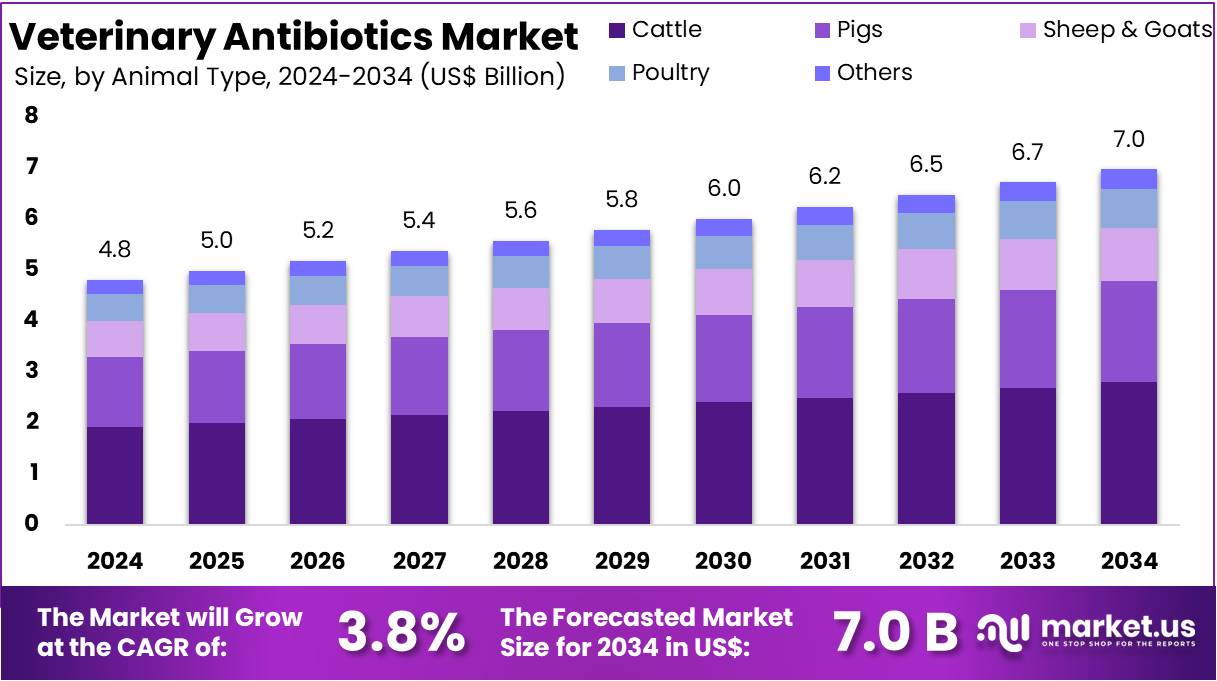
New York, NY – May 05, 2026 – The Global Veterinary Antibiotics Market Size is expected to be worth around US$ 7 Billion by 2034, from US$ 4.8 Billion in 2024, growing at a CAGR of 3.8% during the forecast period from 2025 to 2034. North America held a dominant market position, capturing more than a 33.2% share and holds US$ 1.5 Billion market value for the year.
Veterinary antibiotics are essential therapeutic agents used to prevent and treat bacterial infections in animals, supporting both animal health and agricultural productivity. These medicines are commonly administered to livestock such as cattle, poultry, and swine, as well as companion animals, to control diseases that can impact growth, reproduction, and overall wellbeing.
The global demand for veterinary antibiotics continues to grow, driven by increasing livestock production, rising protein consumption, and heightened awareness of animal health management. Broad-spectrum antibiotics, including tetracyclines, penicillins, and macrolides, are widely utilized due to their effectiveness against a range of bacterial pathogens.
However, the use of veterinary antibiotics is being carefully monitored due to concerns related to antimicrobial resistance (AMR). Regulatory authorities and industry stakeholders are emphasizing responsible usage practices, including adherence to prescribed dosages, withdrawal periods, and veterinary guidance. This shift is encouraging the adoption of antimicrobial stewardship programs and alternative solutions such as vaccines and probiotics.
Technological advancements in veterinary medicine, along with stricter regulatory frameworks, are shaping the future landscape of the market. Emerging economies are expected to witness significant growth due to expanding animal husbandry practices and improved access to veterinary care.
Overall, veterinary antibiotics remain a critical component of modern animal healthcare, balancing disease control needs with evolving public health considerations.
Key Takeaways
- The veterinary antibiotics market was valued at USD 4.8 billion in 2024 and is projected to reach USD 7.0 billion by 2034, expanding at a CAGR of 3.8%.
- In 2024, the cattle segment dominated the global market, accounting for 40.1% of the total revenue share.
- The tetracyclines segment emerged as the leading antibiotic class, capturing 29.3% of the overall market share.
- The powders segment held the largest share among formulations, contributing 31.5% of total revenue.
- North America led the global veterinary antibiotics market, representing 33.2% of the total revenue share in 2024.
Regional Analysis
North America maintained a leading position in the veterinary antibiotics market in 2024, accounting for over 33.2% of the global share, with a market value of approximately USD 1.5 billion. This dominance is supported by a well-established veterinary healthcare infrastructure and stringent regulatory oversight governing antibiotic usage in animals.
The region’s high incidence of zoonotic diseases continues to drive demand for effective treatment solutions. According to the Centers for Disease Control and Prevention, more than 60% of human infectious diseases originate from animals, while 75% of emerging diseases are linked to animal sources. These figures underscore the importance of robust disease prevention and control strategies, where veterinary antibiotics play a critical role in minimizing transmission risks.
Advanced diagnostic technologies in North America enable early detection and timely treatment of infections, contributing to improved animal health outcomes. Regulatory frameworks, including oversight by the U.S. Food and Drug Administration, promote responsible antibiotic use and antimicrobial stewardship.
Market growth is further supported by large-scale livestock production and increasing pet ownership. Antibiotics are widely used to maintain livestock productivity and ensure food safety, while also supporting the health of companion animals. Continuous investments in research and veterinary care are expected to sustain regional market expansion.
Emerging Trends
- Rising Demand for Alternatives to Traditional Antibiotics: Growing concerns over antibiotic resistance are accelerating demand for alternatives such as probiotics, prebiotics, and herbal solutions, which enhance immunity, reduce antibiotic reliance, and align with increasing consumer preference for safer animal-derived food products.
- Stricter Government Regulations: Governments are enforcing stricter regulations on veterinary antibiotic usage, limiting growth-promoting applications and promoting responsible administration, thereby encouraging compliance, improving monitoring systems, and supporting global efforts to mitigate antimicrobial resistance risks across livestock sectors.
- Increased Focus on Preventive Healthcare: A shift toward preventive animal healthcare is evident, driven by increased adoption of vaccines, routine monitoring, and early diagnostics, reducing dependency on antibiotics while improving animal welfare, lowering treatment costs, and enhancing overall farm productivity outcomes.
- Growth in Companion Animal Care: Rising global pet ownership is significantly increasing demand for advanced veterinary care, including antibiotics, as pet owners prioritize health investments, thereby driving expansion in companion animal healthcare and encouraging development of specialized treatment solutions.
- Technological Advancements in Drug Delivery: Innovations in veterinary drug delivery, including long-acting injectables and medicated feeds, are improving treatment efficiency, ensuring accurate dosing, reducing animal stress, and enhancing therapeutic outcomes, thereby supporting practical and scalable antibiotic administration across livestock systems.
- Expansion in Developing Regions: Developing regions are witnessing increased veterinary antibiotic demand due to expanding livestock production, improved awareness, and enhanced veterinary infrastructure, supported by government initiatives, creating significant growth opportunities for animal healthcare companies in emerging markets.
Use Cases
- Treating Bacterial Infections in Livestock: Veterinary antibiotics are widely used to treat bacterial infections in livestock, preventing disease spread, reducing mortality rates, and maintaining productivity, thereby supporting efficient farm operations and minimizing economic losses associated with untreated animal health conditions.
- Post-Surgical Care for Companion Animals: Antibiotics play a critical role in post-surgical care for companion animals by preventing infections, accelerating recovery, and reducing complications, thereby improving animal welfare and ensuring successful outcomes following common veterinary procedures and treatments.
- Managing Disease Outbreaks on Farms: During disease outbreaks, antibiotics are essential for controlling infection spread among livestock populations, reducing mortality, and stabilizing farm operations, enabling farmers to maintain productivity while ensuring timely intervention and effective disease management strategies.
- Support for Animal Welfare in Zoos and Shelters: Veterinary antibiotics are essential in zoos and shelters for treating infections among vulnerable animals, improving recovery rates, preventing disease transmission, and supporting overall animal welfare in environments characterized by high stress and close living conditions.
- Preventive Use in High-Risk Conditions: In high-risk situations such as transport or environmental stress, controlled preventive antibiotic use helps reduce infection risks, supporting animal health stability, minimizing disease occurrence, and ensuring consistent growth and welfare under veterinary supervision.
- Integrated Use in Feedlots and Aquaculture: In feedlots and aquaculture systems, antibiotics are integrated into feed or water under strict regulation to control disease, maintain animal health, and support productivity, while ensuring compliance with safety standards and minimizing resistance development risks.
Frequently Asked Questions on Veterinary Antibiotics
- How are veterinary antibiotics administered to animals?
Veterinary antibiotics are administered through oral, injectable, or topical routes depending on the infection type and animal species. Dosage and duration are determined by veterinarians to ensure efficacy while minimizing resistance development and ensuring compliance with withdrawal periods. - Why is antibiotic resistance a concern in veterinary medicine?
Antibiotic resistance has emerged due to overuse and misuse of antibiotics in animals, reducing treatment effectiveness. Resistant bacteria can transfer to humans through food chains or environmental exposure, making antimicrobial stewardship a critical priority in veterinary and public health sectors. - Which animal segments dominate the veterinary antibiotics market?
Livestock animals, including cattle, poultry, and swine, dominate the market due to their large population and economic importance. However, the companion animal segment is witnessing steady growth, supported by increasing pet ownership and higher expenditure on pet healthcare services. - How is innovation shaping the veterinary antibiotics market?
Innovation is being driven by the development of targeted therapies, improved drug formulations, and combination antibiotics. Research is increasingly focused on enhancing efficacy while reducing resistance risks, supported by advancements in biotechnology and precision veterinary medicine. - What regional trends are observed in the veterinary antibiotics market?
Asia-Pacific represents a rapidly growing market due to expanding livestock production and rising demand for animal protein. North America and Europe maintain stable growth, supported by advanced veterinary infrastructure and stringent regulatory frameworks governing antibiotic usage. - What is the future outlook for the veterinary antibiotics market?
The market is expected to witness moderate growth, supported by increasing global food demand and animal health awareness. However, a gradual shift toward sustainable practices and alternative therapies may influence long-term demand patterns and innovation strategies in the industry.
Conclusion
The veterinary antibiotics market demonstrates steady growth, supported by rising livestock production, increasing protein consumption, and expanding companion animal care. While antibiotics remain essential for disease control and productivity, concerns regarding antimicrobial resistance are reshaping industry practices.
Regulatory enforcement, antimicrobial stewardship, and adoption of alternatives such as vaccines and probiotics are gaining prominence. Technological advancements and preventive healthcare approaches are further enhancing treatment efficiency and animal welfare.
Additionally, emerging economies are contributing significantly to market expansion due to improving veterinary infrastructure. Overall, the market is expected to maintain stable growth, balancing therapeutic demand with evolving regulatory and sustainability considerations.
Discuss your needs with our analyst
Please share your requirements with more details so our analyst can check if they can solve your problem(s)




