


Overview
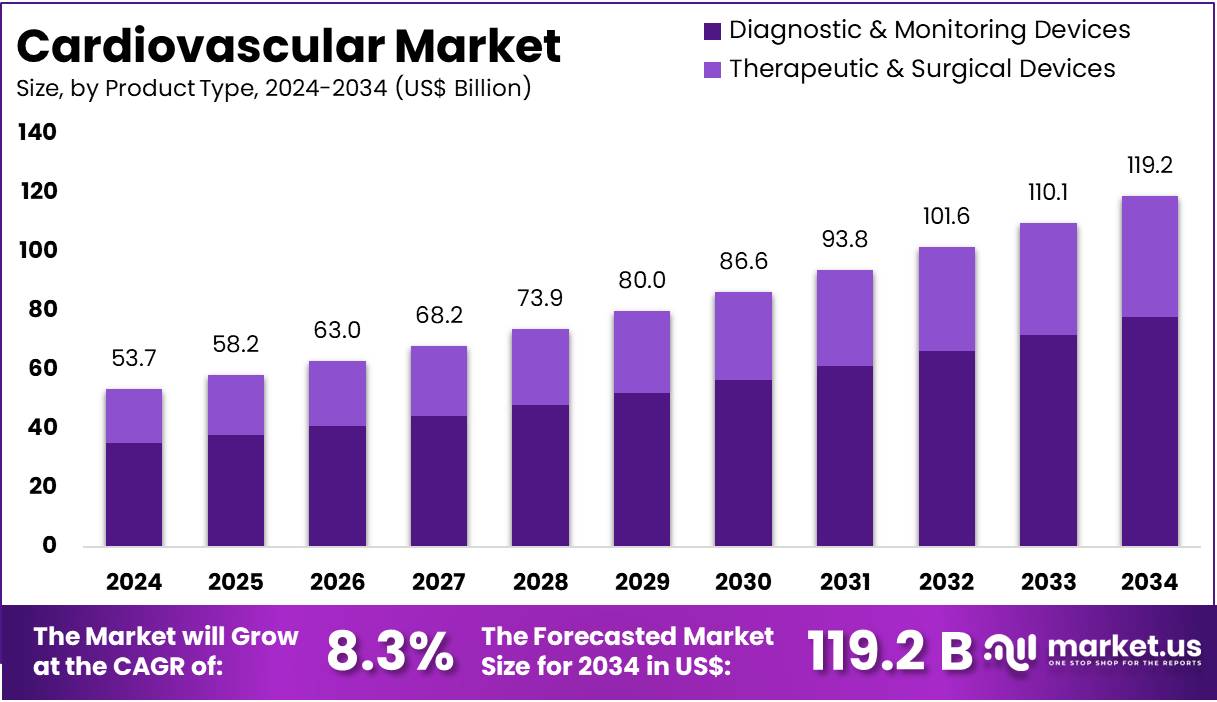
New York, NY – May 08, 2026 – The Cardiovascular Market size is expected to be worth around US$ 119.2 billion by 2034 from US$ 53.7 billion in 2024, growing at a CAGR of 8.3% during the forecast period 2025 to 2034.
The global cardiovascular disease burden continues to increase, driven by aging populations, sedentary lifestyles, unhealthy dietary patterns, obesity, diabetes, hypertension, and tobacco consumption. Cardiovascular diseases (CVDs) include a broad range of disorders affecting the heart and blood vessels, such as coronary artery disease, heart failure, arrhythmias, stroke, and peripheral artery disease. These conditions remain among the leading causes of mortality worldwide and represent a major public health challenge.
According to global health organizations, millions of deaths each year are attributed to cardiovascular disorders, with a significant share occurring in low- and middle-income countries. The growing prevalence of risk factors, combined with rising healthcare expenditures, has accelerated the demand for advanced diagnostic technologies, preventive healthcare solutions, and innovative treatment options.
Technological advancements in cardiac monitoring devices, minimally invasive surgical procedures, imaging systems, and digital health platforms are supporting improved disease management and patient outcomes. In addition, increasing awareness regarding early diagnosis, preventive screening, and lifestyle modification is contributing to market growth.
Healthcare providers, pharmaceutical companies, and medical device manufacturers continue to invest in research and development activities to address the evolving needs of cardiovascular care. Government initiatives promoting heart health awareness and expanding healthcare infrastructure are further expected to support the long-term development of the global cardiovascular sector.
Key Takeaways
- The global cardiovascular market generated revenue of US$ 53.7 billion in 2023 and is projected to reach US$ 119.2 billion by 2033, expanding at a CAGR of 8.3% during the forecast period.
- Based on product type, the market is segmented into diagnostic & monitoring devices and therapeutic & surgical devices. Among these, the diagnostic & monitoring devices segment dominated the market in 2023, accounting for a revenue share of 65.3%.
- By application, the market is categorized into coronary artery disease (CAD), heart failure, cardiac arrhythmia, and others. The coronary artery disease (CAD) segment emerged as the leading application area, capturing 48.5% of the market share in 2023.
- In terms of end user, the market is segmented into hospitals, specialty clinics, and others. Hospitals held the largest share of the cardiovascular market, contributing 58.2% of total revenue in 2023.
- Regionally, North America dominated the global cardiovascular market, securing a market share of 44.7% in 2023.
Regional Analysis
North America dominated the cardiovascular market in 2024, accounting for the largest revenue share of 44.7%. The regional market growth was primarily driven by the rising aging population, increasing prevalence of cardiovascular risk factors, and strong healthcare infrastructure. In the United States, approximately 16.5% of the population was aged 65 years and above in 2023, significantly increasing the demand for cardiovascular care and treatment services.
Additionally, the growing incidence of hypertension and obesity supported market expansion, with nearly 48% of U.S. adults affected by hypertension between 2021 and 2023. Technological advancements in cardiovascular devices, improved treatment outcomes, and the growing adoption of telemedicine further strengthened the market across the region.
Meanwhile, the Asia Pacific cardiovascular market is expected to register the fastest CAGR during the forecast period. Rapid population aging, increasing healthcare awareness, and rising cardiovascular disease burden are major factors supporting regional growth.
According to the United Nations, the elderly population in Asia Pacific is projected to reach 1.3 billion by 2050. Economic development in countries such as China and India, along with expanding healthcare infrastructure and government healthcare initiatives, is further accelerating the demand for cardiovascular diagnostics, monitoring, and treatment services across the region.
Emerging Trends
- AI-Powered Heart Diagnostics: Artificial intelligence is improving heart disease detection by analyzing ECGs and imaging results quickly and accurately. AI-based tools support early diagnosis, reduce human error, and help healthcare professionals deliver faster and more effective cardiovascular care.
- Gene-Silencing Therapies: Gene-silencing therapies are emerging as advanced treatments for high cholesterol by targeting genes responsible for harmful cholesterol production. These therapies offer new treatment possibilities for patients with inherited cardiovascular disorders and high heart disease risks.
- Remote Heart Monitoring Through Smart Devices: Wearable devices and smart monitoring systems allow patients to track heart activity from home. These technologies provide real-time health data, improve early detection of complications, and reduce the need for frequent hospital visits.
- Faster, More Inclusive Clinical Trials: Digital technologies and remote monitoring tools are making cardiovascular clinical trials faster and more accessible. Patients can participate from home, improving data collection efficiency while supporting broader participation from rural and elderly populations.
Use Cases
- AI in Everyday Heart Checkups: Healthcare providers are integrating AI tools into routine heart examinations to analyze ECGs and patient data. This technology helps identify cardiovascular risks earlier and supports faster clinical decision-making during regular checkups.
- Genetic-Based Cholesterol Treatment: Advanced genetic therapies are being developed to lower harmful cholesterol levels by targeting specific genes. These treatments may provide long-term cardiovascular protection for patients who do not respond effectively to conventional medications.
- Stem Cell Therapy for Heart Repair: Stem cell therapy is being explored to repair damaged heart tissues and improve cardiac function. Researchers are developing regenerative treatments that may support recovery in patients with severe heart damage or chronic heart failure.
- Home Monitoring for High-Risk Patients: Remote monitoring systems enable high-risk cardiovascular patients to track heart rate, blood pressure, and oxygen levels at home. These solutions help healthcare providers detect emergencies early and improve ongoing patient management.
Frequently Asked Questions on Cardiovascular
- What factors are driving the growth of the cardiovascular market?
The cardiovascular market is growing due to the increasing prevalence of heart diseases, rising aging population, technological advancements in medical devices, and growing awareness regarding early diagnosis. Expanding healthcare infrastructure and increasing healthcare spending are also supporting market growth globally. - Which product segment dominates the cardiovascular market?
Diagnostic and monitoring devices represent the leading product segment in the cardiovascular market. The dominance of this segment is attributed to the growing demand for early disease detection, continuous patient monitoring, and advancements in imaging systems, wearable technologies, and remote cardiac monitoring solutions. - Why is coronary artery disease a major application segment in the cardiovascular market?
Coronary artery disease holds a significant market share due to its high global prevalence and increasing mortality rates. Rising cases of obesity, hypertension, diabetes, and sedentary lifestyles have increased the need for effective diagnosis, monitoring, and treatment solutions for coronary artery disease. - Why do hospitals account for the largest share in the cardiovascular market?
Hospitals dominate the cardiovascular market because they offer advanced treatment facilities, skilled healthcare professionals, and access to specialized cardiovascular procedures. The increasing number of hospital admissions related to heart diseases and availability of modern diagnostic technologies further support segment growth. - Which region leads the global cardiovascular market?
North America leads the global cardiovascular market due to its advanced healthcare infrastructure, high healthcare expenditure, and growing prevalence of cardiovascular disorders. Strong adoption of innovative medical technologies and increasing awareness regarding preventive cardiac care also contribute to regional market dominance. - Why is the Asia Pacific cardiovascular market growing rapidly?
The Asia Pacific cardiovascular market is expanding rapidly due to population aging, increasing healthcare awareness, and rising prevalence of cardiovascular diseases. Economic development, improving healthcare infrastructure, and supportive government healthcare initiatives are further accelerating market growth across the region.
Conclusion
The global cardiovascular market is experiencing steady growth due to the increasing burden of heart-related diseases, aging populations, and rising prevalence of lifestyle-associated risk factors such as obesity, diabetes, and hypertension. Technological advancements in diagnostic systems, wearable monitoring devices, minimally invasive procedures, and AI-powered healthcare solutions are improving early detection and patient management.
North America continues to lead the market owing to advanced healthcare infrastructure, while Asia Pacific is emerging as the fastest-growing region due to expanding healthcare access and growing awareness. Continuous investments in research, digital health, and preventive care are expected to support long-term market expansion and innovation globally.
Discuss your needs with our analyst
Please share your requirements with more details so our analyst can check if they can solve your problem(s)




