


Overview
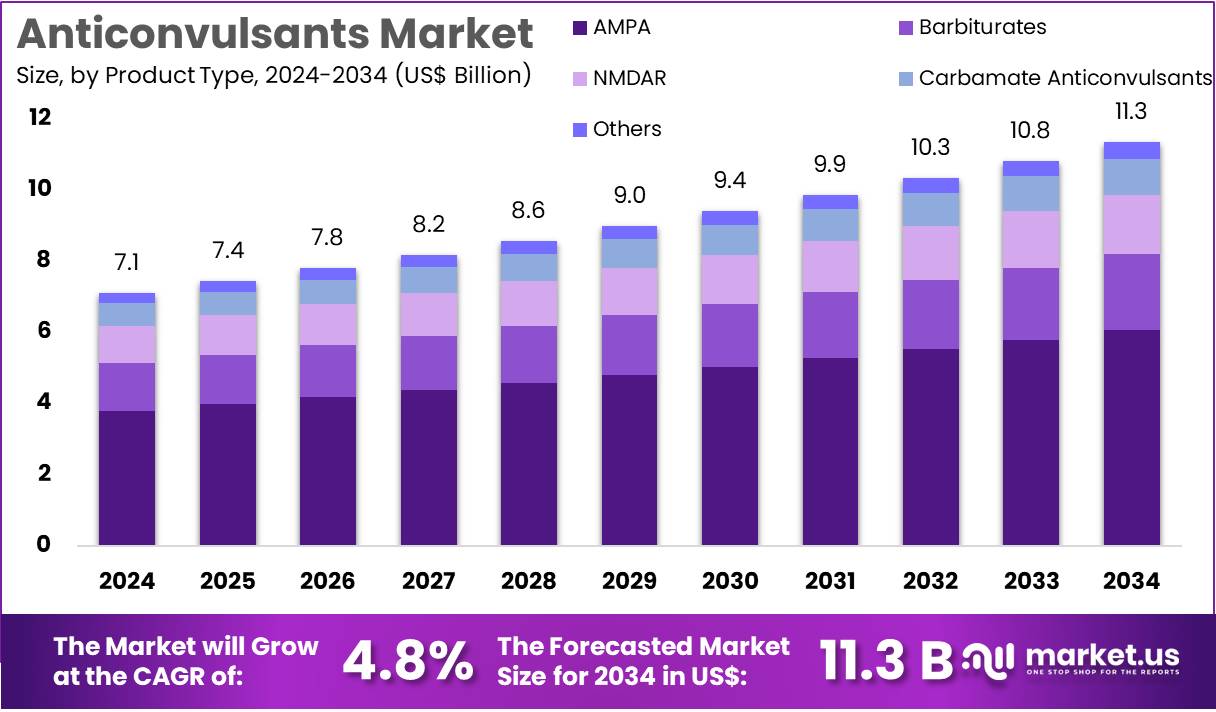
New York, NY – May 26, 2026 – The Anticonvulsants Market size is expected to be worth around US$ 11.3 billion by 2034 from US$ 7.1 billion in 2024, growing at a CAGR of 4.8% during the forecast period 2025 to 2034.
The global anticonvulsants market is witnessing steady growth due to the rising prevalence of neurological disorders such as epilepsy, bipolar disorder, neuropathic pain, and migraine-related conditions. Anticonvulsants, also referred to as antiepileptic drugs (AEDs), are medications designed to prevent or reduce the frequency of seizures by stabilizing abnormal electrical activity in the brain. Increasing awareness regarding early diagnosis and treatment of epilepsy, along with expanding access to neurological healthcare services, is supporting market expansion globally.
The market is further driven by advancements in pharmaceutical research and the development of next-generation anticonvulsant therapies with improved efficacy and reduced side effects. Commonly prescribed anticonvulsants include sodium channel blockers, gamma-aminobutyric acid (GABA) analogs, and calcium channel modulators. These medications are widely used in hospitals, specialty clinics, and retail pharmacies.
North America holds a significant share of the market due to strong healthcare infrastructure, favorable reimbursement policies, and high adoption of advanced therapeutics. Meanwhile, the Asia-Pacific region is expected to witness notable growth owing to the increasing patient population, improving healthcare expenditure, and growing awareness regarding neurological diseases.
Key pharmaceutical companies operating in the market are focusing on strategic collaborations, product approvals, and research investments to strengthen their market presence. Continuous innovation and rising demand for effective neurological treatments are expected to support the long-term growth of the anticonvulsants industry.
Key Takeaways
- In 2023, the global anticonvulsants market was valued at US$ 7.1 billion and is projected to reach US$ 11.3 billion by 2033, expanding at a CAGR of 4.8% during the forecast period.
- Based on product type, the market is segmented into barbiturates, NMDAR, carbamate anticonvulsants, AMPA, and others. Among these, the AMPA segment dominated the market in 2023, accounting for a revenue share of 53.5%.
- By application, the market is categorized into migraine, fibromyalgia, epilepsy, bipolar disorder, and anxiety. The epilepsy segment emerged as the leading application area, capturing 57.6% of the total market share in 2023.
- In terms of end users, the market is segmented into hospitals, clinics, and ambulatory surgical clinics. Hospitals represented the largest segment, contributing 59.3% of the overall market revenue in 2023.
- North America accounted for the highest regional share in the anticonvulsants market, holding 41.5% of the global market revenue in 2023.
Regional Analysis
North America dominated the anticonvulsants market in 2023, accounting for 41.5% of the global revenue share. The region’s leadership is primarily attributed to the growing aging population and the high prevalence of neurological disorders, particularly epilepsy. According to the CDC, nearly 2.9 million adults in the United States reported active epilepsy between 2021 and 2022. The condition is more common among older adults, creating strong demand for long-term treatment and disease management solutions.
Increasing awareness, early diagnosis, and continuous advancements in neurological healthcare are further supporting market growth across the region. In addition, ongoing research initiatives funded by organizations such as the National Institute of Neurological Disorders and Stroke (NINDS) are contributing to the development of improved treatment approaches. Recent FDA approvals for new seizure medications and generic formulations have also expanded patient access to anticonvulsant therapies.
Meanwhile, the Asia Pacific region is projected to register the fastest CAGR during the forecast period. Market growth in the region is driven by improving healthcare infrastructure, rising awareness of neurological conditions, and increasing access to diagnosis and treatment services. The growing elderly population and supportive government healthcare initiatives are also expected to accelerate demand for anticonvulsant medications across Asia Pacific countries.
Emerging Trends
- Growing Demand for Targeted Therapies: The anticonvulsants market is increasingly focused on targeted therapies that act on specific brain receptors linked to seizures. These treatments help reduce side effects while improving seizure control. Growing research efforts are supporting the development of safer, more effective medicines with improved patient outcomes and quality of life.
- Focus on Drug-Resistant Epilepsy: The market is placing greater emphasis on treating drug-resistant epilepsy, where existing therapies fail to control seizures effectively. Pharmaceutical companies are developing innovative drug classes and combination therapies to address unmet needs. These advancements aim to improve seizure management and enhance quality of life for affected patients.
- Use of Anticonvulsants for Other Conditions: Anticonvulsants are increasingly prescribed for conditions beyond epilepsy, including migraines, neuropathic pain, and bipolar disorder. Their ability to regulate abnormal nerve activity has expanded therapeutic applications. This broader usage is driving market growth while encouraging pharmaceutical companies to explore additional treatment opportunities across multiple disorders.
- Long-Acting and Extended-Release Formulations: Long-acting and extended-release anticonvulsants are gaining popularity due to their convenience and improved treatment adherence. These formulations maintain stable drug levels for extended periods, reducing dosing frequency and minimizing seizure risks caused by fluctuating medication levels. Companies continue investing in safer and more effective advanced formulations.
- Increased Awareness and Early Diagnosis: Growing public awareness and educational initiatives are improving the early diagnosis of epilepsy. Better access to neurological testing and screening programs allows faster treatment initiation and improved long-term outcomes. As diagnosis rates rise globally, the demand for effective anticonvulsant therapies continues to increase across healthcare systems.
- Digital Health and Remote Monitoring: Digital health technologies are transforming epilepsy management through wearable devices, seizure-tracking applications, and remote monitoring tools. These solutions provide real-time patient data, helping physicians optimize treatments and improve patient safety. Remote care also benefits rural populations by reducing hospital visits and supporting independent disease management.
Use Cases
- Epilepsy Management: Anticonvulsants are essential in epilepsy management by reducing seizure frequency and stabilizing abnormal brain activity. Effective seizure control enables patients to maintain daily routines, improve independence, and enhance mental well-being. Ongoing research continues to develop advanced therapies with fewer side effects and better long-term treatment outcomes.
- Prevention of Seizures After Brain Injuries: Anticonvulsants are commonly used after brain injuries, surgeries, or infections to prevent seizures during recovery. These medicines stabilize brain activity and reduce neurological complications. Preventive treatment supports safer healing, shortens hospital stays, and improves recovery outcomes for patients affected by traumatic or surgical brain conditions.
- Neuropathic Pain Relief: Certain anticonvulsants effectively treat neuropathic pain caused by nerve damage conditions such as diabetic neuropathy or post-herpetic neuralgia. By calming abnormal nerve signals, these medicines reduce burning and tingling sensations. Patients often experience improved sleep, mobility, and overall quality of life through long-term pain management support.
- Migraine Prevention: Anticonvulsants are widely used for migraine prevention by stabilizing abnormal nerve activity in the brain. These treatments help reduce the frequency and severity of migraine attacks, improving productivity and daily functioning. Combined with lifestyle management strategies, anticonvulsants provide effective long-term control for chronic migraine sufferers.
- Mood Stabilization in Mental Health: Anticonvulsants are also utilized as mood stabilizers, particularly in bipolar disorder treatment. They help regulate overactive brain activity and reduce severe mood fluctuations. When combined with therapy and lifestyle adjustments, these medicines improve emotional stability, support consistent daily functioning, and enhance patients’ overall mental well-being.
- Seizure Control in Veterinary Medicine: Anticonvulsants are widely used in veterinary medicine to manage epilepsy and recurring seizures in animals, especially dogs. These medicines help reduce seizure frequency, improve safety, and enhance the pet’s quality of life. Regular monitoring by veterinarians ensures effective treatment while minimizing potential medication-related side effects.
Frequently Asked Questions on Anticonvulsants
- What factors are driving the growth of the anticonvulsants market?
The growth of the anticonvulsants market is mainly driven by the increasing prevalence of epilepsy and neurological disorders, rising awareness regarding mental health conditions, expanding geriatric population, and continuous advancements in pharmaceutical research for more effective and safer treatment options. - Which application segment dominates the anticonvulsants market?
The epilepsy segment holds the largest share in the anticonvulsants market due to the high number of diagnosed epilepsy cases globally. Growing awareness, improved diagnostic capabilities, and increasing access to treatment are supporting the widespread adoption of anticonvulsant medications for epilepsy management. - Why is North America leading the anticonvulsants market?
North America dominates the anticonvulsants market due to its advanced healthcare infrastructure, high prevalence of neurological disorders, favorable reimbursement policies, and strong investment in neurological research. The increasing elderly population and availability of innovative therapies are also contributing to regional market growth. - Which region is expected to witness the fastest market growth?
The Asia Pacific region is expected to record the fastest growth during the forecast period. Improving healthcare infrastructure, increasing awareness of neurological disorders, rising healthcare expenditure, and growing access to essential medicines are major factors supporting market expansion across developing economies in the region. - What are the common types of anticonvulsant drugs available in the market?
Common anticonvulsant drug categories include barbiturates, carbamate anticonvulsants, AMPA receptor antagonists, and NMDAR inhibitors. These medications are widely prescribed depending on the severity of seizures, patient condition, and treatment response, supporting personalized approaches in neurological care. - Who are the major end users in the anticonvulsants market?
Hospitals represent the leading end-user segment in the anticonvulsants market due to the availability of specialized neurological care and advanced treatment facilities. Clinics and ambulatory surgical centers also contribute significantly by providing outpatient diagnosis, treatment, and long-term patient monitoring services. - How are pharmaceutical companies contributing to market development?
Pharmaceutical companies are investing heavily in research and development activities to introduce advanced anticonvulsant therapies with improved safety and effectiveness. Strategic collaborations, clinical trials, generic drug launches, and regulatory approvals are further supporting innovation and competitive growth in the market.
Conclusion
The global anticonvulsants market is expected to witness stable growth driven by the increasing prevalence of epilepsy, neurological disorders, migraines, and mental health conditions. Advancements in pharmaceutical research, rising awareness regarding early diagnosis, and the growing adoption of targeted therapies are supporting market expansion.
North America continues to dominate due to advanced healthcare infrastructure, while Asia Pacific is emerging as the fastest-growing region. The development of long-acting formulations, digital health technologies, and innovative treatment approaches for drug-resistant epilepsy is further strengthening market potential. Continuous investments in research and improved healthcare access are expected to sustain long-term industry growth globally.
Discuss your needs with our analyst
Please share your requirements with more details so our analyst can check if they can solve your problem(s)




