
Overview
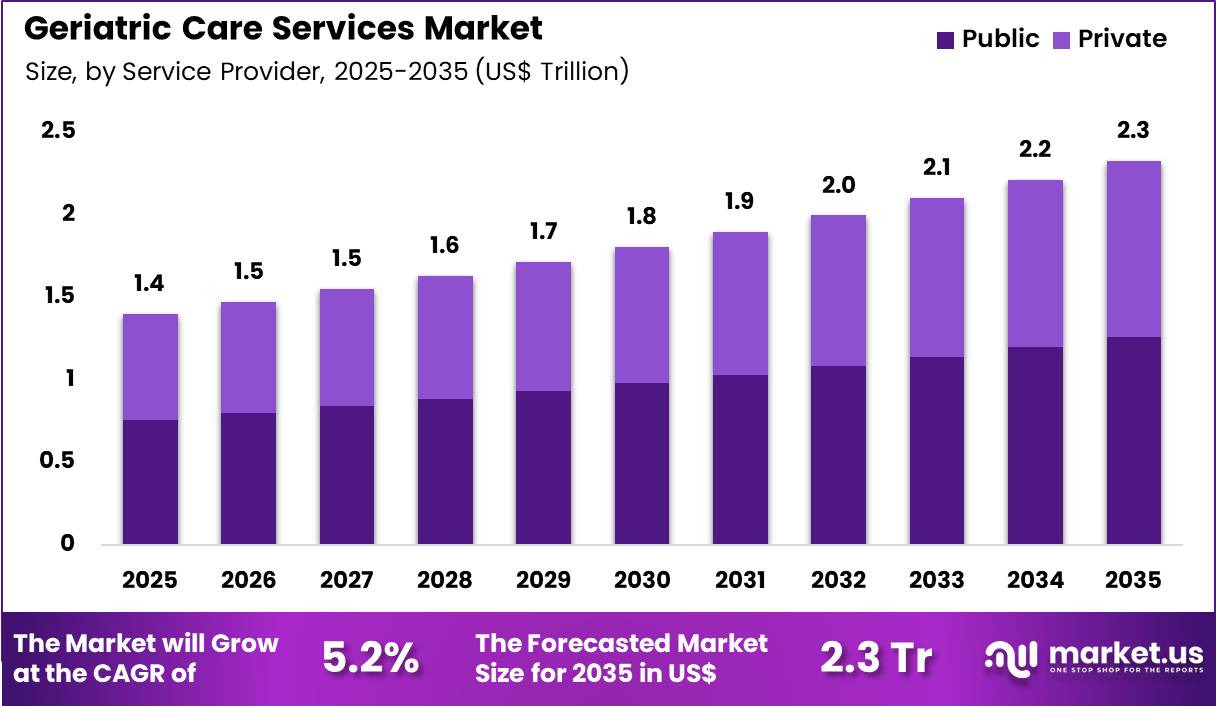
New York, NY – Nov 06 2026 – The Global Geriatric Care Services Market size is expected to be worth around US$ 2.3 Trillion by 2035 from US$ 1.4 Trillion in 2025, growing at a CAGR of 5.2% during the forecast period 2026-2035. In 2025, North America led the market, achieving over 47.2% share with a revenue of US$ 0.7 Trillion.
Geriatric care services focus on providing specialized healthcare and support to older adults, generally aged 65 years and above. These services aim to improve the quality of life, maintain independence, and manage age-related health conditions.
They include medical care, nursing assistance, home healthcare, rehabilitation, assisted living, long-term care, and palliative care. Growing life expectancy and the rising elderly population are increasing the need for organized geriatric care services worldwide.
The increasing prevalence of chronic diseases, including diabetes, cardiovascular disorders, arthritis, dementia, and osteoporosis, is driving demand for continuous medical support and personalized treatment. Families are also seeking professional caregivers to support daily activities, medication management, mobility, and routine health monitoring. Home-based care is gaining attention as older adults increasingly prefer receiving treatment and assistance in familiar surroundings.
Technological advancements are further supporting market development through telehealth, remote patient monitoring, digital health records, and wearable medical devices. Governments and healthcare organizations are also strengthening elderly care infrastructure through long-term care programs and age-friendly healthcare initiatives.
Additionally, rising awareness of preventive healthcare and early disease management is encouraging the adoption of specialized geriatric services. These factors are expected to support the growth of the global Geriatric Care Services Market in the coming years.
Key Takeaways
- In 2025, the Geriatric Care Services Market was valued at US$ 1.4 Trillion and is projected to reach US$ 2.3 Trillion by 2035, growing at a CAGR of 5.2% during the forecast period.
- Based on service provider, the market is segmented into public and private providers, with the public segment dominating with a 54.2% market share.
- By service, the market is categorized into home care, institutional care, and adult day care. Among these, home care emerged as the leading segment, accounting for 41.6% of the market.
- Based on payment source, the market is classified into public insurance, out-of-pocket, private insurance, and others. Public insurance dominated the segment with the largest revenue share of 48.7%.
- By application, the market is divided into respiratory diseases, osteoporosis, arthritis, diabetes, cancer, and others. Respiratory diseases led the segment with a 29.4% revenue share.
- Regionally, North America dominated the Geriatric Care Services Market, capturing a leading market share of 47.2%.
Key Market Segments
- Service Provider Analysis: Public providers dominated the service provider segment with a 54.2% market share, supported by extensive government-funded elderly care programs. Public healthcare systems invest in long-term care facilities, community health centers, and home support services. Growing elderly populations and expanding social protection programs further strengthen demand for affordable public geriatric care services.
- Service Analysis: Home care led the service segment with a 41.6% market share, driven by the growing preference for aging in place. Older adults increasingly choose home-based assistance to maintain independence and comfort. Rising demand for chronic disease monitoring, telehealth services, and professional caregiving further supports the adoption of home care solutions.
- Payment Source Analysis: Public insurance dominated the payment source segment with a 48.7% market share, driven by broad healthcare coverage among elderly populations. Government-funded insurance programs support hospitalization, chronic disease management, and long-term care services. Rising healthcare expenses and expanding insurance benefits further strengthen the role of public insurance in geriatric care financing.
- Application Analysis: Respiratory diseases led the application segment with a 29.4% market share, driven by the high prevalence of age-related pulmonary conditions and chronic obstructive pulmonary disease (COPD). Older adults often require oxygen therapy, respiratory rehabilitation, and regular health monitoring. Growing access to home oxygen programs and early screening further supports demand for geriatric respiratory care services.
Regional Analysis
North America is leading the Geriatric Care Services Market
North America dominated the Geriatric Care Services Market with a 47.2% share in 2024, driven by an aging population, higher life expectancy, and increasing chronic diseases among older adults. Government healthcare funding supports long-term care, home healthcare, and skilled nursing services.
According to the US Census Bureau, 58.0 million Americans were aged 65 and above in 2022, representing 17.3% of the population. Growing demand for assisted living, memory care, and community-based healthcare further strengthens regional market growth.
Asia Pacific is expected to register the highest CAGR
Asia Pacific is projected to experience the fastest growth during the forecast period due to rapid population aging and rising awareness of elderly care services. Japan, China, and South Korea are expanding long-term care programs and healthcare infrastructure.
Japan’s aging population, with 29.1% aged 65 and above in 2023, highlights the growing demand. Increasing urbanization, smaller households, rising incomes, and investments in home-based and institutional care are expected to accelerate regional market expansion.
Emerging Trends
- Growing Demand for Home-Based Elderly Care: Home-based care is becoming an important trend as older adults prefer receiving medical attention and daily assistance in familiar surroundings. Healthcare providers are expanding nursing visits, physiotherapy, medication support, and personal care services to reduce unnecessary hospital visits and support independent living.
- Increasing Adoption of Integrated Geriatric Care: Healthcare systems are moving toward coordinated care that combines medical treatment, rehabilitation, mental health support, and social assistance. The World Health Organization’s Integrated Care for Older People (ICOPE) approach encourages personalized assessments and care plans based on an individual’s physical, mental, and social needs.
- Expansion of Digital Health and Remote Monitoring: Digital healthcare tools are creating new opportunities for elderly care providers. Remote consultations, wearable devices, digital health records, and monitoring systems help healthcare professionals track patients’ health conditions and provide timely support, particularly for older adults who have difficulty travelling.
- Greater Focus on Preventive Healthcare: Care providers are giving more attention to early health assessments, fall prevention, nutrition, physical activity, and regular screening. These services help identify potential health problems earlier and reduce the risk of serious complications among older adults.
- Rising Demand for Trained Geriatric Caregivers: The need for skilled nurses, personal care assistants, and trained caregivers is increasing as elderly individuals require more specialized assistance. Healthcare organizations are emphasizing caregiver education, professional training, and better care standards to improve service quality and patient safety.
Use Cases
- Daily Living and Personal Assistance: Geriatric care services help older adults with everyday activities such as bathing, dressing, eating, walking, and personal hygiene. These services are especially useful for individuals who experience reduced mobility or require assistance with routine household activities.
- Chronic Disease Management: Elderly care providers support patients living with diabetes, hypertension, arthritis, and cardiovascular conditions. Regular health assessments, medication management, and follow-up consultations help monitor these conditions and support better long-term health management.
- Post-Hospital Recovery and Rehabilitation: Older adults often require additional support after surgery, injuries, or hospital treatment. Geriatric services provide physiotherapy, mobility training, wound care, and nursing assistance to help patients recover and regain independence.
- Dementia and Cognitive Care: Specialized geriatric services support individuals experiencing dementia, memory loss, and other cognitive difficulties. Caregivers provide supervision, structured daily activities, memory-support exercises, and assistance with personal needs to improve safety and daily functioning.
- Palliative and End-of-Life Care: Geriatric care services provide comfort-focused support to older adults living with serious or life-limiting illnesses. These services help manage pain and other symptoms while providing emotional support to patients and their families.
Frequently Asked Questions About Geriatric Care Services
- Who needs geriatric care services?
Geriatric care services are suitable for older adults who need assistance with daily activities, chronic disease management, mobility problems, memory-related conditions, or age-related health concerns. Seniors recovering from surgery or illness may also require specialized elderly care. - What services are included in geriatric care?
Geriatric care includes medical consultations, home nursing, physiotherapy, dementia support, medication management, nutritional guidance, personal assistance, and rehabilitation. Some providers also offer palliative care, emergency support, and long-term residential care based on individual requirements. - What are the benefits of geriatric care services?
Geriatric care services improve access to medical support, promote healthy ageing, and help seniors manage chronic conditions. They also provide assistance with daily activities, reduce safety risks, support emotional well-being, and help older adults maintain independence. - How does home-based geriatric care help elderly people?
Home-based geriatric care allows seniors to receive medical and personal assistance in familiar surroundings. Caregivers help with medication, meals, mobility, and daily activities. This approach supports independence while providing families with additional assistance in elderly care. - What are the major factors driving the geriatric care services market?
The market is driven by the growing elderly population, increasing life expectancy, rising chronic disease cases, and greater demand for specialized healthcare. Growing awareness of healthy ageing and increasing preference for home-based care also support market development. - Which are the major service segments in the geriatric care services market?
Major service segments include home healthcare, nursing care, assisted living, rehabilitation, adult day care, and long-term residential care. These services address different requirements, ranging from basic daily assistance to specialized medical treatment and continuous elderly supervision. - How is technology influencing the geriatric care services market?
Technology is improving elderly care through telehealth, wearable devices, remote patient monitoring, and digital health records. These solutions help healthcare professionals track patient conditions, support timely medical attention, improve communication with caregivers, and provide more coordinated care.
Conclusion
The Geriatric Care Services Market is expected to witness steady growth due to the rising elderly population, increasing life expectancy, and growing prevalence of age-related chronic diseases. Rising demand for home-based care, professional caregiving, rehabilitation, and long-term healthcare services is further supporting market expansion.
Technological advancements, including telehealth and remote patient monitoring, are improving elderly care delivery and patient outcomes. North America currently leads the market, while Asia Pacific is expected to experience the fastest growth. Increasing government support, healthcare investments, and awareness of healthy ageing will create new opportunities for market growth through 2035.
Discuss your needs with our analyst
Please share your requirements with more details so our analyst can check if they can solve your problem(s)