
Overview
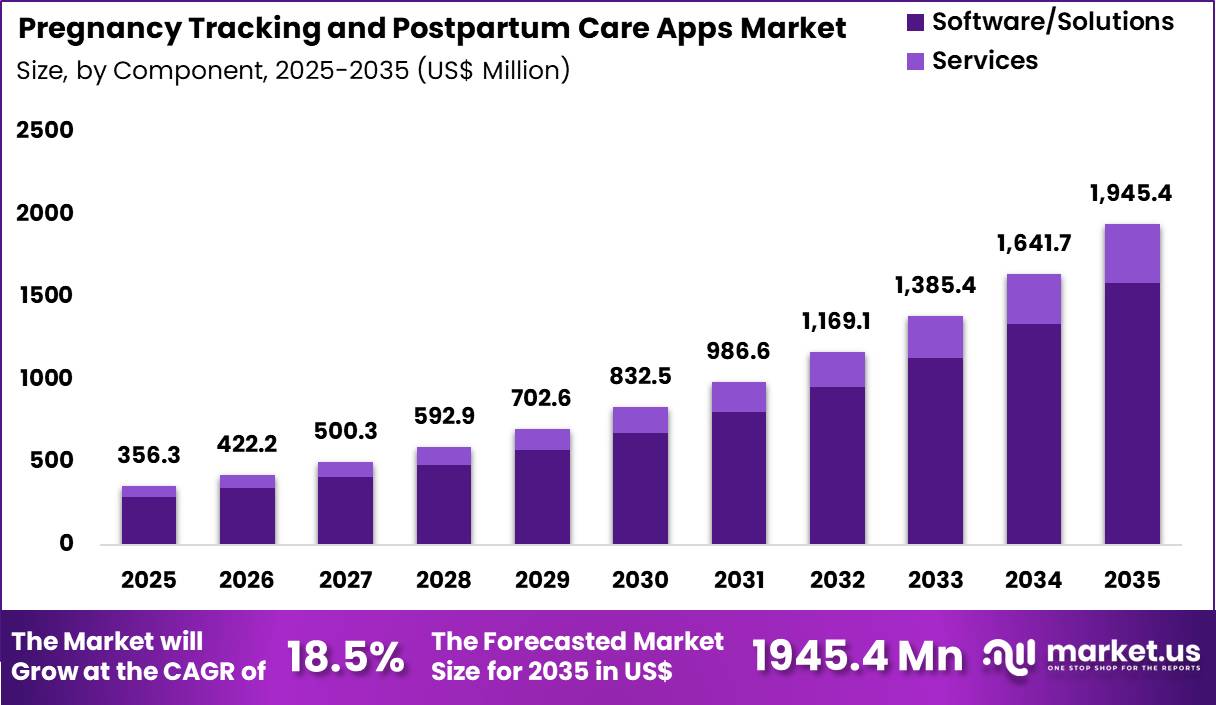
New York, NY – Nov 25 2026 – The Global Pregnancy Tracking and Postpartum Care Apps Market size is expected to be worth around US$ 1945.4 Million by 2035 from US$ 356.3 Million in 2025, growing at a CAGR of 18.5% during the forecast period 2026-2035. In 2025, North America led the market, achieving over 38.5% share with a revenue of US$ 137.2 Million.
Pregnancy Tracking and Postpartum Care Apps are digital healthcare applications designed to support women throughout pregnancy, childbirth, and the postnatal period. These applications provide information and personalized guidance on pregnancy milestones, fetal development, nutritional requirements, medical appointments, and maternal health. Postpartum care features further support mothers through breastfeeding guidance, newborn care, recovery monitoring, mental health resources, and infant development tracking.
The market is witnessing growing adoption due to increasing smartphone penetration, rising awareness of maternal and child health, and the growing preference for digital healthcare solutions. These applications offer convenient access to health-related information, personalized reminders, virtual consultations, and community-based support, improving the overall pregnancy and motherhood experience.
Furthermore, advancements in artificial intelligence, wearable health technologies, and telehealth services are expanding the capabilities of these platforms. Integration of personalized health recommendations, symptom tracking, and remote healthcare support is also strengthening user engagement.
As healthcare becomes increasingly digital, Pregnancy Tracking and Postpartum Care Apps are expected to gain greater importance in the maternal healthcare ecosystem. Growing demand for accessible, personalized, and technology-enabled maternal care solutions is anticipated to create new opportunities for market participants, healthcare providers, and digital health technology developers.
Key Takeaways
- In 2025, the Pregnancy Tracking and Postpartum Care Apps Market generated revenue of US$ 356.3 Million and is projected to grow at a CAGR of 18.5%, reaching US$ 1,945.4 Million by 2035.
- Based on component, the market is segmented into software/solutions and services, with software/solutions dominating the segment with a revenue share of 81.6%.
- Based on platform, the market is categorized into iOS-based apps, Android-based apps, and web-based platforms. Among these, Android-based apps accounted for the largest market share of 58.9%.
- Based on application, the market is segmented into pregnancy tracking and milestones, fetal development monitoring, contraction timer and kick counter, nutrition and diet tracking, exercise and fitness guidance, symptom tracking and management, medication and supplement reminders, baby name and registry tools, community and social support, postpartum recovery tracking, and others. Among these, pregnancy tracking and milestones emerged as the leading application segment, accounting for 42.7% of the market revenue.
- Based on pricing model, the market is categorized into freemium, subscription-based, one-time purchase, and advertisement-based models. The freemium segment dominated the market, capturing a revenue share of 48.3%.
- Based on end user, the market is divided into expecting mothers, postpartum mothers, partners and family members, and healthcare providers. Among these, expecting mothers accounted for the largest market share of 72.6%.
- Regionally, North America dominated the global market, accounting for a revenue share of 38.5% in 2025.
Key Market Segments
- Component Analysis: Software and solutions dominated the component segment, accounting for 81.6% of the market share. Their leadership is attributed to features such as pregnancy milestone tracking, symptom monitoring, personalized health insights, and real-time notifications. Rising smartphone adoption, AI integration, and wearable device connectivity are expected to further strengthen demand for software-based maternal healthcare solutions.
- Platform Analysis: Android-based apps dominated the platform segment, accounting for 58.9% of the market share. Their leading position is supported by widespread smartphone adoption, affordable devices, and accessibility across diverse income groups. Expanding internet connectivity, localized application features, and integration with wearable health technologies are expected to further support the adoption of Android-based pregnancy and postpartum care applications.
- Application Analysis: Pregnancy tracking and milestones dominated the application segment, accounting for 42.7% of the market share. This growth is driven by increasing demand for week-by-week pregnancy updates, fetal development information, and personalized guidance. Rising awareness of prenatal healthcare and the need for continuous pregnancy monitoring are expected to sustain demand for these application features.
- Pricing Model Analysis: The freemium segment dominated the pricing model category, accounting for 48.3% of the market share. Its leadership is attributed to free access to essential pregnancy tracking features, allowing wider user adoption. Optional premium subscriptions, personalized health insights, and advanced monitoring tools are expected to support revenue generation and strengthen the segment’s growth.
- End-User Analysis: Expecting mothers dominated the end-user segment, accounting for 72.6% of the market share. Their leading position is driven by the growing need for pregnancy monitoring, fetal development updates, symptom tracking, and healthcare reminders. Increasing awareness of maternal health and rising adoption of digital healthcare platforms are expected to sustain demand among expecting mothers.
Regional Analysis
North America Dominates the Pregnancy Tracking and Postpartum Care Apps Market
North America dominated the Pregnancy Tracking and Postpartum Care Apps Market, accounting for 38.5% of the market share in 2025. The region’s leadership is driven by high smartphone penetration, growing awareness of maternal health, and increasing adoption of digital healthcare solutions. Expecting mothers increasingly use mobile applications for fetal development tracking, appointment reminders, nutrition guidance, and postpartum support.
The United States represents a major contributor, supported by a large pregnancy user base and growing integration of digital tools into maternal healthcare services. Furthermore, wearable device integration, AI-powered health insights, and remote monitoring capabilities are strengthening user engagement. Rising awareness of postpartum mental health, breastfeeding support, and personalized maternal care is further supporting regional market growth.
Asia Pacific Expected to Register the Highest CAGR
Asia Pacific is expected to register the highest CAGR during the forecast period, driven by increasing smartphone adoption, expanding internet connectivity, and growing maternal healthcare awareness. Countries such as India, China, Indonesia, and Vietnam are witnessing rising adoption of mobile health applications.
Government-led digital healthcare initiatives, multilingual app interfaces, teleconsultation services, and affordable smartphone access are further supporting market expansion. Additionally, increasing awareness of prenatal monitoring, postpartum recovery, and infant care is expected to accelerate the adoption of pregnancy tracking and postpartum care applications across the region.
Emerging Trends
- Integration of Artificial Intelligence (AI): Artificial intelligence is being increasingly incorporated into pregnancy applications to provide personalized health information, pregnancy updates, and automated assistance. AI-based features can help users understand common symptoms, receive customized guidance, and access relevant pregnancy-related information.
- Integration with Wearable Health Devices: Pregnancy applications are increasingly being connected with wearable devices and fitness trackers. These integrations support the collection of health information, including physical activity, sleep patterns, and heart rate, helping users monitor their daily health activities.
- Growth of Telehealth and Virtual Consultations: The integration of telehealth services is becoming an important trend in maternal healthcare applications. Pregnant women can use virtual consultations to communicate with healthcare professionals, discuss concerns, and receive medical guidance without always visiting healthcare facilities.
- Increased Focus on Postpartum Mental Health: Application developers are expanding their services beyond pregnancy monitoring to include postpartum mental health support. Features such as mood tracking, emotional health assessments, educational resources, and professional support are being introduced to address concerns related to postpartum depression and anxiety.
- Greater Focus on Medical Accuracy and Data Privacy: Users and healthcare professionals are placing greater importance on medically reliable information and personal data protection. Consequently, applications are increasingly focusing on expert-reviewed content, transparent privacy policies, secure health information management, and clinically supported recommendations.
Use Cases
- Monitoring Pregnancy Progress and Fetal Development: These applications are used to track pregnancy progress by providing weekly updates about fetal development and changes in the mother’s body. Users can access information about pregnancy stages, expected delivery dates, and important developmental milestones.
- Managing Prenatal Appointments and Medication Reminders: Pregnancy applications help users organize prenatal healthcare activities through appointment scheduling, medication reminders, and notifications. These features support regular healthcare visits, timely medication use, and better management of recommended pregnancy-related activities.
- Tracking Maternal Health and Daily Activities: Applications are used to record health-related information, including weight, physical activity, sleep, nutrition, and other pregnancy-related observations. This information can help users understand their health patterns and share relevant records with healthcare professionals.
- Supporting Postpartum Recovery and Breastfeeding: After childbirth, these applications help mothers monitor physical recovery, record breastfeeding sessions, and access information about newborn feeding and care. They can also provide guidance on postpartum checkups and recovery-related concerns.
- Identifying Maternal Health Warning Signs: Pregnancy and postpartum applications can provide educational information about warning signs such as severe headaches, heavy bleeding, fever, and breathing difficulties. These features encourage users to recognize possible complications and seek timely medical attention.
Frequently Asked Questions About Pregnancy Tracking and Postpartum Care Apps
- What are the main features of Pregnancy Tracking and Postpartum Care Apps?
The main features include pregnancy week tracking, fetal development updates, health record management, medication reminders, nutrition guidance, appointment scheduling, breastfeeding support, mood tracking, and postpartum recovery information. Some applications also offer virtual consultations and wearable device integration. - How do Pregnancy Tracking Apps help pregnant women?
These applications help pregnant women understand different pregnancy stages, monitor daily activities, organize medical appointments, and access health information. They also provide reminders and educational resources that support informed discussions with healthcare professionals throughout pregnancy. - What are the major factors driving the Pregnancy Tracking and Postpartum Care Apps Market?
Market growth is supported by increasing smartphone usage, rising awareness of maternal health, growing adoption of digital healthcare services, and demand for convenient pregnancy monitoring. The expansion of telehealth and personalized health information is also supporting adoption. - What are the emerging opportunities in the Pregnancy Tracking and Postpartum Care Apps Market?
Opportunities are emerging through artificial intelligence, wearable device integration, remote maternal health monitoring, and personalized postpartum support. Developing applications with reliable medical information, regional language options, and improved accessibility can further expand their potential user base. - Which technologies are shaping the Pregnancy Tracking and Postpartum Care Apps Market?
Artificial intelligence, cloud computing, wearable sensors, telehealth platforms, and data analytics are shaping this market. These technologies support personalized pregnancy information, digital health records, remote consultations, and improved communication between mothers and healthcare professionals. - Who are the primary users of Pregnancy Tracking and Postpartum Care Apps?
The primary users include pregnant women, new mothers, and women planning maternal healthcare activities. Healthcare professionals, maternity clinics, hospitals, and family caregivers may also use these applications to support communication, education, and maternal health monitoring. - What role does telehealth play in the Pregnancy Tracking and Postpartum Care Apps Market?
Telehealth enables pregnant women and new mothers to access healthcare professionals through virtual consultations and digital communication. It supports remote follow-ups, postpartum guidance, and access to specialist services, particularly where regular healthcare visits are difficult. - What is the future outlook for the Pregnancy Tracking and Postpartum Care Apps Market?
The market is expected to benefit from increasing digital healthcare adoption, technological improvements, and greater attention to maternal well-being. The development of integrated pregnancy and postpartum services is likely to create additional opportunities for application providers.
Conclusion
The Pregnancy Tracking and Postpartum Care Apps Market is expected to witness strong growth, supported by increasing smartphone adoption, rising maternal health awareness, and growing demand for digital healthcare solutions.
The market, valued at US$ 356.3 million in 2025, is projected to reach US$ 1,945.4 million by 2035, registering a CAGR of 18.5%. Software-based solutions, Android platforms, freemium pricing models, and pregnancy tracking applications are expected to remain important market segments.
Furthermore, advancements in artificial intelligence, wearable technologies, and telehealth are anticipated to create new opportunities for market participants and strengthen digital maternal healthcare services.
Discuss your needs with our analyst
Please share your requirements with more details so our analyst can check if they can solve your problem(s)