
Overview
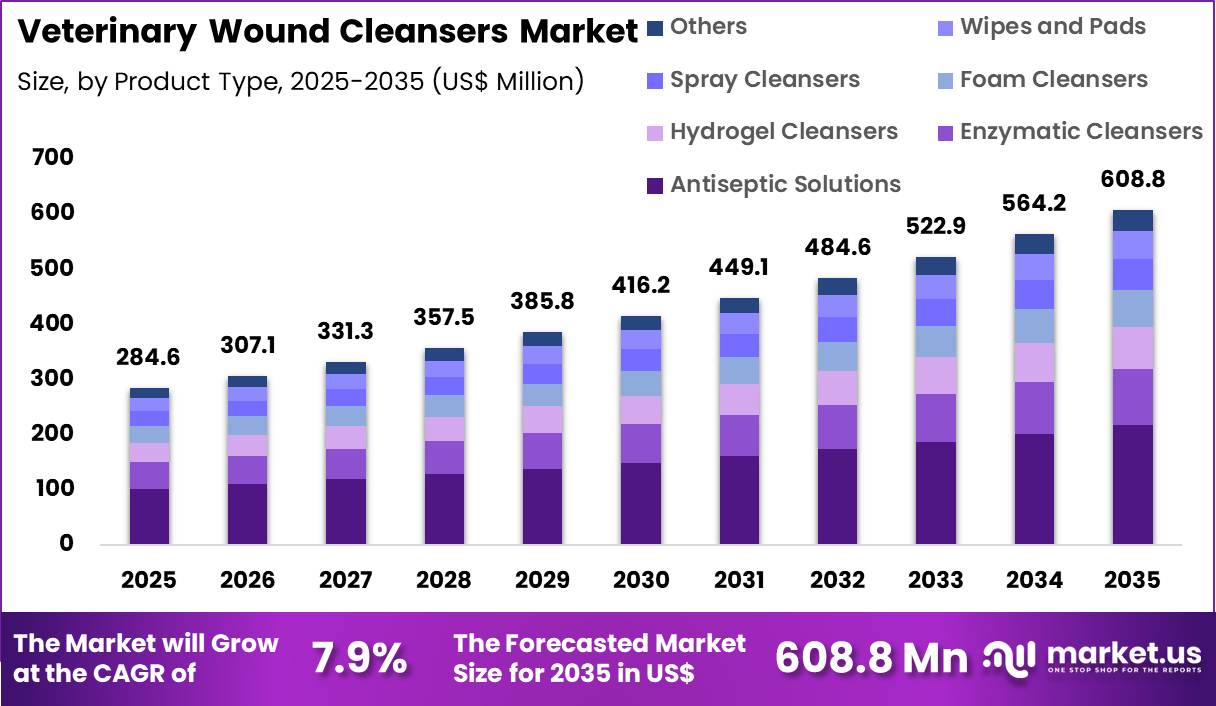
New York, NY – Nov 27 2026 – The Global Veterinary Wound Cleansers Market size is expected to be worth around US$ 608.8 Million by 2035 from US$ 284.6 Million in 2025, growing at a CAGR of 7.9% during the forecast period 2026-2035. In 2025, North America led the market, achieving over 42.6% share with a revenue of US$ 121.2 Million.
Veterinary wound cleansers are specialized solutions used to clean wounds, remove dirt, debris, and harmful microorganisms, and support the wound-healing process in animals. These products play an important role in veterinary healthcare by helping prevent wound infections and maintaining proper hygiene during wound management. They are widely used for treating cuts, abrasions, surgical wounds, burns, bites, and other skin injuries in companion animals and livestock.
The market includes various product types, such as antiseptic wound cleansers, saline-based solutions, antimicrobial cleansers, and chlorhexidine-based formulations. These products are available in different forms, including liquids, sprays, gels, and wipes, offering convenience for veterinary professionals and animal owners.
The growth of the veterinary wound cleansers market is primarily driven by increasing pet ownership, rising expenditure on animal healthcare, growing awareness of animal welfare, and the increasing prevalence of animal injuries and skin infections. Furthermore, advancements in veterinary wound care formulations and the expanding availability of specialized animal healthcare products are supporting market development.
Veterinary clinics, animal hospitals, veterinary pharmacies, and animal care facilities represent key end users. With increasing emphasis on preventive veterinary care and effective wound management, demand for safe and efficient veterinary wound cleansing solutions is expected to increase over the coming years.
Key Takeaways
- In 2025, the market was valued at US$ 284.6 Million and is projected to grow at a CAGR of 7.9%, reaching US$ 608.8 Million by 2035.
- Based on product type, the market is segmented into antiseptic solutions, enzymatic cleansers, hydrogel cleansers, foam cleansers, spray cleansers, wipes and pads, and others. Among these, antiseptic solutions dominated the market, accounting for a share of 35.8%.
- Based on animal type, the market is categorized into companion animals, livestock animals, and equine. Among these, companion animals accounted for the largest market share of 58.4%.
- Based on application, the market is segmented into surgical wounds, traumatic wounds, chronic wounds, burns, post-operative care, dermatological conditions, and others. The surgical wounds segment dominated the market, capturing a revenue share of 42.7%.
- Based on end user, the market is divided into veterinary hospitals, veterinary clinics, animal shelters, and others. Among these, veterinary hospitals held the leading position, accounting for 48.3% of the total market revenue.
- Regionally, North America dominated the veterinary wound cleansers market, accounting for the largest market share of 42.6%.
Key Market Segments
- Product Type Analysis: Antiseptic solutions dominated the product type segment, accounting for 35.8% of the market share. Their strong antimicrobial properties and effectiveness in reducing infection risks make them widely preferred in veterinary wound care. Increasing surgical procedures, animal injuries, and awareness of infection prevention are expected to support segment growth.
- Animal Type Analysis: Companion animals dominated the animal type segment, accounting for 58.4% of the market share. Rising pet ownership, increasing expenditure on pet healthcare, and growing awareness of animal welfare are driving demand. The increasing incidence of injuries, surgical procedures, and skin conditions among dogs and cats is further supporting segment expansion.
- Application Analysis: Surgical wounds dominated the application segment, accounting for 42.7% of the market share. Increasing veterinary surgical procedures, including sterilization, orthopedic operations, and soft tissue surgeries, are driving demand for effective wound cleansing solutions. Growing emphasis on post-operative infection prevention and improved recovery outcomes is further supporting segment growth.
- End-User Analysis: Veterinary hospitals dominated the end-user segment, accounting for 48.3% of the market share. Their advanced medical infrastructure, availability of skilled veterinary professionals, and ability to manage complex injuries and surgical procedures drive product demand. Increasing investments in veterinary healthcare facilities and rising demand for specialized animal care are further supporting growth.
Regional Analysis
North America Veterinary Wound Cleansers Market
North America dominated the veterinary wound cleansers market, accounting for 42.6% of the market share in 2025. The region’s leadership can be attributed to its advanced veterinary healthcare infrastructure, rising pet healthcare expenditure, and growing emphasis on infection prevention. Increasing surgical procedures and trauma cases among companion animals have strengthened demand for effective wound cleansing solutions.
Veterinary hospitals and specialty clinics are increasingly adopting advanced wound management protocols and antiseptic formulations to improve healing outcomes. Furthermore, rising awareness of animal welfare, antimicrobial stewardship, and post-operative care is expected to support regional market growth. Continuous product innovation and the availability of specialized veterinary treatments are further strengthening market development.
Asia Pacific Veterinary Wound Cleansers Market
Asia Pacific is expected to register the highest CAGR during the forecast period, driven by increasing animal ownership, expanding veterinary healthcare infrastructure, and growing livestock populations. Countries such as China, India, and Australia are witnessing rising demand for veterinary healthcare services and effective wound management solutions.
The expansion of veterinary clinics, improved access to animal healthcare in rural areas, and increasing awareness of animal hygiene are supporting product adoption. Additionally, growing expenditure on companion animal healthcare and the need to maintain livestock health and productivity are creating new growth opportunities. The introduction of affordable and advanced wound cleansing formulations is further expected to accelerate regional market expansion.
Emerging Trends
- Growing Demand for Tissue-Friendly Wound Cleansing Solutions: The demand for wound cleansers that remove bacteria and debris without damaging healthy tissue is increasing. Sterile saline, dilute chlorhexidine, and other suitable antiseptic formulations are being used in veterinary wound management to support effective cleaning and wound healing.
- Increasing Adoption of Hypochlorous Acid-Based Wound Cleansers: Hypochlorous acid-based formulations are gaining attention as veterinary wound care solutions because of their antimicrobial properties and potential applications in treating cuts, abrasions, ulcers, burns, and surgical wounds. Recent clinical research has also evaluated their effectiveness in managing dog bite wounds.
- Rising Focus on Antimicrobial Resistance Prevention: Veterinary professionals are increasingly focusing on reducing unnecessary antibiotic use during wound treatment. Antiseptic wound cleansers are being considered as part of local wound management, helping reduce bacterial contamination while supporting responsible antimicrobial use.
- Development of Advanced Wound Care Formulations: The development of specialized wound care products, including medical-grade honey, silver-based dressings, and combination wound care materials, is receiving attention. These products are being evaluated for their ability to manage wound moisture, remove debris, and support different stages of tissue recovery.
- Increasing Attention to Species-Specific Wound Care: Veterinary wound management is increasingly considering differences between animal species and wound types. Dogs, cats, and horses may require different cleansing approaches depending on wound location, tissue damage, contamination, and healing conditions, encouraging demand for specialized veterinary care products.
Use Cases
- Cleaning Cuts, Scratches, and Abrasions: Veterinary wound cleansers are used to remove dirt, bacteria, and other contaminants from minor skin injuries in animals. These products help prepare the affected area for further treatment and reduce the risk of wound complications.
- Post-Surgical Wound Management: Wound cleansing solutions are used during veterinary surgical procedures and follow-up care to remove contaminants from surgical sites. Appropriate cleansing supports wound assessment, hygiene, and the management of surgical incisions during the recovery period.
- Management of Animal Bite Wounds: Dog and cat bite injuries frequently require thorough wound irrigation because bacteria and damaged tissue can be present beneath the skin. Veterinary cleansers are used during wound preparation to reduce contamination before additional medical treatment.
- Treatment of Chronic Wounds and Skin Ulcers: Veterinary wound cleansers are used to remove accumulated discharge, debris, and surface contaminants from chronic wounds and ulcers. Regular wound cleaning forms part of wound management, particularly when combined with suitable dressings and veterinary monitoring.
- Equine and Livestock Wound Care: Wound cleansing products are used for treating injuries in horses and other farm animals, including cuts, abrasions, and contaminated wounds. Irrigation helps remove foreign materials and prepares affected tissues for further veterinary treatment.
Frequently Asked Questions About Veterinary Wound Cleansers
- What are the common ingredients used in veterinary wound cleansers?
Common ingredients include sterile saline, chlorhexidine, povidone-iodine, and hypochlorous acid. Their suitability depends on concentration, formulation, wound condition, and animal species. Veterinary professionals select products according to tissue safety and cleansing requirements. - Are veterinary wound cleansers safe for dogs and cats?
Veterinary wound cleansers can be used safely in dogs and cats when appropriate formulations and instructions are followed. However, certain antiseptics and concentrated solutions can damage healing tissues, making veterinary guidance important before application. - What is the difference between saline and antiseptic wound cleansers?
Saline primarily removes dirt, discharge, and debris through physical irrigation, whereas antiseptic cleansers also provide antimicrobial activity. The selection depends on wound contamination, tissue condition, and the veterinarian’s treatment plan. - What are the major factors driving the veterinary wound cleansers market?
Market growth is supported by increasing attention to animal healthcare, rising veterinary treatment requirements, improved wound management practices, and demand for effective infection prevention. Growing awareness of animal hygiene also supports product adoption. - Which distribution channels are important in the veterinary wound cleansers market?
Veterinary hospitals, animal clinics, veterinary pharmacies, online retailers, and agricultural supply stores are important distribution channels. These channels provide access to wound cleansing products for veterinary professionals, livestock owners, and companion animal caregivers. - What opportunities are emerging in the veterinary wound cleansers market?
Opportunities are emerging through the development of advanced antiseptic formulations, species-specific products, and convenient ready-to-use solutions. Increasing attention to antimicrobial stewardship and specialized wound management is also creating opportunities for product innovation. - What is the role of veterinary hospitals in the veterinary wound cleansers market?
Veterinary hospitals play an important role by using wound cleansing products during surgical procedures, emergency treatments, injury management, and postoperative care. Their product requirements are influenced by treatment volumes, clinical protocols, and wound management standards. - What is the future outlook for the veterinary wound cleansers market?
The market outlook is supported by continued development of animal healthcare services and improved wound management practices. Innovation in tissue-compatible antiseptics and specialized cleansing formulations is expected to create additional opportunities across companion animal and livestock healthcare.
Conclusion
The veterinary wound cleansers market is expected to witness steady growth, supported by increasing pet ownership, rising animal healthcare expenditure, and growing awareness of effective wound management.
The market, valued at US$ 284.6 million in 2025, is projected to reach US$ 608.8 million by 2035, growing at a CAGR of 7.9%. Increasing demand for antiseptic solutions, rising surgical procedures, and the growing focus on companion animal healthcare are supporting market expansion.
Furthermore, advancements in tissue-friendly formulations, hypochlorous acid-based products, and specialized veterinary wound care solutions are expected to create new opportunities for market participants.
Discuss your needs with our analyst
Please share your requirements with more details so our analyst can check if they can solve your problem(s)