
Overview
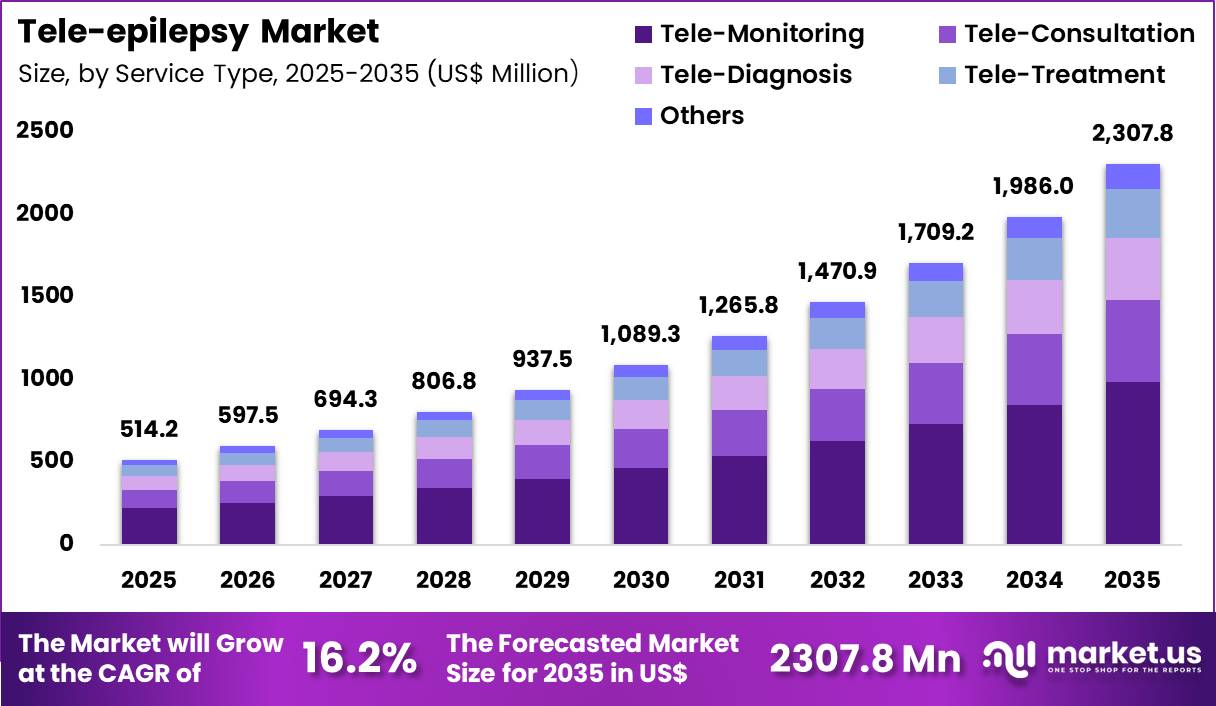
New York, NY – Nov 24 2026 – The Global Tele-epilepsy Market size is expected to be worth around US$ 2307.8 Million by 2035 from US$ 514.2 Million in 2025, growing at a CAGR of 16.2% during the forecast period 2026-2035. In 2025, North America led the market, achieving over 44.8% share with a revenue of US$ 230.4 Million.
Tele-epilepsy is a specialized telemedicine service that enables patients with epilepsy to receive medical consultations, diagnosis support, treatment guidance, and follow-up care remotely through digital communication platforms. It connects patients with neurologists and epilepsy specialists without requiring frequent hospital visits.
The growing adoption of tele-epilepsy services is improving access to neurological care, particularly for individuals living in rural, remote, and underserved areas. Through virtual consultations, healthcare professionals can review seizure history, assess symptoms, monitor treatment progress, evaluate medication effectiveness, and provide guidance on seizure management.
Tele-epilepsy also supports continuous patient monitoring, medication adherence, caregiver education, and timely clinical intervention. Digital healthcare technologies, including video consultations, electronic health records, and remote monitoring solutions, are further strengthening the delivery of epilepsy care.
The increasing prevalence of epilepsy, shortage of specialized neurological healthcare professionals in certain regions, and growing acceptance of telehealth services are contributing to the adoption of tele-epilepsy solutions.
Although certain diagnostic procedures, such as electroencephalography (EEG), and emergency assessments may require in-person care, tele-epilepsy offers an effective complementary approach to conventional healthcare services. It is expected to play an increasingly important role in making epilepsy management more accessible, convenient, and patient-centered.
Key Takeaways
- In 2025, the global tele-epilepsy market was valued at US$ 514.2 Million and is projected to grow at a CAGR of 16.2%, reaching US$ 2,307.8 Million by 2035.
- Based on service type, the market is segmented into tele-consultation, tele-diagnosis, tele-monitoring, tele-treatment, and others. Among these, tele-monitoring dominated the market, accounting for a share of 42.7%.
- By application, the market is categorized into seizure detection and monitoring, medication management, treatment adherence, patient education and support, and others. Seizure detection and monitoring emerged as the leading application segment, capturing 48.3% of the market share.
- Based on end users, the market is divided into hospitals and clinics, neurology centers, home care settings, long-term care facilities, and research and academic institutes. Hospitals and clinics represented the dominant segment, accounting for 41.5% of the total market revenue.
- By age group, the market is classified into pediatric, adult, and geriatric segments, with the adult segment leading the market with a revenue share of 53.7%.
- Regionally, North America dominated the global tele-epilepsy market, accounting for the largest market share of 44.8%.
Key Market Segments
- Service Type Analysis: Tele-monitoring dominated the service type segment, accounting for 42.7% of the market share. Its leadership is driven by the growing need for continuous seizure tracking and remote patient supervision. Increasing adoption of wearable EEG devices, mobile health applications, and AI-enabled monitoring solutions is further supporting segment growth by improving seizure detection, treatment assessment, and patient care.
- Application Analysis: Seizure detection and monitoring emerged as the leading application segment, accounting for 48.3% of the market share. Its dominance is attributed to the growing need for timely seizure identification and continuous patient assessment. Increasing adoption of connected monitoring devices and digital healthcare platforms is supporting real-time data collection, improved treatment management, and better coordination between patients, caregivers, and healthcare professionals.
- End-User Analysis: Hospitals and clinics represented the dominant end-user segment, accounting for 41.5% of the market share. Their leadership is supported by established healthcare infrastructure, access to neurological specialists, and increasing integration of telemedicine solutions into clinical workflows. Growing investments in digital healthcare platforms, electronic medical records, and remote patient monitoring are further strengthening adoption across these facilities.
- Age Group Analysis: The adult segment dominated the age group category, accounting for 53.7% of the market share. This dominance is supported by the substantial patient population requiring regular epilepsy management and treatment monitoring. Increasing awareness, greater adoption of wearable health technologies, and rising utilization of telemedicine platforms among working-age individuals are further contributing to segment expansion.
Regional Analysis
North America Dominates the Tele-Epilepsy Market
North America dominated the tele-epilepsy market in 2025, accounting for 44.8% of the total market share. This leadership is attributed to the well-established healthcare infrastructure, increasing adoption of tele-neurology services, and growing demand for remote epilepsy management. The United States is witnessing rising integration of virtual consultations, remote EEG interpretation, and digital seizure monitoring solutions.
Additionally, increasing awareness of epilepsy, investments in digital healthcare infrastructure, and favorable telehealth reimbursement policies are supporting regional market growth. The availability of advanced technologies and specialized neurological care services is further strengthening the adoption of tele-epilepsy solutions across the region.
Asia Pacific Expected to Register the Highest CAGR
The Asia Pacific tele-epilepsy market is expected to register the highest CAGR during the forecast period. Growth is driven by increasing healthcare digitalization, rising smartphone penetration, and limited access to neurologists in several developing countries.
Government initiatives promoting telemedicine, expanding internet connectivity, and growing investments by digital healthcare providers are further accelerating adoption. Countries such as India, China, and Indonesia are increasingly implementing remote consultation and seizure monitoring solutions to improve access to neurological care.
Emerging Trends
- Increasing Adoption of Virtual Neurology Consultations: Virtual consultations are becoming an important part of epilepsy management. Neurologists can use video consultations to review seizure history, assess treatment progress, discuss medication-related concerns, and provide follow-up care. This approach is particularly useful for patients living in rural and remote areas where specialist availability is limited. The American Epilepsy Society supports maintaining telehealth as an option for epilepsy patients.
- Integration of Artificial Intelligence and Remote Monitoring Technologies: Artificial intelligence (AI) is increasingly being explored for analysing seizure-related information collected through wearable devices and digital health platforms. These technologies can help identify unusual activity patterns, support seizure monitoring, and provide additional information to healthcare professionals. The integration of AI with remote monitoring solutions is creating opportunities for more personalised epilepsy management.
- Growing Use of Wearable Seizure Detection Devices: Wearable technologies, including smartwatches and specialised seizure-monitoring devices, are gaining attention in epilepsy care. These devices can monitor selected physiological signals and detect certain seizure-related movements. The collected information can help patients, caregivers, and doctors better understand seizure frequency and patterns, supporting treatment decisions and ongoing monitoring.
- Expansion of Remote EEG and Diagnostic Services: Remote electroencephalogram (EEG) services are gaining importance as healthcare providers explore ways to improve access to neurological diagnostic facilities. Home-based and ambulatory EEG technologies, combined with remote specialist interpretation, can support epilepsy assessment and follow-up. These services may reduce geographical barriers and improve access to specialised neurological investigations.
- Development of Integrated and Hybrid Epilepsy Care Models: Healthcare providers are increasingly exploring hybrid care models that combine virtual consultations with physical hospital visits. Routine follow-ups and medication reviews can be conducted remotely, while complex diagnostic examinations and procedures can be performed in person. This approach supports continuity of care while maintaining access to specialised medical examinations when required.
Use Cases
- Remote Epilepsy Consultation and Follow-Up: Tele-epilepsy platforms enable patients to consult neurologists through video calls, telephone consultations, and other digital communication channels. These services are particularly useful for routine follow-ups, treatment discussions, and reviewing changes in seizure frequency. Patients can receive medical guidance without regularly travelling to specialised healthcare facilities.
- Medication Management and Treatment Monitoring: Remote consultations allow neurologists to review antiseizure medication use, discuss possible side effects, and evaluate treatment progress. Patients can share information about missed doses, seizure recurrence, and medication-related concerns. This application supports ongoing treatment management and helps healthcare professionals identify patients who may require further clinical evaluation.
- Remote EEG Assessment and Neurological Evaluation: Tele-epilepsy services can support the remote review and interpretation of EEG recordings. Patients can undergo EEG testing at suitable diagnostic facilities or through available home-based monitoring arrangements, while specialists can review the recorded information remotely. This model can improve access to neurological expertise, particularly in underserved locations.
- Seizure Monitoring and Caregiver Support: Digital seizure diaries, wearable devices, and remote monitoring platforms can help patients and caregivers record seizure episodes and related information. Healthcare professionals can review these records during virtual consultations to understand seizure patterns, assess treatment response, and provide guidance on appropriate patient care.
- Post-Surgical Follow-Up and Specialised Epilepsy Care: Tele-epilepsy services can be used to monitor patients following epilepsy-related surgery and provide continuing clinical support. Virtual appointments allow specialists to review recovery progress, discuss medication requirements, and address patient concerns. These services can reduce unnecessary hospital visits while allowing patients to receive specialist guidance.
Frequently Asked Questions About Tele-epilepsy
- How does tele-epilepsy work?
Tele-epilepsy works through video consultations, telephone calls, digital health platforms, and remote monitoring tools. Patients share their medical history, seizure records, and treatment information with neurologists, who provide clinical guidance and recommend further examinations when necessary. - What are the major benefits of tele-epilepsy?
The major benefits include improved access to neurological specialists, reduced travel requirements, convenient follow-up consultations, better treatment continuity, and improved communication between patients and healthcare professionals. It is particularly beneficial for individuals living in remote areas. - Can epilepsy be diagnosed through telemedicine?
Telemedicine can support epilepsy diagnosis through medical history reviews, symptom discussions, and assessment of available medical records. However, EEG testing, physical examinations, and additional investigations may be required to establish an accurate diagnosis. - Who can benefit from tele-epilepsy services?
People with epilepsy requiring routine consultations, medication reviews, treatment monitoring, or post-surgical follow-ups can benefit from tele-epilepsy. Caregivers and patients living in rural areas can also benefit from improved access to neurological specialists. - What are the major factors driving the tele-epilepsy market?
The market is driven by increasing demand for remote healthcare services, limited availability of neurological specialists, rising adoption of digital health technologies, growing awareness of epilepsy management, and the need for convenient long-term patient monitoring. - What are the major technologies used in the tele-epilepsy market?
Major technologies include video consultation platforms, remote EEG systems, wearable seizure detection devices, mobile health applications, cloud-based patient management systems, and artificial intelligence tools. These technologies support remote consultations, clinical information sharing, and continuous patient monitoring. - What challenges are affecting the growth of the tele-epilepsy market?
Market growth is challenged by limited internet connectivity, data privacy concerns, inadequate digital infrastructure, reimbursement limitations, and difficulties conducting physical examinations remotely. These factors can restrict adoption, particularly in rural and economically underserved regions. - What is the future outlook of the tele-epilepsy market?
The market is expected to benefit from increasing digital healthcare adoption, advancements in wearable monitoring devices, AI-based seizure analysis, and expanding virtual neurology services. Greater integration of remote and hospital-based care may further support market development.
Conclusion
The global tele-epilepsy market is expected to witness significant growth, driven by increasing adoption of telehealth services, rising demand for remote neurological care, and advancements in digital monitoring technologies. Growing use of wearable seizure detection devices, AI-enabled monitoring solutions, and virtual consultations is improving patient access and treatment management.
North America currently leads the market, supported by advanced healthcare infrastructure and established telemedicine services, while Asia Pacific is expected to experience the fastest growth due to expanding digital healthcare initiatives and limited specialist availability. Overall, continuous technological advancements and increasing acceptance of remote healthcare are expected to create new market opportunities.
Discuss your needs with our analyst
Please share your requirements with more details so our analyst can check if they can solve your problem(s)