
Overview
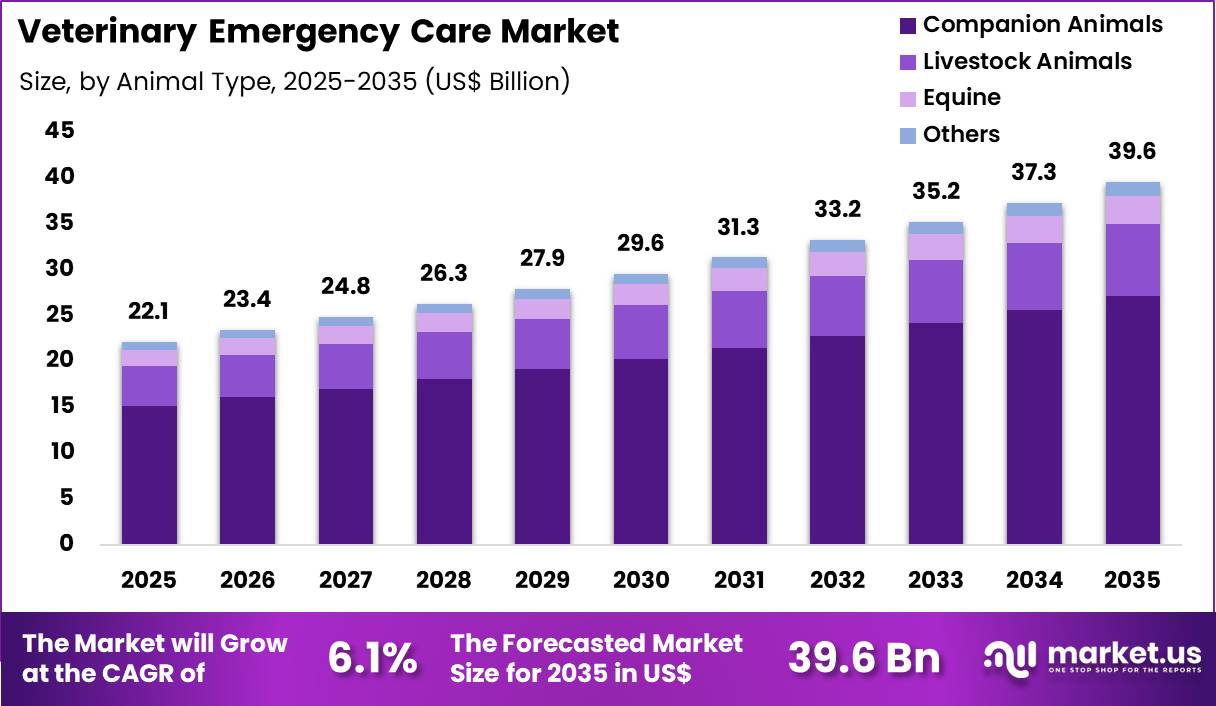
New York, NY – Nov 27 2026 – Global Veterinary Emergency Care Market size is expected to be worth around US$ 39.6 Billion by 2035 from US$ 22.1 Billion in 2025, growing at a CAGR of 6.0% during the forecast period 2026-2035. In 2025, North America led the market, achieving over 38.4% share with a revenue of US$ 8.5 Billion.
Veterinary emergency care refers to immediate medical attention provided to animals experiencing sudden illnesses, severe injuries, accidents, or life-threatening health conditions. It plays an essential role in ensuring animal health and welfare by enabling timely diagnosis, treatment, and stabilization during critical situations.
Emergency veterinary services generally include trauma management, emergency surgery, poisoning treatment, respiratory distress management, intensive care, accident-related injuries, and urgent diagnostic procedures. These services are supported by trained veterinary professionals, advanced medical equipment, diagnostic facilities, and round-the-clock care capabilities.
The demand for veterinary emergency care is increasing due to rising pet ownership, growing awareness of animal health, increased expenditure on veterinary services, and improvements in veterinary medical technologies. Furthermore, the expansion of specialized veterinary hospitals, emergency clinics, and 24-hour animal care facilities is strengthening access to critical veterinary services.
Technological advancements in diagnostic imaging, laboratory testing, telemedicine, and minimally invasive surgical procedures are also improving treatment efficiency and patient outcomes. Veterinary emergency care is expected to remain an important segment of the animal healthcare industry, supported by increasing attention to preventive healthcare, animal welfare, and timely medical intervention.
Key Takeaways
- In 2025, the Veterinary Emergency Care Market generated revenue of US$ 22.1 Billion and is projected to grow at a CAGR of 6.0%, reaching US$ 39.6 Billion by 2035.
- Based on service type, the market is segmented into emergency consultation, trauma and injury care, poisoning and toxicity management, critical care and monitoring, surgical emergency services, diagnostic imaging, and others. Among these, emergency consultation dominated the market, accounting for a share of 28.5%.
- Based on animal type, the market is categorized into companion animals, livestock animals, equine, and others. Companion animals accounted for the largest market share of 68.6%.
- Based on end user, the market is segmented into pet owners, veterinary hospitals, animal shelters, and others. Among these, pet owners emerged as the leading segment, capturing a revenue share of 58.3%.
- Regionally, North America dominated the Veterinary Emergency Care Market, accounting for the largest market share of 38.4%.
Key Market Segments
- Service Type Analysis: Emergency consultation held the dominant position in the veterinary emergency care market, accounting for 28.5% of the service type segment. Its growth is driven by increasing demand for immediate veterinary assistance, early diagnosis, and timely treatment. Expanding 24/7 veterinary services and teleconsultation facilities are further supporting segment growth.
- Animal Type Analysis: Companion animals dominated the veterinary emergency care market, accounting for 68.6% of the animal type segment. This dominance is attributed to rising pet ownership, increasing emotional attachment, and higher spending on pet healthcare. Growing awareness of animal health and demand for immediate medical treatment are expected to support segment expansion.
- End-User Analysis: Pet owners dominated the veterinary emergency care market, accounting for 58.3% of the end-user segment. This growth is supported by increasing pet ownership, rising disposable incomes, and greater willingness to spend on emergency veterinary treatment. Growing pet insurance adoption and awareness of animal healthcare are further strengthening segment demand.
Regional Analysis
North America Veterinary Emergency Care Market
North America dominated the Veterinary Emergency Care Market in 2025, accounting for 38.4% of the global market share. This leadership is attributed to the well-established veterinary healthcare infrastructure, widespread availability of 24/7 animal hospitals, and increasing expenditure on emergency pet care.
Rising pet ownership and growing awareness of animal health have encouraged owners to seek immediate medical attention for injuries, poisoning, and acute illnesses. Furthermore, veterinary hospitals are expanding specialized emergency and critical care units equipped with advanced diagnostic imaging, surgical facilities, and intensive monitoring systems.
The growing presence of multi-location veterinary hospital networks, adoption of rapid diagnostic technologies, and increasing availability of specialized veterinary professionals are further strengthening regional market growth. Additionally, rising pet insurance adoption and willingness to spend on advanced veterinary treatments are supporting demand for emergency care services across the United States and Canada.
Asia Pacific Veterinary Emergency Care Market
The Asia Pacific region is expected to register the highest CAGR during the forecast period, driven by increasing pet ownership, improving veterinary healthcare infrastructure, and growing awareness of animal welfare. Countries such as China, India, Japan, and Australia are witnessing increased demand for professional veterinary services.
Rising urbanization and changing lifestyles are encouraging greater expenditure on companion animal healthcare. Furthermore, veterinary hospitals and private clinic networks are investing in advanced diagnostic equipment, emergency treatment facilities, and skilled veterinary professionals. The gradual expansion of 24-hour veterinary services and specialized critical care units is improving access to urgent medical assistance.
Additionally, digital veterinary consultation platforms and emergency training programs are supporting faster diagnosis and treatment. These developments are expected to create significant growth opportunities for the veterinary emergency care market across the Asia Pacific region.
Emerging Trends
- Growing Adoption of Veterinary Teletriage Services: Veterinary hospitals are increasingly using teletriage services to assess animal health conditions through phone calls, video consultations, and digital communication. These services help veterinary professionals identify urgent cases, guide pet owners, and determine whether immediate hospital treatment is required.
- Increasing Use of Advanced Diagnostic Equipment: Veterinary emergency facilities are adopting advanced diagnostic technologies, including digital X-rays, ultrasound systems, blood gas analyzers, and multiparameter patient monitors. These technologies support faster identification of internal injuries, respiratory problems, cardiac conditions, and other critical health complications.
- Rising Demand for Specialized Emergency and Critical Care Units: Veterinary hospitals are expanding specialized treatment facilities for animals requiring intensive medical attention. These units provide services such as oxygen therapy, continuous vital-sign monitoring, emergency surgery, and intensive care, particularly for animals with severe injuries or life-threatening conditions.
- Integration of Remote Patient Monitoring Technologies: Remote monitoring technologies are creating opportunities for continuous observation of animals after emergency treatment. Wearable devices and connected monitoring systems can help veterinarians track vital signs, blood glucose levels, and other health indicators during recovery and follow-up care.
- Growing Focus on Veterinary Workforce and Emergency Care Capacity: Veterinary hospitals are focusing on improving staffing, specialist availability, and emergency service capacity. According to the Association of American Veterinary Medical Colleges (AAVMC), increasing demand and limited specialist training capacity are contributing to workforce shortages, creating a need for improved clinical resources.
Use Cases
- Emergency Treatment for Road Accidents and Physical Injuries: Veterinary emergency services are used to treat animals involved in road accidents, falls, animal attacks, and other traumatic incidents. Treatment may include wound management, fracture stabilization, bleeding control, pain management, and emergency surgery to prevent further complications.
- Management of Poisoning and Toxic Substance Exposure: Emergency veterinary care is essential when animals accidentally consume toxic foods, chemicals, medicines, pesticides, or other harmful substances. Veterinarians assess the exposure, identify possible complications, and provide appropriate treatment to reduce toxicity and protect vital organ functions.
- Treatment of Respiratory and Cardiac Emergencies: Animals experiencing breathing difficulties, airway blockage, cardiac abnormalities, or cardiopulmonary arrest require immediate veterinary attention. Emergency treatment may involve oxygen support, airway management, cardiovascular monitoring, and resuscitation procedures to stabilize the animal’s condition.
- Emergency Management of Heatstroke and Severe Dehydration: Veterinary emergency services are used to manage animals affected by extreme temperatures, heatstroke, and serious fluid loss. Treatment may involve controlled cooling, intravenous fluid administration, temperature monitoring, and assessment of organ damage to reduce the risk of serious complications.
- Emergency Care for Difficult Births and Reproductive Complications: Veterinary emergency facilities provide assistance to animals experiencing difficult labor, birth complications, and other urgent reproductive conditions. Services may include maternal stabilization, fetal assessment, assisted delivery, and emergency cesarean procedures when medically required.
Frequently Asked Questions About Veterinary Emergency Care
- What are the common conditions requiring veterinary emergency care?
Common conditions include road accident injuries, poisoning, severe bleeding, heatstroke, respiratory distress, seizures, fractures, cardiac emergencies, and difficult childbirth. These conditions require prompt veterinary assessment to reduce complications and improve animal survival. - Which animals require veterinary emergency care?
Veterinary emergency care is provided to different animal categories, including dogs, cats, horses, cattle, sheep, goats, and other domestic animals. Treatment requirements vary according to species, age, medical condition, injury severity, and available veterinary facilities. - What services are included in veterinary emergency care?
Veterinary emergency services generally include emergency diagnosis, trauma management, intensive care, oxygen therapy, fluid administration, emergency surgery, poisoning treatment, and cardiovascular stabilization. Additional services may include diagnostic imaging, laboratory testing, hospitalization, and continuous patient monitoring. - What are the major factors driving the veterinary emergency care market?
The market is supported by increasing demand for animal healthcare, rising veterinary service utilization, greater awareness of pet health, and growing requirements for specialized treatment. Limited primary care capacity also contributes to emergency and specialist referrals. - How is technology influencing the veterinary emergency care market?
Technology is improving emergency diagnosis and patient management through digital imaging, advanced monitoring equipment, teletriage, and remote consultations. These developments support faster clinical assessments, better communication between veterinary professionals, and improved access to specialized medical guidance. - What is the future outlook for the veterinary emergency care market?
The market is expected to benefit from continued improvements in veterinary diagnostics, specialized treatment facilities, digital consultation services, and emergency patient monitoring. Investments in veterinary infrastructure and professional training may further strengthen emergency healthcare service availability. - Which healthcare facilities provide veterinary emergency care?
Veterinary emergency care is provided through dedicated emergency hospitals, multispecialty veterinary hospitals, animal healthcare centers, university veterinary hospitals, and selected general veterinary clinics. These facilities offer different levels of emergency treatment depending on their equipment and specialist availability.
Conclusion
The Veterinary Emergency Care Market is witnessing steady growth, supported by increasing pet ownership, rising animal healthcare expenditure, and growing demand for immediate medical services. In 2025, the market generated USD 22.1 billion and is projected to reach USD 39.6 billion by 2035, growing at a CAGR of 6.0%. Emergency consultation and companion animals represent the leading segments.
North America currently dominates, while Asia Pacific is expected to experience the fastest growth. Technological advancements, specialized critical care facilities, teletriage, and remote monitoring are expected to create further opportunities for market expansion and improved veterinary healthcare services.
Discuss your needs with our analyst
Please share your requirements with more details so our analyst can check if they can solve your problem(s)