


Overview
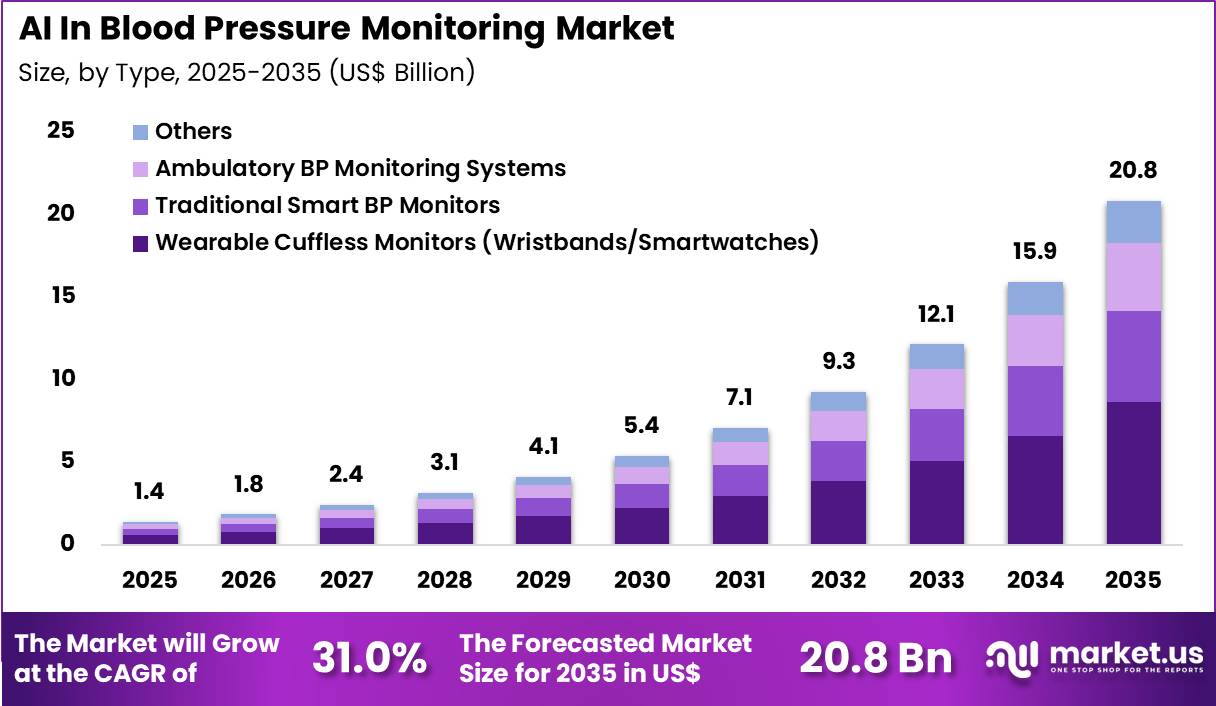
New York, NY – Nov 19 2026 – The Global AI In Blood Pressure Monitoring Market size is expected to be worth around US$ 20.8 Billion by 2035 from US$ 1.4 Billion in 2025, growing at a CAGR of 31.0% during the forecast period 2026-2035. In 2025, North America led the market, achieving over 48.6% share with a revenue of US$ 0.7 Billion.
Artificial Intelligence (AI) in blood pressure monitoring is emerging as an important advancement in the digital healthcare industry. AI-powered technologies are transforming traditional blood pressure measurement by enabling continuous monitoring, real-time data analysis, early risk detection, and personalized health insights. These solutions integrate machine learning algorithms, wearable devices, smart blood pressure monitors, and mobile health applications to improve the accuracy and efficiency of cardiovascular health management.
AI-based blood pressure monitoring systems can analyze patient data, identify abnormal blood pressure patterns, and support the early detection of hypertension-related risks. These technologies also enable remote patient monitoring, allowing healthcare professionals to track blood pressure trends and make informed treatment decisions. The integration of AI with connected healthcare devices is further supporting preventive healthcare, reducing the need for frequent hospital visits, and improving patient engagement.
The growing prevalence of hypertension, increasing adoption of wearable healthcare devices, rising demand for remote patient monitoring, and advancements in digital health technologies are contributing to market development. Additionally, the increasing focus on personalized healthcare and preventive disease management is creating new opportunities for technology providers and healthcare organizations.
However, concerns related to data privacy, device accuracy, regulatory compliance, and integration with existing healthcare systems remain important challenges. Overall, AI in blood pressure monitoring is expected to play a significant role in advancing accessible, data-driven, and personalized cardiovascular care.
Key Takeaways
- In 2025, the AI in Blood Pressure Monitoring Market was valued at US$ 1.4 Billion, registering a CAGR of 31.0%, and is projected to reach US$ 20.8 Billion by 2035.
- By type, the market is segmented into AI-powered digital monitors (oscillometric), wearable cuffless monitors (wristbands/smartwatches), non-contact/continuous monitoring systems, AI-enhanced photoplethysmography (PPG) apps, and others. Among these, wearable cuffless monitors (wristbands/smartwatches) dominated the market, accounting for a share of 41.6%.
- Based on technology, the market is categorized into deep learning (DL) and neural networks, machine learning (ML) models, natural language processing (NLP), and others. The machine learning (ML) models segment held the leading share of 56.1%.
- By application, the market is classified into hypertension management, cardiovascular disease prediction, remote patient monitoring, fitness and wellness, and others. The hypertension management segment dominated the market, capturing a revenue share of 37.6%.
- Based on end use, the market is divided into hospitals and acute care, home care settings/patients (consumers), clinics and ambulatory care, and others. The hospitals and acute care segment accounted for the largest revenue share of 45.2%.
- Regionally, North America dominated the AI in Blood Pressure Monitoring Market, accounting for a market share of 48.6%.
Key Market Segments
- Type Analysis: Wearable cuffless monitors dominated the type segment with a 41.6% market share, driven by the growing adoption of AI-integrated smartwatches and wristbands. These devices use optical sensors and AI algorithms to estimate blood pressure continuously without traditional cuffs. Increasing demand for convenient health monitoring and remote cardiovascular care is expected to support segment growth.
- Technology Analysis: Machine learning (ML) models dominated the technology segment with a 56.1% market share, owing to their ability to analyze physiological signals and predict blood pressure patterns. These algorithms process data such as heart rate variability and photoplethysmography signals. Growing adoption of AI-driven diagnostic solutions and remote patient monitoring is expected to drive segment expansion.
- Application Analysis: Hypertension management dominated the application segment with a 37.6% market share, supported by the increasing global prevalence of high blood pressure. AI-enabled monitoring solutions help healthcare professionals track blood pressure fluctuations, assess cardiovascular risks, and optimize treatment plans. Rising demand for continuous monitoring and effective chronic disease management is expected to support market growth.
- End-Use Analysis: Hospitals and acute care facilities dominated the end-use segment with a 45.2% market share, driven by high patient volumes and advanced healthcare infrastructure. AI-powered monitoring systems support continuous blood pressure assessment, early detection of abnormalities, and timely clinical interventions. Increasing hospital investments in digital healthcare technologies are expected to strengthen segment adoption.
Regional Analysis
North America is Leading the AI in Blood Pressure Monitoring Market
North America dominated the AI in Blood Pressure Monitoring Market in 2025, accounting for 48.6% of the global market share. Regional growth is driven by the increasing integration of artificial intelligence into wearable health devices, remote patient monitoring platforms, and digital healthcare systems.
The high prevalence of hypertension and cardiovascular diseases, particularly in the United States, is increasing demand for advanced monitoring solutions. Hospitals and telehealth providers are adopting AI-enabled technologies to support continuous blood pressure tracking, early risk detection, and personalized patient care.
Additionally, investments in healthcare infrastructure, technological innovation, and remote monitoring programs are strengthening regional market adoption. Collaborations between medical device manufacturers and technology companies are further supporting the development of intelligent cardiovascular monitoring solutions.
Asia Pacific is Expected to Register the Highest CAGR
Asia Pacific is expected to register the highest CAGR during the forecast period, driven by increasing healthcare digitalization, rising cardiovascular disease prevalence, and growing adoption of wearable monitoring devices. Countries such as China, India, Japan, and South Korea are investing in AI-based healthcare technologies and digital health infrastructure.
Increasing smartphone penetration, expanding telemedicine services, and government initiatives supporting remote patient monitoring are creating significant growth opportunities. Furthermore, technological advancements in connected medical devices and AI-powered predictive analytics are expected to accelerate regional market expansion.
Emerging Trends
- Integration of AI with Wearable Devices: AI is increasingly being integrated into smartwatches, fitness bands, smart rings and wearable sensors to support convenient blood pressure tracking. These devices use technologies such as photoplethysmography (PPG) and machine learning to estimate blood pressure from cardiovascular signals, reducing dependence on frequent cuff-based measurements.
- Development of Cuffless Blood Pressure Monitoring: Growing interest in non-invasive healthcare technologies is encouraging the development of cuffless blood pressure monitoring solutions. AI algorithms analyse pulse wave patterns and other physiological signals to estimate blood pressure, creating opportunities for more comfortable and frequent monitoring. However, clinical accuracy remains an important challenge.
- Increasing Use of Predictive Analytics: Machine learning algorithms are being developed to analyse historical blood pressure readings, heart rate patterns and other health information. These capabilities can help identify unusual changes, recognise potential hypertension risks and support earlier medical assessment through data-based health monitoring.
- Expansion of Remote Patient Monitoring: Healthcare providers are increasingly adopting digital monitoring solutions to observe patients outside hospitals. AI-enabled blood pressure systems can collect readings, identify concerning patterns and share information with healthcare professionals, supporting follow-up care and reducing the need for frequent in-person visits.
- Improvement in Personalised Blood Pressure Analysis: AI technologies are supporting more personalised health monitoring by analysing individual health records, age-related information, physiological patterns and previous readings. This approach can help healthcare professionals understand variations in blood pressure and make monitoring decisions based on individual patient requirements.
Use Cases
- Hypertension Detection and Risk Assessment: AI algorithms can analyse blood pressure history, heart rate patterns and other patient information to identify individuals who may have an increased risk of hypertension. These insights can support healthcare professionals in deciding whether further clinical assessment is required.
- Home-Based Blood Pressure Monitoring: AI-enabled monitoring systems can help individuals track blood pressure at home using connected digital devices. Readings can be stored and analysed automatically, allowing patients and healthcare providers to observe changes over time and support regular hypertension management.
- Hospital and Clinical Patient Monitoring: Hospitals can use AI-supported monitoring systems to analyse patient measurements and identify unusual blood pressure changes. These solutions can support clinical observation, improve information management and help medical professionals prioritise patients requiring additional attention.
- Remote Monitoring of Elderly Patients: Older adults and individuals with mobility limitations can benefit from connected blood pressure monitoring solutions. AI-based analysis can help caregivers and healthcare professionals review measurement patterns remotely and identify changes that may require medical evaluation.
- Clinical Research and Cardiovascular Studies: AI can be used in clinical research to analyse large volumes of blood pressure readings and related physiological information. Researchers can examine cardiovascular patterns, evaluate monitoring technologies and investigate the relationship between blood pressure variations and health outcomes.
Frequently Asked Questions About AI In Blood Pressure Monitoring
- What is AI in blood pressure monitoring?
AI in blood pressure monitoring refers to the use of artificial intelligence and machine learning algorithms to analyse physiological signals, interpret blood pressure readings, identify unusual patterns and support healthcare professionals in monitoring cardiovascular health. - How does AI help in blood pressure monitoring?
AI helps analyse blood pressure measurements, heart rate patterns and pulse signals. It can identify changes, organise patient information and generate alerts for unusual readings, supporting timely medical assessment and better monitoring practices. - Can AI measure blood pressure without a cuff?
Yes, certain AI-enabled technologies estimate blood pressure without traditional cuffs by analysing pulse wave signals and optical sensor data. However, their accuracy varies, and current clinical guidelines do not recommend cuffless devices for hypertension diagnosis or management. - What technologies are used in AI-based blood pressure monitoring?
Common technologies include machine learning, deep learning, photoplethysmography, wearable sensors, cloud computing and connected medical devices. These technologies help collect physiological information, analyse measurement patterns and support digital blood pressure monitoring applications. - What are the major factors driving the AI in blood pressure monitoring market?
The market is being supported by increasing hypertension cases, growing demand for remote patient monitoring, wider wearable device adoption, advancements in AI algorithms and the rising preference for convenient, non-invasive cardiovascular health monitoring solutions. - What are the major challenges in the AI in blood pressure monitoring market?
Major challenges include measurement accuracy, limited clinical validation, device calibration requirements, data privacy concerns and regulatory compliance. Variations in patient physiology and environmental conditions can also affect readings, creating barriers to widespread clinical adoption. - What is the future outlook for the AI in blood pressure monitoring market?
The market is expected to benefit from continued advancements in wearable sensors, machine learning and remote healthcare platforms. Improved clinical validation, reliable measurements and integration with healthcare systems will be important for supporting future adoption.
Conclusion
The AI in Blood Pressure Monitoring Market is expected to experience significant growth, supported by the increasing prevalence of hypertension, rising adoption of wearable devices, and growing demand for remote patient monitoring. Advancements in machine learning, predictive analytics, and cuffless monitoring technologies are creating new opportunities for improved cardiovascular health management.
North America currently leads the market, while Asia Pacific is expected to witness the fastest growth during the forecast period. However, device accuracy, clinical validation, data privacy, and regulatory requirements remain key challenges. Overall, continuous technological innovation and increasing healthcare digitalization are expected to support long-term market expansion.
Discuss your needs with our analyst
Please share your requirements with more details so our analyst can check if they can solve your problem(s)



