
Overview
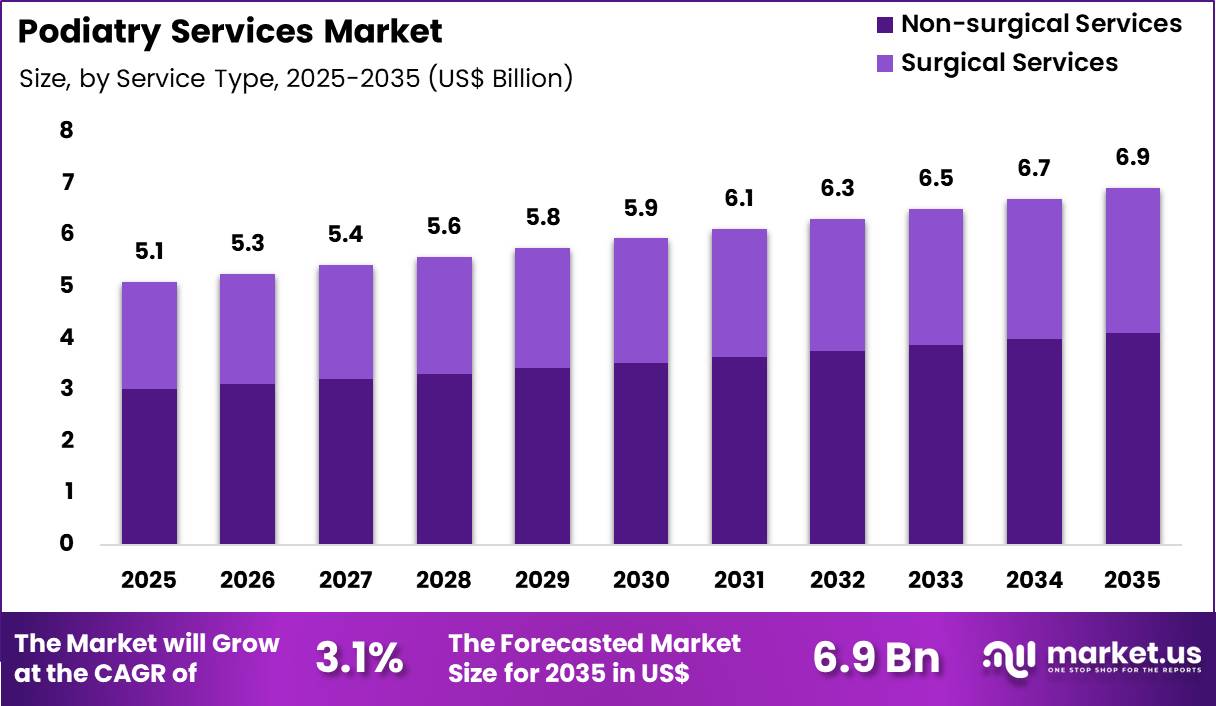
New York, NY – Nov 26 2026 – The Global Podiatry Services Market size is expected to be worth around US$ 6.9 Billion by 2035 from US$ 5.1 Billion in 2025, growing at a CAGR of 3.1% during the forecast period 2026-2035. In 2025, North America led the market, achieving over 38.6% share with a revenue of US$ 2.0 Billion.
Podiatry services refer to specialized medical care focused on the diagnosis, treatment, prevention, and management of conditions affecting the feet, ankles, and lower limbs. These services are provided by qualified podiatrists and foot care specialists to improve mobility, reduce pain, and maintain overall foot health. Common conditions treated through podiatry include bunions, corns, calluses, fungal infections, ingrown toenails, plantar fasciitis, diabetic foot complications, heel pain, and sports-related foot injuries.
Podiatry services include routine foot examinations, wound care, nail care, orthotic treatment, biomechanical assessments, minor surgical procedures, and diabetic foot management. Growing awareness of preventive healthcare, increasing cases of diabetes, an ageing population, and rising incidences of foot-related disorders are supporting the demand for professional podiatry services.
Technological advancements, including digital foot scanning, advanced diagnostic tools, customized orthotics, and minimally invasive treatment procedures, are further improving the quality and accessibility of podiatric care. Additionally, the expansion of specialized foot care clinics, hospitals, rehabilitation centres, and home healthcare services is contributing to the development of the sector.
With increasing emphasis on mobility, preventive healthcare, and improved quality of life, podiatry services are expected to remain an important component of the global healthcare industry.
Key Takeaways
- In 2025, the podiatry services market was valued at US$ 5.1 billion and is projected to reach US$ 6.9 billion by 2035, registering a CAGR of 3.1% during the forecast period.
- By service type, the market is segmented into surgical and non-surgical services, with non-surgical services dominating with a market share of 49.4%.
- Based on condition, the market includes diabetic foot care, sports injuries, arthritis, bunions and hammertoes, plantar fasciitis, heel spurs, fungal nail infections, and others. Diabetic foot care held a significant share of 33.8%.
- By end user, the market is categorized into hospitals, podiatry clinics, ambulatory surgical centers, and others. Podiatry clinics dominated the segment with a revenue share of 45.8%.
- Based on age group, the market is divided into pediatrics, adults, and geriatrics, with geriatrics accounting for the largest share of 42.3%.
- Regionally, North America dominated the global podiatry services market, accounting for a market share of 38.6% in 2025.
Key Market Segments
- Service Type Analysis: Non-surgical services dominated the podiatry services market, accounting for 59.4% of the segment in 2025. Growth is supported by rising preference for conservative treatments, including orthotics, physical therapy, wound care, and routine foot management. Lower treatment costs, reduced recovery time, and increasing awareness of preventive foot care further strengthen segment demand.
- Condition Analysis: Diabetic foot care dominated the condition segment, accounting for 38.3% of the market in 2025. Rising diabetes prevalence and associated complications, including neuropathy, poor circulation, ulcers, and infections, are driving demand. Increasing awareness of preventive screening, regular monitoring, and specialized wound management is further supporting segment growth.
- End User Analysis: Podiatry clinics dominated the end-user segment, accounting for 45.8% of the market in 2025. Their specialized treatment capabilities, personalized care, shorter waiting times, and convenient outpatient services are supporting demand. Increasing availability of qualified podiatrists and rising awareness of preventive foot care are further strengthening the segment’s market position.
- Age Group Analysis: The geriatrics segment dominated the age group category, accounting for 42.3% of the market in 2025. Rising age-related foot disorders, reduced mobility, diabetes, and arthritis are driving demand. Increasing healthcare access and the need for regular foot examinations, wound management, and mobility support are further contributing to segment expansion.
Regional Analysis
North America is Leading the Podiatry Services Market
North America accounted for 38.6% of the podiatry services market in 2025, supported by rising demand for specialized foot care, increasing diabetes prevalence, and growing cases of sports injuries and age-related foot disorders.
According to the CDC, approximately 37.3 million people in the United States were living with diabetes in 2022, increasing the need for preventive screening, wound management, and specialized podiatric treatment. Healthcare providers are adopting advanced diagnostic technologies, minimally invasive procedures, and multidisciplinary care models to improve patient outcomes.
Asia Pacific is Expected to Register the Highest CAGR
Asia Pacific is projected to record the highest CAGR during the forecast period, driven by improving healthcare infrastructure, rising diabetes prevalence, and increasing awareness of foot health.
According to the International Diabetes Federation, approximately 206 million adults in the Western Pacific region had diabetes in 2023. Expanding specialized foot care centers, government healthcare initiatives, improved clinical training, and greater access to wound management and orthotic treatments are expected to accelerate regional market growth.
Emerging Trends
- Increasing Demand for Diabetic Foot Care: The growing number of people living with diabetes is increasing the need for regular foot examinations, wound management, and ulcer prevention. According to the International Diabetes Federation, approximately 589 million adults were living with diabetes worldwide in 2024, creating a significant need for specialised foot care services.
- Growing Adoption of Telehealth Services: Virtual consultations are increasingly being used for follow-up appointments, treatment monitoring, and patient education. Telehealth allows podiatrists to assess certain foot conditions remotely, improve patient access, and reduce unnecessary hospital visits, particularly for elderly patients and individuals living in rural areas.
- Rising Use of Advanced Diagnostic Technologies: Digital foot scanning, pressure measurement systems, gait analysis, and computer-assisted assessments are gaining importance in podiatry practices. These technologies help identify abnormal walking patterns, pressure points, and structural problems, supporting more accurate treatment planning and customised orthotic solutions.
- Increasing Focus on Preventive Foot Healthcare: Greater awareness of foot health is encouraging patients to seek early treatment for corns, calluses, fungal infections, nail disorders, and foot deformities. Preventive examinations are also becoming important for people with diabetes and circulation-related conditions to reduce the risk of serious complications.
- Expansion of Minimally Invasive Foot and Ankle Procedures: Advances in surgical techniques are supporting the use of smaller incisions, improved surgical instruments, and less disruptive procedures for selected foot and ankle conditions. These approaches may help reduce tissue damage and support recovery, depending on the patient’s condition and treatment requirements.
- Greater Integration with Multidisciplinary Healthcare: Podiatry services are increasingly being integrated with diabetes clinics, vascular specialists, orthopaedic departments, and wound-care teams. This coordinated approach supports early diagnosis and treatment of complex foot conditions while improving continuity of care. The NHS identifies diabetes, vascular disease, and musculoskeletal conditions as important areas of podiatry care.
Use Cases
- Diabetic Foot Ulcer Treatment: Podiatry services are used to examine, treat, and monitor diabetic foot ulcers. Podiatrists assess wounds, remove damaged tissue when required, recommend suitable footwear, and support infection prevention. Early treatment helps reduce the risk of severe complications and lower-limb amputations.
- Treatment of Foot and Ankle Pain: Podiatrists diagnose and manage conditions such as plantar fasciitis, heel pain, bunions, flat feet, and tendon-related disorders. Treatment may include physical therapy guidance, footwear recommendations, customised orthotic devices, and other suitable medical interventions to improve movement and reduce discomfort.
- Management of Nail and Skin Disorders: Podiatry services are used to manage ingrown toenails, fungal nail infections, corns, calluses, cracked skin, and plantar warts. Professional treatment helps control discomfort, reduce infection risks, and maintain proper foot hygiene, particularly among patients with underlying health conditions.
- Gait Assessment and Customised Orthotics: Podiatrists assess walking patterns, foot alignment, and pressure distribution to identify problems affecting movement. Based on the findings, customised insoles, supportive footwear, and corrective devices may be recommended to improve weight distribution and provide better walking comfort.
- Foot Care for Elderly and Mobility-Impaired Patients: Older adults and individuals with limited mobility use podiatry services for nail care, skin assessments, wound treatment, footwear advice, and mobility-related foot problems. Home-based podiatry services can also support patients who cannot easily travel to healthcare facilities.
Frequently Asked Questions About Podiatry Services
- What conditions are treated by podiatrists?
Podiatrists treat various conditions, including heel pain, plantar fasciitis, bunions, ingrown toenails, corns, calluses, fungal infections, foot ulcers, and diabetic neuropathy. They also manage structural abnormalities and certain conditions affecting walking and mobility. - Why are podiatry services important for diabetic patients?
Podiatry services help diabetic patients identify foot injuries, reduced sensation, poor circulation, and ulcers at an early stage. Regular examinations and appropriate treatment can reduce infection risks, prevent complications, and lower the possibility of amputation. - How often should a person visit a podiatrist?
The frequency of podiatry visits depends on individual foot health and medical conditions. People with diabetes should receive at least annual comprehensive foot examinations, while patients with previous ulcers or other risk factors may require more frequent assessments. - What is the difference between a podiatrist and an orthopaedic doctor?
A podiatrist specialises in foot and ankle conditions, including skin, nail, and structural problems. An orthopaedic doctor treats musculoskeletal conditions throughout the body, including bones, joints, muscles, and complex foot and ankle injuries. - What factors are driving the growth of the podiatry services market?
Market growth is supported by increasing diabetes prevalence, an ageing population, rising foot-related health problems, and greater awareness of preventive healthcare. Growing demand for specialised wound management and diabetic foot examinations is also supporting service requirements. - Which are the major service segments in the podiatry services market?
The major service segments include general podiatry, diabetic foot care, sports-related foot treatment, wound management, nail surgery, orthotic services, and foot and ankle surgery. These services address different patient requirements based on medical conditions and treatment complexity. - How is technology influencing the podiatry services market?
Technology is supporting podiatry through digital foot scanning, gait analysis, pressure measurement, teleconsultations, and improved diagnostic equipment. These developments help healthcare professionals assess foot conditions, prepare personalised treatment plans, and improve patient monitoring and follow-up. - What is the future outlook for the podiatry services market?
The future outlook remains positive as diabetes prevalence, age-related foot conditions, and demand for specialised healthcare continue to increase. Greater adoption of preventive examinations, advanced diagnostic technologies, and integrated treatment approaches is expected to support market development.
Conclusion
The podiatry services market is witnessing steady growth, supported by increasing diabetes prevalence, an ageing population, and rising awareness of preventive foot care. Valued at US$ 5.1 billion in 2025, the market is projected to reach US$ 6.9 billion by 2035, registering a CAGR of 3.1%. Non-surgical treatments, diabetic foot care, podiatry clinics, and geriatric patients represent important market segments.
Technological advancements, including digital foot scanning, telehealth, customised orthotics, and minimally invasive procedures, are further improving treatment accessibility. Additionally, expanding healthcare infrastructure and growing demand for specialised foot care are expected to support future market development.
Discuss your needs with our analyst
Please share your requirements with more details so our analyst can check if they can solve your problem(s)