
Overview
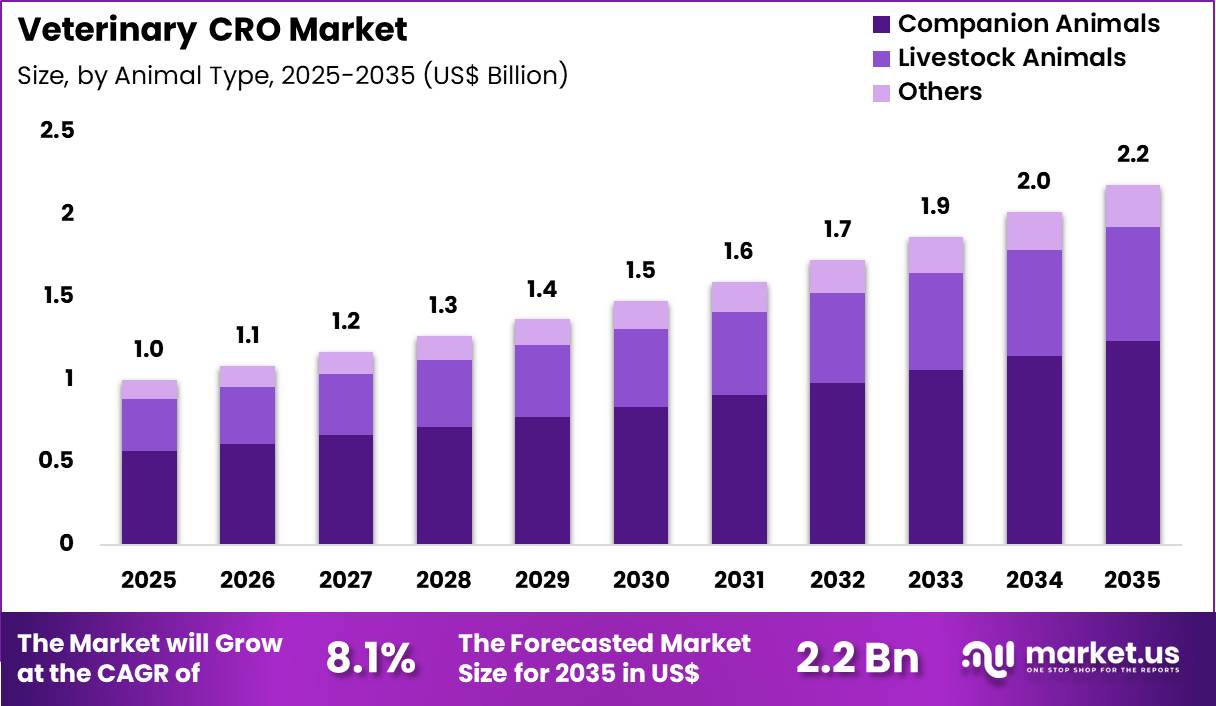
New York, NY – Nov 27 2026 – The Global Veterinary CRO Market size is expected to be worth around US$ 2.2 Billion by 2035 from US$ 1.0 Billion in 2025, growing at a CAGR of 8.1% during the forecast period 2026-2035. In 2025, North America led the market, achieving over 45.6% share with a revenue of US$ 0.5 Billion.
The Veterinary Contract Research Organization (CRO) market comprises organizations that provide outsourced research, testing, and development services to pharmaceutical companies, biotechnology firms, animal healthcare companies, and veterinary medicine manufacturers. These organizations support the development and evaluation of veterinary drugs, vaccines, biologics, feed additives, and other animal healthcare products.
Key services offered by veterinary CROs include preclinical studies, clinical trials, toxicology testing, pharmacokinetic studies, safety and efficacy assessments, laboratory testing, regulatory consulting, and post-marketing surveillance. These services are essential for ensuring the safety, quality, and effectiveness of veterinary products before and after commercialization.
The growth of the veterinary CRO market is primarily driven by increasing pet ownership, rising expenditure on animal healthcare, growing demand for livestock disease management, and increasing investments in veterinary pharmaceutical research and development. Additionally, stringent regulatory requirements and the growing need for specialized research capabilities are encouraging pharmaceutical and biotechnology companies to outsource research activities to CROs.
North America and Europe represent important markets due to their established animal healthcare industries, advanced research infrastructure, and regulatory frameworks. Meanwhile, Asia-Pacific is expected to offer emerging growth opportunities, supported by expanding veterinary healthcare infrastructure and increasing investments in animal health research.
Key Takeaways
- In 2025, the global veterinary CRO market was valued at US$ 1.0 billion and is projected to grow at a CAGR of 8.1% during 2025–2035, reaching US$ 2.2 billion by 2035.
- Based on service type, the market is segmented into clinical trials, preclinical studies, toxicology testing, regulatory consulting, pharmacovigilance, and others. Among these, clinical trials dominated the market, accounting for a 35.9% share.
- Based on animal type, the market is categorized into companion animals, livestock animals, and others. Companion animals emerged as the leading segment, accounting for 56.7% of the total market share.
- By application, the market is segmented into oncology, infectious diseases, neurology, cardiology, orthopedics, parasitology, vaccine development, and others. Among these, infectious diseases dominated the market, capturing a revenue share of 28.4%.
- Based on end user, the market is divided into pharmaceutical companies, biotechnology companies, veterinary drug manufacturers, research and academic institutes, and others. Pharmaceutical companies held the largest market share of 48.3%.
- Regionally, North America dominated the global veterinary CRO market, accounting for the largest revenue share of 45.6%.
Key Market Segments
- Service Type Analysis: Clinical trials dominated the veterinary CRO market, accounting for 35.9% of the service type segment. Growth is driven by increasing demand for safety and efficacy assessments before regulatory approval of veterinary products. Rising investments in animal health research, growing pharmaceutical outsourcing, and the development of new veterinary drugs, vaccines, and biologics are further supporting segment expansion.
- Animal Type Analysis: Companion animals dominated the veterinary CRO market, accounting for 56.7% of the animal type segment. This dominance is primarily attributed to rising pet ownership, increasing expenditure on pet healthcare, and growing demand for advanced veterinary treatments. Additionally, increasing clinical research focused on oncology, dermatology, infectious diseases, and chronic conditions is supporting segment growth.
- Application Analysis: Infectious diseases represented the leading application segment, accounting for 28.4% of the veterinary CRO market. Segment growth is driven by the increasing prevalence of bacterial, viral, and parasitic infections among companion and livestock animals. Rising concerns regarding zoonotic diseases, growing demand for veterinary vaccines, and increased emphasis on disease prevention are further supporting research activities.
- End-User Analysis: Pharmaceutical companies dominated the veterinary CRO market, accounting for 48.3% of the end-user segment. Their leading position is supported by substantial investments in veterinary drug development, clinical research, and vaccine development. Increasing outsourcing of research activities to specialized CROs enables pharmaceutical companies to reduce development costs, access technical expertise, and improve research efficiency.
Regional Analysis
North America is Leading the Veterinary CRO Market
North America dominated the veterinary CRO market, accounting for 45.6% of the global market share in 2025. This leadership is attributed to the well-established animal healthcare industry, advanced research infrastructure, and strong presence of pharmaceutical and biotechnology companies. Increasing investments in veterinary drug development, rising pet healthcare expenditure, and growing demand for innovative animal therapeutics are driving regional growth.
Additionally, pharmaceutical companies are increasingly outsourcing preclinical studies, clinical trials, toxicology testing, and regulatory services to specialized CROs to reduce development costs and accelerate product approvals. The presence of established regulatory frameworks, advanced laboratory facilities, and collaborations between research institutions and CROs further strengthens North America’s market position. Growing demand for treatments targeting chronic diseases in companion animals is also supporting the expansion of veterinary research activities across the region.
Asia Pacific is Expected to Register the Highest CAGR
Asia Pacific is expected to witness the highest growth in the veterinary CRO market during the forecast period. This growth is driven by expanding pharmaceutical manufacturing capabilities, increasing investments in animal healthcare research, and the availability of cost-effective clinical research services.
Countries such as China, India, South Korea, and Australia are emerging as important destinations for outsourced veterinary research. Additionally, rising livestock populations, increasing pet ownership, growing awareness of animal disease management, and supportive government initiatives are encouraging investments in veterinary drug development.
The expansion of research infrastructure, availability of skilled scientific professionals, and increasing collaborations between global pharmaceutical companies and regional CROs are further expected to create significant growth opportunities across the region.
Emerging Trends
- Increasing Demand for Advanced Veterinary Clinical Trials: The demand for well-designed veterinary clinical trials is increasing as pharmaceutical companies develop new treatments for companion animals and livestock. CROs are increasingly involved in clinical study planning, animal safety testing, treatment effectiveness evaluation, and regulatory documentation. The FDA provides guidance on clinical trial design and target animal safety requirements.
- Growing Adoption of Digital Technologies and Innovative Study Designs: Digital data collection, electronic records, advanced statistical methods, and adaptive clinical trial designs are gaining importance in veterinary research. These approaches can improve data quality, support better decision-making, and reduce unnecessary study delays. The FDA’s guidance on adaptive and innovative study designs supports this development.
- Greater Focus on Animal Welfare and Alternative Testing Methods: Veterinary research organizations are increasingly adopting the 3Rs approach: Replacement, Reduction, and Refinement. Cell-based testing, computer models, and other alternative methods are being explored to reduce animal use and improve research practices while maintaining scientific quality.
- Increasing Research on Veterinary Vaccines and Biologics: The development of veterinary vaccines, diagnostic products, antisera, and other biological treatments is creating additional research requirements. CROs can support manufacturers through product safety, potency, effectiveness, and quality-related studies. USDA APHIS regulates veterinary biologics to ensure that these products meet established safety and effectiveness standards.
- Rising Importance of Antimicrobial Resistance Research: Growing attention to antimicrobial resistance is increasing the need for research into safer and more effective veterinary treatments. CROs can support antimicrobial drug trials, laboratory investigations, and effectiveness assessments. European regulatory guidance also emphasizes responsible antimicrobial use and appropriate clinical study evaluation.
Use Cases
- Veterinary Drug Discovery and Development: CROs support pharmaceutical companies in evaluating new veterinary drug candidates through laboratory research, preclinical investigations, and development studies. These services help assess the safety, effectiveness, dosage, and suitability of new treatments before they are introduced into veterinary healthcare.
- Animal Safety and Toxicity Testing: Veterinary CROs conduct safety studies to identify possible side effects, toxic reactions, and other risks associated with veterinary medicines. These studies may include blood analysis, clinical observations, organ assessments, and dose evaluations to support regulatory submissions and product development.
- Veterinary Vaccine and Biologics Testing: CROs assist manufacturers in evaluating vaccines, diagnostic products, and other veterinary biological products. Testing activities may include safety assessments, potency testing, immune response evaluation, and effectiveness studies to support product quality and regulatory requirements.
- Clinical Trials for Companion Animals and Livestock: CROs manage clinical studies involving animals such as dogs, cats, cattle, poultry, and horses. These trials help determine whether veterinary medicines work under real-world conditions and provide evidence regarding treatment outcomes, dosage requirements, and potential adverse effects.
- Regulatory Support and Product Approval: Veterinary CROs assist animal healthcare companies with study protocols, clinical data management, statistical analysis, and regulatory documentation. These services help manufacturers prepare the scientific evidence required for veterinary drug approvals and product registrations across different regulatory markets.
Frequently Asked Questions About Veterinary CRO
- What services are provided by Veterinary CROs?
Veterinary CROs provide services such as preclinical research, clinical trial management, toxicology testing, pharmacokinetic studies, vaccine testing, laboratory analysis, data management, and regulatory consulting to support veterinary pharmaceutical and biotechnology companies. - Why do pharmaceutical companies outsource veterinary research to CROs?
Pharmaceutical companies outsource veterinary research to access specialized scientific expertise, research facilities, trained professionals, and clinical trial networks. Outsourcing also helps manage research costs, improve operational efficiency, and support timely product development. - What types of animals are included in veterinary clinical trials?
Veterinary clinical trials commonly involve companion animals and livestock, including dogs, cats, cattle, pigs, sheep, goats, poultry, and horses. The selected animal species depends on the intended use and target population of the veterinary product. - What is the role of a Veterinary CRO in drug development?
Veterinary CROs support different stages of drug development, including preclinical testing, safety evaluation, clinical trials, laboratory investigations, and regulatory documentation. Their research findings help manufacturers assess product performance and prepare evidence for regulatory review. - What is the difference between a Veterinary CRO and a traditional CRO?
A Veterinary CRO focuses on research involving animal medicines, vaccines, and healthcare products, whereas traditional CROs commonly support human pharmaceutical and biotechnology research. Veterinary CROs require specialized knowledge of animal species and veterinary regulations. - What are the major factors driving the Veterinary CRO market?
The Veterinary CRO market is supported by increasing demand for animal healthcare products, growing veterinary pharmaceutical research, rising companion animal healthcare expenditure, livestock disease management requirements, and the need for specialized clinical research services. - What opportunities are emerging in the Veterinary CRO market?
Emerging opportunities include advanced veterinary biologics, personalized animal treatments, digital clinical trial management, alternative testing technologies, antimicrobial resistance research, and improved veterinary diagnostics. These developments are creating additional opportunities for specialized outsourced research services. - Which end users utilize Veterinary CRO services?
Major end users include veterinary pharmaceutical companies, biotechnology companies, animal vaccine manufacturers, diagnostic product developers, academic research institutions, and animal healthcare organizations. These organizations use CRO services to support research, product development, testing, and regulatory activities.
Conclusion
The global veterinary CRO market is witnessing steady growth, driven by increasing pet ownership, rising animal healthcare expenditure, and growing investments in veterinary pharmaceutical research and development. The increasing demand for clinical trials, preclinical studies, toxicology testing, and regulatory support is further strengthening the role of CROs in animal healthcare product development.
North America currently leads the market due to its advanced research infrastructure and established pharmaceutical industry, while Asia Pacific is expected to offer significant growth opportunities. Additionally, advancements in digital research technologies, veterinary vaccines, and alternative testing methods are expected to support market expansion through 2035.
Discuss your needs with our analyst
Please share your requirements with more details so our analyst can check if they can solve your problem(s)