
Overview
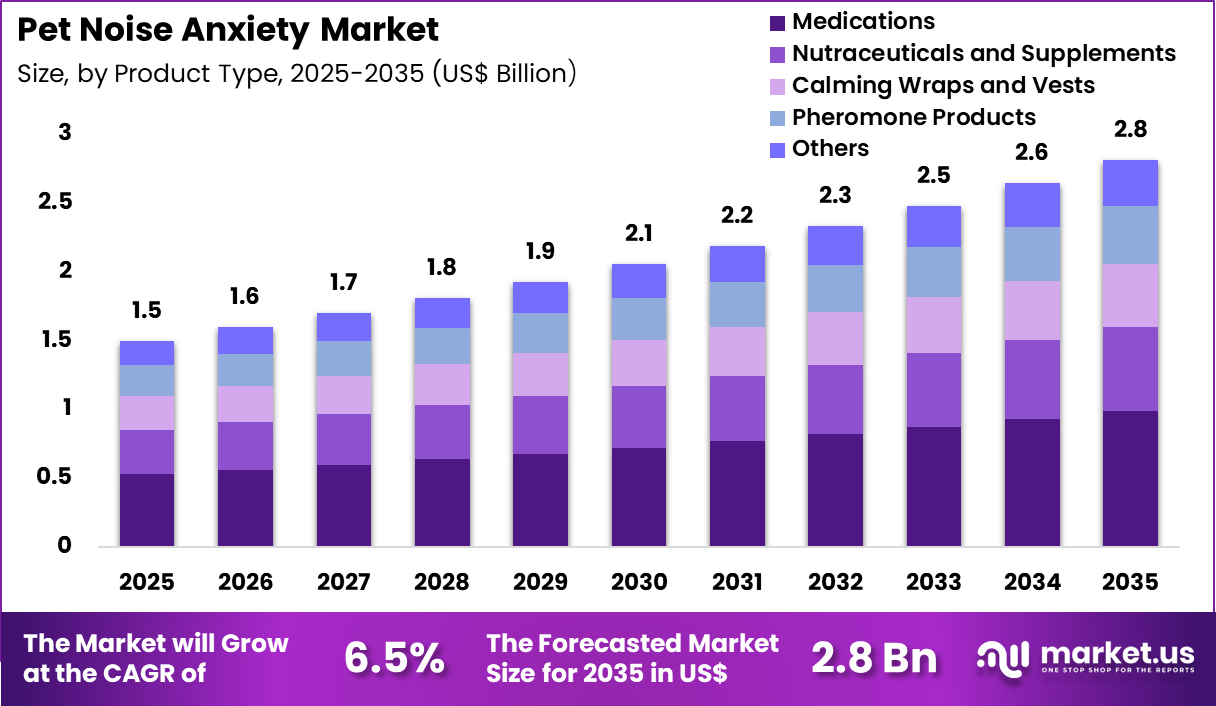
New York, NY – Nov 27 2026 – The Global Pet Noise Anxiety Market size is expected to be worth around US$ 2.8 Billion by 2035 from US$ 1.5 Billion in 2025, growing at a CAGR of 6.5% during the forecast period 2026-2035. In 2025, North America led the market, achieving over 39.4% share with a revenue of US$ 0.6 Billion.
Pet noise anxiety refers to the stress and fear experienced by pets, particularly dogs and cats, in response to loud or unexpected sounds. Common triggers include thunderstorms, fireworks, traffic noise, construction activities, household appliances, and loud celebrations. This condition is increasingly recognized as an important aspect of pet health and overall animal well-being.
Pets experiencing noise anxiety may exhibit symptoms such as excessive barking or meowing, trembling, panting, hiding, restlessness, destructive behaviour, loss of appetite, and attempts to escape. The intensity of these reactions can vary depending on the animal’s temperament, age, previous experiences, and sensitivity to sound.
Growing awareness of pet mental health has increased the importance of effective noise-anxiety management. Common approaches include creating safe and quiet spaces, using behavioural training and desensitization techniques, maintaining familiar routines, and seeking veterinary guidance when symptoms are severe.
The demand for pet calming products, anxiety-relief solutions, and professional behavioural support is also gaining attention within the pet care industry. As pet ownership and awareness of animal welfare continue to increase, addressing noise-related anxiety is becoming an important part of comprehensive pet care. Early recognition and appropriate intervention can help improve pets’ comfort, emotional well-being, and quality of life.
Key Takeaways
- In 2025, the global Pet Noise Anxiety Market was valued at US$ 1.5 Billion and is projected to grow at a CAGR of 6.5%, reaching US$ 2.8 Billion by 2035.
- Based on pet type, the market is segmented into dogs, cats, and other pets. Among these, dogs dominated the market, accounting for a 72.8% share.
- By product type, the market is categorized into medications, nutraceuticals and supplements, calming wraps and vests, pheromone products, and others. Medications emerged as the leading segment, capturing a 35.1% market share.
- Based on distribution channel, the market is divided into veterinary hospitals, retail pharmacies, online pharmacies, pet specialty stores, and others. Veterinary hospitals dominated the segment, accounting for a 42.6% revenue share.
- By end user, the market is segmented into pet owners, veterinary hospitals, animal shelters, and others. Pet owners represented the leading segment, holding a 34.6% revenue share.
- Regionally, North America dominated the global Pet Noise Anxiety Market, accounting for a 39.4% market share.
Key Market Segments
- Pet Type Analysis: Dogs dominated the pet type segment, accounting for 72.8% of the market share, driven by their sensitivity to loud noises such as fireworks, thunderstorms, and traffic. Common anxiety symptoms, including trembling, excessive barking, and destructive behaviour, encourage owners to seek effective treatments. Rising dog ownership and growing awareness of pet mental health are expected to sustain segment dominance.
- Product Type Analysis: Medications held the leading position in the product type segment, accounting for 35.1% of the market share. Their effectiveness in managing moderate to severe noise anxiety supports widespread adoption. Veterinary-prescribed anti-anxiety drugs and sedatives provide relief during stressful situations. Increasing veterinary awareness and the availability of targeted formulations are expected to support segment growth.
- Distribution Channel Analysis: Veterinary hospitals dominated the distribution channel segment, capturing 42.6% of the market share. Their role in diagnosing anxiety, prescribing medications, and recommending behavioural therapies drives demand. Growing pet healthcare expenditure and increasing reliance on professional veterinary guidance are further supporting this segment. The need for supervised treatment is expected to maintain its leading position.
- End-User Analysis: Pet owners represented the largest end-user segment, accounting for 34.6% of the market share. Growing awareness of pet anxiety and increasing focus on animal well-being are encouraging owners to adopt calming products and treatments. Rising pet humanization, stronger emotional bonds, and greater spending on behavioural care are expected to support the segment’s continued growth.
Regional Analysis
North America Pet Noise Anxiety Market
North America dominated the Pet Noise Anxiety Market in 2025, accounting for 39.4% of the global market share. This dominance is attributed to growing awareness of pet behavioural health, high pet ownership, and increasing expenditure on companion animal healthcare.
Pet owners are increasingly adopting calming supplements, pheromone-based products, pressure garments, and prescription medications to manage noise-related stress caused by fireworks, thunderstorms, and urban noise.
Growing veterinary involvement, rising pet humanization trends, and continuous product innovation are further supporting regional market growth. Increasing preference for preventive care and effective anxiety management solutions is expected to strengthen North America’s market position.
Asia Pacific Pet Noise Anxiety Market
Asia Pacific is expected to register the highest CAGR during the forecast period, driven by rising pet ownership, urbanization, and increasing awareness of animal behavioural health. Countries such as China, Japan, South Korea, and Australia are witnessing growing demand for pet wellness solutions.
Increasing adoption of companion animals, expanding veterinary infrastructure, and improving access to calming products through e-commerce platforms are supporting regional growth. Additionally, greater awareness among veterinarians and pet owners regarding noise-induced anxiety is expected to accelerate the adoption of behavioural treatments, supplements, and other anxiety management solutions across the region.
Emerging Trends
- Growing Demand for Veterinary-Approved Anxiety Medications: The demand for prescription-based anxiety treatments is increasing as pet owners become more aware of the health effects of noise-related fear. Veterinary-approved medicines are gaining attention because they can help manage severe anxiety during fireworks, thunderstorms, and other loud events.
- Increasing Adoption of Behavioural Training Solutions: Behavioural training is becoming an important part of pet noise anxiety management. Techniques such as sound desensitisation, relaxation training, and positive reinforcement are being adopted to help pets gradually develop better responses to frightening sounds.
- Rising Popularity of Home-Based Anxiety Management Products: Pet owners are increasingly using home-based solutions to create comfortable environments for anxious animals. Products such as sound-masking devices, calming music systems, covered resting spaces, and noise-reducing arrangements are gaining attention for managing environmental stress.
- Development of Multi-Approach Treatment Methods: The market is moving towards combined treatment approaches involving veterinary medicines, behavioural modification, and environmental management. These methods address both immediate anxiety symptoms and long-term behavioural responses, supporting more complete anxiety management.
- Increasing Focus on Early Detection and Preventive Care: Preventive anxiety management is receiving greater attention, particularly for puppies and young dogs. Early exposure to sounds through controlled training and positive experiences can help reduce the development of noise-related fears later in life.
Use Cases
- Fireworks and Festival Noise Management: Noise anxiety solutions are used to manage fear caused by fireworks during festivals, public celebrations, and special events. Calming products, prescribed medications, and sound-reduction methods help reduce distress and prevent pets from escaping or injuring themselves.
- Thunderstorm and Severe Weather Management: Pets experiencing anxiety during thunderstorms can benefit from veterinary-recommended treatments and indoor noise management solutions. These approaches help manage reactions such as trembling, hiding, excessive barking, panting, and restlessness during severe weather conditions.
- Household Noise Anxiety Management: Everyday household sounds, including vacuum cleaners, washing machines, alarms, and electronic devices, can trigger anxiety in sensitive pets. Noise management products and gradual sound-training programmes are used to improve their comfort in residential environments.
- Veterinary Treatment and Clinical Behavioural Care: Veterinary clinics use noise anxiety treatments to support animals experiencing severe or repeated fear responses. Professional assessment helps determine whether prescription medications, behavioural therapy, or combined treatment approaches are required to manage the condition.
- Pet Training and Early Anxiety Prevention: Pet training centres and animal behaviour specialists use controlled sound exposure and reward-based training to develop positive responses to unfamiliar noises. These programmes are particularly useful for puppies and pets showing early signs of sound sensitivity.
Frequently Asked Questions About Pet Noise Anxiety
- What are the common signs of noise anxiety in pets?
Common signs include excessive barking, trembling, panting, hiding, pacing, whining, and attempting to escape. Some pets may also show destructive behaviour, loss of appetite, or unusual changes in their normal daily activities. - Which animals are commonly affected by noise anxiety?
Dogs are particularly affected by noise sensitivity, with research identifying it as a common canine anxiety-related behaviour. Cats can also experience fear from loud sounds, although available prevalence research is more developed for dogs. - How can pet noise anxiety be managed?
Pet noise anxiety can be managed through environmental changes, behavioural training, sound desensitisation, and veterinary-prescribed medication when necessary. Providing a quiet resting space and reducing exposure to sudden sounds can also improve comfort. - What factors are driving the growth of the pet noise anxiety market?
Market growth is supported by increasing awareness of animal mental well-being, rising demand for veterinary care, growing recognition of noise sensitivity, and the development of new treatment options for managing anxiety in companion animals. - Which treatment categories are gaining attention in the pet noise anxiety market?
Prescription medicines, behavioural therapies, and combined anxiety management approaches are receiving increasing attention. Scientific evidence supports selected medications and behavioural techniques, while many alternative remedies have limited evidence for treating severe noise-related fear. - What role do veterinary clinics play in the pet noise anxiety market?
Veterinary clinics support the market by identifying anxiety symptoms, evaluating underlying causes, recommending suitable treatments, and monitoring patient responses. Their involvement is particularly important when severe anxiety requires prescription medication or professional behavioural support. - What opportunities are emerging in the pet noise anxiety market?
Opportunities are emerging in preventive behavioural training, veterinary-approved medicines, home-based calming solutions, and integrated treatment programmes. Greater awareness of noise-related distress also creates opportunities for specialised pet healthcare and animal behaviour services. - What is the future outlook for the pet noise anxiety market?
The market outlook is supported by growing attention to pet well-being and the development of treatment options. Continued research, improved veterinary awareness, and wider access to effective anxiety management solutions may support future market development.
Conclusion
The global Pet Noise Anxiety Market is witnessing steady growth, supported by increasing pet ownership, rising awareness of animal mental health, and growing demand for effective anxiety management solutions. Valued at US$ 1.5 billion in 2025, the market is projected to reach US$ 2.8 billion by 2035, at a CAGR of 6.5%. Dogs and medications remain the leading segments, while veterinary hospitals play a major role in treatment delivery.
North America currently dominates the market, whereas Asia Pacific is expected to experience the fastest growth, supported by expanding veterinary services, product innovation, and increasing pet healthcare expenditure.
Discuss your needs with our analyst
Please share your requirements with more details so our analyst can check if they can solve your problem(s)