
Overview
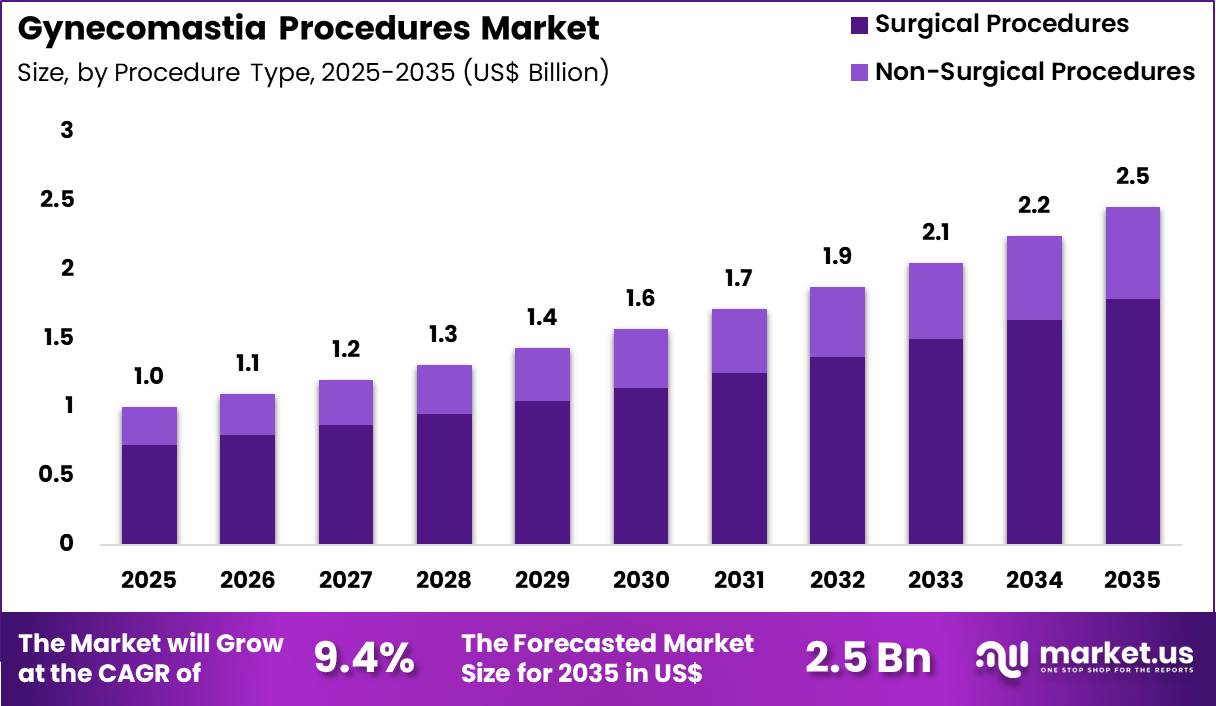
New York, NY – Nov 23 2026 – The Global Gynecomastia Procedures Market size is expected to be worth around US$ 2.5 Billion by 2035 from US$ 1.0 Billion in 2025, growing at a CAGR of 9.4% during the forecast period 2026-2035. In 2025, North America led the market, achieving over 41.6% share with a revenue of US$ 0.4 Billion.
Gynecomastia procedures refer to surgical treatments designed to reduce enlarged breast tissue in men, a condition commonly known as gynecomastia. The condition may develop due to hormonal imbalances, genetic factors, certain medications, obesity, or underlying health conditions. It can affect one or both breasts and may cause physical discomfort, self-consciousness, and reduced confidence.
Gynecomastia surgery, also known as male breast reduction surgery, is performed to create a flatter, firmer, and more masculine chest appearance. The procedure generally involves two primary techniques: liposuction, which removes excess fatty tissue, and surgical excision, which removes excess glandular breast tissue and skin when required. In some cases, both techniques are combined to achieve optimal results.
The procedure is typically performed under general anesthesia, depending on the patient’s condition and surgical requirements. Recovery time varies based on the treatment approach, with patients generally advised to wear compression garments and avoid strenuous physical activities during the initial recovery period.
Growing awareness of male body image, advancements in minimally invasive surgical techniques, and increasing acceptance of cosmetic procedures are contributing to interest in gynecomastia treatments. These developments are supporting the growing relevance of male breast reduction procedures within the global aesthetic surgery landscape.
Key Takeaways
- In 2025, the gynecomastia procedures market generated revenue of US$ 1.0 billion and is projected to grow at a CAGR of 9.4%, reaching US$ 2.5 billion by 2035.
- Based on procedure type, the market is segmented into surgical and non-surgical procedures. Among these, surgical procedures dominated the market, accounting for a 72.8% share.
- By grade type, the market is categorized into Grade I, Grade II, Grade III, and Grade IV. Grade II accounted for a significant market share of 34.6%.
- Based on end users, the market is segmented into hospitals, specialty clinics, ambulatory surgical centers (ASCs), cosmetic surgery centers, and others. Hospitals emerged as the leading segment, capturing the largest revenue share of 43.5%.
- Regionally, North America dominated the global gynecomastia procedures market, accounting for a market share of 41.6%.
Key Market Segments
- Procedure Type Analysis: Surgical procedures dominated the gynecomastia procedures market, accounting for 72.8% of the segment share. Their dominance is attributed to permanent results, effective removal of excess fat and glandular tissue, and improved chest contouring. Growing awareness of male aesthetics, advancements in surgical techniques, and increasing patient preference for long-lasting outcomes are further supporting segment growth.
- Grade Type Analysis: Grade II dominated the gynecomastia procedures market, accounting for 34.6% of the segment share. Its leading position is attributed to the relatively high prevalence of moderate breast enlargement and suitability for established surgical techniques. Increasing treatment awareness, growing acceptance of male cosmetic procedures, and demand for improved chest appearance are further supporting segment expansion.
- End-User Analysis: Hospitals dominated the gynecomastia procedures market, accounting for 43.5% of the segment share. Their leadership is supported by advanced surgical infrastructure, qualified plastic surgeons, anesthesia facilities, and comprehensive post-operative care. Increasing patient preference for supervised surgical environments, expanding hospital-based cosmetic services, and improvements in healthcare infrastructure are expected to support the segment’s continued growth.
Regional Analysis
North America Dominates the Gynecomastia Procedures Market
North America dominated the gynecomastia procedures market in 2025, accounting for 41.6% of the global market share. Regional growth is driven by increasing awareness of male breast reduction treatments, rising obesity rates, hormonal disorders, and growing acceptance of cosmetic procedures among men.
The United States and Canada have witnessed expanding availability of advanced surgical techniques, including liposuction-assisted procedures and glandular excision. Additionally, well-established healthcare infrastructure, experienced plastic surgeons, and increasing availability of outpatient surgical centers are improving treatment accessibility.
Growing emphasis on male body image, technological advancements, and increasing willingness to undergo aesthetic procedures are further supporting regional market growth.
Asia Pacific Expected to Register the Highest CAGR
Asia Pacific is expected to register the highest CAGR during the forecast period, driven by rising disposable incomes, increasing aesthetic awareness, and expanding access to cosmetic surgery. Countries such as China, India, Japan, and South Korea are witnessing growing acceptance of male aesthetic treatments.
Additionally, expanding private healthcare infrastructure, medical tourism, improved surgical technologies, and increasing availability of specialized cosmetic clinics are supporting market growth. Greater awareness of gynecomastia treatments and the growing adoption of minimally invasive procedures are expected to further accelerate regional market expansion.
Emerging Trends
- Increasing Preference for Minimally Invasive Procedures: The adoption of liposuction-based techniques is increasing as patients seek smaller incisions, reduced scarring, and improved chest contours. Liposuction is commonly used to remove excess breast fat, while glandular tissue may require surgical excision.
- Growing Adoption of Combined Surgical Techniques: Combined liposuction and glandular tissue removal is gaining clinical importance. This approach addresses both fatty deposits and enlarged breast glands, allowing surgeons to select treatment according to breast composition and the severity of gynecomastia.
- Greater Focus on Individualized Treatment: Treatment planning is increasingly based on the patient’s age, medical history, breast enlargement severity, tissue composition, and underlying causes. Clinical guidelines support selecting surgical methods according to individual patient conditions rather than applying one technique to everyone.
- Increasing Attention to Psychological Well-being: Greater recognition of the psychological effects of gynecomastia is encouraging patients to seek medical consultations and corrective procedures. Concerns related to body image, self-confidence, social interactions, and emotional discomfort are becoming important considerations in treatment decisions.
- Improved Clinical Evaluation Before Surgery: Healthcare professionals are placing greater importance on identifying hormonal imbalances, medication-related causes, and underlying medical conditions before recommending surgery. This supports safer treatment selection and helps determine whether observation, medical management, or surgical intervention is appropriate.
Use Cases
- Removal of Excess Breast Fat: Liposuction is used in patients whose enlarged chest appearance is mainly caused by excess fatty tissue. The procedure helps reduce chest fullness and improve the overall chest shape without requiring extensive glandular tissue removal.
- Removal of Enlarged Glandular Tissue: Surgical excision is used when firm glandular tissue is responsible for breast enlargement. This procedure allows surgeons to remove excess breast glands and is particularly relevant when liposuction alone cannot provide the required correction.
- Correction of Severe Gynecomastia: Patients with significant breast enlargement, excess skin, or stretched areolas may require more extensive surgical correction. Tissue removal and skin tightening can be performed to achieve a flatter chest and improve chest proportions.
- Treatment of Persistent Gynecomastia: Surgical procedures are considered for patients experiencing long-lasting breast enlargement that does not improve after appropriate medical management. This application is particularly relevant when persistent tissue growth causes physical discomfort or psychological distress.
- Correction of Chest Asymmetry: Gynecomastia surgery can be used when breast enlargement affects one side more than the other. Tissue removal, liposuction, and contour adjustment can help improve the balance between both sides of the male chest.
Frequently Asked Questions About Gynecomastia Procedures
- What are the main types of gynecomastia surgery?
The main types include liposuction, surgical glandular tissue excision, and combined liposuction with excision. The selected technique depends on whether breast enlargement is caused by excess fat, glandular tissue, or both. - Who is eligible for gynecomastia surgery?
Men with persistent breast enlargement, stable breast development, good general health, and realistic expectations may be suitable candidates. Surgery is generally considered when underlying causes have been assessed and alternative treatments have not provided sufficient improvement. - How long does recovery from gynecomastia surgery take?
Recovery varies according to the surgical technique and individual healing process. Swelling gradually decreases after surgery, while final results may take approximately three to six months to become visible. - What are the possible risks of gynecomastia surgery?
Potential complications include bleeding, infection, scarring, fluid accumulation, changes in nipple sensation, uneven chest contours, and anesthesia-related risks. The likelihood of complications depends on patient health, surgical technique, and postoperative care. - What factors are driving the growth of the gynecomastia procedures market?
Market growth is supported by increasing awareness of male cosmetic surgery, rising concerns about body image, improved surgical techniques, and growing acceptance of aesthetic treatments. Greater access to specialized plastic surgery services also supports demand. - Which procedure segment holds an important position in the gynecomastia procedures market?
Combined liposuction and glandular tissue excision represents an important treatment approach because it addresses both excess fat and enlarged breast glands. However, the preferred procedure varies according to patient anatomy and clinical requirements. - What are the major challenges affecting the gynecomastia procedures market?
High treatment costs, limited insurance coverage, surgical complications, and concerns about recovery can restrict market adoption. Additionally, social hesitation and limited awareness about available treatments may prevent some patients from seeking professional medical assistance. - What is the future outlook for the gynecomastia procedures market?
The market is expected to benefit from improvements in surgical techniques, increasing acceptance of male aesthetic procedures, and greater awareness of treatment options. Individualized surgical planning and improved patient care may further support market development.
Conclusion
The global gynecomastia procedures market is expected to witness significant growth, supported by increasing awareness of male aesthetic treatments, rising acceptance of cosmetic surgery, and advancements in surgical techniques. Surgical procedures continue to dominate due to their effectiveness in removing excess fat and glandular tissue and delivering long-lasting results.
Hospitals remain the leading end-user segment, supported by advanced medical infrastructure and specialized surgical facilities. North America holds the largest market share, while Asia Pacific is expected to experience the fastest growth. Growing demand for minimally invasive techniques, personalized treatment approaches, and improved patient outcomes is expected to create further market opportunities through 2035.
Discuss your needs with our analyst
Please share your requirements with more details so our analyst can check if they can solve your problem(s)