


Overview
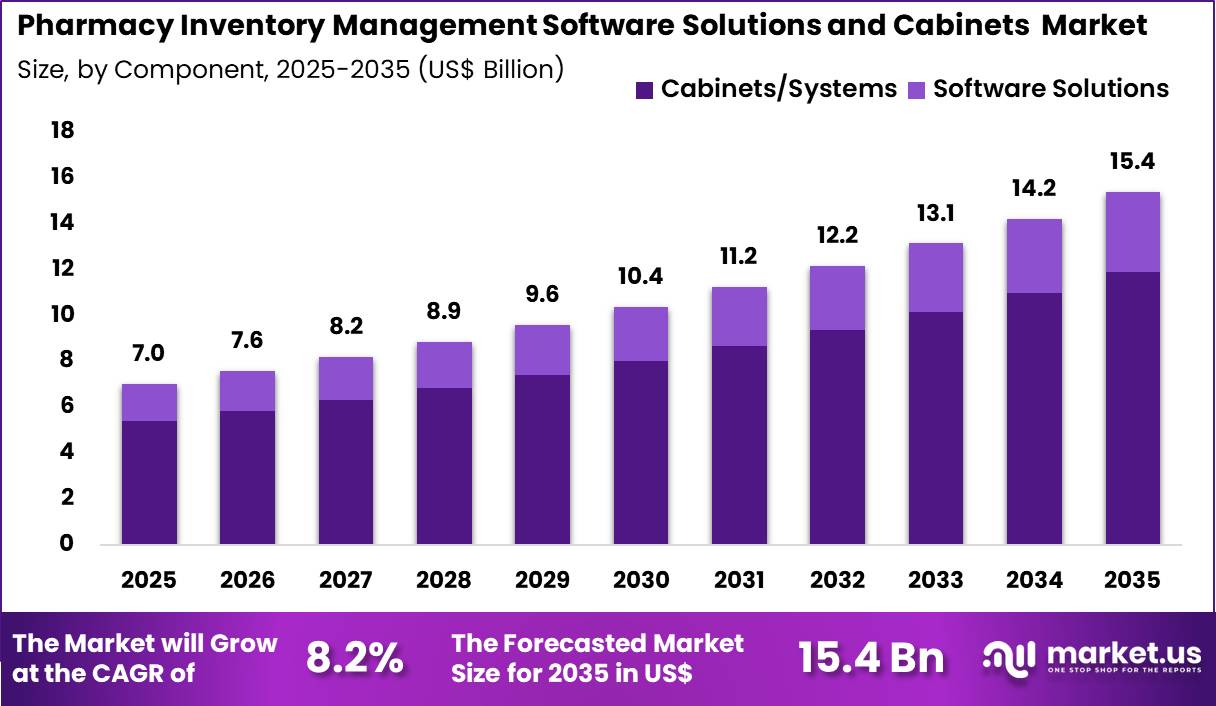
New York, NY – Nov 20 2026 – The Global Pharmacy Inventory Management Software Solutions and Cabinets Market size is expected to be worth around US$ 15.4 Billion by 2035 from US$ 7.0 Billion in 2025, growing at a CAGR of 8.2% during the forecast period 2026-2035. In 2025, North America led the market, achieving over 53.1% share with a revenue of US$ 3.7 Billion.
Pharmacy Inventory Management Software Solutions and Cabinets are advanced technologies designed to improve medication storage, tracking, dispensing, and inventory control across pharmacies, hospitals, and healthcare facilities. These solutions help streamline pharmacy operations by providing real-time visibility into medicine stock levels, reducing inventory errors, and supporting efficient medication management.
Pharmacy inventory management software enables automated stock tracking, prescription management, expiry date monitoring, barcode scanning, purchase order management, and inventory reporting. These capabilities help healthcare providers maintain optimal stock levels, minimize medication wastage, and improve operational efficiency.
Pharmacy automation cabinets, including automated dispensing cabinets (ADCs), provide secure and organized storage of medications while controlling access to medicines through user authentication and automated tracking systems. These cabinets support accurate medication dispensing, improve inventory visibility, and help reduce manual handling errors.
The growing adoption of digital healthcare technologies, increasing demand for medication safety, rising hospital automation investments, and the need for efficient pharmaceutical supply chain management are supporting market growth. Furthermore, the integration of cloud-based platforms, artificial intelligence, and advanced analytics is creating new opportunities for innovation.
As healthcare facilities increasingly prioritize operational efficiency and patient safety, pharmacy inventory management software and automated cabinet solutions are expected to play an important role in the modernization of pharmacy management systems.
Key Takeaways
- In 2025, the global market was valued at US$ 7.0 Billion and is projected to grow at a CAGR of 8.2%, reaching US$ 15.4 Billion by 2035.
- Based on component, the market is segmented into cabinets/systems and software solutions, with cabinets/systems dominating the segment with a revenue share of 77.3%.
- By mode of operation, the market is categorized into centralized and decentralized systems, with the decentralized segment accounting for the largest share of 55.1%.
- Based on end use, the market is segmented into independent pharmacies, hospital pharmacies, long-term care (LTC) facilities, and others. Independent pharmacies dominated the market, accounting for 39.2% of the total revenue share.
- Regionally, North America dominated the global market, accounting for a significant revenue share of 53.1%.
Key Market Segments
- Component Analysis: Cabinets and systems dominated the component segment, accounting for 77.3% of the market share. Their adoption is driven by the growing demand for automated medication storage, real-time inventory tracking, expiry monitoring, and dispensing accuracy. Increasing focus on medication safety, reduced inventory losses, and operational efficiency is expected to support segment growth.
- Mode of Operations Analysis: Decentralized operations held a significant market share of 55.1%, driven by the growing need for faster medication access across multiple healthcare locations. These systems enable efficient inventory monitoring, quicker dispensing, and improved workflow coordination. Increasing adoption of distributed medication management solutions is expected to support segment expansion.
- End-Use Analysis: Independent pharmacies dominated the end-use segment, accounting for 39.2% of the market share. Growing prescription volumes, limited staffing resources, and the need for efficient stock management are driving adoption. Inventory management software and automated cabinets help minimize stock shortages, reduce manual errors, and improve operational efficiency across independent pharmacies.
Regional Analysis
North America Regional Analysis
North America dominated the Pharmacy Inventory Management Software Solutions and Cabinets Market, accounting for 53.1% of the market share in 2025. Regional growth is driven by the widespread adoption of automated dispensing cabinets, digital inventory tracking platforms, and advanced medication management technologies across hospitals and healthcare facilities.
According to the American Society of Health-System Pharmacists, more than 97% of U.S. hospitals used automated dispensing cabinets by 2022. Increasing emphasis on medication safety, real-time inventory monitoring, drug traceability, and healthcare digitization is further supporting market expansion. Integration with electronic health records and predictive analytics is also strengthening adoption across the region.
Asia Pacific Regional Analysis
Asia Pacific is expected to register the highest CAGR during the forecast period, supported by healthcare infrastructure modernization and growing investments in hospital automation. Countries such as China, India, Japan, and South Korea are increasingly adopting digital pharmacy management systems and automated dispensing cabinets.
Government-led smart hospital initiatives, rising prescription volumes, and growing awareness of medication safety are further driving demand. Additionally, the expansion of healthcare facilities and availability of cost-effective automation technologies are expected to create significant growth opportunities across the region.
Emerging Trends
- Growing Adoption of AI-Based Inventory Forecasting: Artificial intelligence (AI) and predictive analytics are increasingly being incorporated into pharmacy inventory software. These technologies help pharmacies study past medicine usage, identify demand patterns, estimate future stock requirements, and reduce the risk of overstocking or medicine shortages.
- Integration of Barcode and RFID Technologies: Barcode scanning and Radio Frequency Identification (RFID) technologies are gaining importance in pharmacy inventory management. These technologies help healthcare facilities identify medicines, track stock movement, verify products during restocking, and detect expired or recalled medicines. ASHP supports barcode verification throughout medication inventory and dispensing activities.
- Increased Use of Connected Automated Dispensing Cabinets: Hospitals are increasingly adopting automated dispensing cabinets (ADCs) connected with pharmacy and hospital information systems. These cabinets provide controlled access to medicines, record medication withdrawals, and help pharmacy teams monitor stock levels across different patient care departments.
- Greater Focus on Medication Security and Controlled Drug Monitoring: Healthcare facilities are placing greater emphasis on secure medication storage and controlled substance tracking. Modern cabinets increasingly support individual user identification, electronic access records, inventory counts, and transaction monitoring to improve accountability and identify unusual medication removal activities.
- Expansion of Temperature Monitoring and Smart Storage Solutions: Pharmacies are adopting improved storage monitoring solutions for temperature-sensitive medicines and vaccines. Digital temperature monitoring devices, automated alerts, and electronic records help healthcare providers identify storage problems and protect medicine quality. The CDC recommends digital data loggers for routine vaccine storage monitoring.
Use Cases
- Hospital Pharmacy Stock Management: Hospital pharmacies use inventory management software to monitor medicine quantities, manage stock replenishment, and track medicines distributed to different departments. Automated cabinets provide authorized healthcare staff with timely access to required medicines while maintaining electronic records of medication transactions.
- Expiry Date and Drug Recall Management: Pharmacy inventory solutions are used to identify medicines approaching their expiry dates and manage recalled products. Barcode-based tracking helps pharmacy staff verify products during receiving, storage, and dispensing, reducing the possibility of expired or recalled medicines remaining in active inventory.
- Controlled Substance Inventory Management: Hospitals use automated dispensing cabinets and inventory software to manage controlled medicines, including narcotic drugs. Access restrictions, electronic transaction records, inventory reconciliation, and discrepancy reports help improve medication security and support internal audits.
- Vaccine and Temperature-Sensitive Medicine Storage: Pharmacies and vaccination centres use digital inventory and storage monitoring systems to manage vaccines and other temperature-sensitive medicines. Temperature records, storage alerts, and stock tracking help staff maintain suitable storage conditions and reduce losses caused by temperature-related damage.
- Multi-Location Pharmacy Inventory Coordination: Healthcare networks operating multiple hospitals, clinics, and pharmacy units use centralized inventory software to monitor stock across different locations. This allows pharmacy managers to identify surplus medicines, coordinate stock transfers, monitor replenishment requirements, and improve inventory visibility across facilities.
Frequently Asked Questions About Pharmacy Inventory Management Software Solutions and Cabinets
- What are automated dispensing cabinets in pharmacies?
Automated dispensing cabinets are secure electronic storage units used in hospitals and healthcare facilities to store and distribute medicines. They provide authorized staff access to medications while recording withdrawals, supporting inventory control, and improving medication accountability. - What are the major features of pharmacy inventory management software?
Major features include real-time inventory tracking, barcode scanning, automated stock alerts, expiry date monitoring, purchase management, electronic reporting, inventory reconciliation, and integration with pharmacy systems. These features help improve operational efficiency and medication availability. - How does pharmacy inventory management software help reduce medicine wastage?
The software tracks medicine quantities, expiry dates, and consumption patterns. Automated alerts help pharmacy staff identify products approaching expiration and manage replenishment requirements, reducing unnecessary purchases, expired stock, and avoidable inventory losses. - What are the major factors driving the Pharmacy Inventory Management Software Solutions and Cabinets Market?
Market growth is supported by increasing healthcare automation, rising demand for medication safety, growing hospital infrastructure, and the need for better inventory accuracy. Healthcare providers are also adopting digital solutions to reduce medicine wastage and operational costs. - What role does artificial intelligence play in the Pharmacy Inventory Management Software Solutions and Cabinets Market?
Artificial intelligence supports demand forecasting, inventory optimization, and identification of unusual stock patterns. By analysing historical consumption and purchasing information, AI-enabled platforms can help pharmacies plan replenishment, reduce excess inventory, and improve medicine availability. - Why is inventory automation important for hospital pharmacies?
Inventory automation helps hospital pharmacies maintain accurate stock records, monitor medication withdrawals, and manage replenishment activities. It also reduces repetitive manual work, supports controlled medicine monitoring, and improves coordination between pharmacy departments and clinical teams. - How do government healthcare regulations influence this market?
Healthcare regulations and medication safety guidelines encourage better product tracking, secure storage, and accurate inventory documentation. Requirements related to drug traceability, controlled substances, and vaccine storage can increase demand for compliant digital inventory solutions. - What is the future outlook for the Pharmacy Inventory Management Software Solutions and Cabinets Market?
The market is expected to benefit from continued healthcare digitization, increased automation, and stronger focus on medication safety. Integration of intelligent software, connected dispensing cabinets, and advanced monitoring technologies is likely to create further adoption opportunities.
Conclusion
The Pharmacy Inventory Management Software Solutions and Cabinets Market is expected to experience significant growth, driven by increasing healthcare automation, rising emphasis on medication safety, and the need for efficient inventory management. Valued at US$ 7.0 billion in 2025, the market is projected to reach US$ 15.4 billion by 2035, growing at a CAGR of 8.2%.
The adoption of automated dispensing cabinets, AI-based inventory forecasting, barcode and RFID technologies, and smart storage solutions is expected to strengthen market development. While North America currently dominates, Asia Pacific is anticipated to offer substantial growth opportunities, supported by healthcare infrastructure modernization and increasing automation investments.
Discuss your needs with our analyst
Please share your requirements with more details so our analyst can check if they can solve your problem(s)



