
Overview
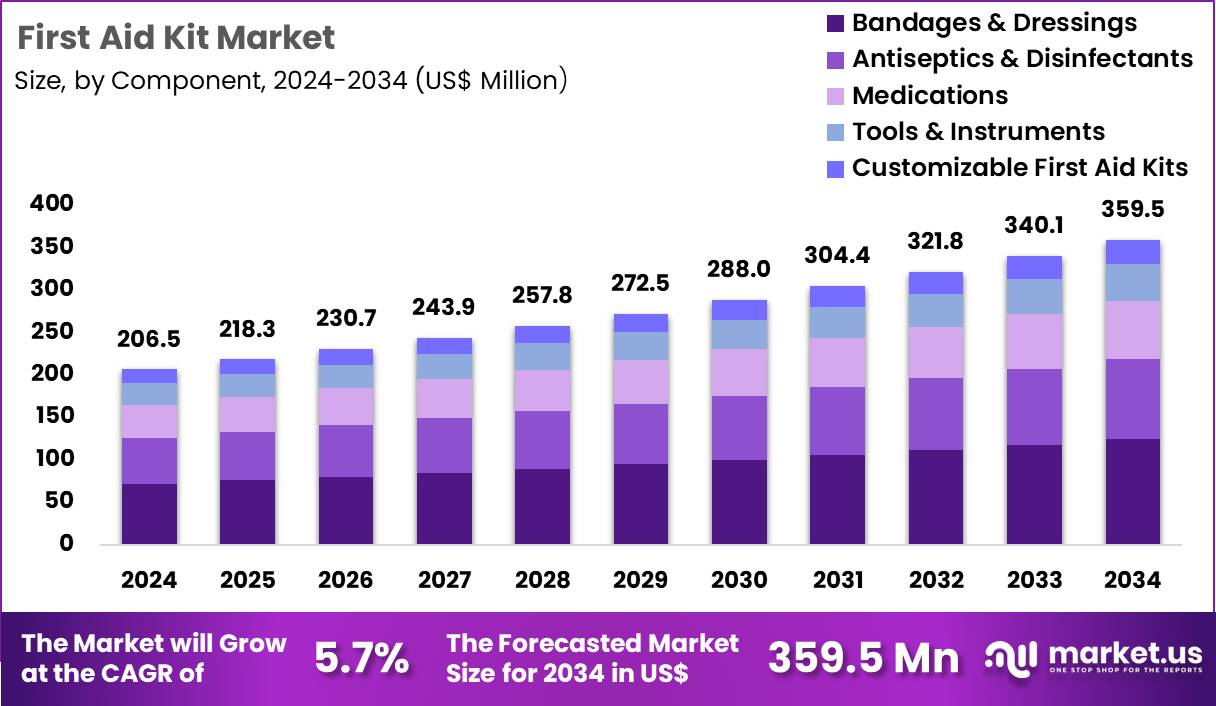
New York, NY – Oct 23, 2026 – Global First Aid Kit Market size is expected to be worth around US$ 359.5 Million by 2034 from US$ 206.5 Million in 2024, growing at a CAGR of 5.7% during the forecast period 2025 to 2034. In 2024, North America led the market, achieving over 35.3% share with a revenue of US$ 72.9 Million.
A first aid kit is an essential collection of medical supplies and equipment used to provide immediate care for minor injuries and sudden illnesses before professional medical assistance is available. It plays an important role in homes, workplaces, schools, hospitals, vehicles, industrial facilities, and outdoor activities.
A basic first aid kit generally includes adhesive bandages, sterile gauze pads, medical tape, antiseptic wipes, disposable gloves, scissors, tweezers, an elastic bandage, a digital thermometer, and a first aid instruction guide. Depending on its intended use, the kit may also contain burn dressings, an emergency blanket, and other essential medical supplies.
The primary purpose of a first aid kit is to help manage minor cuts, scrapes, burns, and other common injuries while reducing the risk of complications. The contents should be selected according to the user’s needs, the environment, and applicable safety requirements.
Growing awareness of workplace safety, emergency preparedness, and personal health protection supports the importance of first aid kits across residential, commercial, industrial, and institutional settings. Regular inspection is necessary to ensure that supplies remain clean, complete, and within their expiry dates.
A properly stocked first aid kit, combined with basic first aid knowledge, can improve emergency readiness and support timely care until trained medical professionals take over.
Key Takeaways
- In 2024, the market was valued at US$ 206.5 million and is projected to grow at a CAGR of 5.7%, reaching US$ 359.5 million by 2034.
- By product type, the market is segmented into basic and advanced first aid kits, with basic first aid kits dominating with a 58.4% market share.
- By component, the market is categorized into bandages & dressings, medications, antiseptics & disinfectants, tools & instruments, and customizable first aid kits. Bandages & dressings accounted for a significant share of 34.7%.
- By end user, the market is segmented into hospitals & clinics, home care settings & individuals, sports, industrial facilities, and others. Hospitals & clinics held the largest revenue share of 46.8%.
- Regionally, North America dominated the market, accounting for a 35.3% market share.
Key Market Segments
- Product Type Analysis: Basic first aid kits held a 58.4% market share, driven by affordability, accessibility, and widespread use across households, workplaces, schools, and public institutions. Rising safety awareness, workplace requirements, and emergency preparedness initiatives continue to support segment growth.
- Component Analysis: Bandages and dressings accounted for 34.7% market share, supported by their essential role in wound management, bleeding control, and infection prevention. Rising healthcare needs, sports-related injuries, industrial safety measures, and demand for sterile wound care products further strengthen segment growth.
- End-User Analysis: Hospitals and clinics accounted for 46.8% market share, driven by high patient volumes, emergency preparedness requirements, and routine wound care needs. Healthcare infrastructure expansion, standardized safety protocols, and regular replenishment of medical supplies continue to support segment demand.
Regional Analysis
North America Is Leading the First Aid Kit Market
North America accounted for 35.3% of the global first aid kit market in 2024, driven by growing emergency preparedness awareness, workplace safety regulations, and increasing outdoor recreational activities.
Established companies, including Johnson & Johnson and 3M, offer diverse first aid kits for households, vehicles, and outdoor use. Strong retail networks, e-commerce platforms, and public awareness campaigns further support product accessibility and adoption. Workplace safety requirements and first aid training initiatives also contribute to regional market growth.
Asia Pacific Is Expected to Record the Highest CAGR
Asia Pacific is projected to register the highest CAGR during the forecast period, supported by increasing disaster preparedness initiatives, expanding healthcare access, and rising safety awareness. Countries such as India, China, Indonesia, and the Philippines are strengthening emergency response capabilities.
Government initiatives, affordable first aid products, and localized kit designs addressing regional risks, including floods and typhoons, are expected to support demand. Additionally, expanding manufacturing capacity and growing investments in community preparedness are anticipated to accelerate regional market growth.
Emerging Trends
- Growing demand for portable and travel-friendly kits: Demand is being supported by the need for compact first aid kits for cars, travel, hiking, and outdoor activities. Manufacturers are focusing on lightweight packaging and organized compartments that allow users to carry essential supplies conveniently. The American Red Cross recommends keeping kits at home and in vehicles.
- Increasing demand for specialized first aid kits: General-purpose kits are being complemented by products designed for specific risks, such as burns, serious bleeding, and outdoor injuries. These products help organizations select supplies according to their activities. Industry research identifies specialized kits as an important product category.
- Greater focus on workplace safety compliance: Employers are paying closer attention to the availability, condition, and suitability of first aid supplies. In the United States, Occupational Safety and Health Administration guidance addresses workplace first aid requirements. This supports demand from factories, construction sites, warehouses, and other workplaces.
- More attention to sustainable packaging: Environmental concerns are creating opportunities to develop kits with less packaging waste, durable storage cases, and refillable components. This is a potential product-development direction rather than a confirmed market-wide shift. Manufacturers must maintain the hygiene, sterility, and safety of medical supplies.
- Expansion of refill and replacement products: Demand is not limited to the initial purchase of a kit. Used, damaged, or expired items must be replaced to keep supplies ready for emergencies. This creates repeat-purchase opportunities for manufacturers, pharmacies, online sellers, and workplace safety suppliers.
Use Cases
- Household injury management: First aid kits are used at home to provide initial care for minor cuts, scrapes, small burns, and other common injuries. Households can keep dressings, bandages, gloves, and suitable emergency supplies available until further medical assistance is needed.
- Schools and educational institutions: Schools use first aid kits to respond to minor injuries during classroom activities, sports, and playground use. Suitable supplies help staff provide initial care while arranging professional treatment when required. Kit contents should reflect student needs and institutional safety procedures.
- Industrial and construction operations: Factories and construction sites use first aid kits to address workplace injuries before medical professionals arrive. Supplies are selected according to workforce size, work-related hazards, and access to hospitals. Higher-risk operations may require additional equipment and trained first aid personnel.
- Road transport and fleet management: Cars, buses, trucks, and commercial fleets can carry first aid kits to support initial care following minor injuries or roadside incidents. Transport operators can select suitable kits based on passenger numbers, journey length, operating conditions, and applicable safety rules.
- Disaster preparedness and community response: First aid kits form part of emergency supplies prepared for floods, storms, power outages, and other disasters. They provide basic medical materials when normal services are disrupted. The CDC includes first aid kits among the supplies recommended for emergency preparedness.
Frequently Asked Questions About First Aid Kit
- What items should be included in a first aid kit?
A first aid kit should include adhesive bandages, sterile gauze, wound dressings, medical tape, disposable gloves, scissors, tweezers, and antiseptic wipes. Additional supplies may be included according to specific medical needs and potential risks. - Why is a first aid kit important at home?
A first aid kit helps households manage minor injuries quickly while preparing for emergencies. Having essential supplies readily available can support initial care until professional medical assistance becomes necessary, particularly during unexpected incidents or service disruptions. - How often should a first aid kit be checked?
A first aid kit should be inspected regularly to identify missing, damaged, used, or expired supplies. Items should be replaced promptly, and the kit should be stored in a clean, dry, accessible location. - Can a first aid kit be customized for different users?
Yes, first aid kits can be customized for employees, children, travellers, and people with specific medical needs. The CDC recommends including personal medical supplies and considering individual requirements when preparing emergency kits. - What factors influence demand in the first aid kit market?
Demand is influenced by workplace safety needs, household emergency planning, road travel, outdoor activities, and disaster preparedness. OSHA guidance on workplace first aid supplies and CDC emergency planning resources support these important areas of use. - Who are the major customers in the first aid kit market?
Major customer groups include households, employers, schools, transport operators, healthcare facilities, and emergency response organizations. Their requirements vary according to user numbers, workplace hazards, travel conditions, and the availability of medical assistance. - What regulations affect the first aid kit market?
Regulatory requirements vary by country and application. In the United States, OSHA requires readily available first aid supplies in relevant workplaces. Employers must assess workplace needs and follow applicable occupational safety requirements when selecting supplies. - What opportunities are available in the first aid kit market?
Opportunities include developing kits for specific workplace hazards, outdoor activities, vehicle fleets, and household emergencies. Suppliers can also provide replacement supplies and customized kits that meet different user requirements and support emergency preparedness.
Conclusion
The first aid kit market is expected to experience steady growth, supported by rising safety awareness, emergency preparedness, and increasing demand across residential, healthcare, industrial, and commercial settings. Basic first aid kits continue to lead by product type, while bandages and dressings remain essential components.
Hospitals and clinics represent a major end-user segment, supported by regular medical supply requirements. North America currently leads the market, while Asia Pacific is expected to offer strong growth opportunities. Product innovation, portable designs, specialized kits, sustainable packaging, and refill solutions are likely to create new opportunities for manufacturers and suppliers during the forecast period.
Discuss your needs with our analyst
Please share your requirements with more details so our analyst can check if they can solve your problem(s)