
Overview
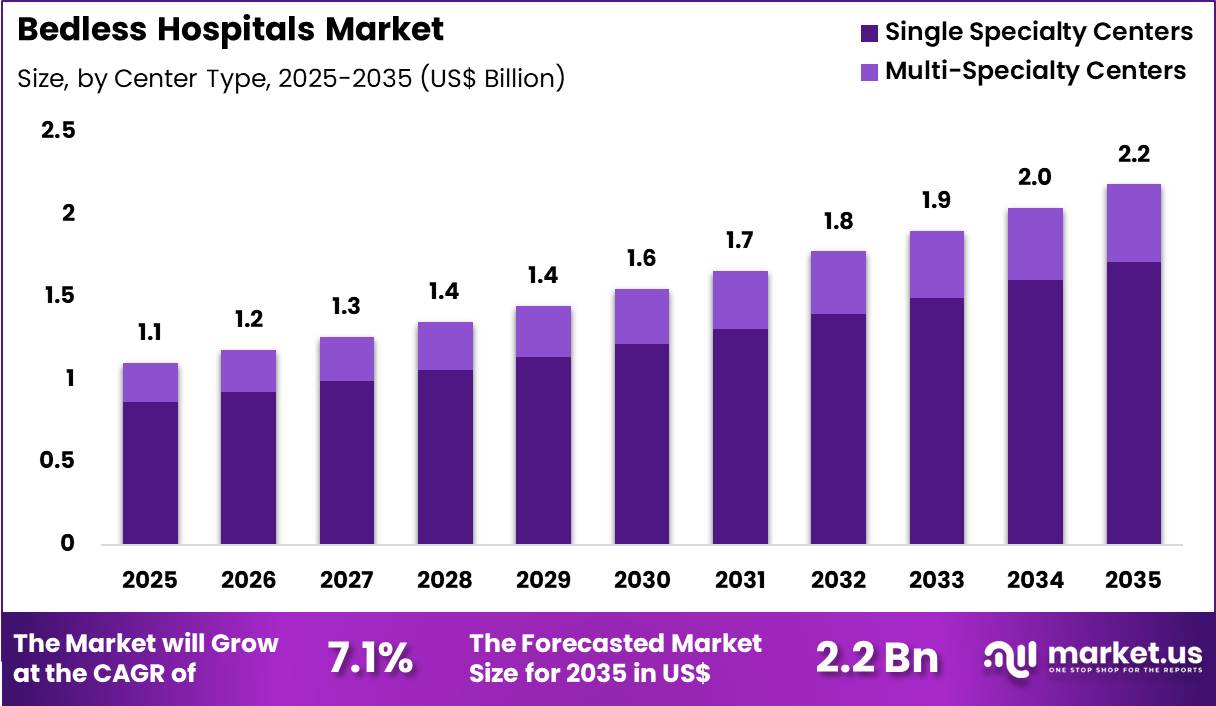
New York, NY – Nov 18 2026 – The Global Bedless Hospitals Market size is expected to be worth around US$ 2.2 Billion by 2035 from US$ 1.1 Billion in 2025, growing at a CAGR of 7.1% during the forecast period 2026-2035. In 2025, North America led the market, achieving over 46.8% share with a revenue of US$ 0.5 Billion.
Bedless hospitals represent an emerging healthcare delivery model in which traditional hospital infrastructure and inpatient bed capacity are reduced or eliminated through the adoption of outpatient services, day-care treatments, digital healthcare technologies, and advanced medical facilities. These hospitals focus on providing efficient, accessible, and cost-effective healthcare without requiring patients to stay overnight.
The bedless hospital model is supported by growing demand for minimally invasive procedures, same-day surgeries, preventive healthcare, telemedicine, and patient-centric treatment solutions. Advanced diagnostic equipment, digital patient management systems, remote monitoring technologies, and specialized medical services play an important role in supporting this healthcare model.
One of the major advantages of bedless hospitals is their ability to optimize operational costs, improve resource utilization, reduce patient waiting times, and expand access to specialized healthcare services. This model also supports the broader shift toward decentralized healthcare delivery, where medical services are provided closer to patients and outside conventional inpatient settings.
The growing focus on healthcare infrastructure modernization, technological advancements, and value-based care is expected to create new opportunities for the bedless hospital model. As healthcare providers increasingly prioritize operational efficiency and patient convenience, bedless hospitals are emerging as a potential alternative to conventional hospital-based care.
Key Takeaways
- In 2025, the market was valued at US$ 1.1 billion and is projected to reach US$ 2.2 billion by 2035, growing at a CAGR of 7.1% during the forecast period.
- Based on service type, the market is segmented into outpatient services, diagnostics and imaging services, consultative services, emergency services, and others. Among these, outpatient services dominated the market, accounting for a share of 48.2%.
- By healthcare specialty, the market is categorized into gastroenterology, ophthalmology, orthopedics, pain and neurology, urology, dermatology, cardiology, pediatrics, and others. Gastroenterology emerged as the leading segment, capturing 26.8% of the market share.
- Based on center type, the market is divided into single-specialty centers and multi-specialty centers. Single-specialty centers dominated the market, accounting for the largest revenue share of 78.6%.
- By technology utilization, the market is segmented into remote monitoring devices, mobile health applications, wearable health technology, and others. Remote monitoring devices led the segment, capturing a revenue share of 36.5%.
- Regionally, North America dominated the global market, accounting for the largest market share of 46.8%.
Key Market Segments
- Service Type Analysis: Outpatient services dominated the bedless hospitals market, accounting for 48.2% of the service type segment. This dominance is attributed to the growing preference for same-day diagnosis, treatment, and minor surgical procedures without overnight admission. Increasing healthcare cost pressures, demand for convenient treatment, and the expansion of ambulatory care facilities are further supporting segment growth.
- Healthcare Specialty Analysis: Gastroenterology emerged as the leading healthcare specialty, accounting for 26.8% of the market. Its dominance is driven by the increasing demand for outpatient gastrointestinal procedures, including endoscopy, colonoscopy, and digestive health screenings. Rising cases of gastrointestinal disorders and growing emphasis on preventive screening and early disease detection are further contributing to segment expansion.
- Center Type Analysis: Single-specialty centers dominated the bedless hospitals market, capturing 78.6% of the total revenue share. Their leadership is supported by specialized clinical expertise, streamlined operations, and investments in dedicated medical equipment. Growing demand for focused outpatient treatments across gastroenterology, ophthalmology, and orthopedics is further encouraging healthcare providers to establish single-specialty facilities.
- Technology Utilization Analysis: Remote monitoring devices held the largest share of the technology utilization segment, accounting for 36.5% of the market. Their adoption is driven by the growing need for continuous patient monitoring beyond traditional hospital settings. Increasing integration of connected medical devices, wearable sensors, and digital healthcare platforms is further supporting remote patient management and post-procedure care.
Regional Analysis
North America Dominates the Bedless Hospitals Market
North America accounted for 46.8% of the bedless hospitals market in 2025, driven by the growing adoption of outpatient healthcare services and same-day treatment facilities. Healthcare providers across the United States and Canada are increasingly investing in ambulatory surgery centers, advanced diagnostic facilities, and minimally invasive treatment technologies.
The expansion of digital health platforms, robotic surgery, and remote patient monitoring has further supported the adoption of bedless healthcare models. Additionally, increasing pressure to reduce healthcare expenditure and hospital overcrowding has encouraged providers to shift toward cost-efficient outpatient care delivery.
Asia Pacific Bedless Hospitals Market to Register the Highest CAGR
Asia Pacific is expected to register the highest CAGR during the forecast period, supported by healthcare infrastructure development, urbanization, and rising demand for accessible medical services.
Countries such as China, India, Japan, and Singapore are expanding outpatient facilities and day-care surgical centers. Growing investments in digital healthcare, minimally invasive procedures, and advanced diagnostic technologies are further expected to accelerate regional market growth.
Emerging Trends
- Home-Based Treatment for Chronic Diseases: Bedless hospital models can support patients suffering from chronic conditions such as diabetes, hypertension, and heart failure. Remote consultations, regular monitoring, medication management, and follow-up services allow patients to receive continuous medical support without frequent hospital visits.
- Post-Surgical Recovery at Home: Patients recovering from selected surgical procedures can receive nursing assistance, wound monitoring, medication support, and virtual consultations at home. This approach can support earlier discharge, improve recovery convenience, and reduce the need for extended inpatient hospital stays.
- Elderly and Frailty Care: Bedless healthcare services can support elderly individuals who require regular medical supervision but do not always need inpatient treatment. Remote monitoring, home nursing, medication management, and specialist consultations can help manage age-related health conditions in familiar surroundings.
- Acute Care and Hospital Admission Avoidance: Patients with suitable acute conditions, including selected respiratory illnesses and heart failure episodes, can receive hospital-level treatment through virtual wards. Medical teams can monitor their condition, arrange home visits, and provide timely interventions when required.
- Healthcare Access in Rural and Remote Areas: Bedless hospital models can improve access to medical specialists in locations with limited hospital infrastructure. Telemedicine platforms connect local healthcare facilities and patients with doctors at larger hospitals, reducing geographical barriers to medical consultations.
Use Cases
- Expansion of Hospital-at-Home Services: Healthcare providers are increasingly developing hospital-at-home programmes to treat selected patients in their homes. These services include medical supervision, nursing visits, medication delivery, and remote consultations. This approach helps reduce unnecessary hospital admissions and improves the use of existing hospital resources.
- Increasing Adoption of Remote Patient Monitoring: Remote patient monitoring is becoming an important part of bedless healthcare delivery. Connected devices, wearable sensors, and digital monitoring systems allow healthcare professionals to track patients’ vital signs, including heart rate, blood pressure, and oxygen levels, without requiring continuous hospital stays.
- Integration of Artificial Intelligence in Virtual Healthcare: Artificial intelligence is increasingly being integrated into digital healthcare platforms to support clinical decision-making, patient monitoring, and healthcare coordination. AI-supported systems can help identify changes in patient conditions and support timely medical intervention in home-based healthcare settings.
- Growth of Virtual Wards and Digital Care Networks: Virtual wards are expanding as healthcare systems seek alternatives to conventional inpatient services. These models connect doctors, nurses, specialists, and patients through digital platforms, enabling hospital-level treatment at home while supporting early discharge and reducing pressure on hospital infrastructure.
- Expansion of Government-Supported Telemedicine Services: Government initiatives are supporting the development of bedless healthcare through telemedicine infrastructure. India’s eSanjeevani platform demonstrates this development, providing remote consultations through a nationwide network of healthcare facilities and medical professionals.
Frequently Asked Questions About Bedless Hospitals
- What technologies are used in bedless hospitals?
Bedless hospitals use telemedicine platforms, artificial intelligence, wearable devices, remote patient monitoring systems, electronic health records, and connected medical equipment. These technologies help healthcare professionals monitor patients and coordinate treatment outside conventional hospital environments. - How do bedless hospitals support elderly patients?
Bedless hospitals support elderly patients through home nursing, remote health monitoring, medication management, and virtual specialist consultations. These services can reduce unnecessary hospital visits while allowing older individuals to receive medical support in familiar surroundings. - What role does telemedicine play in bedless hospitals?
Telemedicine enables patients to consult doctors remotely through video calls, digital platforms, and connected healthcare systems. It supports diagnosis, treatment guidance, follow-up consultations, and specialist access without requiring patients to travel to hospitals. - What are the major factors driving the bedless hospitals market?
The market is supported by increasing healthcare expenditure, rising demand for home-based medical services, hospital capacity constraints, ageing populations, and digital healthcare adoption. The need to improve healthcare accessibility is also encouraging alternative care delivery models. - Which technologies are creating opportunities in the bedless hospitals market?
Artificial intelligence, wearable medical devices, remote monitoring platforms, cloud-based healthcare systems, telemedicine, and electronic health records are creating opportunities. These technologies support continuous patient observation, faster communication, and better coordination between healthcare professionals. - Which healthcare services are included in the bedless hospitals market?
The market includes hospital-at-home programmes, virtual wards, remote consultations, home nursing, digital diagnostics, chronic disease monitoring, and post-surgical recovery services. These services enable healthcare providers to deliver selected medical treatments beyond traditional hospital infrastructure. - Which patient groups are creating demand for bedless hospital services?
Demand is associated with elderly individuals, patients with chronic diseases, people requiring post-surgical recovery, and patients with selected acute conditions. These groups can benefit from appropriate home-based treatment, remote monitoring, and regular medical supervision. - How are government initiatives supporting the bedless hospitals market?
Government healthcare initiatives are supporting digital consultations, virtual healthcare infrastructure, and remote medical services. India’s eSanjeevani programme is an example, connecting patients and healthcare providers through a nationwide telemedicine network.
Conclusion
The bedless hospitals market is expected to witness steady growth, driven by increasing demand for outpatient services, same-day treatments, minimally invasive procedures, and technology-enabled healthcare delivery. The growing adoption of remote patient monitoring, digital health platforms, and specialized medical centers is further supporting market development.
North America currently leads the market, while Asia Pacific is expected to offer significant growth opportunities due to expanding healthcare infrastructure and rising demand for accessible medical services. As healthcare providers focus on cost optimization, operational efficiency, and patient convenience, bedless hospitals are expected to become an increasingly important part of the global healthcare ecosystem.
Discuss your needs with our analyst
Please share your requirements with more details so our analyst can check if they can solve your problem(s)