


Overview
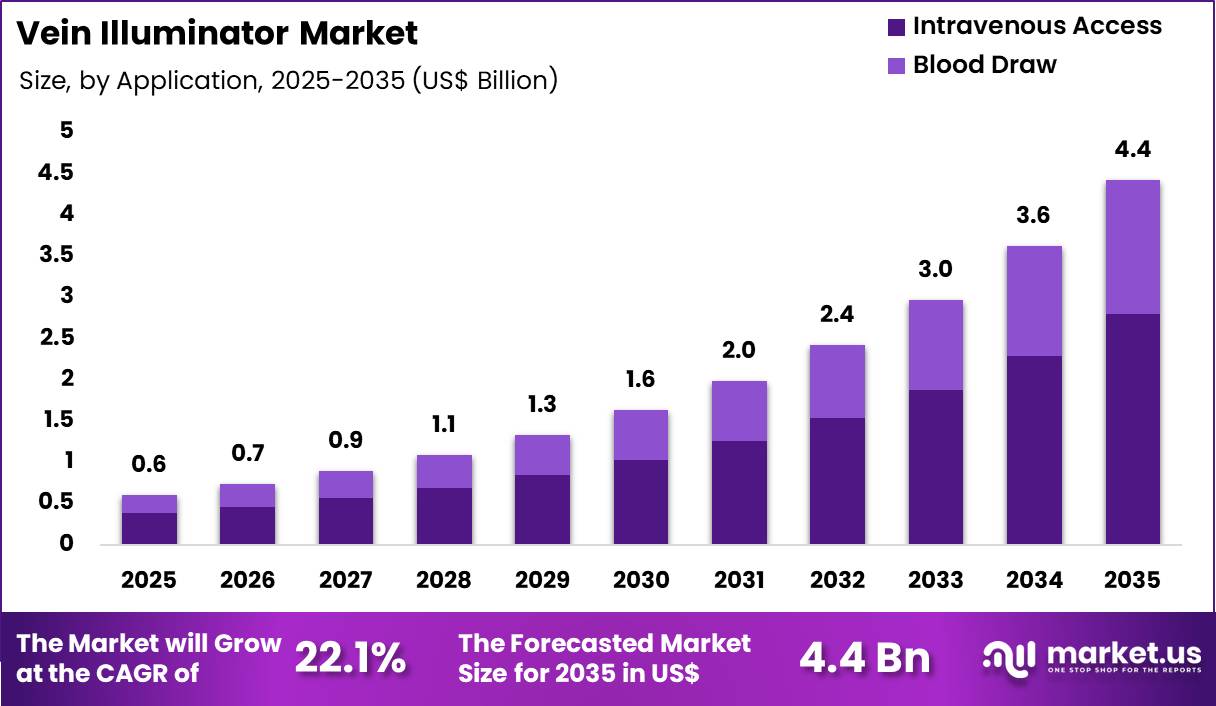
New York, NY – Oct 30, 2026 – The Global Vein Illuminator Market size is expected to be worth around US$ 4.4 Billion by 2035 from US$ 0.6 Billion in 2025, growing at a CAGR of 22.1% during the forecast period 2026 to 2035. In 2025, North America led the market, achieving over 40.0% share with a revenue of US$ 0.2 Billion.
A Vein Illuminator is a medical device designed to assist healthcare professionals in locating veins beneath the skin. It uses advanced imaging technology, typically near-infrared (NIR) light, to visualize superficial veins and display their position on the skin’s surface. This technology helps medical professionals identify suitable veins for intravenous (IV) access, blood collection, and other vascular procedures.
The device works by detecting differences in how blood and surrounding tissues absorb and reflect near-infrared light. The captured information is processed and converted into a visual image, allowing veins to be viewed more clearly. Depending on the model, the projected vein image may appear directly on the patient’s skin or on a digital display.
Vein Illuminators are increasingly being used in hospitals, clinics, diagnostic laboratories, emergency departments, and other healthcare facilities. They are particularly useful for patients with difficult-to-access veins, including children, elderly individuals, and patients with challenging vascular conditions.
By improving vein visibility, these devices can support more accurate vein selection, reduce repeated needle insertion attempts, and improve the overall patient experience. With the growing emphasis on patient comfort, clinical efficiency, and advanced medical technologies, Vein Illuminators are becoming an important addition to modern healthcare infrastructure.
Key Takeaways
- In 2025, the global vein illuminator market was valued at US$ 0.6 billion and is projected to grow at a CAGR of 22.1%, reaching US$ 4.4 billion by 2035.
- Based on product type, the market is segmented into infrared, transilluminated, and ultrasound devices, with the infrared segment dominating with a 46.9% market share.
- By application, the market is categorized into intravenous access and blood draw, with intravenous access accounting for the largest share of 63.2%.
- Based on end users, the market is segmented into hospitals, rehabilitation facilities, academic institutions, and blood donation camps. Among these, hospitals dominated the market, accounting for a 54.6% revenue share.
- Regionally, North America dominated the global vein illuminator market, capturing a 40.0% market share.
Key Market Segments
- Product Type Analysis: The infrared segment dominated the vein illuminator market, accounting for 46.9% market share, driven by its ability to provide rapid, non-invasive visualization of superficial veins. Its real-time imaging capabilities improve patient comfort and support successful venipuncture, particularly among pediatric, geriatric, and obese patients. Growing adoption across hospitals, coupled with advancements in image clarity, portability, and battery efficiency, is expected to sustain segment growth.
- Application Analysis: The intravenous access segment dominated the application category, accounting for 63.2% market share, supported by the increasing demand for IV procedures in hospitals and outpatient facilities. Vein illuminators improve vein identification, reduce repeated needle insertion attempts, and enhance procedural efficiency. Rising chronic disease prevalence, increasing hospital admissions, and growing emphasis on patient comfort and vascular access safety are further supporting segment expansion.
- End-User Analysis: The hospitals segment held the leading position in the vein illuminator market, accounting for 54.6% market share. This dominance is attributed to high patient volumes and frequent vascular access procedures across emergency departments, intensive care units, and general wards. Increasing investments in patient safety, improved clinical efficiency, and advanced medical technologies are driving adoption. Growing emphasis on reducing needle insertion failures is expected to support continued segment growth.
Regional Analysis
North America Dominates the Vein Illuminator Market
North America accounted for 40.0% of the global vein illuminator market in 2024, driven by increasing adoption of advanced vascular access technologies across hospitals, clinics, and outpatient facilities.
Rising demand for efficient venipuncture, growing chronic disease prevalence, and an ageing population are supporting regional growth. Increased use of infusion therapies and emphasis on improving first-stick success rates further strengthen market adoption.
Asia Pacific is Expected to Register the Highest CAGR
The Asia Pacific vein illuminator market is anticipated to witness the highest CAGR during the forecast period, supported by expanding healthcare infrastructure, increasing diagnostic procedures, and rising demand for advanced medical devices.
Growing cases of anemia, diabetes, and cancer are increasing the need for frequent blood collection and intravenous access. Government investments in healthcare modernization, rising medical tourism, and the availability of affordable devices from regional manufacturers are further expected to accelerate market growth.
Emerging Trends
- Increasing Adoption of Near-Infrared (NIR) Technology: Near-infrared technology is gaining importance in vein visualization because it helps healthcare professionals identify superficial veins beneath the skin. The technology projects vein patterns onto the skin, supporting more accurate site selection during blood collection and intravenous procedures.
- Growing Focus on Difficult Venous Access: Hospitals are increasingly considering vein illuminators for patients with difficult-to-locate veins, including children, older adults and patients with obesity. These devices can help healthcare professionals identify suitable veins before attempting needle insertion, potentially reducing repeated attempts.
- Development of Portable and User-Friendly Devices: Manufacturers are focusing on compact, lightweight and portable vein visualization systems that can be used across different hospital departments. Handheld and cordless designs can improve convenience for nurses and other healthcare professionals during routine vascular access procedures.
- Integration of Digital Imaging and Image Processing: Digital imaging and image-processing technologies are creating opportunities for improved vein visualization. Newer development approaches use cameras, infrared light and software-based image enhancement to identify superficial veins and display clearer vascular patterns.
- Increasing Focus on Clinical Training and Technology Adoption: Healthcare facilities are placing greater importance on training medical staff to use vein visualization equipment effectively. A 2024 hospital-based study reported that 69% of participating students and nurses felt more confident performing venipuncture after using near-infrared imaging.
Use Cases
- Blood Collection and Diagnostic Testing: Vein illuminators help nurses and phlebotomists locate suitable superficial veins before collecting blood samples. Their use can support vein selection, particularly when veins are difficult to identify through normal visual inspection and touch.
- Intravenous (IV) Cannulation: These devices assist healthcare professionals in identifying suitable veins before inserting intravenous catheters. They are particularly useful when establishing peripheral IV access in patients who may require medication, fluids or other intravenous treatments.
- Pediatric Healthcare Procedures: Children may have smaller veins that are difficult to locate during routine medical procedures. Vein illuminators can provide a visual guide to superficial veins, helping healthcare professionals plan blood collection and IV access in pediatric care settings.
- Oncology and Chemotherapy Treatment: Patients receiving chemotherapy may require repeated vascular access for treatment and blood testing. Vein illuminators can assist healthcare professionals in identifying suitable superficial veins before peripheral venous access procedures.
- Emergency and Hospital-Based Vascular Access: Emergency departments and hospital wards often require timely vascular access for patient treatment. Vein visualization devices can support healthcare staff in identifying potential insertion sites, especially when conventional vein identification methods are challenging.
Frequently Asked Questions About Vein Illuminator
- How does a vein illuminator work?
A vein illuminator uses infrared light to detect differences in how blood and surrounding tissues absorb light. The device processes this information and displays a vein pattern on the skin, helping medical staff identify potential insertion locations. - Who are the major end users of vein illuminators?
Hospitals, clinics, diagnostic laboratories, emergency departments and specialized healthcare facilities represent important end users. Nurses, phlebotomists and other trained medical professionals use these devices to support vein identification during vascular access procedures. - What factors are driving the vein illuminator market?
Market growth is supported by increasing demand for efficient vascular access, rising hospital procedures, technological improvements in infrared imaging and greater attention to patient comfort. The need to locate difficult veins also supports adoption. - What technologies are commonly used in vein illuminators?
Near-infrared imaging is a widely used technology in vein illuminators. Other approaches include visible-light transillumination and digital image processing, which help improve the visibility of superficial blood vessels during clinical procedures. - What are the major challenges faced by the vein illuminator market?
High equipment costs, limited awareness, staff training requirements and variations in device performance across patients can restrict adoption. Deep veins and certain patient characteristics may also limit the effectiveness of superficial vein visualization technology. - Can vein illuminators replace conventional vein identification methods?
No. Vein illuminators are designed to support conventional visual inspection and palpation rather than replace them. Healthcare professionals must continue using clinical judgment and appropriate vascular access techniques when selecting veins. - What is the role of vein illuminators in pediatric healthcare?
Vein illuminators support pediatric healthcare by helping medical professionals identify superficial veins in children. This can be particularly useful during blood collection and IV cannulation when smaller veins make conventional vascular access more challenging. - What is the future outlook for the vein illuminator market?
The market outlook is supported by ongoing improvements in infrared imaging, portable medical equipment and digital visualization. Wider clinical evaluation, staff training and integration into hospital workflows are likely to influence future adoption.
Conclusion
The global vein illuminator market is expected to witness significant growth, driven by increasing demand for efficient vascular access, rising hospital admissions, and advancements in near-infrared imaging technology. The growing need to improve venipuncture accuracy, reduce repeated needle insertion attempts, and enhance patient comfort is supporting market adoption.
Infrared devices, intravenous access applications, and hospitals are expected to remain key market segments. North America currently leads the market, while Asia Pacific is anticipated to experience the fastest growth. With continuous technological advancements, increasing healthcare investments, and wider clinical adoption, the market is projected to reach US$ 4.4 billion by 2035, registering a CAGR of 22.1%.
Discuss your needs with our analyst
Please share your requirements with more details so our analyst can check if they can solve your problem(s)



