
Overview
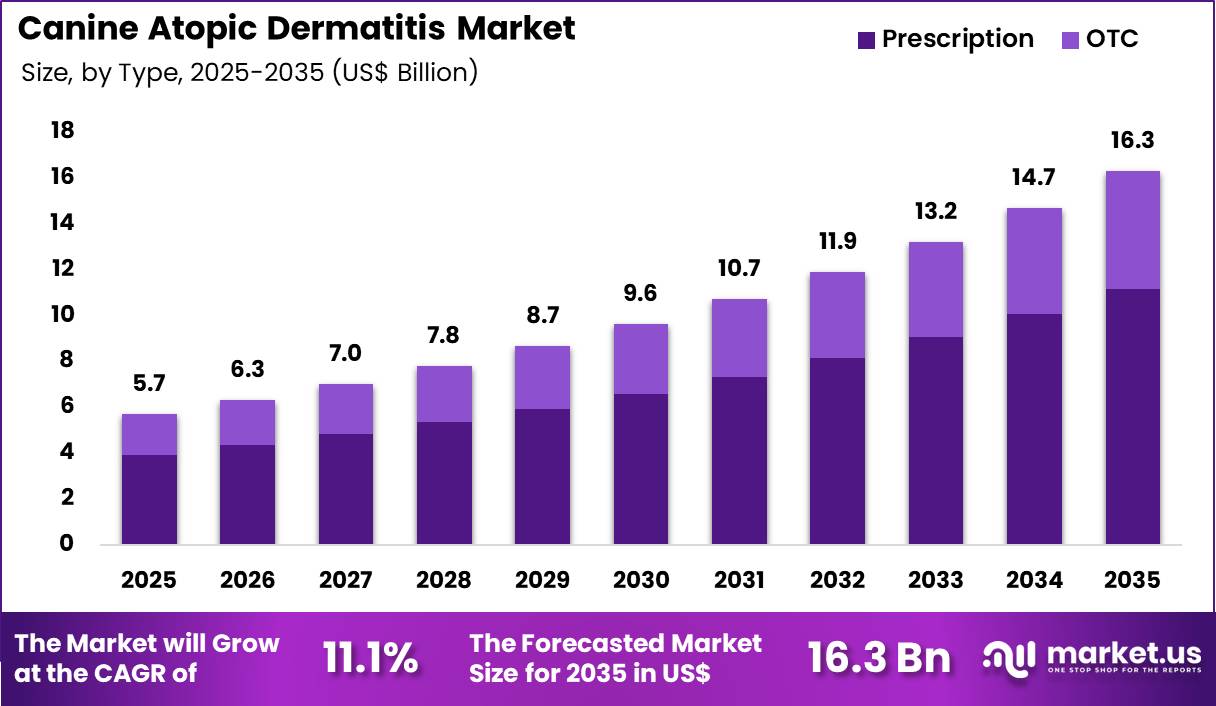
New York, NY – Nov 23 2026 – The Global Canine Atopic Dermatitis Market size is expected to be worth around US$ 16.3 Billion by 2035 from US$ 5.7 Billion in 2025, growing at a CAGR of 11.1% during the forecast period 2026-2035. In 2025, North America led the market, achieving over 41.2% share with a revenue of US$ 2.4 Billion.
Canine Atopic Dermatitis (CAD) is a common, chronic, and inflammatory skin disease in dogs, primarily associated with allergic reactions to environmental substances such as pollen, dust mites, mold spores, and other allergens. The condition is characterized by persistent itching, skin irritation, redness, and inflammation, which can significantly affect a dog’s comfort and quality of life.
The disease develops due to a combination of genetic predisposition, impaired skin barrier function, and abnormal immune responses to environmental allergens. Commonly affected areas include the paws, ears, face, abdomen, and skin folds. In some cases, repeated scratching and licking can lead to secondary bacterial or yeast infections, further worsening the symptoms.
Canine Atopic Dermatitis can affect dogs of different breeds and ages, although certain breeds may have a higher genetic susceptibility. As the condition is chronic, long-term management is generally required. Treatment approaches include allergen avoidance, medicated shampoos, topical therapies, anti-inflammatory medications, immunotherapy, and other veterinary-prescribed treatments.
Growing awareness of pet health, increasing veterinary expenditure, and rising demand for effective dermatological treatments are contributing to greater attention toward Canine Atopic Dermatitis. Continued advancements in veterinary dermatology are also supporting the development of improved diagnostic and treatment solutions.
Key Takeaways
- In 2025, the global market was valued at US$ 5.7 billion and is projected to grow at a CAGR of 11.1%, reaching US$ 16.3 billion by 2035.
- Based on product type, the market is segmented into glucocorticoids, antihistamines, immunosuppressants, monoclonal antibodies (mAbs), and others. Among these, glucocorticoids dominated the market, accounting for a share of 39.6%.
- By type, the market is categorized into prescription and over-the-counter (OTC) products, with prescription products representing the leading segment.
- Based on dog breed, the market is segmented into retrievers, German shepherds, terriers, and others. Among these, retrievers (Golden and Labrador) accounted for a significant market share of 55.1%.
- By mode of administration, the market is divided into oral, topical, and injectable treatments, with oral administration dominating the market at a revenue share of 72.8%.
- Based on end users, the market is categorized into veterinary hospitals and clinics, with this segment accounting for the largest revenue share of 54.6%.
- Regionally, North America dominated the global market, accounting for a market share of 41.2%.
Key Market Segments
- Product Analysis: Glucocorticoids accounted for 39.6% of the product segment, maintaining their leading position in the canine atopic dermatitis market. Their rapid anti-inflammatory effects, ability to control itching, and effectiveness in reducing skin irritation make them a preferred treatment for managing acute allergic flare-ups.
- Dog Breed Analysis: Retrievers accounted for 55.1% of the dog breed segment, driven by their higher susceptibility to allergic skin conditions and widespread popularity as companion animals. Labrador and Golden Retrievers are frequently associated with atopic dermatitis, supporting consistent demand for veterinary diagnosis and long-term treatment.
- Mode of Administration Analysis: Oral administration accounted for 72.8% of the mode of administration segment, supported by convenient dosing, ease of use, and better treatment adherence. Oral medications provide effective systemic relief and can be administered at home, making them suitable for managing recurring symptoms and chronic skin conditions.
- Distribution Channel Analysis: Veterinary hospitals and clinics accounted for 54.6% of the distribution channel segment, supported by their essential role in disease diagnosis, prescription, and treatment monitoring. Access to veterinary expertise, specialized diagnostic services, and personalized treatment plans continues to strengthen their position as the primary distribution channel.
Regional Analysis
North America Canine Atopic Dermatitis Market Analysis
North America accounted for 41.2% of the canine atopic dermatitis market in 2025, supported by high pet ownership, advanced veterinary healthcare infrastructure, and increasing awareness of canine skin disorders. The United States and Canada have witnessed greater adoption of veterinary dermatology services, enabling early diagnosis and effective disease management.
According to the American Pet Products Association, approximately 65.1 million U.S. households owned a dog in 2023, creating substantial demand for dermatological treatments. Growing adoption of monoclonal antibodies, immunomodulators, and topical therapies is further supporting market expansion. Additionally, rising pet healthcare expenditure, expanding specialty veterinary clinics, and continued pharmaceutical innovation are strengthening regional growth. Increasing preference for advanced treatments that improve animal health and quality of life is expected to sustain North America’s leading position in the market.
Asia Pacific Canine Atopic Dermatitis Market Analysis
Asia Pacific is expected to register the highest CAGR during the forecast period, driven by increasing pet ownership, rising disposable incomes, and improving veterinary healthcare infrastructure. Countries such as China, India, Japan, and South Korea are experiencing growing adoption of companion animals, particularly among urban households. Increasing awareness of canine allergic skin conditions is encouraging pet owners to seek professional diagnosis and treatment.
Veterinary clinics are expanding dermatology services, while pharmaceutical companies are strengthening regional product availability. Furthermore, improvements in veterinary education, preventive healthcare practices, and access to advanced medications are supporting treatment adoption. Rising expenditure on premium pet healthcare services and growing demand for effective long-term disease management are expected to accelerate the expansion of the canine atopic dermatitis market across Asia Pacific.
Emerging Trends
- Increasing adoption of targeted biological therapies: The adoption of biological therapies, particularly monoclonal antibodies such as lokivetmab, is increasing the treatment options available for dogs with atopic dermatitis. These therapies target specific inflammatory signals responsible for itching, supporting more focused disease management and long-term treatment approaches.
- Growing focus on JAK inhibitor-based treatments: Janus kinase (JAK) inhibitors, including oclacitinib, are gaining importance because they help control itching and inflammation by blocking specific immune signalling pathways. The development and clinical evaluation of additional JAK inhibitors are expanding treatment choices for veterinary dermatology.
- Rising demand for personalised treatment approaches: Veterinary treatment is increasingly being tailored according to disease severity, allergy triggers, skin condition, and individual drug response. Allergen-specific immunotherapy, targeted medication, and supportive skin care are being combined to improve treatment outcomes and reduce repeated disease flare-ups.
- Increased attention to skin barrier restoration and microbiome health: Research and clinical recommendations are placing greater emphasis on restoring the skin barrier and maintaining healthy skin microorganisms. Medicated shampoos, moisturising formulations, essential fatty acids, and microbiome-modulating products are receiving attention as complementary options for disease management.
- Expansion of long-term and preventive disease management: The treatment approach is shifting beyond temporary itch relief towards continuous disease control and prevention of recurring symptoms. Veterinary guidelines increasingly support maintenance therapies, infection control, allergen management, and regular clinical monitoring, creating opportunities for recurring treatment-related demand.
Use Cases
- Treatment of chronic itching and skin inflammation: Veterinary medicines such as oclacitinib, lokivetmab, and corticosteroids are used to manage itching, redness, and inflammation associated with canine atopic dermatitis. These treatments help improve animal comfort and reduce skin damage caused by continuous scratching and licking.
- Allergen identification and immunotherapy: Allergy testing is used to identify environmental allergens that may trigger symptoms in affected dogs. Based on relevant test results, allergen-specific immunotherapy can be developed to modify the immune response and provide longer-term control of allergic skin disease.
- Management of secondary bacterial and yeast infections: Dogs with atopic dermatitis can develop secondary skin and ear infections caused by bacteria and yeast. Veterinary professionals use appropriate antimicrobial treatments, medicated shampoos, and infection monitoring to control these complications and prevent further skin damage.
- Skin barrier protection and supportive dermatological care: Moisturising products, essential fatty acid supplements, and specialised veterinary shampoos are used to support skin barrier function. These products help maintain skin hydration and complement prescription treatments, particularly in dogs requiring continuous management of chronic allergic skin conditions.
- Long-term management of recurrent allergic conditions: Veterinary clinics use personalised treatment plans to manage dogs experiencing repeated allergic flare-ups. These plans may include maintenance medication, allergen avoidance, regular skin examinations, and treatment adjustments, supporting continued disease control and improved quality of life.
Frequently Asked Questions About Canine Atopic Dermatitis
- What is canine atopic dermatitis?
Canine atopic dermatitis is a chronic inflammatory skin condition caused by an allergic reaction to environmental or other allergens in genetically susceptible dogs. It commonly results in itching, redness, skin irritation, and recurring infections. - What are the common symptoms of canine atopic dermatitis?
Common symptoms include excessive scratching, licking, chewing of paws, redness, hair loss, and recurring ear infections. The face, ears, paws, abdomen, and skin folds are frequently affected in dogs with this condition. - What causes canine atopic dermatitis?
Canine atopic dermatitis develops due to a combination of genetic susceptibility, immune system responses, and exposure to allergens. Common triggers include house dust mites, pollens, environmental substances, and certain food-related allergens in susceptible dogs. - What are the major factors driving the canine atopic dermatitis market?
Market development is supported by growing attention to companion animal health, demand for effective veterinary dermatology treatments, improved diagnostic practices, and increasing availability of targeted therapies for managing chronic allergic skin conditions. - Which product categories are included in the canine atopic dermatitis market?
Major product categories include prescription medications, monoclonal antibodies, JAK inhibitors, corticosteroids, immunotherapy products, medicated shampoos, moisturisers, and nutritional supplements. These products support different stages of diagnosis, symptom relief, and long-term disease management. - Which treatment segment is gaining importance in the canine atopic dermatitis market?
Biological therapies and JAK inhibitors are gaining clinical importance because they target specific inflammatory pathways involved in itching and skin inflammation. Their use is expanding treatment choices alongside established corticosteroids and immunosuppressive therapies. - What opportunities exist in the canine atopic dermatitis market?
Opportunities include developing longer-lasting treatments, improving allergen-specific immunotherapy, expanding veterinary dermatology services, and introducing advanced skin barrier products. Research into microbiome health also provides opportunities for complementary treatment development. - What is the future outlook for the canine atopic dermatitis market?
The market is expected to benefit from continued developments in targeted medicines, biological therapies, personalised treatment, and preventive skin care. Greater emphasis on long-term disease control is likely to support further veterinary treatment innovation.
Conclusion
The global canine atopic dermatitis market is expected to witness strong growth, driven by increasing pet ownership, rising veterinary healthcare expenditure, and growing awareness of chronic allergic skin conditions in dogs. The adoption of advanced treatment options, including monoclonal antibodies, JAK inhibitors, and personalised immunotherapy, is further supporting market development.
North America is expected to maintain its leading position, while Asia Pacific is anticipated to experience the fastest growth during the forecast period. Continued advancements in veterinary dermatology, improved diagnostic capabilities, and increasing demand for long-term disease management solutions are expected to create significant growth opportunities, driving the market towards US$ 16.3 billion by 2035.
Discuss your needs with our analyst
Please share your requirements with more details so our analyst can check if they can solve your problem(s)