
Overview
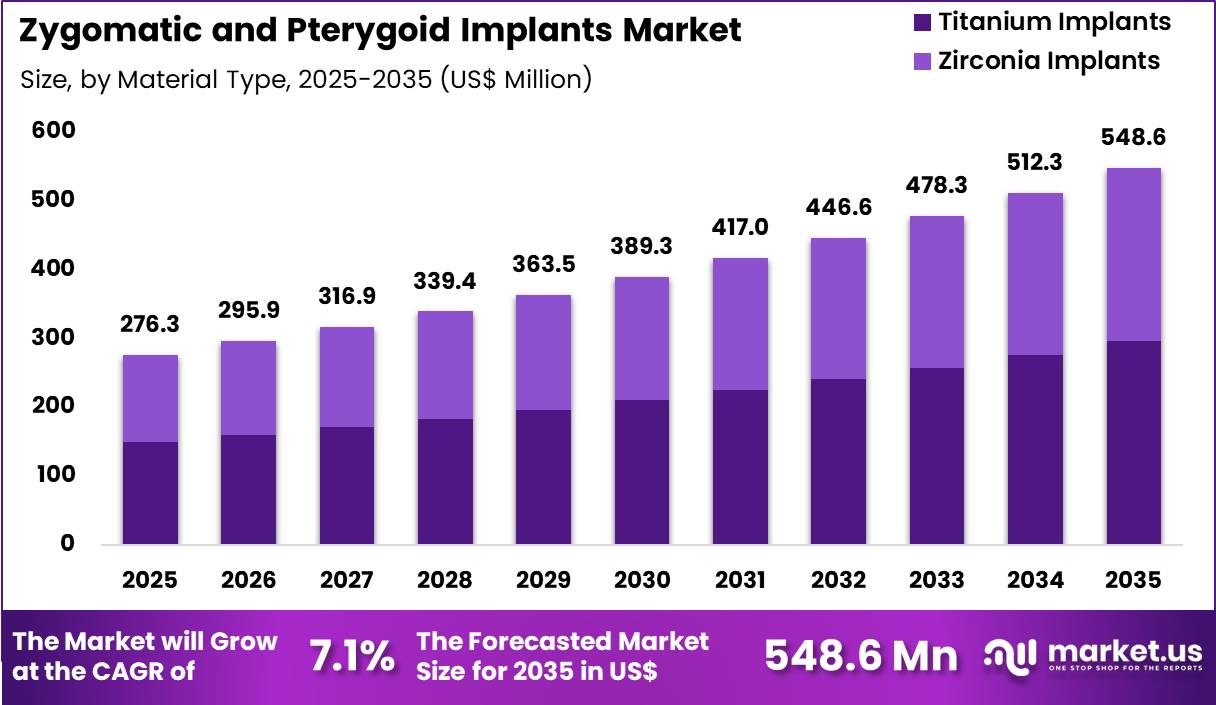
New York, NY – Nov 23 2026 – The Global Zygomatic and Pterygoid Implants Market size is expected to be worth around US$ 548.6 Million by 2035 from US$ 276.3 Million in 2025, growing at a CAGR of 7.1% during the forecast period 2026-2035. In 2025, North America led the market, achieving over 41.3% share with a revenue of US$ 114.1 Million.
Zygomatic and pterygoid implants are advanced dental implant solutions designed for patients with severe upper jawbone loss who may not be suitable candidates for conventional dental implants. These specialized implants provide alternative options for restoring oral function, aesthetics, and quality of life.
Zygomatic implants are longer implants anchored in the zygomatic bone (cheekbone), bypassing areas of insufficient bone in the upper jaw. They are commonly used in patients with severe maxillary bone loss and can help reduce the need for extensive bone grafting procedures.
Pterygoid implants are placed in the pterygoid region of the upper jaw, engaging dense bone to provide strong posterior support for fixed dental restorations. They are particularly useful in cases where conventional implants cannot be placed in the back region of the upper jaw due to insufficient bone volume.
Both techniques require advanced surgical expertise, detailed treatment planning, and appropriate diagnostic imaging. Their adoption has expanded treatment possibilities for patients with complex dental conditions.
With continued advancements in implant technology, digital dentistry, and surgical techniques, zygomatic and pterygoid implants are contributing to the development of more predictable and effective solutions for full-mouth rehabilitation.
Key Takeaways
- In 2025, the market was valued at US$ 276.3 Million and is projected to grow at a CAGR of 7.1%, reaching US$ 548.6 Million by 2035.
- Based on material type, the market is segmented into titanium implants and zirconia implants, with titanium implants dominating the segment with a 53.9% market share.
- By application, the market is categorized into maxillary bone loss, severe alveolar atrophy, maxillary sinuses, and other applications. Among these, maxillary bone loss accounted for the largest share of 55.1%.
- Based on end users, the market is segmented into hospitals, dental clinics, ambulatory surgical centers, academic institutions, and others. Dental clinics dominated the segment, accounting for 58.6% of the total market revenue.
- By distribution channel, the market is classified into direct sales, dental distributors, and online channels. Dental distributors held the leading position, capturing a revenue share of 48.5%.
- Regionally, North America dominated the global market, accounting for the largest share of 41.3%.
Key Market Segments
- Material Type Analysis: Titanium implants dominated the material type segment with a 53.9% market share, supported by their proven clinical history, mechanical strength, and reliable osseointegration. Their widespread use, established surgical workflows, and continuous improvements in surface technology are expected to sustain demand in complex maxillary restorations.
- Application Analysis: Maxillary bone loss dominated the application segment with a 55.1% market share, driven by the increasing need for advanced dental rehabilitation among patients with severe upper jawbone deterioration. Zygomatic and pterygoid implants provide stable anchorage in dense anatomical structures, reducing dependence on extensive bone grafting procedures.
- End User Analysis: Dental clinics dominated the end-user segment with a 58.6% market share, owing to their central role in implant consultations, surgical planning, prosthetic rehabilitation, and patient follow-up. Increasing investments in digital imaging, advanced surgical technologies, and specialized implant services are expected to strengthen their market position.
- Distribution Channel Analysis: Dental distributors led the distribution channel segment with a 48.5% market share, supported by their extensive provider networks, product availability, and technical assistance. Their ability to supply implant systems, surgical instruments, and prosthetic components, alongside clinical training and inventory management, continues to support their importance in market distribution.
Regional Analysis
North America Dominates the Zygomatic and Pterygoid Implants Market
North America dominated the zygomatic and pterygoid implants market in 2025, accounting for 41.3% of the total market share. This leadership is attributed to the growing adoption of advanced dental implant procedures, increasing prevalence of tooth loss, and well-established dental healthcare infrastructure.
Rising demand for full-arch rehabilitation, particularly among the geriatric population, has further supported regional growth. Additionally, technological advancements in digital imaging, guided surgery, and implant design have improved treatment precision and clinical outcomes. Increasing investments in specialized dental clinics and professional training programs are also strengthening the adoption of advanced implant solutions across the region.
Asia Pacific Expected to Register the Highest CAGR
Asia Pacific is expected to register the highest CAGR during the forecast period, supported by improving dental healthcare infrastructure, rising disposable incomes, and growing awareness of advanced dental treatments. Countries such as China, India, Japan, and South Korea are witnessing increasing investments in specialized dental clinics and implant technologies.
Rising periodontal disease prevalence and demand for aesthetic dental restoration are further supporting adoption. Additionally, expanding professional training, international manufacturer partnerships, and growing availability of digital dentistry solutions are expected to accelerate regional market growth.
Emerging Trends
- Increasing Preference for Graft-Free Implant Procedures: The use of zygomatic and pterygoid implants is gaining clinical attention because these procedures can reduce the need for extensive bone grafting in patients with severe upper-jaw bone loss. This may help reduce treatment stages and overall treatment time.
- Adoption of Digital Treatment Planning and 3D Imaging: The use of cone-beam computed tomography (CBCT), 3D imaging, and computer-assisted planning is increasing in complex implant procedures. These technologies help surgeons examine bone structure, identify anatomical risks, and plan implant placement more accurately.
- Growing Interest in Immediate-Load Implant Solutions: Immediate-loading approaches are receiving attention because they can allow eligible patients to receive temporary fixed teeth shortly after implant placement. This approach may reduce the waiting period for functional rehabilitation, depending on initial implant stability and clinical conditions.
- Development of Advanced Implant Designs and Materials: Manufacturers are focusing on implant designs, surface properties, and materials that support stability and compatibility with human tissues. Titanium remains an established material, while improvements in implant geometry are supporting the development of solutions for complex jaw anatomy.
- Greater Focus on Surgical Training and Patient Safety: The growing complexity of zygomatic and pterygoid implant procedures is increasing the importance of specialist training, careful patient selection, and postoperative monitoring. International clinical recommendations emphasize experienced surgical teams and appropriate diagnostic assessments before treatment.
Use Cases
- Rehabilitation of Patients with Severe Upper-Jaw Bone Loss: Zygomatic implants are used in patients with severe bone loss in the upper jaw, where conventional implants may not provide sufficient support. They are anchored in the cheekbone to support fixed dental prostheses.
- Replacement of Missing Posterior Upper Teeth: Pterygoid implants are used to replace missing teeth in the back region of the upper jaw. They obtain support from the pterygoid region, helping provide posterior anchorage when conventional bone support is limited.
- Full-Arch Dental Rehabilitation: Both implant types can be used as part of full-arch rehabilitation for patients who have lost most or all upper teeth. They can provide additional support for fixed dental bridges when conventional implant placement is difficult.
- Treatment After Failed Bone Grafting or Dental Implants: Zygomatic implants can be considered when previous bone grafting or conventional implant procedures have failed. They provide an alternative anchoring method for selected patients who have limited remaining upper-jaw bone.
- Rehabilitation Following Facial Trauma or Jawbone Removal: Zygomatic implants can support dental rehabilitation in selected patients who have lost part of their upper jaw because of facial injuries, surgery, or tumour removal. Treatment planning requires careful evaluation of the remaining bone and surrounding tissues.
Frequently Asked Questions About Zygomatic and Pterygoid Implants
- What are pterygoid implants?
Pterygoid implants are specialised dental implants placed in the posterior upper jaw and anchored in the pterygoid region. They are used to provide support for replacement teeth when sufficient bone is unavailable in the back of the upper jaw. - What is the main difference between zygomatic and pterygoid implants?
Zygomatic implants are anchored in the cheekbone and generally support rehabilitation in cases of severe upper-jaw bone loss. Pterygoid implants are anchored in the posterior pterygoid region to provide support for missing back teeth. - What materials are used in zygomatic and pterygoid implants?
Titanium and titanium alloys are commonly used in dental implant systems because of their established biocompatibility and strength. Certain implant systems also use zirconium oxide, depending on their design and clinical application. - What are the major benefits of zygomatic and pterygoid implants?
These implants can provide additional anchorage in areas with limited upper-jaw bone. In selected patients, they may reduce the need for extensive bone grafting and support fixed dental rehabilitation with fewer treatment stages. - What diagnostic methods are used before implant placement?
Dentists generally use clinical examinations and CT or CBCT imaging to evaluate bone volume, sinus health, and surrounding anatomical structures. Three-dimensional assessment supports treatment planning and helps identify potential surgical risks. - What opportunities exist in the zygomatic and pterygoid implants market?
Opportunities are emerging through digital dentistry, computer-assisted surgery, improved implant designs, and growing demand for graft-free rehabilitation. Expanding specialist dental facilities may also support the availability of these advanced treatment options. - How is digital technology influencing this market?
Digital technologies such as CBCT imaging, three-dimensional treatment planning, surgical guides, and navigation systems are improving preoperative assessment. These technologies can support more accurate implant positioning and help surgeons manage complex anatomical conditions. - What is the future outlook for the zygomatic and pterygoid implants market?
The market outlook is supported by advancements in implant technology, increasing interest in minimally invasive treatment planning, and demand for complex dental rehabilitation. However, long-term growth will depend on clinical evidence, affordability, and specialist training.
Conclusion
The global zygomatic and pterygoid implants market is expected to experience steady growth, increasing from US$ 276.3 million in 2025 to US$ 548.6 million by 2035, at a CAGR of 7.1%. Market expansion is supported by rising demand for advanced dental rehabilitation, increasing cases of severe maxillary bone loss, and growing adoption of digital dentistry.
Titanium implants, maxillary bone loss applications, dental clinics, and dental distributors represent key market segments. North America currently dominates the market, while Asia Pacific is expected to register the highest growth. Technological advancements and improved surgical techniques will further support future market development.
Discuss your needs with our analyst
Please share your requirements with more details so our analyst can check if they can solve your problem(s)