


Overview
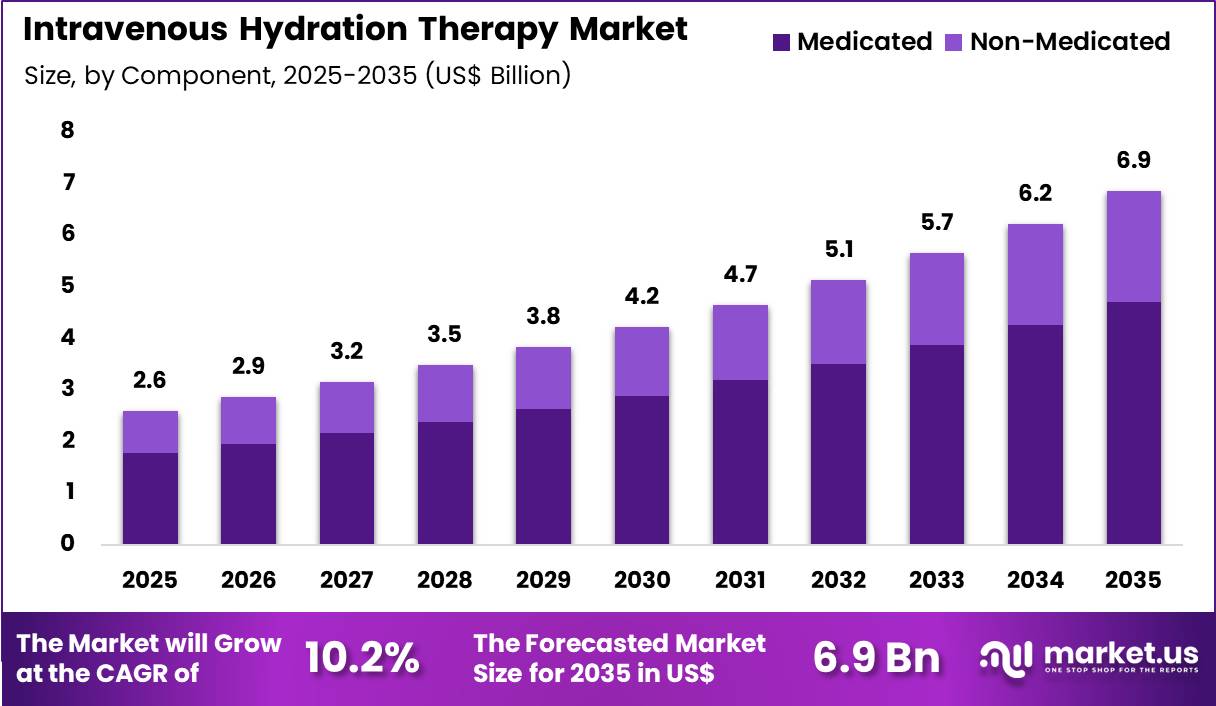
New York, NY – Nov 13 2026 – The Global Intravenous Hydration Therapy Market size is expected to be worth around US$ 6.9 Billion by 2035 from US$ 2.6 Billion in 2025, growing at a CAGR of 10.2% during the forecast period 2026-2035. In 2025, North America led the market, achieving over 48.6% share with a revenue of US$ 1.3 Billion.
Intravenous (IV) Hydration Therapy is a medical treatment in which fluids, electrolytes, vitamins, and other nutrients are administered directly into the bloodstream through an intravenous drip. The therapy is primarily used to support hydration and restore fluid balance, particularly in individuals experiencing dehydration due to illness, physical exertion, or inadequate fluid intake.
Unlike oral hydration, IV therapy delivers fluids directly into the circulatory system, allowing rapid fluid replacement when clinically appropriate. Depending on individual health requirements, formulations may include saline solutions, essential electrolytes, and selected vitamins. The treatment is commonly provided in hospitals, specialized healthcare facilities, and wellness clinics under the supervision of qualified healthcare professionals.
Growing awareness of preventive healthcare, increasing demand for personalized wellness services, and the expansion of specialized outpatient care facilities are contributing to interest in IV Hydration Therapy. Its applications are also being explored across healthcare and wellness settings.
However, IV Hydration Therapy is not necessary for everyone, and its benefits depend on individual medical conditions and treatment requirements. Potential risks include infection, vein irritation, and fluid or electrolyte imbalances. Therefore, proper medical assessment, appropriate formulation selection, and professional administration remain essential for patient safety.
With continued developments in healthcare delivery and personalized treatment approaches, IV Hydration Therapy is gaining attention as a specialized service within the broader hydration and wellness sector.
Key Takeaways
- In 2025, the global market was valued at US$ 2.6 Billion and is projected to grow at a CAGR of 10.2% during the forecast period, reaching US$ 6.9 Billion by 2035.
- Based on service, the market is categorized into energy boosters, immune boosters, hydration, beauty/aesthetics, detoxification, longevity/anti-aging, performance/athletics, migraine and pain relief, flu/stomach, and others. Among these, energy boosters dominated the market, accounting for a 27.1% share.
- By component, the market is segmented into medicated and non-medicated. The medicated segment held the dominant position, capturing a market share of 68.5%.
- Based on provider, the market is classified into physical providers and mobile providers. The physical providers segment led the market, accounting for the largest revenue share of 78.1%.
- In terms of end use, the market is divided into hospitals and clinics, wellness centers and spas, home healthcare, and others. The hospitals and clinics segment dominated the market, representing a revenue share of 44.6%.
- Regionally, North America emerged as the leading market, accounting for the largest share of 48.6%.
Key Market Segments
- Service Analysis: The energy boosters segment dominated the service category, accounting for 27.1% of the market. Its leading position is driven by rising consumer demand for fatigue recovery, energy restoration, and improved physical performance. Increasing adoption of vitamin B complex, vitamin C, and electrolyte-based infusions among professionals, athletes, and travelers is further supporting segment growth.
- Component Analysis: The medicated segment dominated the component category, accounting for 68.5% of the market. Its growth is supported by the increasing use of vitamin, mineral, and therapeutic drug-based infusions for managing dehydration, electrolyte imbalances, infections, and nutritional deficiencies. Rising adoption of medically supervised infusion treatments across hospitals and clinics is further strengthening demand.
- Provider Analysis: The physical providers segment dominated the provider category, accounting for 78.1% of the market. Its leading position is attributed to established healthcare infrastructure, qualified medical professionals, and supervised treatment facilities. Increasing patient preference for clinically monitored IV hydration services, coupled with the expansion of specialized infusion centers and outpatient clinics, is supporting segment growth.
- End-Use Analysis: The hospitals and clinics segment dominated the end-use category, accounting for 44.6% of the market. Its dominance is driven by the widespread administration of intravenous fluids for dehydration, infections, electrolyte imbalances, and postoperative recovery. High patient volumes, access to trained healthcare professionals, and expanding outpatient infusion services are further supporting segment growth.
Regional Analysis
North America dominated the Intravenous Hydration Therapy Market, accounting for 48.6% of the market share in 2025. Regional growth is driven by the widespread availability of healthcare facilities, increasing demand for rapid rehydration treatments, and rising adoption of infusion services across hospitals, clinics, and wellness centers.
Growing cases of dehydration, heat-related illnesses, and gastrointestinal disorders have further supported the utilization of intravenous fluid therapies. Additionally, expanding outpatient infusion services, home-based treatment programs, and increasing consumer interest in vitamin-infused hydration solutions are strengthening regional market growth.
Asia Pacific is expected to register the highest CAGR during the forecast period, supported by expanding healthcare infrastructure, rising healthcare expenditure, and increasing awareness of dehydration management. Countries such as India, China, and Japan are witnessing improvements in hospital facilities and emergency healthcare services.
Furthermore, increasing cases of heat-related illnesses, infectious diseases, and gastrointestinal disorders are driving demand for intravenous fluid administration. The expansion of private wellness clinics and growing availability of infusion therapy services are expected to create additional growth opportunities across the region.
Emerging Trends
- Expansion of IV Hydration Wellness Clinics: The growing availability of specialized IV hydration clinics and medical spas is supporting the commercial expansion of this market. These facilities offer hydration services combined with vitamins, minerals, and electrolytes. However, the clinical benefits of many elective wellness combinations remain insufficiently established.
- Increasing Demand for Personalized IV Formulations: Healthcare providers and wellness facilities are offering different IV formulations based on individual requirements. These formulations may contain saline solutions, electrolytes, vitamins, and minerals. This trend is encouraging service providers to develop treatment options for specific hydration and nutritional needs.
- Growing Adoption of Home-Based Infusion Services: The availability of home infusion services is creating opportunities for patient convenience and continued treatment outside hospitals. Remote monitoring, nursing support, and patient training are supporting this care model. Medicare’s home infusion benefit also provides an established framework for eligible treatments.
- Greater Focus on Treatment Safety and Regulatory Compliance: Increasing attention is being given to clinical supervision, sterile preparation, and proper administration of IV solutions. Healthcare authorities are highlighting contamination risks and inconsistent practices at some commercial hydration facilities. This is encouraging greater focus on qualified professionals and patient safety.
- Development of Outpatient and Alternative Infusion Settings: Infusion services are increasingly being delivered through settings outside traditional hospital environments, including physician offices and qualified home-care facilities. This approach can improve treatment accessibility and support care coordination. The expansion of these settings is creating additional service delivery opportunities.
Use Cases
- Treatment of Severe Dehydration: IV hydration is used to restore lost fluids in patients experiencing severe dehydration. It is particularly relevant when dehydration is associated with shock, altered mental status, or failure of oral rehydration. Fluid selection and administration require medical assessment.
- Fluid Replacement During Gastrointestinal Illness: Patients experiencing significant fluid loss due to persistent vomiting or diarrhea may require intravenous fluids. This treatment helps replace lost water and electrolytes when oral rehydration is insufficient or cannot be tolerated.
- Hospital-Based Fluid and Electrolyte Management: IV hydration is used in hospitals to maintain fluid balance, replace existing fluid deficits, and manage electrolyte requirements. It is particularly important for patients whose hydration needs cannot be adequately addressed through oral or enteral intake.
- Postoperative Fluid Management: Patients recovering from surgical procedures may require intravenous fluids when normal food and fluid intake is temporarily limited. IV therapy can support fluid replacement and maintenance during recovery, depending on the patient’s clinical condition and prescribed treatment plan.
- Home-Based Infusion and Long-Term Treatment Support: Home infusion services are used for eligible patients who require prescribed intravenous medications or other infusion treatments outside hospitals. Nursing assistance, patient education, equipment, and remote monitoring support the safe delivery of these services.
Frequently Asked Questions About Intravenous Hydration Therapy
- How does intravenous hydration therapy work?
During the procedure, a healthcare professional inserts a small catheter into a vein and administers a prescribed fluid solution. The fluid enters the bloodstream directly, allowing the body to receive water and necessary electrolytes. - What conditions can be treated with IV hydration therapy?
IV hydration is commonly used for severe dehydration, significant fluid loss from vomiting or diarrhea, and certain hospital-related fluid management requirements. Its use depends on medical assessment and whether oral fluid replacement is appropriate. - What types of fluids are used in intravenous hydration therapy
Commonly used IV fluids include normal saline, lactated Ringer’s solution, and other prescribed electrolyte-containing solutions. The selection depends on the patient’s hydration status, electrolyte levels, medical condition, and required fluid replacement. - What are the major challenges affecting the intravenous hydration therapy market?
The market faces challenges related to treatment costs, limited clinical evidence for certain wellness claims, infection risks, sterile preparation requirements, and regulatory differences. These factors can influence consumer confidence and healthcare provider participation. - What role do home healthcare services play in this market?
Home healthcare services support the administration of prescribed infusion treatments outside traditional hospitals. Nursing assistance, patient training, medical equipment, and remote monitoring are important components supporting this delivery model and improving treatment accessibility. - How does regulatory compliance affect the intravenous hydration therapy market?
Regulatory compliance affects product preparation, professional qualifications, prescription requirements, and treatment administration. Stronger oversight can improve patient safety, reduce contamination risks, and establish greater confidence in commercial IV hydration service providers. - What are the future opportunities in the intravenous hydration therapy market?
Future opportunities may emerge from expanding home infusion services, improved outpatient treatment access, specialized hydration formulations, and better clinical monitoring. However, commercial growth will depend on demonstrated treatment benefits, patient safety, and regulatory compliance.
Conclusion
The intravenous hydration therapy market is expected to witness steady growth, supported by increasing demand for effective dehydration management, expanding outpatient healthcare services, and rising adoption of home-based infusion treatments. The availability of specialized IV fluids, improved administration technologies, and growing healthcare infrastructure is further supporting market development.
However, challenges related to treatment costs, clinical evidence, infection risks, and regulatory compliance may influence market expansion. Going forward, opportunities are expected to emerge from advancements in infusion solutions, improved patient monitoring, and wider access to specialized hydration services, with patient safety and clinical effectiveness remaining key priorities.
Discuss your needs with our analyst
Please share your requirements with more details so our analyst can check if they can solve your problem(s)



