


Overview
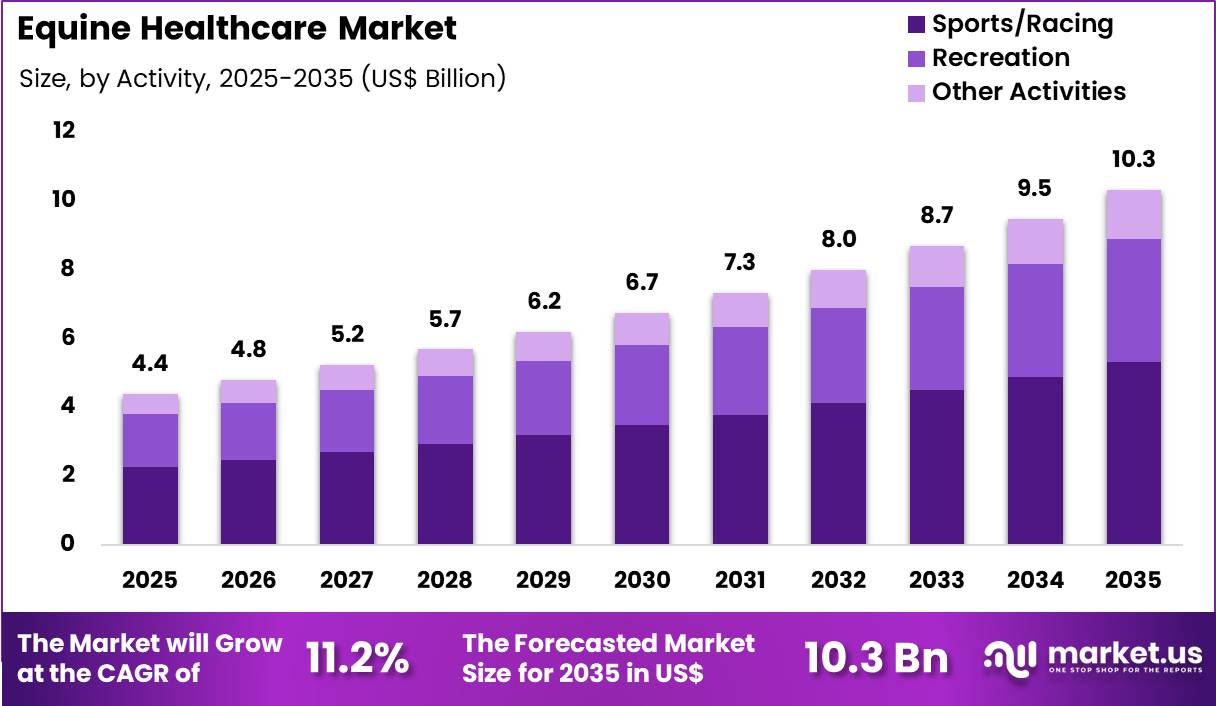
New York, NY – Nov 17 2026 – The Global Equine Healthcare Market size is expected to be worth around US$ 10.3 Billion by 2035 from US$ 4.4 Billion in 2025, growing at a CAGR of 11.2% during the forecast period 2026-2035. In 2025, North America led the market, achieving over 44.6% share with a revenue of US$ 2.0 Billion.
Equine healthcare refers to the comprehensive management of horses’ health, well-being, and medical needs through preventive care, diagnosis, treatment, and rehabilitation. It plays an important role in maintaining horse health, improving performance, and extending life expectancy across various applications, including racing, breeding, sports, recreation, and farm activities.
The sector covers a wide range of services and products, including veterinary care, vaccinations, dental care, diagnostic testing, nutritional supplements, medications, wound management, and rehabilitation therapies. Regular veterinary examinations, balanced nutrition, parasite control, and appropriate exercise are essential components of effective equine healthcare management.
Growing awareness of animal welfare, increasing participation in equestrian sports, and rising expenditure on veterinary services are supporting the development of the equine healthcare sector. Furthermore, advancements in veterinary diagnostics, digital health monitoring, regenerative medicine, and specialized treatment solutions are creating new opportunities for market development.
As horse owners, breeders, and equestrian organizations increasingly prioritize preventive healthcare, demand for advanced veterinary services and innovative equine health products is expected to increase. Overall, equine healthcare remains an essential component of the global animal healthcare industry, with continued opportunities for innovation and service expansion.
Key Takeaways
- In 2025, the global equine healthcare market was valued at US$ 4.4 Billion and is projected to grow at a CAGR of 11.2%, reaching US$ 10.3 Billion by 2035.
- Based on product, the market is categorized into pharmaceuticals, vaccines, medicinal feed additives, orthobiologics, diagnostics, software & services, and others. Among these, pharmaceuticals dominated the market, accounting for a share of 44.3%.
- Based on indication, the market is segmented into musculoskeletal disorders, parasitic infections, equine herpes virus, equine viral arteritis (EVA), equine influenza, West Nile virus, tetanus, and other indications. Among these, parasitic infections accounted for a significant market share of 29.1%.
- Based on activity, the market is classified into sports/racing, recreation, and other activities. The sports/racing segment emerged as the leading category, capturing the largest revenue share of 51.6%.
- Based on distribution channel, the market is divided into veterinary hospitals & clinics, e-commerce, equestrian facilities, and other channels. The veterinary hospitals & clinics segment dominated the market, accounting for 46.2% of total revenue.
- Regionally, North America dominated the global equine healthcare market, accounting for the largest market share of 44.6%.
Key Market Segments
- Product Analysis: Pharmaceuticals dominated the product segment with a 44.3% market share, driven by their essential role in infection control, pain management, inflammation reduction, and post-treatment recovery. Rising cases of parasitic infections, musculoskeletal disorders, and gastrointestinal conditions are supporting demand for equine medicines. Increasing emphasis on preventive healthcare and targeted treatments is further strengthening segment growth.
- Indication Analysis: Parasitic infections accounted for the largest indication share of 29.1%, owing to the widespread occurrence of internal parasites, particularly strongyles, among horses. Regular deworming, diagnostic testing, and veterinary monitoring remain essential for maintaining equine health. Growing awareness of parasite resistance is also encouraging evidence-based treatment approaches.
- Activity Analysis: Sports/racing dominated the activity segment with a 51.6% share, supported by increasing expenditure on performance enhancement, injury prevention, rehabilitation, and routine veterinary care. The growing economic importance of competitive equestrian activities is further driving demand for specialized healthcare solutions.
- Distribution Channel Analysis: Veterinary hospitals and clinics led the distribution channel segment with a 46.2% share, owing to their established role in diagnosis, treatment, vaccination, and pharmaceutical dispensing. Increasing preference for professional veterinary supervision and specialized equine treatments is expected to sustain segment dominance.
Regional Analysis
North America Dominates the Equine Healthcare Market
North America accounted for the largest share of the equine healthcare market at 44.6% in 2025, supported by a well-established veterinary infrastructure and a substantial horse population. The United States has a developed equine industry, with approximately 6.65 million horses, according to the 2023 National Equine Economic Impact Study.
Rising participation in horse racing, equestrian sports, and recreational riding is increasing demand for veterinary treatments, vaccinations, diagnostics, and preventive healthcare. Furthermore, advancements in veterinary imaging, regenerative medicine, orthopedic treatments, and rehabilitation services are strengthening regional market growth.
Asia Pacific Expected to Record the Highest CAGR
Asia Pacific is expected to register the highest CAGR during the forecast period, driven by growing equestrian activities, increasing awareness of animal welfare, and improvements in veterinary infrastructure.
Countries such as China, India, Japan, Mongolia, and Australia are witnessing rising investments in veterinary services, disease surveillance, and vaccination programs. Additionally, expanding horse racing activities, veterinary training programs, and regional pharmaceutical manufacturing are expected to create significant growth opportunities for the equine healthcare market.
Emerging Trends
- Increasing Adoption of Wearable Health Monitoring Devices: Wearable biometric sensors are gaining attention in equine healthcare for monitoring horse movement, heart rate, and physical activity. These devices can help identify early signs of musculoskeletal injuries and support timely veterinary intervention. An American Association of Equine Practitioners (AAEP) study demonstrated the potential of wearable sensors for identifying injury risks in Thoroughbred racehorses.
- Growing Use of Artificial Intelligence in Veterinary Diagnostics: Artificial intelligence is increasingly being explored for equine disease detection, diagnostic imaging, and movement analysis. AI-supported technologies can help veterinarians identify abnormal movement patterns, evaluate medical images, and improve clinical decision-making. The American Association of Equine Practitioners has identified AI and digital technologies as important developments in modern equine veterinary practice.
- Expansion of Equine Telemedicine Services: Remote veterinary consultations are becoming an important part of equine healthcare delivery. Telemedicine enables veterinarians to assess follow-up cases, review clinical images, communicate with horse owners, and monitor recovery. The AAEP recognizes telehealth as a useful tool for veterinary collaboration, treatment monitoring, and improved communication with horse owners.
- Development of Advanced Point-of-Care Diagnostic Technologies: The demand for faster and more accessible diagnostic testing is encouraging the development of stall-side testing solutions. These technologies can help veterinarians evaluate certain health conditions without depending entirely on external laboratory facilities. Faster diagnostic information can support treatment decisions, particularly in emergency care and large equine facilities.
- Greater Focus on Preventive Healthcare and Disease Surveillance: Preventive healthcare is receiving increased attention due to the risk of infectious and vector-borne diseases affecting horses. Government-led disease monitoring, vaccination planning, biosecurity measures, and health reporting are becoming important parts of equine management. USDA APHIS continues to monitor diseases such as equine piroplasmosis and equine viral arteritis.
Use Cases
- Sports Horse Injury Prevention and Performance Management: Equine healthcare solutions are widely used to monitor racehorses, competition horses, and other performance animals. Veterinary examinations, gait analysis, imaging, and rehabilitation services help identify injuries, manage physical stress, and support recovery.
- Reproductive Healthcare and Breeding Management: Veterinary reproductive services are used to improve breeding outcomes through fertility examinations, pregnancy monitoring, reproductive disease management, and foaling assistance. These services support the health of breeding stallions, broodmares, and newborn foals while helping maintain breeding productivity.
- Emergency Treatment and Gastrointestinal Disease Management: Equine healthcare services are essential for treating emergency conditions such as colic, abdominal pain, dehydration, and intestinal obstruction. Diagnostic examinations, fluid therapy, medication, and surgical procedures are used to manage critical conditions and improve survival outcomes.
- Dental Healthcare and Nutritional Management: Dental examinations and treatments are used to address uneven tooth wear, oral infections, and chewing difficulties in horses. Veterinary dental care, combined with nutritional assessment, helps maintain proper food intake, body condition, and overall animal health.
- Infectious Disease Treatment and Chronic Health Management: Equine veterinary services are used to manage infectious diseases, respiratory conditions, parasitic infections, and long-term health problems. Vaccination, laboratory testing, prescribed medication, and regular examinations help reduce complications and maintain the health of horses.
Frequently Asked Questions About Equine Healthcare
- What are the most common health problems in horses?
Common equine health problems include colic, lameness, laminitis, osteoarthritis, respiratory infections, dental disorders, and reproductive conditions. These problems may affect horse mobility, performance, nutritional health, and overall quality of life. - Why is preventive healthcare important for horses?
Preventive healthcare helps identify potential health problems before they become severe. Regular veterinary examinations, vaccination, dental care, parasite control, proper nutrition, and suitable stable management can reduce disease risks and support long-term horse welfare. - What diagnostic methods are used in equine healthcare?
Equine diagnostic methods include physical examinations, blood tests, ultrasound, radiography, endoscopy, and advanced medical imaging. These methods help veterinarians identify injuries, infections, reproductive conditions, respiratory disorders, and other medical problems requiring treatment. - How does technology improve equine healthcare?
Technology improves equine healthcare through wearable sensors, digital imaging, artificial intelligence, and remote monitoring systems. These solutions help veterinarians track physical activity, identify abnormal movement, assess health changes, and make more informed treatment decisions. - What are the major factors driving the equine healthcare market?
Market growth is supported by increasing awareness of animal welfare, rising expenditure on veterinary services, greater participation in equestrian sports, and growing demand for preventive treatments. Advancements in diagnostic technologies are also supporting healthcare adoption. - What are the major segments of the equine healthcare market?
The market can be segmented by product and service categories, including pharmaceuticals, vaccines, diagnostic equipment, surgical products, veterinary services, and nutritional supplements. Applications include preventive care, infectious disease management, reproductive health, and sports medicine. - How is digital technology creating opportunities in the equine healthcare market?
Digital technology is creating opportunities through remote veterinary consultations, wearable monitoring devices, AI-supported diagnostics, and digital health records. These solutions can improve health tracking, support early intervention, and increase access to veterinary expertise.
Conclusion
The global equine healthcare market is experiencing significant growth, driven by increasing awareness of animal welfare, rising veterinary expenditure, and expanding participation in horse racing and equestrian sports.
Valued at US$ 4.4 billion in 2025, the market is projected to reach US$ 10.3 billion by 2035, registering a CAGR of 11.2%. Pharmaceuticals, parasitic infection treatments, and sports-related healthcare remain major revenue-generating segments.
Additionally, advancements in wearable monitoring devices, artificial intelligence, telemedicine, and veterinary diagnostics are creating new growth opportunities. Increasing investments in preventive healthcare, specialized treatments, and veterinary infrastructure are expected to further strengthen market expansion.
Discuss your needs with our analyst
Please share your requirements with more details so our analyst can check if they can solve your problem(s)



