


Overview
New York, NY – Aug 13, 2026 – The Global Small Molecule API Market size is expected to reach around US$ 369.37 Billion by 2034, up from US$ 208.21 Billion in 2024, growing at a CAGR of 5.9% during the forecast period from 2025 to 2034. North America held a dominant market position, capturing more than a 38.7% share and holding a US$ 80.57 billion market value for the year.
The global Small Molecule Active Pharmaceutical Ingredient (API) market is witnessing steady growth, driven by rising demand for generic medicines, increasing chronic disease prevalence, and continuous pharmaceutical innovation.
Small molecule APIs are low molecular weight chemical compounds that provide therapeutic effects and are widely used in oral dosage forms such as tablets and capsules. These APIs play a crucial role in treating major disease areas, including oncology, cardiovascular disorders, diabetes, infectious diseases, and neurological conditions.
The market is supported by the growing global healthcare burden. According to the World Health Organization (WHO), noncommunicable diseases remain responsible for a significant proportion of global deaths, increasing the need for affordable and effective medicines.
Cancer demand is also accelerating, with the International Agency for Research on Cancer (IARC) reporting approximately 20 million new cancer cases in 2022, projected to exceed 35 million cases annually by 2050.
Regulatory approvals continue to expand opportunities for API manufacturers. In 2024, the U.S. FDA approved 50 new drugs, while the European Medicines Agency (EMA) recommended 114 medicines, including 46 new active substances, creating demand for new API development and manufacturing capacity. Additionally, the WHO Model List of Essential Medicines updated in 2025 includes 523 medicines for adults and 374 for children, supporting consistent demand for essential small molecule drugs.
Increasing outsourcing to contract manufacturing organizations (CMOs), government initiatives for supply chain security, and investments in GMP-compliant manufacturing facilities are further strengthening market growth. The rising focus on reliable API supply, cost efficiency, and regulatory compliance is expected to drive long-term expansion of the small molecule API market.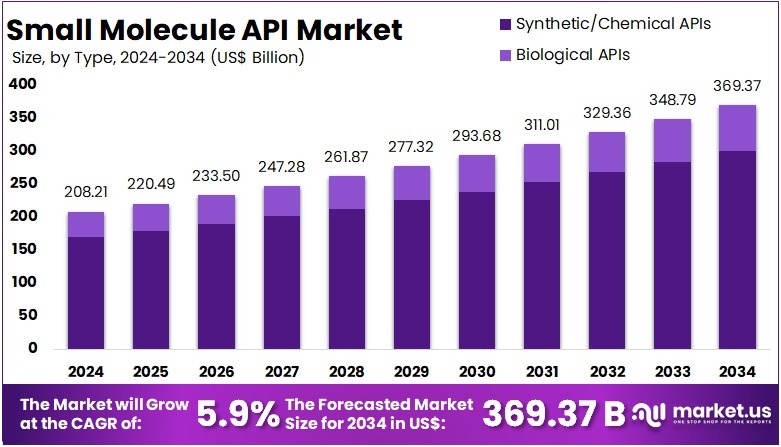
Key Takeaways
- The global small molecule API market is expected to grow from US$ 208.21 billion in 2024 to approximately US$ 369.37 billion by 2034, reflecting strong industry expansion.
- The market is projected to register a CAGR of 5.9% between 2025 and 2034, indicating steady and sustainable growth over the forecast period.
- Synthetic/chemical APIs accounted for the largest share of the type segment in 2024, representing more than 81.3% of the global small molecule API market.
- Commercial applications dominated the application segment in 2024, contributing over 78.8% of the overall small molecule API applications market share.
- In-house manufacturing remained the leading manufacturing approach in 2024, holding approximately 59.7% share of the global small molecule API manufacturing segment.
- Oncology was the leading therapeutic area in 2024, capturing around 33.1% of the global small molecule API market share due to rising demand for cancer treatments.
- Pharmaceutical companies emerged as the largest end-user segment in 2024, accounting for more than 45.8% of the overall small molecule API market share.
- North America held the leading position in the regional market in 2024, capturing a 38.7% share with a market value of approximately US$ 80.57 billion.
Statistical Information
- Growing Cancer Burden Increases Demand for Oncology Small Molecule APIs: Cancer treatment remains one of the strongest demand areas for small molecule APIs, particularly oral targeted therapies and supportive medicines. According to the WHO’s International Agency for Research on Cancer (IARC), approximately 20 million new cancer cases were reported globally in 2022, and the number is expected to rise to more than 35 million cases by 2050 due to population ageing and risk factors.
- Essential Medicine Demand Supports Continuous Small Molecule API Consumption: The demand for small molecule APIs is strongly supported by the global requirement for essential medicines used in chronic and infectious disease treatment. The WHO Model List of Essential Medicines 2025 includes more than 520 medicines, including 374 medicines for children, guiding procurement decisions in over 150 countries. Many listed medicines are chemically synthesized small molecules requiring reliable API supply.
- Increasing Cancer Cases Drive Oncology Small Molecule API Demand: Oncology remains a major application area for small molecule APIs due to increasing cancer incidence worldwide. The WHO’s International Agency for Research on Cancer (IARC) reported nearly 20 million new cancer cases and around 10 million cancer deaths in 2022. Global cancer cases are projected to reach 35 million annually by 2050, representing approximately a 77% increase compared with 2022 levels.
- Diabetes Growth Increases Demand for Oral Small Molecule Drugs: The rising global diabetes population is increasing demand for small molecule APIs used in glucose management therapies. According to the International Diabetes Federation (IDF), approximately 537 million adults aged 20–79 years were living with diabetes in 2021. The number is projected to increase to 643 million by 2030 and 783 million by 2045, creating sustained demand for diabetes medicines.
- Ageing Population Creates Long-Term Demand for Chronic Disease APIs: Population ageing is increasing the need for medicines used in cardiovascular disease, cancer, neurological disorders, and metabolic conditions. According to the United Nations, the global population aged 65 years and above reached 761 million in 2021 and is projected to increase to approximately 1.6 billion by 2050. This demographic shift supports sustained demand for small molecule medicines.
- Cancer Incidence Creates Long-Term Demand for Oncology APIs: Oncology is one of the fastest-growing therapeutic areas for small molecule APIs due to increasing cancer prevalence and demand for targeted treatments. The WHO’s International Agency for Research on Cancer (IARC) estimated approximately 20 million new cancer cases in 2022 and forecasts global cases could reach more than 35 million annually by 2050, increasing the need for oncology medicines.
- Antibiotic Resistance Creates Need for Reliable Antimicrobial API Supply: Antimicrobial medicines remain a critical category of small molecule APIs due to rising resistance challenges. The WHO reported that bacterial antimicrobial resistance was directly responsible for approximately 1.27 million deaths globally in 2019 and contributed to nearly 5 million associated deaths, highlighting the continued requirement for effective antimicrobial drug availability.
- Rising Prescription Medicine Use Supports Small Molecule API Demand: Increasing prescription medicine utilization is strengthening demand for widely used small molecule APIs across chronic disease treatment areas. According to the U.S. Centers for Medicare & Medicaid Services (CMS), total U.S. prescription drug spending reached approximately US$405 billion in 2022, increasing by about 8.4% compared with 2021. Growth in medicine consumption supports continued API production requirements.
- Hypertension Treatment Demand Supports Cardiovascular API Growth: Hypertension medicines represent a major segment of small molecule API consumption due to the widespread prevalence of high blood pressure. The WHO reported that approximately 1.28 billion adults aged 30–79 years worldwide had hypertension in 2021, with nearly 46% unaware of their condition. Increased diagnosis and treatment access continue to support demand for antihypertensive APIs.
Regional Analysis
North America dominated regional markets in 2024, holding a 38.7% share
North America remains a leading region for the small molecule API market, supported by strong pharmaceutical consumption, advanced healthcare infrastructure, and high demand for prescription medicines. The United States is the major contributor due to its significant pharmaceutical spending. According to the U.S. Centers for Medicare & Medicaid Services (CMS), national prescription drug spending reached approximately US$405 billion in 2022, reflecting continued growth in medicine utilization.
The region’s high disease burden also supports API demand, with chronic conditions such as cancer, diabetes, and cardiovascular diseases requiring long-term small molecule therapies. The WHO reported that noncommunicable diseases account for a major share of deaths across the Americas, increasing the need for essential medicines. Regulatory strength further supports market expansion. The U.S. FDA approved 50 novel drugs in 2024, creating opportunities for new API development and manufacturing. Strong generic medicine adoption and investments in pharmaceutical supply chains continue to strengthen North America’s position in the global small molecule API market.
Emerging Trends
- Increasing Focus on Essential Medicines and Supply Security: Small molecule APIs are gaining importance as governments focus on reliable access to essential medicines. The WHO 2025 Essential Medicines List includes more than 520 medicines, including 374 pediatric medicines, supporting continuous demand for quality API manufacturing across healthcare systems. More than 150 countries use WHO-based medicine lists for procurement planning.
- Growth of Oncology Small Molecule APIs for Targeted Therapies: Oncology remains a major use case for small molecule APIs due to rising cancer incidence and demand for targeted oral therapies. The WHO’s cancer research agency reported approximately 20 million new cancer cases in 2022, with global cases expected to exceed 35 million annually by 2050, increasing the need for advanced oncology medicines.
- Expansion of Generic Drug Manufacturing and Cost-Efficient APIs: Generic medicine production is increasing the requirement for affordable small molecule APIs. The U.S. FDA reported that generic medicines represent approximately 90% of prescriptions dispensed in the United States, helping reduce healthcare costs while maintaining treatment access. This trend encourages pharmaceutical companies to expand high-quality API sourcing and manufacturing capacity.
- Increasing Drug Approvals Create New API Development Opportunities: Continuous regulatory approvals are driving demand for new small molecule API development, process optimization, and commercial manufacturing. The U.S. FDA approved 50 novel drugs in 2024, including therapies across oncology, metabolic diseases, and rare conditions. Each approval creates opportunities for API suppliers to support clinical and commercial production requirements.
- Rising Demand for Chronic Disease Treatment APIs: The growing burden of chronic diseases is increasing the requirement for small molecule APIs used in cardiovascular, diabetes, and neurological medicines. According to the WHO, noncommunicable diseases cause approximately 41 million deaths annually, representing around 74% of global deaths, creating long-term demand for chronic therapy APIs.
Use Cases
- Oncology Treatment and Targeted Cancer Therapies: Small molecule APIs are widely used in oncology medicines, including targeted therapies, kinase inhibitors, and supportive cancer treatments. Rising cancer cases are increasing demand for these APIs. According to the WHO’s IARC, approximately 20 million new cancer cases were recorded in 2022, and cases are expected to exceed 35 million annually by 2050, supporting long-term oncology API requirements.
- Cardiovascular Disease Management: Small molecule APIs play a major role in cardiovascular medicines, including statins, antihypertensive drugs, and anticoagulants. The WHO reported that cardiovascular diseases cause approximately 17.9 million deaths annually, representing around 32% of global deaths. Increasing diagnosis and long-term treatment needs are driving demand for cardiovascular API production.
- Diabetes and Metabolic Disorder Treatment: Small molecule APIs are essential in oral diabetes medicines used to control blood glucose levels. The International Diabetes Federation reported that around 537 million adults aged 20–79 years had diabetes in 2021, with projections reaching 783 million by 2045. Growing diabetes prevalence is increasing demand for APIs used in metabolic therapies.
- Infectious Disease and Antibiotic Manufacturing: Small-molecule APIs are extensively used in antibiotics and antiviral medicines for infectious disease management. The WHO reported that antimicrobial resistance was directly responsible for approximately 1.27 million deaths in 2019 and contributed to nearly 5 million associated deaths globally, increasing the need for reliable antimicrobial drug supply and API manufacturing.
- Central Nervous System (CNS) Disorder Treatment: Small molecule APIs support medicines for neurological conditions such as depression, epilepsy, Parkinson’s disease, and anxiety disorders. The WHO estimates that more than 1 billion people worldwide are affected by neurological disorders, creating continuous demand for CNS-focused small molecule medicines and active ingredient production.
Frequently Asked Questions on Small Molecule API
- Which therapeutic areas use small molecule APIs the most?
Small molecule APIs are widely used in oncology, cardiovascular disorders, diabetes, infectious diseases, and central nervous system conditions. Increasing disease burden and long-term treatment requirements continue to support demand across these therapeutic areas. - How does cancer growth impact the Small Molecule API Market?
Rising cancer incidence increases demand for oncology small molecule APIs used in targeted therapies and supportive treatments. The WHO reported around 20 million new cancer cases in 2022, supporting long-term requirements for cancer medicines. - What role do generic medicines play in the Small Molecule API Market?
Generic medicines are a major demand driver because they provide affordable alternatives to branded therapies. According to the FDA, generic drugs account for more than 90% of prescriptions filled in the United States. - How do drug approvals influence small molecule API demand?
New drug approvals create opportunities for API manufacturers by introducing new active ingredients requiring development and commercial production. The FDA approved 50 novel drugs in 2024, supporting continued pharmaceutical manufacturing demand. - Which region dominates the Small Molecule API Market?
North America leads the market due to high pharmaceutical spending, advanced healthcare infrastructure, strong regulatory systems, and high prescription medicine usage. The United States remains the major contributor through innovation and large-scale pharmaceutical consumption. - What is the future outlook for the Small Molecule API Market?
The market outlook remains positive due to rising medicine demand, increasing chronic diseases, generic drug expansion, and pharmaceutical innovation. Investments in manufacturing capacity, quality systems, and supply chain security will support future growth. - How does healthcare spending influence small molecule API demand?
Increasing healthcare expenditure supports higher pharmaceutical consumption and medicine availability. Growth in prescription drug usage, chronic disease treatment, and healthcare access programs continues to increase demand for reliable small molecule API production.
Conclusion
The Small Molecule API Market is positioned for steady growth due to increasing demand for essential medicines, rising chronic disease prevalence, expanding generic drug adoption, and continuous pharmaceutical innovation. Oncology, cardiovascular, diabetes, and infectious disease treatments remain major application areas supporting API consumption.
Regulatory approvals, supply chain diversification, and investments in advanced manufacturing are strengthening industry development. Pharmaceutical companies are focusing on quality compliance, cost efficiency, and reliable production capabilities to meet global healthcare needs. With growing medicine demand, increasing healthcare access, and technological advancements, small molecule APIs will continue to play a critical role in global pharmaceutical manufacturing and patient care.
Discuss your needs with our analyst
Please share your requirements with more details so our analyst can check if they can solve your problem(s)




