


Overview
New York, NY – Aug 12, 2026 – The Global Oncology Nutrition Market size is expected to be worth around US$ 6.53 Billion by 2034 from US$ 2.89 Billion in 2024, growing at a CAGR of 8.5% during the forecast period from 2025 to 2034. In 2024, North America led the market, achieving over 39.3% share with a revenue of US$ 1.13 billion.
The global oncology nutrition sector is witnessing steady expansion as the growing burden of cancer increases the need for specialized nutritional support. According to the World Health Organization (WHO), global cancer cases are expected to surpass 35 million annually by 2050, representing an estimated 77% increase compared with 2022 levels.
Rising cancer incidence, ageing populations, and lifestyle-related risk factors such as tobacco use, alcohol consumption, obesity, and environmental pollution are creating higher demand for clinical nutrition solutions. Ageing demographics are further accelerating market growth. By 2030, one in six people worldwide will be aged 60 years or older, and the global population of older adults is projected to reach 2.1 billion by 2050.
Since cancer prevalence increases with age, healthcare systems are focusing on nutritional interventions that support muscle preservation, immune function, treatment tolerance, and recovery among elderly patients.
Clinical requirements are also strengthening adoption of oncology nutrition services. The U.S. National Cancer Institute reports that cancer patients frequently experience nutrition-related challenges, including appetite loss, weight decline, and cachexia, which can negatively affect treatment outcomes. As a result, hospitals and cancer centers are integrating dietitian-led nutrition programs into oncology care pathways.
The growing population of cancer survivors is creating additional long-term demand. The United States has more than 18 million cancer survivors, many requiring continued dietary guidance and symptom-specific nutrition management.
Supportive healthcare policies, malnutrition screening recommendations, and reimbursement programs for medical nutrition therapies are further contributing to the expansion of oncology nutrition services across hospitals, outpatient centers, and home-care settings.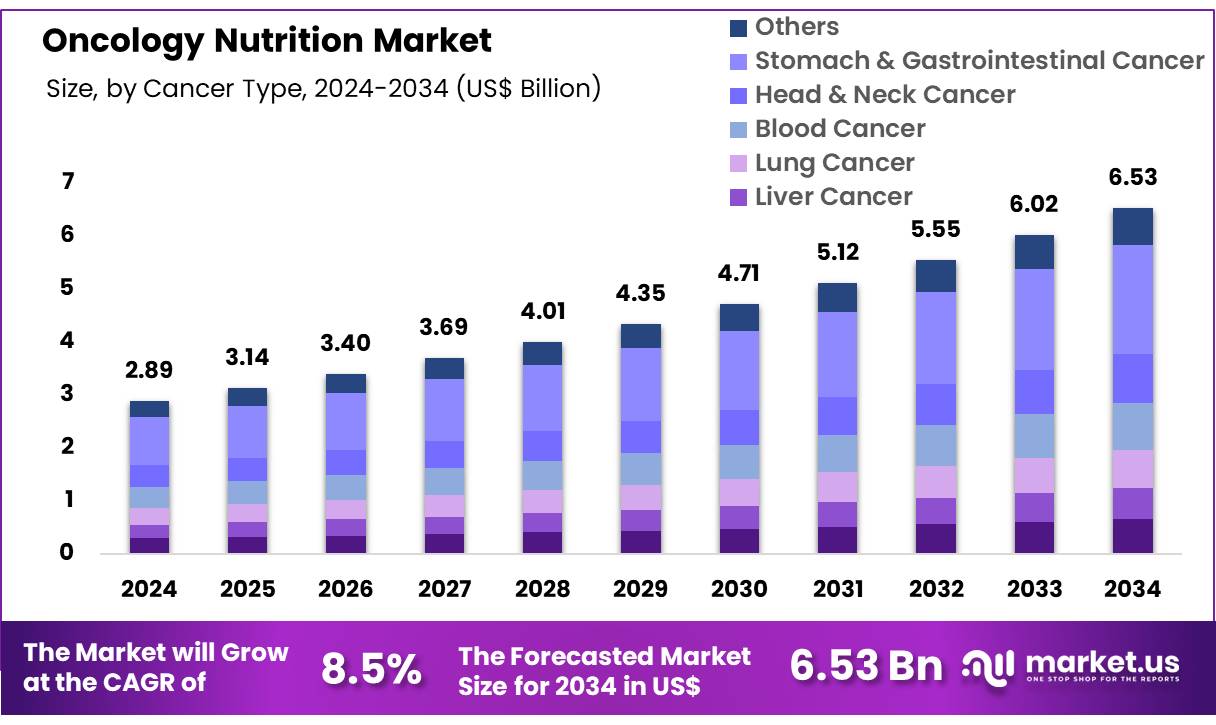
Key Takeaways
- Market Size: The global oncology nutrition market is projected to reach approximately US$ 6.53 billion by 2034, increasing from US$ 2.89 billion in 2024.
- Market Growth: The oncology nutrition market is expected to expand at a CAGR of 8.5% from 2025 to 2034, driven by rising cancer prevalence and increasing demand for specialized nutritional care.
- Cancer Type Analysis: The stomach and gastrointestinal cancer segment dominates the oncology nutrition market, collectively accounting for 31.5% of the overall market share.
- Nutrition Type Analysis: The enteral nutrition segment holds the leading position in the oncology nutrition market, representing 75.9% of the total market share.
- Formula Type Analysis: The specialized formula segment emerged as the dominant category in 2024, capturing 47.8% of the total market share due to increasing demand for targeted nutritional support.
- Route of Administration Analysis: The parenteral nutrition segment accounted for 62.6% of the global market share in 2024, making it the leading administration route.
- Distribution Channel Analysis: Hospital pharmacies dominated the oncology nutrition distribution channel in 2024, contributing 65.3% of the total market share.
- Regional Analysis: North America led the global oncology nutrition market in 2024, holding more than 39.3% market share with revenue of approximately US$ 1.13 billion.
Statistical Information
- Rising Global Cancer Burden Increasing Demand for Oncology Nutrition Support: The increasing number of cancer cases is creating higher demand for specialized nutrition management. According to the World Health Organization (WHO), approximately 20 million new cancer cases were reported globally in 2022, and this number is projected to exceed 35 million cases annually by 2050, representing around a 77% increase. The rising burden is associated with population ageing, growth, tobacco use, alcohol consumption, obesity, and air pollution.
- Ageing Population Driving Long-Term Oncology Nutrition Requirements: Cancer incidence increases significantly with age, creating greater demand for nutritional interventions among elderly patients. The United Nations reports that the global population aged 60 years and older reached 1 billion in 2020 and is expected to increase to 1.4 billion by 2030 and 2.1 billion by 2050. Older cancer patients often require protein support, muscle maintenance, and personalized dietary management during treatment.
- Cancer-Related Malnutrition Creating Demand for Specialized Nutrition Products: Malnutrition is a common complication among cancer patients and directly impacts treatment outcomes. The National Cancer Institute (NCI) reports that malnutrition occurs in approximately 30% to 85% of cancer patients, depending on cancer type and disease stage. Cancer-related malnutrition can increase treatment complications, reduce quality of life, and contribute to poorer survival outcomes.
- Appetite Loss and Weight Reduction Increasing Use of Medical Nutrition Therapy: Cancer treatment frequently causes appetite loss and unintended weight decline, increasing the requirement for nutritional intervention. According to the National Cancer Institute, appetite loss occurs in approximately 15% to 25% of cancer patients at diagnosis. Among chemotherapy patients, observational studies reported appetite loss in around 26% of patients.
- Growing Cancer Survivor Population Supporting Long-Term Nutrition Management: The increasing number of cancer survivors is expanding demand for continued nutritional counselling and lifestyle management. The American Cancer Society reported that the United States had more than 18 million cancer survivors as of January 2022, including approximately 12 million survivors aged 65 years or older (67%).
- Gastrointestinal Cancer Burden Increasing Requirement for Enteral Nutrition: Gastrointestinal cancers create significant nutritional challenges because they can affect digestion, absorption, and food intake. WHO and the International Agency for Research on Cancer reported that colorectal cancer accounted for approximately 1.9 million new cases globally in 2022, representing about 9.6% of all cancers worldwide. Stomach cancer also remained among the leading cancer types globally.
- Preventable Risk Factors Increasing Future Cancer Care Requirements: Lifestyle and environmental factors continue to contribute significantly to cancer incidence. WHO reported that tobacco, alcohol consumption, obesity, and environmental exposures are major contributors behind the expected rise from 20 million cancer cases in 2022 to more than 35 million cases by 2050.
- High Prevalence of Malnutrition Among Cancer Patients Increasing Nutrition Intervention Demand: Cancer-related malnutrition remains a major clinical issue, increasing the need for medical nutrition therapy such as oral nutritional supplements, enteral feeding, and parenteral nutrition. The National Cancer Institute (NCI) reports that malnutrition affects approximately 30% to 85% of cancer patients, depending on cancer type, stage, and treatment setting. Malnutrition is also associated with increased treatment toxicity, reduced quality of life, and contributes to approximately 10% to 20% of cancer-related mortality.
Regional Analysis
North America led the market, achieving over 39.3% share
North America continues to represent a leading region in the oncology nutrition sector due to its high cancer burden, advanced healthcare infrastructure, and strong adoption of supportive cancer care services. In the United States, the National Cancer Institute estimates that more than 2 million new cancer cases are expected annually, creating significant demand for nutritional interventions that support treatment outcomes, recovery, and quality of life.
The region has strong integration of nutrition management within oncology care pathways. Healthcare organizations recommend early nutrition screening, assessment, and personalized dietary counseling to help patients maintain muscle strength, manage treatment-related side effects, and prevent malnutrition. The American Cancer Society recommends nutrition screening and referral to registered dietitians for cancer patients requiring specialized support.
Additionally, North America benefits from established cancer centers, reimbursement availability for medical nutrition therapies, and growing focus on survivorship care. Organizations such as the American Society of Clinical Oncology (ASCO) continue developing evidence-based standards and survivorship guidelines to improve long-term cancer care management. With rising cancer prevalence, increasing awareness among healthcare professionals, and advancements in personalized nutrition solutions, North America is expected to maintain a strong position in the oncology nutrition sector.
Emerging Trends
- Personalized Oncology Nutrition Plans Using Patient-Specific Data: Personalized nutrition is becoming an important trend as cancer patients have different metabolic needs during treatment. Healthcare providers are increasingly using weight monitoring, muscle assessment, treatment stage, and dietary history to create individual nutrition plans. NCI highlights that cancer malnutrition affects 30% to 85% of patients depending on cancer type and stage, increasing demand for tailored nutritional support.
- Growing Adoption of Enteral Nutrition for Patients Unable to Meet Dietary Needs: Enteral nutrition is gaining importance as many cancer patients struggle with normal food intake due to surgery, chemotherapy, swallowing problems, or digestive disorders. ESPEN guidelines recommend enteral nutrition through oral supplements or tube feeding when nutritional requirements cannot be achieved through regular eating.
- Increasing Focus on Cancer Cachexia Management and Muscle Preservation: Cancer cachexia management is becoming a major focus in oncology nutrition due to its impact on patient outcomes. NCI reports that cancer-related malnutrition can contribute to increased treatment toxicity, reduced quality of life, and approximately 10% to 20% of cancer-related mortality. Healthcare providers are emphasizing protein intake, exercise support, and nutritional monitoring.
- Expansion of Home-Based Oncology Nutrition Services: Home-based nutrition support is becoming more common as cancer care moves toward outpatient and long-term management. ESPEN provides dedicated guidelines for home enteral nutrition, supporting safe nutritional care outside hospitals.
- Growth of Specialized Medical Nutrition Formulas for Cancer Patients: Specialized nutrition formulas designed with higher protein, calories, amino acids, and targeted nutrients are gaining attention in oncology care. Healthcare professionals are focusing on formulas that support immunity, weight maintenance, and treatment tolerance. ESPEN cancer nutrition guidelines emphasize energy, protein, vitamins, minerals, and individualized nutrition planning for cancer patients.
Use Cases
- Nutrition Support During Chemotherapy Treatment: Chemotherapy can cause appetite loss, nausea, vomiting, taste changes, and reduced food intake, increasing the risk of malnutrition. Oncology nutrition programs provide calorie-dense foods, protein supplements, and dietary counselling to help patients maintain strength and continue treatment. The National Cancer Institute highlights nutrition support as an important part of managing treatment-related side effects.
- Enteral Nutrition for Gastrointestinal Cancer Patients: Patients with stomach, colorectal, pancreatic, and other gastrointestinal cancers may experience difficulty eating or absorbing nutrients. Enteral nutrition provides nutrients through feeding tubes when normal food intake is insufficient. Hospitals commonly use tube feeding to support patients before and after cancer surgery or during intensive treatment.
- Management of Cancer Cachexia and Muscle Loss: Oncology nutrition is used to manage cancer cachexia, a condition involving severe weight loss and muscle deterioration. Nutrition specialists provide high-protein diets, energy-rich supplements, and monitoring programs to support muscle maintenance and improve treatment tolerance.
- Nutritional Support During Radiation Therapy: Radiation therapy, especially for head, neck, and gastrointestinal cancers, can affect swallowing, taste, and appetite. Oncology nutrition services help patients manage these side effects through modified diets, oral supplements, and hydration strategies.
- Pre-Surgery and Post-Surgery Nutritional Management: Cancer surgery can increase nutritional requirements due to tissue repair, healing, and recovery needs. Nutrition support before and after surgery helps improve energy intake, maintain body weight, and support immune function. Hospitals use oral supplements, enteral nutrition, and dietitian-guided plans for surgical patients.
Frequently Asked Questions on Oncology Nutrition
- Why is oncology nutrition important for cancer patients?
Oncology nutrition is important because many cancer patients experience appetite loss, weight reduction, and nutrient deficiencies during treatment. Proper nutritional support helps manage side effects, improve recovery, maintain immunity, and support better quality of life throughout the cancer care journey. - What factors are driving the growth of the oncology nutrition market?
The oncology nutrition market is growing due to increasing cancer cases, ageing populations, rising awareness about cancer-related malnutrition, and greater adoption of personalized nutrition programs. Hospitals, cancer centers, and home-care providers are increasingly integrating nutrition support into treatment pathways. - How does cancer treatment affect nutritional requirements?
Cancer treatments such as chemotherapy, radiation therapy, and surgery can affect appetite, digestion, and nutrient absorption. Patients may require additional calories, proteins, vitamins, and minerals to maintain strength, manage treatment-related symptoms, and support healing during different stages of cancer care. - What role do specialized nutrition formulas play in cancer care?
Specialized nutrition formulas are designed to meet the unique nutritional requirements of cancer patients. They provide concentrated calories, high protein content, and targeted nutrients to support weight maintenance, muscle preservation, recovery, and improved tolerance to cancer therapies. - Which cancer types require higher oncology nutrition support?
Gastrointestinal cancers, stomach cancer, pancreatic cancer, head and neck cancer, and lung cancer often require greater nutritional support due to their impact on digestion, swallowing, metabolism, and appetite. These patients frequently experience higher risks of malnutrition and weight loss. - How are hospitals adopting oncology nutrition programs?
Hospitals are integrating oncology nutrition programs through multidisciplinary teams involving oncologists, nurses, and registered dietitians. These programs include nutrition screening, dietary counselling, supplement recommendations, and monitoring of patient weight and nutritional status throughout cancer treatment. - How does ageing population impact the oncology nutrition market?
The ageing population is increasing demand for oncology nutrition because cancer risk rises with age. Older patients often require additional nutritional support due to muscle loss, reduced appetite, and other health conditions that affect food intake and recovery.
Conclusion
The oncology nutrition market is experiencing steady growth due to the rising global cancer burden, ageing population, increasing awareness of cancer-related malnutrition, and growing adoption of personalized nutrition solutions. Healthcare providers are integrating nutrition support into cancer treatment pathways to improve patient outcomes, maintain muscle strength, and enhance treatment tolerance.
The increasing use of enteral and parenteral nutrition, specialized formulas, and home-based nutrition services is further supporting market expansion. With advancements in clinical nutrition, digital monitoring, and survivorship care programs, oncology nutrition is becoming an essential component of comprehensive cancer management across hospitals, clinics, and home-care settings.
Discuss your needs with our analyst
Please share your requirements with more details so our analyst can check if they can solve your problem(s)




