


Overview
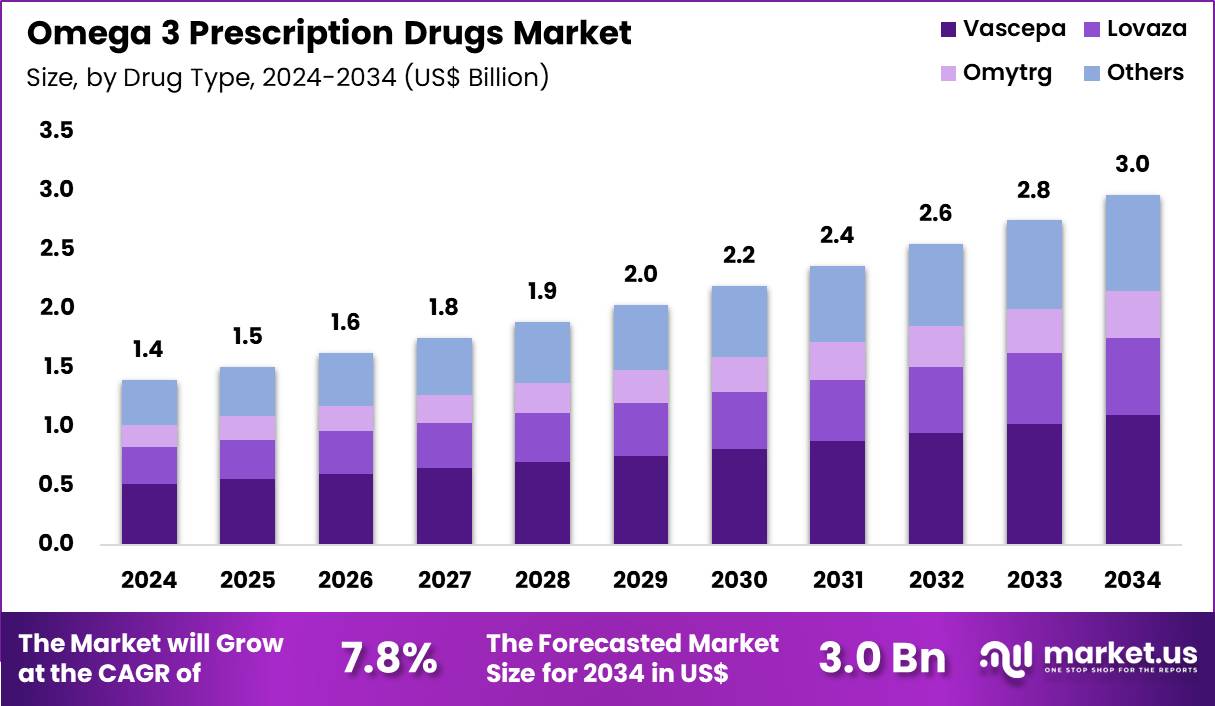
New York, NY – Sep 28, 2026 – The Global Omega 3 Prescription Drugs Market size is expected to be worth around US$ 3.0 Billion by 2034 from US$ 1.4 Billion in 2024, growing at a CAGR of 7.8% during the forecast period 2025 to 2034. In 2024, North America led the market, achieving over 39.3% share with a revenue of US$ 550.2 Million.
The global Omega-3 Prescription Drugs market is gaining attention due to the increasing prevalence of cardiovascular disorders, elevated triglyceride levels, and other lipid-related conditions. Prescription omega-3 products contain concentrated forms of marine-derived fatty acids, primarily eicosapentaenoic acid (EPA) and docosahexaenoic acid (DHA), and are used under medical supervision to manage specific lipid abnormalities.
These medicines are primarily prescribed for patients with very high triglyceride levels and are generally used alongside dietary and lifestyle modifications. Unlike conventional dietary supplements, prescription omega-3 drugs are manufactured under stringent pharmaceutical quality standards, with controlled concentrations, purity, and dosing.
Market growth is being supported by the rising burden of cardiovascular diseases, greater awareness of triglyceride management, and increasing adoption of preventive healthcare. Ongoing research into the clinical applications of EPA and DHA is also contributing to product development and market expansion.
North America and Europe represent significant markets because of established healthcare systems, high awareness of lipid-management therapies, and the availability of approved prescription products. Growth opportunities are also emerging in Asia-Pacific as healthcare access improves and the incidence of cardiovascular and metabolic disorders increases.
Key market participants are focusing on product innovation, clinical research, regulatory approvals, and strategic collaborations to strengthen their market positions. The market outlook remains closely linked to cardiovascular disease trends, regulatory developments, and clinical evidence supporting prescription omega-3 therapies.
Key Takeaways
- In 2024, the Omega-3 Prescription Drugs market generated revenue of US$ 1.4 billion and is projected to grow at a CAGR of 7.8%, reaching US$ 3.0 billion by 2034.
- By drug type, the market is segmented into Vascepa, Lovaza, Omtryg, and others. Vascepa dominated the segment in 2024, accounting for a 37.1% market share.
- Based on indication, the market is categorized into severe hypertriglyceridemia, cardiovascular risk reduction, cancer, and others. Severe hypertriglyceridemia held the largest share, at 43.6% in 2024.
- By patient type, the market is segmented into adult and geriatric patients. The adult segment dominated the market, accounting for 66.3% of the revenue share in 2024.
- By distribution channel, the market is divided into hospital pharmacies, retail pharmacies, and online pharmacies. Retail pharmacies led the segment with a 48.2% revenue share in 2024.
- Regionally, North America dominated the Omega-3 Prescription Drugs market in 2024, accounting for a 39.3% market share.
Key Market Segments
- Drug Type Analysis: Vascepa held a 37.1% market share, supported by its purified EPA formulation, clinical differentiation, and physician acceptance. Its ability to reduce triglycerides without increasing LDL cholesterol, alongside cardiovascular risk reduction approvals and supporting clinical evidence, strengthens long-term prescription demand.
- Indication Analysis: Severe hypertriglyceridemia accounted for 43.6% of the market, driven by rising lipid disorders, obesity, diabetes, and metabolic syndrome. Increased screening and awareness of pancreatitis and cardiovascular risks support treatment initiation, while standardized prescription dosing strengthens demand for omega-3 therapies.
- Patient Type Analysis: Adults represented 66.3% of the market, reflecting the high prevalence of dyslipidemia and cardiovascular risk factors in this population. Sedentary lifestyles, poor dietary patterns, regular health screenings, and long-term pharmacological management support prescription omega-3 utilization and sustained treatment demand.
Regional Analysis
North America accounted for 39.3% of the Omega-3 Prescription Drugs market in 2024, supported by strong clinical adoption, established lipid-management practices, and growing attention to cardiovascular risk reduction. Physicians increasingly prescribe EPA-based therapies for severe hypertriglyceridemia and residual cardiovascular risk among statin-treated patients.
Updated treatment guidelines, broader access through hospital formularies and retail pharmacies, and continued physician education further support market development. The high prevalence of elevated triglyceride levels in the U.S. also provides a substantial treatment population.
Asia Pacific is projected to register the highest CAGR during the forecast period, driven by rising dyslipidemia prevalence, aging populations, and increasing cardiovascular risk. Improvements in specialist healthcare access and diagnostic capabilities are supporting earlier identification and treatment of lipid disorders.
Government-led cardiovascular prevention initiatives and expanding local pharmaceutical manufacturing are improving product availability and affordability. Increasing awareness of triglyceride-related health risks is also strengthening physician adoption of prescription-grade omega-3 therapies across the region.
Emerging Trends
- Growing focus on high and very high triglycerides: Demand for prescription omega-3 therapies is supported by the need to manage elevated triglyceride levels. The American Heart Association notes that obesity and diabetes are important factors associated with increasing hypertriglyceridemia. Prescription omega-3 products can provide meaningful triglyceride reduction at appropriate doses.
- Increasing interest in EPA-only formulations: EPA-only therapy, particularly icosapent ethyl, has gained greater clinical attention because cardiovascular outcome evidence has expanded its role beyond triglyceride reduction. In the REDUCE-IT study, adding icosapent ethyl to statin therapy reduced major cardiovascular events by 25%.
- Greater differentiation between prescription drugs and supplements: The market is increasingly being separated into regulated prescription medicines and over-the-counter omega-3 supplements. Healthcare organizations emphasize that dietary supplements are not reviewed or approved by the FDA for treating high triglycerides, supporting continued clinical differentiation of prescription products.
- Stronger integration with statin-based treatment: Prescription omega-3 therapies are increasingly considered within broader lipid-management strategies rather than as isolated treatments. FDA information identifies icosapent ethyl as a therapy used with statins for cardiovascular risk reduction in specified adult populations.
- Competition from newer triglyceride-lowering therapies: The competitive environment is expanding beyond traditional omega-3 medicines. New approaches targeting triglyceride biology are being investigated, including multi-receptor therapies. For example, preliminary 2025 research reported substantial triglyceride reductions with DR10624, although these findings were from a small Phase 2 study and remain preliminary.
Use Cases
- Treatment of very high triglyceride levels: Prescription omega-3 medicines are used to lower high triglyceride levels, particularly in adults with severe elevations. FDA information lists omega-3-acid ethyl esters as medicines for very high triglycerides, while clinical guidance recognizes prescription omega-3 fatty acids as effective triglyceride-lowering therapies.
- Cardiovascular risk reduction in selected patients: Icosapent ethyl has a specific cardiovascular risk-reduction use. According to the FDA, it is used with statins in certain adults with cardiovascular disease or diabetes plus additional cardiovascular risk factors, helping reduce the risk of heart attack, stroke, and certain cardiovascular events.
- Add-on treatment to statins: Prescription omega-3 drugs can be used alongside statin therapy when triglyceride management remains necessary. Clinical evidence has evaluated these medicines in patients already receiving statins, making combination treatment an important use case within broader lipid-management strategies.
- Management of patients at risk from severe hypertriglyceridemia: Very high triglycerides can increase concern about pancreatitis. Therefore, triglyceride-lowering therapy can form part of the management approach for patients with severe hypertriglyceridemia, together with dietary changes and treatment of underlying conditions such as diabetes or hypothyroidism.
- Treatment within a broader cardiometabolic care strategy: Prescription omega-3 therapy can be incorporated into care for patients with multiple cardiometabolic risk factors. However, treatment decisions depend on triglyceride levels, cardiovascular risk, existing medicines, and patient characteristics rather than omega-3 therapy being used universally.
Frequently Asked Questions About Omega 3 Prescription Drugs
- What are the main types of prescription omega-3 drugs?
The main prescription categories include omega-3-acid ethyl esters, which contain EPA and DHA, and icosapent ethyl, which provides EPA. These products have different formulations and approved uses, so they should not be considered interchangeable medicines. - What are omega-3 prescription drugs used for?
Omega-3 prescription drugs are primarily used to lower elevated triglycerides. Icosapent ethyl also has an FDA-approved cardiovascular risk-reduction use for specified adults receiving statins and having cardiovascular disease or diabetes with additional cardiovascular risk factors. - How do prescription omega-3 drugs lower triglycerides?
Prescription omega-3 fatty acids reduce triglyceride levels through effects on lipid production and metabolism in the liver and other tissues. At a commonly studied prescription dose of 4 grams daily, the American Heart Association reports triglyceride reductions of approximately 20% to 30%. - What is driving the omega-3 prescription drugs market?
Market growth is being supported by the need for better triglyceride management, increasing cardiometabolic risk, clinical evidence for selected therapies, and greater awareness of prescription options. Obesity and diabetes are also associated with increasing prevalence of hypertriglyceridemia. - Which patient groups create demand for prescription omega-3 drugs?
Demand is mainly associated with adults requiring treatment for high or very high triglycerides and selected patients requiring cardiovascular risk reduction. The relevant population includes patients with cardiovascular disease, diabetes, or other risk factors when treatment criteria are met. - How are prescription omega-3 drugs different from other lipid-lowering medicines?
Prescription omega-3 drugs primarily target triglyceride management, while other medicines can focus more strongly on LDL cholesterol or specific lipid pathways. Treatment selection depends on the patient’s lipid profile, cardiovascular risk, medical conditions, and existing therapy. - What is the future outlook for the omega-3 prescription drugs market?
The market is expected to remain focused on evidence-based triglyceride management and cardiovascular risk reduction. Future development is likely to emphasize differentiated formulations, stronger clinical-outcome evidence, combination treatment, and competition from newer therapies targeting triglyceride metabolism.
Conclusion
The global Omega-3 Prescription Drugs market is expected to witness steady growth, supported by the rising burden of cardiovascular and lipid-related disorders, increasing awareness of triglyceride management, and expanding use of prescription therapies. The market is projected to increase from US$ 1.4 billion in 2024 to US$ 3.0 billion by 2034, registering a 7.8% CAGR.
Vascepa, severe hypertriglyceridemia, adult patients, and retail pharmacies represented key market segments in 2024. North America remained the leading regional market, while Asia Pacific is expected to record strong growth. Product innovation, clinical research, regulatory support, and broader healthcare access are expected to influence future market development.
Discuss your needs with our analyst
Please share your requirements with more details so our analyst can check if they can solve your problem(s)




