


Overview
New York, NY – August 20, 2026 – The Global Menopause Treatment Market size is expected to be worth around US$ 27.99 Billion by 2034, from US$ 15.78 Billion in 2024, growing at a CAGR of 5.9% during the forecast period from 2025 to 2034. North America held a dominant market position, capturing more than a 37.6% share and holding a US$ 5.93 billion market value for the year.
Menopause Treatment is gaining momentum due to the increasing number of women entering menopause, rising awareness regarding women’s healthcare, and growing availability of advanced therapeutic options. Menopause is a natural stage of aging that typically occurs between 45 and 55 years, with the average age estimated at around 51 years.
According to the World Health Organization, approximately 1.2 billion women worldwide are expected to be experiencing menopause or post-menopause by 2030, creating a significant demand for symptom management solutions.
Menopause-related symptoms affect a large global population, with clinical studies reporting that up to 80% of women experience hot flashes or night sweats, while approximately 40%–60% report sleep disturbances, mood changes, or reduced quality of life during the menopausal transition.
Common treatment approaches include hormone replacement therapy (HRT), estrogen therapies, non-hormonal medications, vaginal treatments, and dietary supplements. HRT is considered one of the most effective treatments for moderate to severe vasomotor symptoms when prescribed after appropriate medical evaluation.
In the United States, more than 6,000 women enter menopause every day, and approximately 75 million women are currently in the menopausal transition or postmenopausal stage. Healthcare systems are increasingly focusing on menopause management as women spend nearly one-third to one-half of their lives after menopause, increasing demand for long-term healthcare support.
The market is further supported by increasing investments in women’s health research, expansion of telemedicine platforms, and development of targeted non-hormonal therapies. Recent healthcare initiatives are improving menopause education, diagnosis, and access to treatment options.
With a growing aging female population, rising healthcare awareness, and continued pharmaceutical innovation, the menopause treatment sector is expected to witness strong development opportunities globally through the coming years.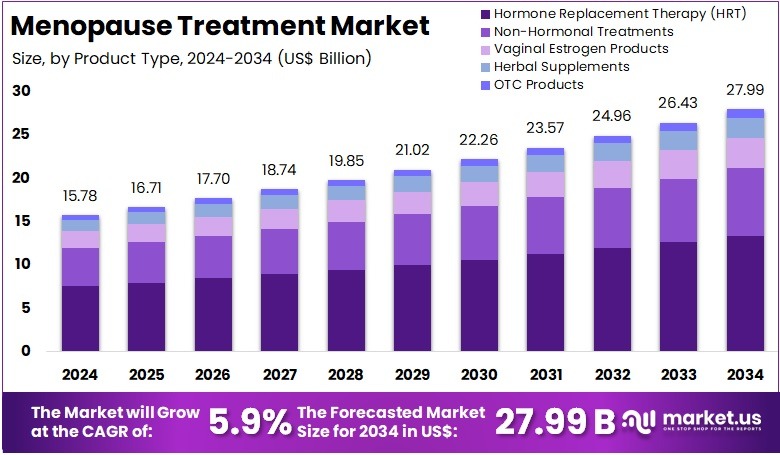
Key Takeaways
- The global menopause treatment market is expected to expand from US$ 15.78 Billion in 2024 to approximately US$ 27.99 Billion by 2034, registering a compound annual growth rate (CAGR) of 5.9% during the forecast period.
- Hormone replacement therapy (HRT) emerged as the leading product segment in 2024, accounting for more than 47.8% of the overall menopause treatment market share due to its effectiveness in managing moderate to severe menopausal symptoms.
- Oral administration represented the dominant route of delivery in 2024, capturing over 52.5% market share as patients and healthcare providers preferred oral therapies for convenience and ease of use.
- Hospitals and clinics remained the major end-user segment in 2024, contributing to more than 49.9% of the demand for menopause treatment products and services due to increased diagnosis and professional healthcare support.
- North America held the leading position in the global menopause treatment market in 2024, accounting for over 37.6% market share and generating approximately US$ 5.93 billion in revenue, supported by advanced healthcare infrastructure and high awareness of menopause management.
Statistical Information
- Limited Use of Hormone Therapy Despite Large Eligible Population: The United States has a large menopause-age population requiring potential symptom management. According to U.S. Census Bureau data, approximately 41 million women aged 45–64 years were living in the United States in 2020, representing a major population experiencing perimenopause and menopause-related health changes. However, hormone therapy adoption remains limited due to safety concerns, awareness gaps, and individualized prescribing decisions, indicating an unmet treatment need.
- Hormone Therapy Utilization Remains Lower Than Potential Clinical Need: FDA data indicates that menopausal hormone therapy utilization remains lower compared with the number of women experiencing menopause-related symptoms. Approximately 2 million women aged 46–65 years received hormone therapy prescriptions, highlighting a significant gap between the eligible menopause population and actual treatment usage.
- Higher MHT Adoption in Surgical Menopause Compared With Natural Menopause: An Indian clinical cohort evaluating menopausal hormone therapy usage reported that 58.33% of women with surgical menopause were using MHT, while among women with natural menopause, 41% had considered MHT but only 16.70% actually used therapy, demonstrating higher acceptance among women with surgery-induced menopause compared with natural menopause.
- Gap Between Menopause Awareness and Hormone Therapy Knowledge: A study among Indian women aged 40 years and above found that 82.9% were aware of menopause, but only 35.5% (27 out of 76 women) knew about hormone replacement therapy. HRT awareness increased to 48.4% among graduates, showing that education level strongly influences awareness of menopause treatment options.
- Gynaecologists Show Mixed Adoption of Menopausal Hormone Therapy: A survey of Jaipur gynaecologists found that 85% reported prescribing MHT for menopause symptoms, while 69.04% were currently prescribing HRT and 30.96% had stopped prescribing it. Around 78.57% were aware of WHI-related safety concerns, and 83.48% used alternative therapies, with safety concerns influencing treatment decisions.
- High Prevalence of Menopause Symptoms Impacts Quality of Life: A clinical study reported that 87.7% of menopausal women experienced at least one symptom during the previous month. Anxiety affected approximately 80%, physical and mental exhaustion affected 71.5%, sleep problems affected 61.2%, irritability affected 60.7%, and joint or muscular discomfort affected 56%, while 70.2% experienced reduced quality of life.
- Age-Specific Symptom Patterns Influence Treatment Demand: Clinical research showed that menopause symptoms vary by age group, with 60.7% of women aged 45–55 years experiencing hot flashes, while 54.8% reported sexual problems. Among women aged 56–65 years, sleep disturbance affected 58.6%, indicating different treatment requirements based on symptom patterns and age.
- Recommended Timing Window for Menopausal Hormone Therapy: The North American Menopause Society recommends that menopausal hormone therapy is generally most appropriate for healthy women who are younger than 60 years or within 10 years of menopause onset. This treatment window helps healthcare providers evaluate benefits and risks while managing moderate-to-severe menopause symptoms.
- Awareness Barriers Affect Menopause Treatment Adoption: A study among Indian women aged 40 years and above reported that while 82.9% were aware of menopause, only 35.5% were aware of hormone replacement therapy (HRT). Awareness was higher among women with higher education levels, showing that knowledge gaps remain an important factor affecting treatment discussions and therapy adoption.
Regional Analysis
North America maintained its dominance with a market share exceeding 37.6%.
North America represents a significant region for menopause treatment due to advanced healthcare infrastructure, high awareness of women’s health, and strong access to specialized medical services. In the United States, menopause typically occurs between 45 and 55 years of age, creating a large patient population requiring symptom management. FDA-approved therapies, including hormone and non-hormonal treatments, are widely available for managing hot flashes, vaginal symptoms, and other menopause-related conditions.
The region is witnessing increased focus on personalized menopause care, with healthcare providers emphasizing individualized treatment decisions based on symptoms, age, and health risks. FDA data highlights that around 41 million U.S. women aged 45–64 years were living in 2020, while approximately 2 million women aged 46–65 received hormone therapy prescriptions, indicating continued demand for improved awareness and treatment access.
Growing adoption of digital healthcare services, telemedicine consultations, and patient education platforms is further improving access to menopause care. Increased research activity and development of newer non-hormonal therapies, such as FDA-approved fezolinetant for vasomotor symptoms, are supporting treatment innovation across the region. North America is expected to remain an important market due to ageing demographics, advanced healthcare systems, and increasing demand for effective menopause management solutions.
Emerging Trends
- Growing Adoption of Non-Hormonal Therapies: The menopause treatment landscape is shifting toward non-hormonal options as women seek safer alternatives for symptom management. The FDA approved fezolinetant in 2023 for treating moderate-to-severe vasomotor symptoms, creating new opportunities for women who cannot or prefer not to use hormone therapy.
- Personalized Menopause Treatment Approaches: Healthcare providers are increasingly adopting individualized treatment plans based on age, symptom severity, medical history, and patient preferences. FDA guidelines emphasize evaluating benefits and risks before prescribing hormone therapy, supporting more targeted menopause care strategies.
- Expansion of Digital Health and Telemedicine Services: Digital healthcare platforms are improving menopause care access through online consultations, symptom tracking, and remote follow-ups. The U.S. Department of Health and Human Services reports continued growth in telehealth adoption, helping patients receive specialized healthcare support without frequent hospital visits.
- Increasing Awareness of Menopause Healthcare Needs: Menopause awareness is rising as healthcare organizations focus on improving diagnosis and treatment access. WHO estimates that around 1.2 billion women globally will be experiencing menopause or post-menopause by 2030, increasing demand for education and clinical support.
- Innovation in Hormone Therapy Delivery Methods: Treatment innovation is focusing on improving convenience and safety through different hormone therapy formulations, including tablets, patches, gels, sprays, and vaginal products. FDA recognizes multiple approved hormone therapy routes to address different symptom patterns and patient requirements.
Use Cases
- Management of Moderate-to-Severe Hot Flashes and Night Sweats: Menopause treatments are widely used for controlling vasomotor symptoms, which affect a large proportion of women during menopause. Hormone therapy remains one of the most effective options, while newer non-hormonal medicines such as fezolinetant provide alternatives for symptom management.
- Personalized Hormone Therapy Based on Patient Risk Profiles: Menopause treatment is increasingly used through personalized approaches where physicians consider age, symptom severity, medical history, and risk factors before recommending therapy. FDA guidance supports individualized hormone therapy decisions to balance benefits and potential risks for each patient.
- Treatment of Vaginal and Urinary Symptoms: Local estrogen therapies are used for managing genitourinary syndrome of menopause, including vaginal dryness, discomfort, painful intercourse, and urinary symptoms. These treatments provide targeted symptom relief with lower systemic exposure compared with some systemic therapies.
- Non-Hormonal Treatment for Women Unable to Use Hormone Therapy: Non-hormonal medications are increasingly used for women with contraindications or concerns related to hormone therapy. Options include FDA-approved medicines for vasomotor symptoms, as well as other physician-guided treatments for symptom control.
- Bone Health Protection After Menopause: Menopause care is used to address increased osteoporosis risk caused by declining estrogen levels. Healthcare providers combine symptom management with bone density evaluation, calcium and vitamin D recommendations, exercise guidance, and preventive treatments when required.
Frequently Asked Questions on Menopause Treatment
- What are the common symptoms treated with menopause therapies?
Menopause treatments commonly address symptoms such as hot flashes, night sweats, sleep problems, mood changes, vaginal dryness, urinary discomfort, and reduced bone health. These symptoms vary among women depending on age, hormonal changes, and overall health conditions. - What is hormone replacement therapy (HRT) for menopause?
Hormone replacement therapy provides estrogen alone or combined estrogen and progestogen to relieve moderate-to-severe menopause symptoms. It is mainly used for hot flashes, night sweats, and certain vaginal symptoms after evaluating individual health risks. - What are non-hormonal treatments for menopause symptoms?
Non-hormonal menopause treatments include prescription medicines and lifestyle approaches designed for women who cannot or prefer not to use hormone therapy. These options are commonly used for managing hot flashes, sleep issues, and mood-related symptoms. - How does menopause treatment improve quality of life?
Menopause treatment helps reduce uncomfortable symptoms that affect daily activities, sleep, emotional wellbeing, and physical health. Proper management can support better comfort, improved productivity, and healthier aging during the postmenopausal stage. - What are the major trends in the menopause treatment market?
Major trends include increasing adoption of non-hormonal therapies, personalized treatment plans, digital healthcare consultations, improved menopause awareness, and development of new therapies designed to provide safer and more targeted symptom relief. - Which treatment type dominates menopause care?
Hormone therapy remains an important treatment option for moderate-to-severe menopause symptoms, while non-hormonal therapies are gaining attention. The preferred treatment depends on symptom severity, patient health profile, treatment goals, and physician recommendations. - How is technology influencing menopause treatment?
Technology is improving menopause care through telemedicine platforms, digital symptom tracking tools, online consultations, and remote monitoring solutions. These technologies help women access healthcare professionals, receive guidance, and manage symptoms more conveniently. - How do lifestyle changes support menopause treatment?
Lifestyle modifications such as regular exercise, healthy nutrition, stress management, and adequate sleep support menopause symptom management. These approaches are often combined with medical treatments to improve overall health and reduce menopause-related complications.
Conclusion
The menopause treatment market is evolving with increasing awareness, improved healthcare access, and advancements in both hormonal and non-hormonal therapies. Rising recognition of menopause as an important women’s health stage is encouraging early diagnosis and personalized treatment approaches. Innovations such as non-hormonal medications, digital healthcare platforms, and targeted therapies are improving symptom management and patient outcomes.
Despite challenges related to awareness gaps and treatment concerns, growing healthcare focus on women’s wellness is creating new opportunities. With a rising global menopause population and increasing demand for effective solutions, the market is expected to witness continued development and expansion in the coming years.
Discuss your needs with our analyst
Please share your requirements with more details so our analyst can check if they can solve your problem(s)




