
Overview
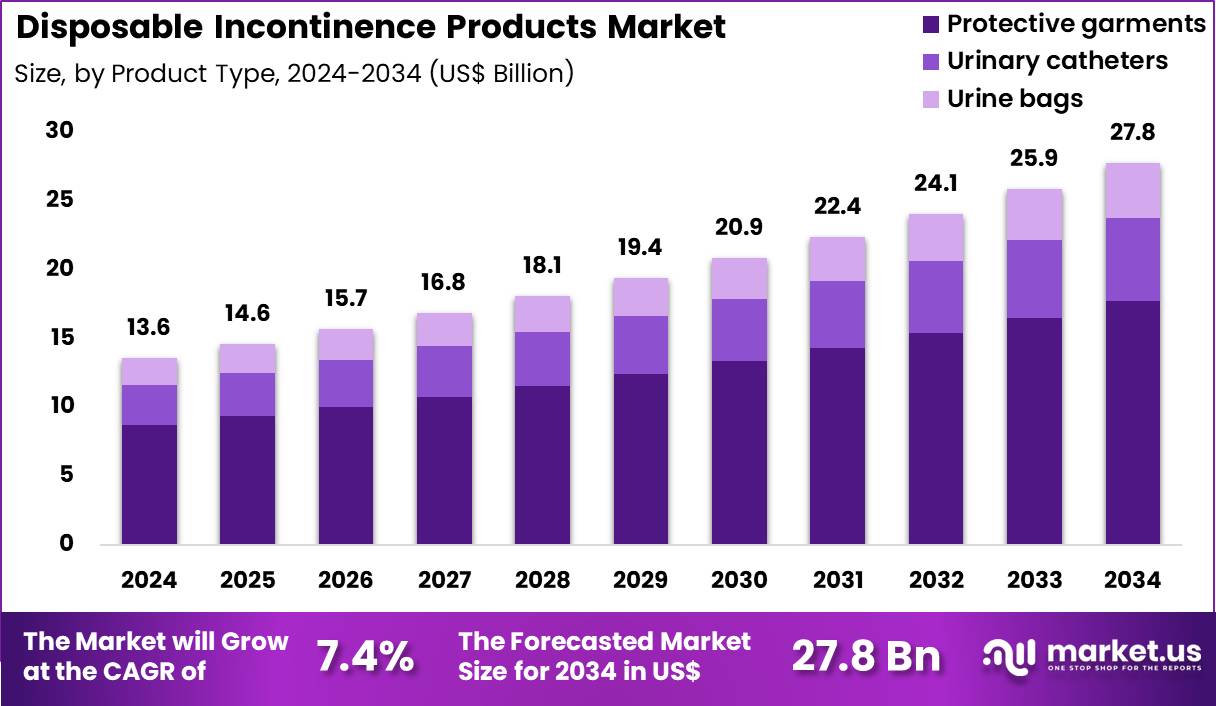
New York, NY – Oct 13, 2026 – The Global Disposable Incontinence Products Market size is expected to be worth around US$ 27.8 Billion by 2034 from US$ 13.6 Billion in 2024, growing at a CAGR of 7.4% during the forecast period 2025 to 2034. In 2024, North America led the market, achieving over 37.9% share with a revenue of US$ 5.2 Billion.
The disposable incontinence products market comprises absorbent hygiene products designed to manage urinary and fecal incontinence among adults, older adults, and individuals with specific healthcare needs. These products include disposable adult diapers, pull-up underwear, absorbent pads, liners, and underpads. They are widely used in hospitals, nursing homes, long-term care facilities, and home-care settings.
Market growth is supported by the increasing aging population, rising awareness of personal hygiene, growing demand for home-based healthcare, and the need for convenient and effective incontinence management solutions. Improvements in absorbent materials, odor control, skin protection, leakage prevention, and product design are also contributing to product development and consumer acceptance.
Manufacturers are focusing on enhancing product comfort, discretion, absorbency, and ease of use to meet the changing needs of users and caregivers. In addition, growing attention to sustainability is encouraging research into biodegradable materials, reduced-plastic designs, and more environmentally responsible manufacturing practices.
North America and Europe represent established markets due to developed healthcare infrastructure and greater awareness of incontinence management, while Asia-Pacific offers growth opportunities driven by population aging, expanding healthcare access, and rising consumer awareness.
Overall, the disposable incontinence products market is expected to benefit from sustained healthcare demand, product innovation, and the increasing emphasis on patient comfort, dignity, and quality of life.
Key Takeaways
- In 2024, the market was valued at US$ 13.6 billion and is projected to reach US$ 27.8 billion by 2034, registering a CAGR of 7.4% during the forecast period.
- By product type, the market is segmented into protective garments, urinary catheters and urine bags. Protective garments dominated the market in 2024, accounting for 63.9% of the total market share.
- Based on application, the market is categorized into chronic kidney failure, benign prostatic hyperplasia (BPH), and others. Chronic kidney failure held a significant market share of 44.8% in 2024.
- By end user, the market is divided into home-care settings, hospitals and clinics, and others. Home-care settings emerged as the leading segment in 2024, accounting for 52.7% of the total market revenue.
- Regionally, North America dominated the market in 2024, accounting for 37.9% of the global market share.
Key Market Segments
- Product Type Analysis: Protective garments dominated the disposable incontinence products market, accounting for 63.9% of the product segment in 2024. Rising demand for comfortable, discreet, and highly absorbent products, supported by aging populations and expanding home-care services, continues to drive segment growth.
- Application Analysis: Chronic kidney failure accounted for 44.8% of the application segment in 2024. Increasing chronic disease prevalence, mobility limitations, and long-term care requirements are supporting demand for disposable incontinence products among patients requiring regular hygiene management and reliable leakage protection.
- End-User Analysis: Home-care settings held the largest end-user share at 52.7% in 2024. Growing preference for home-based care, population aging, and convenient product availability through pharmacies and online channels are supporting demand for disposable incontinence products among patients and caregivers.
Regional Analysis
North America Disposable Incontinence Products Market
North America dominated the Disposable Incontinence Products Market in 2024, accounting for 37.9% of the global market share. Market growth was supported by an aging population, increasing awareness of urinary incontinence, and rising demand for effective hygiene solutions. Growing adoption of home healthcare services and product innovations in absorbency, odor control, and skin protection further strengthened demand.
Expanding retail pharmacy networks and e-commerce platforms improved product accessibility and purchasing convenience. According to the U.S. Census Bureau, the population aged 65 and above reached 58.9 million in 2022, supporting sustained demand for incontinence management products.
Asia Pacific Disposable Incontinence Products Market
Asia Pacific is projected to register the highest CAGR during the forecast period, driven by rapid population aging, improving healthcare infrastructure, and rising awareness of personal hygiene.
Increasing disposable incomes and the availability of affordable products are supporting market penetration. According to the United Nations, Asia Pacific had over 414 million people aged 65 and above in 2023, creating significant growth opportunities. Furthermore, expanding e-commerce distribution and elderly care facilities are expected to accelerate regional market growth.
Emerging Trends
- Growing demand from an ageing population: The increasing number of older adults is expanding the potential customer base for disposable incontinence products. WHO projects that the global population aged 60 years and above will increase from 1.4 billion in 2030 to 2.1 billion in 2050. This demographic shift is expected to support demand for adult diapers, absorbent underwear, and bed protection products across home care and long-term care facilities.
- Development of comfortable and discreet products: Manufacturers are focusing on thinner absorbent layers, improved fit, odour control, and clothing-like designs. These features can help users manage leakage with greater comfort and privacy during everyday activities. The US National Institute of Diabetes and Digestive and Kidney Diseases (NIDDK) also identifies modern briefs and pads as useful options for managing leakage and supporting an active lifestyle.
- Expansion of home-based care: More care is being provided at home, increasing the importance of products that are easy for family caregivers to use and replace. Disposable briefs, pull-up underwear, and absorbent bed pads can simplify daily hygiene management and reduce the need to wash contaminated fabrics. Market participants can address this trend through convenient pack sizes, clear product instructions, and dependable product availability.
- Greater focus on skin protection and hygiene: Product development increasingly considers the need to manage moisture, reduce leakage, and maintain skin comfort. This is particularly relevant for people who require frequent product changes or spend long periods in bed. Manufacturers can differentiate their offerings through absorbent materials, skin-friendly surfaces, and products designed to make cleaning and changing easier for caregivers.
- Growth in online purchasing and product accessibility: Online retail offers consumers a private way to compare products, select suitable sizes, and arrange repeat purchases. This channel can be particularly useful for customers who prefer home delivery or have difficulty visiting stores. For manufacturers and retailers, digital sales channels provide opportunities to offer subscription orders, product guidance, and a wider range of absorbency levels.
Use Cases
- Daily care for older adults: Disposable adult briefs and pull-up underwear are used by older people experiencing urinary or bowel leakage. These products help protect clothing, support personal hygiene, and allow users to continue daily activities with greater confidence and independence.
- Hospital and clinical care: Hospitals use disposable briefs, pads, and absorbent underpads to manage leakage among patients who have limited mobility or need assistance with personal care. These products support routine hygiene procedures and help protect beds and other surfaces.
- Nursing homes and long-term care: Residential care facilities use disposable incontinence products for residents who need regular assistance with changing and cleaning. Products with suitable absorbency and secure fit can simplify care routines and help staff manage leakage across multiple residents.
- Bed protection and overnight care: Disposable underpads are placed on beds, chairs, and other surfaces to absorb leakage and protect furnishings. They are particularly useful during overnight care, recovery periods, and situations where changing bedding frequently would increase caregiver workload.
- Active lifestyles and temporary recovery: Absorbent pads and protective underwear can help people manage leakage during exercise, travel, work, or recovery after medical procedures. Product selection depends on leakage severity, fit, comfort, and the individual’s care requirements.
Frequently Asked Questions About Disposable Incontinence Products
- What are disposable incontinence products?
Disposable incontinence products are single-use absorbent items designed to manage accidental urine or stool leakage. Common types include adult diapers, pull-up underwear, pads, liners, and underpads that protect clothing, bedding, and furniture. - What are the main types of disposable incontinence products?
The main types include adult briefs with fastening tabs, pull-up protective underwear, absorbent pads and liners, and disposable underpads. Each product serves different needs based on leakage volume, user mobility, fit, and the area requiring protection. - Who uses disposable incontinence products?
These products are used by adults experiencing urinary or bowel leakage, including older people, individuals with mobility limitations, and patients recovering from illness or surgery. They are also used in hospitals, nursing homes, and home-based care settings. - How should consumers choose the right incontinence product?
Consumers should consider leakage severity, waist size, absorbency, skin comfort, mobility, and intended wear time. A suitable product should fit securely without causing discomfort. Persistent or new leakage should be discussed with a qualified healthcare professional. - Can disposable incontinence products prevent skin irritation?
Disposable products can help manage moisture, but they cannot guarantee prevention of skin irritation. Correct sizing, timely changes, gentle cleansing, and suitable skin protection are important. Persistent redness, pain, or skin damage requires professional assessment. - What factors are driving the growth of this market?
Market growth is supported by population ageing, increasing need for long-term care, greater awareness of incontinence management, and demand for convenient hygiene solutions. Improvements in absorbency, comfort, product fit, and retail access also support market development. - What opportunities are available for manufacturers in this market?
Manufacturers can explore opportunities in comfortable protective underwear, improved absorbent materials, skin-friendly products, convenient packaging, and online distribution. Additional opportunities exist in emerging markets where ageing populations and expanding healthcare services may increase demand for hygiene products. - What is the future outlook for the disposable incontinence products market?
The market outlook is supported by demographic ageing, continued need for personal hygiene products, and wider access to home-care services. Future performance will depend on affordability, product innovation, distribution reach, environmental considerations, and the pace of healthcare development across
Conclusion
The disposable incontinence products market is expected to experience steady growth, supported by population ageing, increasing demand for home-based healthcare, and greater awareness of personal hygiene. Valued at US$ 13.6 billion in 2024, the market is projected to reach US$ 27.8 billion by 2034, reflecting a CAGR of 7.4%.
Protective garments and home-care settings represent key market segments, while North America remains the leading regional market. Asia-Pacific offers significant growth opportunities due to demographic changes and improving healthcare access. Product innovation, enhanced comfort, effective leakage protection, and sustainable materials are expected to shape future market development and competitive strategies.
Discuss your needs with our analyst
Please share your requirements with more details so our analyst can check if they can solve your problem(s)