


Overview
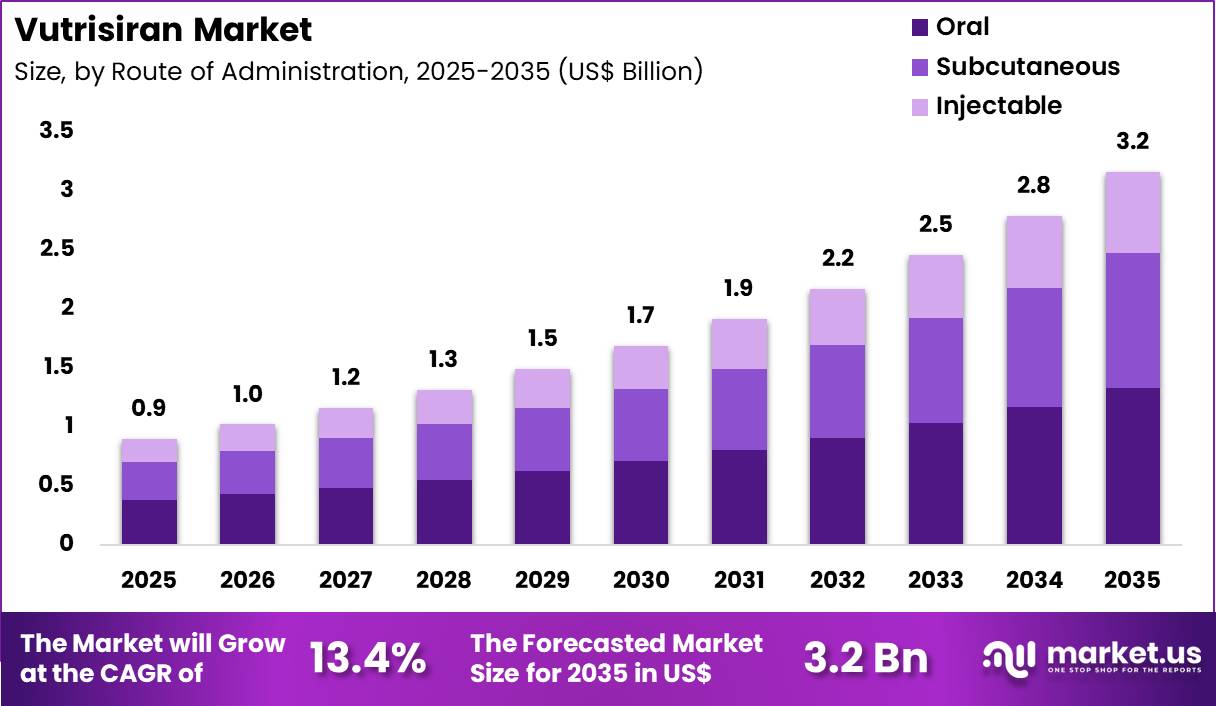
New York, NY – Oct 30, 2026 – Global Vutrisiran Market size is expected to be worth around US$ 3.2 Billion by 2035 from US$ 0.9 Billion in 2025, growing at a CAGR of 13.4% during the forecast period 2025 to 2035. In 2025, North America led the market, achieving over 39.9% share with a revenue of US$ 0.4 Billion.
Vutrisiran is an innovative RNA interference (RNAi)-based therapeutic developed by Alnylam Pharmaceuticals for the treatment of transthyretin-mediated amyloidosis (ATTR amyloidosis). Marketed under the brand name AMVUTTRA, vutrisiran is a small interfering RNA (siRNA) therapeutic designed to reduce the production of transthyretin (TTR) protein in the liver.
The drug works by targeting and degrading messenger RNA (mRNA) responsible for TTR protein production. This reduces circulating TTR levels and helps limit the formation and accumulation of abnormal amyloid deposits in tissues and organs, particularly the heart and peripheral nerves.
Vutrisiran is approved for treating polyneuropathy associated with hereditary transthyretin-mediated amyloidosis (hATTR-PN) in adults. In March 2025, the U.S. Food and Drug Administration (FDA) expanded its approval to include cardiomyopathy associated with wild-type or hereditary ATTR amyloidosis (ATTR-CM), helping reduce cardiovascular mortality, hospitalizations, and urgent heart failure visits.
The recommended dosage is 25 mg administered through subcutaneous injection once every three months by a healthcare professional. Its quarterly dosing schedule offers a convenient treatment approach.
Vutrisiran represents an important advancement in RNAi-based therapies, expanding treatment options for patients affected by this progressive and potentially life-threatening disease.
Key Takeaways
- In 2025, the market was valued at US$ 0.9 Billion and is projected to grow at a CAGR of 13.4%, reaching US$ 3.2 Billion by 2035.
- Based on product type, the market is segmented into antisense oligonucleotides, nucleotides, nucleic acids, nucleosides, and others. Among these, antisense oligonucleotides dominated the market, accounting for a share of 46.8%.
- By route of administration, the market is categorized into oral, subcutaneous, and injectable segments. The oral segment held a significant market share of 41.9%.
- Based on distribution channel, the market is classified into hospital pharmacies, online pharmacies, retail pharmacies, and others. Hospital pharmacies emerged as the leading segment, capturing the largest revenue share of 58.4%.
- Regionally, North America dominated the market, accounting for the largest share of 39.9%.
Key Market Segments
- Product Type Analysis: Antisense oligonucleotide accounted for 46.8% of product type growth, supported by its targeted mechanism and alignment with disease-modifying treatment strategies. Its ability to regulate gene expression at the RNA level improves therapeutic precision. Advancements in oligonucleotide chemistry, stability, and tissue delivery further strengthen adoption. Rising investment in RNA-based therapies and expanding clinical evidence are expected to sustain segment leadership.
- Route of Administration Analysis: Oral administration represented 41.9% of growth within the route of administration segment, driven by patient preference for convenient and non-invasive treatment. Simplified dosing supports adherence and reduces dependence on clinical visits. Improvements in formulation technologies and bioavailability further strengthen adoption. Growing demand for home-based care and cost-efficient treatment models is expected to support continued segment expansion.
- Distribution Channel Analysis: Hospital pharmacies accounted for 58.4% of distribution channel growth, supported by their ability to manage specialized and high-value therapies. Institutional dispensing enables clinical monitoring, inventory control, and coordinated patient care. Established cold-chain infrastructure and reimbursement processes further strengthen this channel. Increasing emphasis on supervised treatment initiation and follow-up is expected to maintain hospital pharmacies’ leading position.
Regional Analysis
North America is Leading the Vutrisiran Market
North America accounted for 39.9% of the Vutrisiran market in 2024, driven by strong adoption of RNA interference therapies across specialized healthcare centers. Early diagnosis through genetic testing, established specialist networks, and favorable reimbursement pathways improved treatment accessibility.
Growing awareness of hereditary transthyretin amyloidosis and patient advocacy initiatives further supported demand. Advanced specialty pharmacy networks and cold-chain infrastructure strengthened therapy distribution. According to the NIH, rare diseases affect approximately 25–30 million people in the US, highlighting the need for advanced treatment options.
Asia Pacific is Expected to Register the Highest CAGR
Asia Pacific is expected to record the highest CAGR during the forecast period, supported by improving rare disease diagnosis and expanding access to advanced therapies. Government initiatives, orphan drug policies, and genetic screening programs are strengthening treatment availability.
Physician training, international collaborations, and improved cold-chain infrastructure further support regional adoption. Additionally, Alnylam Pharmaceuticals reported approximately USD 1.05 billion in global revenue in 2023, reflecting growing commercial momentum for RNA interference therapies.
Emerging Trends
- Expansion of Treatment Applications in ATTR Cardiomyopathy: The expansion of vutrisiran’s approved applications is creating new growth opportunities. In March 2025, the FDA expanded its approval to include cardiomyopathy associated with hereditary and wild-type transthyretin amyloidosis (ATTR-CM), in addition to hereditary ATTR polyneuropathy. This has increased its potential patient population.
- Growing Adoption of RNA Interference (RNAi) Therapies: The increasing use of RNA interference technology is an important trend in the market. Vutrisiran reduces the production of transthyretin protein by targeting its messenger RNA in the liver. This targeted treatment approach is strengthening interest in RNAi-based medicines for rare genetic and protein-related disorders.
- Increasing Preference for Less Frequent Drug Administration: The demand for convenient treatment options is supporting the adoption of vutrisiran. The medicine is administered through a subcutaneous injection once every three months by a healthcare professional. This less frequent administration schedule may reduce treatment-related hospital visits compared with more frequent injection or infusion-based therapies.
- Stronger Clinical Evidence Supporting Cardiovascular Treatment: Clinical evidence is strengthening the position of vutrisiran in the ATTR-CM treatment landscape. The HELIOS-B trial involving 655 patients demonstrated a reduction in the combined risk of death and recurrent cardiovascular events compared with placebo, supporting its expanded clinical use.
- Growing Focus on Early Diagnosis and Specialist Treatment: Greater awareness of transthyretin amyloidosis is encouraging earlier diagnosis and specialist-led treatment. Cardiologists, neurologists, and amyloidosis treatment centres are important in identifying suitable patients. Improved diagnostic pathways may support the future use of vutrisiran among patients with confirmed ATTR-related conditions.
Use Cases
- Treatment of Hereditary ATTR Polyneuropathy (hATTR-PN): Vutrisiran is used to treat polyneuropathy in adults with hereditary transthyretin-mediated amyloidosis. It reduces the production of abnormal transthyretin protein, helping address the underlying disease process associated with nerve damage, sensory problems, and progressive movement difficulties.
- Treatment of ATTR Cardiomyopathy (ATTR-CM): Vutrisiran is used in adults with cardiomyopathy associated with hereditary or wild-type transthyretin amyloidosis. It helps reduce cardiovascular mortality, cardiovascular hospitalizations, and urgent heart failure visits, making it an important treatment option for eligible patients.
- Management of Transthyretin Protein Production: Vutrisiran is used to reduce the production of transthyretin protein in the liver. By targeting TTR messenger RNA through RNA interference, it reduces the availability of the protein responsible for amyloid formation and accumulation in different body tissues.
- Reduction of Cardiovascular Disease Complications: Vutrisiran can be used in eligible ATTR-CM patients to lower the risk of cardiovascular complications. Evidence from the HELIOS-B study demonstrated reductions in cardiovascular hospitalizations and urgent heart failure visits compared with placebo.
- Long-Term Management of ATTR Amyloidosis: Vutrisiran can be used as part of long-term disease management in eligible adults with ATTR amyloidosis. Its once-every-three-months administration schedule supports ongoing treatment, while regular medical assessments help monitor disease progression, treatment response, and vitamin A levels.
Frequently Asked Questions About Vutrisiran
- What is the brand name of Vutrisiran?
Vutrisiran is marketed under the brand name Amvuttra. It is developed by Alnylam Pharmaceuticals and is available as a subcutaneous injection for patients requiring treatment for approved forms of transthyretin amyloidosis. - How does Vutrisiran work in the human body?
Vutrisiran works through RNA interference technology by targeting transthyretin messenger RNA in liver cells. This process reduces the production of both normal and abnormal transthyretin proteins, helping decrease amyloid protein accumulation in body tissues. - Which diseases are treated with Vutrisiran?
Vutrisiran is approved for treating hereditary transthyretin-mediated amyloidosis with polyneuropathy in adults. It is also approved for cardiomyopathy associated with hereditary or wild-type transthyretin amyloidosis in adults. - Which factors are creating opportunities in the Vutrisiran market?
Market opportunities are emerging from expanded regulatory approvals, improved disease detection, increasing specialist awareness, and the development of RNA interference treatments. The inclusion of ATTR cardiomyopathy has also expanded the potential treatment population. - What is the role of clinical trials in the Vutrisiran market?
Clinical trials play an important role in establishing treatment effectiveness and safety. Studies such as HELIOS-A and HELIOS-B have provided evidence supporting vutrisiran’s use in neurological and cardiovascular manifestations of transthyretin amyloidosis. - Which regions have opportunities in the Vutrisiran market?
North America and Europe represent important markets due to established rare disease treatment infrastructure and regulatory frameworks. Asia-Pacific also presents potential opportunities as disease awareness, diagnostic capabilities, and access to advanced treatments improve. - What is the future outlook for the Vutrisiran market?
The market outlook is supported by expanded treatment applications, increasing awareness of ATTR amyloidosis, and continued development of RNA-based medicines. Future commercial growth will also depend on treatment affordability, reimbursement, diagnosis rates, and geographic availability. - Who are the major stakeholders in the Vutrisiran market?
Major stakeholders include Alnylam Pharmaceuticals, healthcare providers, specialist hospitals, regulatory authorities, pharmaceutical distributors, insurers, and patients. Their activities influence medicine availability, regulatory compliance, treatment access, clinical adoption, and the overall commercial development of vutrisiran.
Conclusion
The Vutrisiran market is expected to witness steady growth, supported by the increasing adoption of RNA interference-based therapies and expanding treatment applications for transthyretin amyloidosis. The FDA’s approval for ATTR cardiomyopathy in 2025 has further strengthened its clinical and commercial potential. Growing disease awareness, improved diagnostic capabilities, and increasing demand for targeted treatments are expected to support market expansion.
North America is likely to maintain its leading position, while Asia Pacific offers promising growth opportunities. However, high treatment costs, reimbursement limitations, and restricted patient access may influence market development. Overall, continued clinical advancements are expected to strengthen the market outlook.
Discuss your needs with our analyst
Please share your requirements with more details so our analyst can check if they can solve your problem(s)



