


Overview
New York, NY – Sep 21, 2026 –The Global Antimicrobial Hospital Textile Market is projected to reach approximately US$ 21.6 Billion by 2034, increasing from US$ 10.5 Billion in 2024, at a CAGR of 7.5% during the forecast period from 2025 to 2034. In 2024, North America dominated the market with over a 41.6% share, generating revenue of around US$ 4.4 Billion, supported by advanced healthcare infrastructure, strict infection-control protocols, and increased adoption of antimicrobial medical fabrics.
Antimicrobial Hospital Textile is gaining momentum due to increasing adoption of advanced infection-control materials across healthcare facilities. In 2024, hospital bedding and linen applications accounted for nearly 40% of product demand, driven by the need for safer patient environments and reduced microbial contamination risks. The use of antimicrobial-treated fabrics in surgical gowns, curtains, and protective clothing increased by more than 20% in recent years, supported by rising awareness about hospital hygiene.
Additionally, innovations in silver-based antimicrobial fibers and durable coating technologies are improving textile performance, with manufacturers focusing on products that maintain effectiveness after multiple washing cycles exceeding 50 uses. North America dominated the market with nearly 38% revenue share in 2024, supported by advanced hospital infrastructure, higher healthcare expenditure, and strict infection-control standards.
The United States alone accounts for a major portion of regional demand due to increasing adoption of antimicrobial bedding, surgical textiles, and protective clothing. Europe represented approximately 31% of global market revenue in 2024, driven by healthcare quality regulations and sustainable textile initiatives. Technological advancements, including long-lasting antimicrobial coatings, nanofiber-based textiles, and smart healthcare fabrics, are creating new growth opportunities.
Hospitals are increasingly investing in reusable antimicrobial textiles that can withstand 50–100+ industrial washing cycles while maintaining microbial protection. Growing healthcare infrastructure development, rising surgical procedures, and increasing awareness about infection prevention are expected to support market growth through 2034.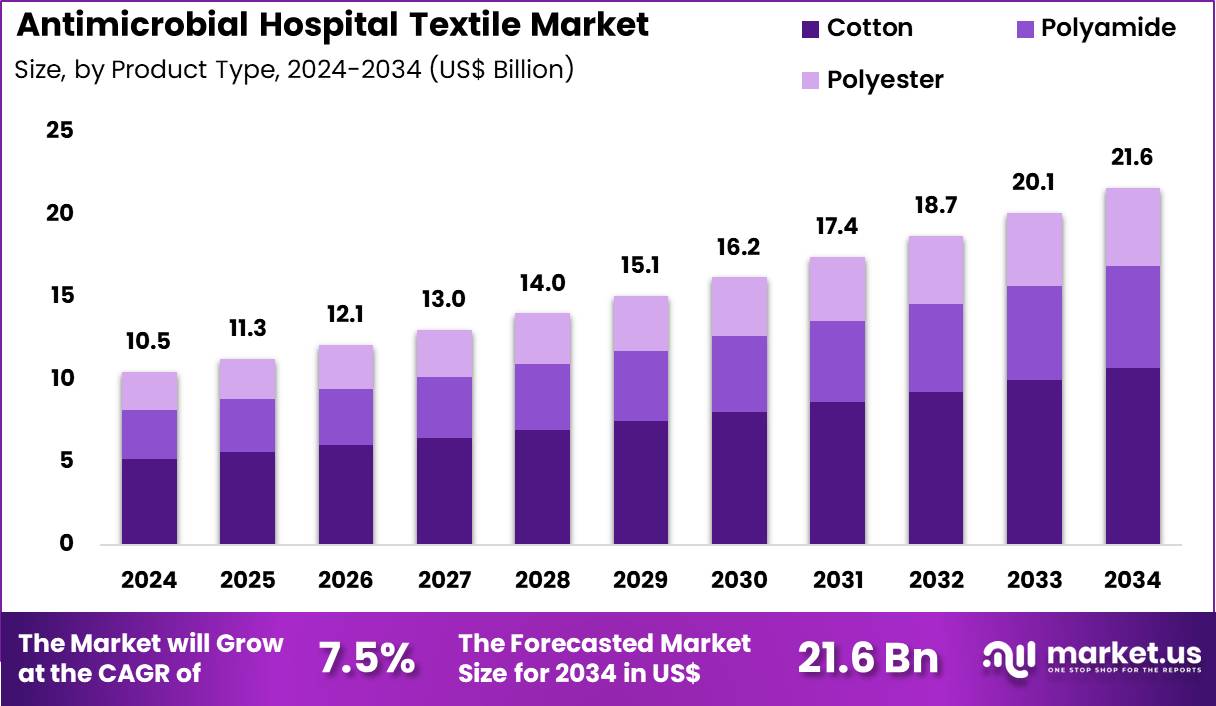
Key Takeaways
- In 2024, the Antimicrobial Hospital Textile Market recorded revenue of approximately US$ 10.5 billion and is projected to grow at a CAGR of 7.5%, reaching nearly US$ 21.6 billion by 2034.
- Based on product type, the market is categorized into cotton, polyamide, and polyester. The cotton segment dominated in 2024, accounting for approximately 49.6% market share due to its comfort, durability, and widespread use in healthcare textiles.
- By application, the market is segmented into attire, sheets & blankets, and surgical supplies & wipes. The attire segment captured a leading position in 2024, holding around 46.7% share, driven by rising demand for antimicrobial gowns, uniforms, and protective healthcare clothing.
- Regionally, North America emerged as the leading market in 2024, capturing approximately 41.6% market share due to advanced healthcare infrastructure, strong infection-control standards, and increasing adoption of antimicrobial textile solutions.
Market Segmentation Overview
- Product Type Analysis: Cotton dominated the product type segment with a 49.6% market share in 2024. Its comfort, breathability, absorbency, and skin-friendly properties make it suitable for hospital linens, gowns, and uniforms. Increasing adoption of antimicrobial-treated cotton fabrics, along with their ability to withstand frequent laundering, supports demand. Advancements in durable antimicrobial finishes further strengthen cotton’s position across healthcare facilities.
- Application Analysis: Attire accounted for the largest application share at 46.7% in 2024. Antimicrobial hospital attire, including gowns, scrubs, and uniforms, helps limit microbial transfer in clinical environments. Rising infection-control awareness and growing healthcare activity are increasing demand for protective garments. Improved antimicrobial coatings that remain effective through repeated washing are also supporting adoption across hospitals and healthcare facilities.
Statistical Information
- Hospital Infection Burden Sustains Demand For Hygiene Textiles: CDC estimated 518,000 healthcare-associated infections in U.S. acute-care hospitals during 2023. Its survey found that 2.6% of hospitalised patients had one or more healthcare-associated infections. This infection burden supports hospital demand for hygienic bedding, patient gowns, privacy curtains, uniforms, towels, drapes, and laundry-management systems. Antimicrobial textiles are positioned as an adjunct to, not a replacement for, standard infection-control practices
- N-halamine Textile Achieved Near Total Bacterial Reduction: CDC-supported research found N-halamine antimicrobial fabrics achieved 99.9983% kill of 7 common bacteria and fungi, including drug-resistant organisms, within 15 minutes. The same fabric achieved 100% kill of MS2 virus within 3b0 minutes. This indicates strong laboratory antimicrobial performance and supports demand for treated hospital textiles in high-touch, high-risk, and infection-control-sensitive environments.
- Contaminated Hospital Textiles Can Carry Extremely High Bacterial Loads: CDC states that hospital textiles heavily contaminated with blood, skin, stool, urine, vomitus, or body fluids can carry 10⁶–10⁸ CFU per 100 cm² of fabric. This equals 1 million to 100 million viable microorganisms on a small textile area. Such contamination supports demand for robust laundry processes, staff handling controls, antimicrobial treatments, and textiles designed to tolerate repeated disinfection cycles.
- CDC Survey Identified Three Hundred Ninety-Two Hospital Infections: CDC’s 2023 survey reviewed 13,654 patients in 218 acute-care hospitals and identified 392 healthcare-associated infections among 357 patients. Pneumonia represented 25.8% of infections, surgical-site infections 20.9%, gastrointestinal infections 14.5%, bloodstream infections 12.0%, and urinary-tract infections 8.9%. These infection categories create a continuing hygiene rationale for hospital-textile innovation.
- Silver-Treated Textiles Reduced Bacterial Loads Before Patient Use: A three-hospital study found ionic-silver-treated textile aprons had 89% lower aerobic bacterial colony-forming units before patient use than untreated controls. Silver-treated sheets had 88% lower bacterial counts before use. After patient use, bacterial reductions remained 45% for aprons and 30% for sheets. All four results were statistically significant, with P ≤ 0.0001.
- Hospital Uniform Study Found Pathogens On Sixty Three Percent: A hospital-textile study collected 238 samples from linens, uniforms, curtains, and hard surfaces. Overall, 119 samples, or 50%, tested positive for at least one pathogen. Among doctor and nurse uniforms, 63% contained pathogenic organisms; 11% carried multidrug-resistant organisms. Of the positive samples, 79% had one pathogen, 18% had two or three pathogens, and 3% had more
Regional Analysis
North America led the market by securing a market share of 41.6% in 2024.
North America remains a major market for antimicrobial hospital textiles, supported by advanced healthcare infrastructure and strong infection-control practices. The CDC reports that approximately 1 in 31 hospital patients has at least one healthcare-associated infection (HAI) on any given day. Demand for hygienic bed linens, gowns, uniforms, curtains, and surgical textiles continues to benefit from stringent hospital sanitation practices. Asia Pacific is expected to witness strong growth as healthcare systems expand infection-prevention programs and improve hospital hygiene.
WHO reports that approximately 15% of patients in low- and middle-income countries acquire at least one HAI during hospitalization, compared with 7% in high-income countries. This infection burden is increasing attention toward hygienic bedding, protective apparel, curtains, and reusable medical textiles. WHO’s 2024 Global Report on Infection Prevention and Control emphasizes stronger IPC practices across healthcare facilities.
Business Opportunities
The Antimicrobial Hospital Textile Market presents several business opportunities as healthcare providers strengthen infection-control practices and demand advanced textile solutions. Manufacturers can develop durable antimicrobial fabrics using silver, copper, zinc oxide, and other technologies for hospital gowns, bedding, curtains, uniforms, and surgical textiles. Reusable antimicrobial textiles represent another opportunity as healthcare facilities seek products capable of withstanding frequent industrial laundering while supporting sustainability objectives.
Companies can also invest in smart healthcare textiles incorporating sensors for moisture, temperature, and hygiene monitoring. Partnerships between textile manufacturers, hospitals, commercial laundries, and healthcare organizations can support real-world product validation and accelerate adoption. Specialized textiles for intensive-care units, surgical departments, long-term care facilities, and patient rooms offer additional growth potential.
Asia Pacific and other emerging healthcare markets provide opportunities through expanding hospital infrastructure and infection-prevention programs. Businesses focusing on cost-effective products, proven antimicrobial performance, sustainable materials, and regulatory compliance can strengthen their competitive position while addressing evolving healthcare textile requirements.
Emerging Trends
- Greater Focus on Textile Hygiene: Hospitals are strengthening textile handling and laundering practices to reduce contamination. CDC guidance covers bed sheets, towels, patient clothing, and other healthcare textiles. Proper laundering depends on time, temperature, mechanical action, and drying, making hygienic textile management increasingly important.
- Antimicrobial Healthcare Uniforms: Healthcare-worker clothing can become contaminated during patient care. A study involving 280 samples found bacterial growth in 81.1% of long-sleeved attire samples, while 20.7% contained potential pathogens. This supports interest in antimicrobial uniforms, although product effectiveness requires clinical validation.
- Durable Antimicrobial Treatments: Textile manufacturers are developing treatments designed to remain effective after repeated use and laundering. One hospital study reported that PHMB-treated uniforms maintained more than 99% antimicrobial activity against S. aureus and K. pneumoniae after 5 months of use.
- Hospital Bedding and Linen Applications: Antimicrobial technologies are being explored for bedding, towels, gowns, curtains, and other frequently handled textiles. CDC identifies these materials as healthcare textiles requiring controlled handling, transportation, laundering, and storage to minimize contamination risks.
- Evidence-Based Product Development: Antimicrobial textiles are increasingly being evaluated under real healthcare conditions rather than relying only on laboratory testing. In one randomized study, 30% of hospital scrubs were contaminated, with no significant difference between antimicrobial and standard scrubs, highlighting the need for evidence-based product claims.
Use Cases
- Hospital Bed Linen: Antimicrobial sheets, pillowcases, blankets, and mattress covers can be used in patient rooms to support hygienic care. These textiles are particularly relevant because healthcare facilities routinely handle large volumes of bedding and other fabrics that require controlled collection, laundering, storage, and transportation.
- Healthcare Worker Attire: Antimicrobial gowns, scrubs, uniforms, and laboratory coats can be used in hospitals where clothing may come into contact with patients, equipment, and contaminated surfaces. A study found bacterial growth on 81.1% of 280 long-sleeved attire samples, highlighting the importance of textile hygiene.
- Surgical Textiles: Antimicrobial surgical gowns, drapes, and related fabrics can be used in operating rooms as part of broader infection-control practices. These products can provide an additional textile-management approach alongside sterilization, hand hygiene, environmental cleaning, and appropriate personal protective equipment.
- Privacy Curtains: Antimicrobial privacy curtains can be deployed around patient beds, examination areas, and treatment spaces. Because curtains are frequently touched and may remain in patient-care areas for extended periods, healthcare facilities can incorporate improved cleaning and textile-management procedures.
- Long-Term Care Facilities: Antimicrobial bedding, patient clothing, gowns, and reusable textiles can support hygiene practices in nursing homes and long-term care settings. These environments involve prolonged patient stays and frequent textile handling, making effective laundering, storage, and contamination-control procedures especially important.
Recent Development
- In 2026, BioCote Limited continued expanding its antimicrobial technology portfolio for textiles and fabrics, offering solutions suitable for both natural and synthetic materials. The company states that its technology can reduce bacteria such as S. aureus and K. pneumoniae on treated products by more than 99%.
- In 2026, Herculite Products Inc. continued promoting its Sure-Chek® antimicrobial healthcare fabrics, which incorporate a controlled-release antimicrobial additive designed to remain effective throughout the product’s working life. The fabrics are used for healthcare applications including protective coverings and medical environments.
- In 2026, Herculite Products Inc. continued developing healthcare textile solutions with fluid resistance, flame resistance, stain resistance, and antimicrobial properties. Its Sure-Chek® fabrics are manufactured in the United States and are designed for demanding medical environments where cleaning and durability are important.
- In April 2026, BioCote Limited highlighted antimicrobial additives as an additional layer of protection for materials used in healthcare-related environments. The company reported testing against microorganisms and emphasized continuous microbial-load reduction between routine cleaning cycles.
Frequently Asked Questions About Antimicrobial Hospital Textile
- What is driving the Antimicrobial Hospital Textile Market?
Growing attention to healthcare-associated infections, hospital hygiene, and patient safety is supporting demand. Healthcare facilities are increasingly evaluating antimicrobial fabrics alongside established cleaning, laundering, hand-hygiene, sterilization, and infection-prevention procedures. - Which product type dominates the market?
Cotton is a major product type because it provides breathability, comfort, absorbency, and suitability for repeated laundering. Cotton fabrics can also receive antimicrobial treatments, making them useful for hospital bedding, gowns, uniforms, and other frequently handled healthcare textiles. - What materials are used in antimicrobial hospital textiles?
Common materials include cotton, polyester, polyamide, and blended fabrics. Antimicrobial functionality can be introduced through technologies involving silver, copper, zinc-based compounds, or other antimicrobial agents, depending on the textile application and regulatory requirements. - Which region leads the market?
North America is a leading regional market, supported by advanced healthcare infrastructure and established infection-prevention practices. The United States has extensive healthcare textile-management requirements, while hospitals continue evaluating specialized fabrics for bedding, uniforms, gowns, curtains, and other applications. - What opportunities exist in antimicrobial hospital textiles?
Opportunities include developing durable antimicrobial fabrics, reusable healthcare textiles, specialized surgical materials, antimicrobial curtains, protective apparel, and smart textiles. Manufacturers can also collaborate with healthcare organizations to conduct clinical evaluations and demonstrate product performance under real-world conditions. - What is the future outlook for the market?
The market outlook is supported by continued investment in infection prevention, healthcare infrastructure, textile innovation, and reusable medical products. Future development is likely to emphasize durable antimicrobial treatments, sustainable fabrics, clinical validation, improved washing resistance, and application-specific textile solutions. - Who are the key players in the market?
Key companies associated with the market include Milliken & Company, PurThread Technologies, BioCote Limited, LifeThreads Global, Trevira GmbH, Herculite Products Inc., Smith & Nephew, and Medline Industries. These companies participate across antimicrobial textiles, healthcare fabrics, medical products, and related solutions.
Conclusion
The Antimicrobial Hospital Textile Market is gaining importance as healthcare providers strengthen infection-prevention and hygiene practices. Demand is supported by the growing use of antimicrobial fabrics in hospital attire, bedding, surgical textiles, curtains, and patient-care products. Cotton remains a significant material due to its comfort, breathability, and laundering suitability, while attire represents a major application area.
North America leads adoption through advanced healthcare infrastructure and established infection-control practices. Meanwhile, Asia Pacific offers strong opportunities as healthcare systems expand and improve hygiene standards. Future market development will focus on durable antimicrobial treatments, reusable textiles, sustainable materials, smart fabrics, and stronger clinical validation to support effective healthcare textile solutions.
Discuss your needs with our analyst
Please share your requirements with more details so our analyst can check if they can solve your problem(s)




