


Overview
New York, NY – Aug 13, 2026 – The Global Neurology Digital Therapeutics Market Size is expected to be worth around US$ 540.6 million by 2034 from US$ 248.1 million in 2024, growing at a CAGR of 8.1% during the forecast period 2025 to 2034. North America held a dominant market position, capturing more than a 37.6% share and holding a US$ 93.3 million market value for the year.
The Neurology Digital Therapeutics (DTx) Market is expanding rapidly due to the increasing global burden of neurological disorders and the growing demand for accessible, technology-driven treatment solutions. According to the World Health Organization (WHO), neurological conditions affect up to 1 billion people worldwide, making them one of the leading causes of disability globally. Digital therapeutics are addressing this unmet need by offering clinically validated software-based interventions for conditions including ADHD, Alzheimer’s disease, multiple sclerosis, insomnia, and cognitive impairment.
Neurology DTx solutions leverage smartphones, tablets, artificial intelligence, and remote monitoring technologies to deliver personalized treatment programs. These platforms improve patient adherence, enable continuous health tracking, and support healthcare providers with real-time insights. The increasing adoption of digital health solutions is supported by the growing availability of smartphones, with more than 4 billion smartphone users globally, creating a large potential user base for digital interventions.
Regulatory acceptance is strengthening market development. In 2020, Akili Interactive’s EndeavorRx became the first FDA-authorized prescription video game-based digital therapeutic for children with ADHD, establishing a new category in neurological treatment. In September 2024, Cognoa’s Canvas Dx received Medicaid coverage recognition in Wyoming, demonstrating progress toward payer reimbursement and broader patient access.
Healthcare provider confidence in digital tools is also increasing. A 2024 survey by The Pew Charitable Trusts found that 75% of physicians believe digital health tools can improve patient outcomes. Growing collaborations between digital therapeutics companies, pharmaceutical firms, and healthcare systems are expected to accelerate commercialization, reimbursement adoption, and integration of personalized neurological care solutions.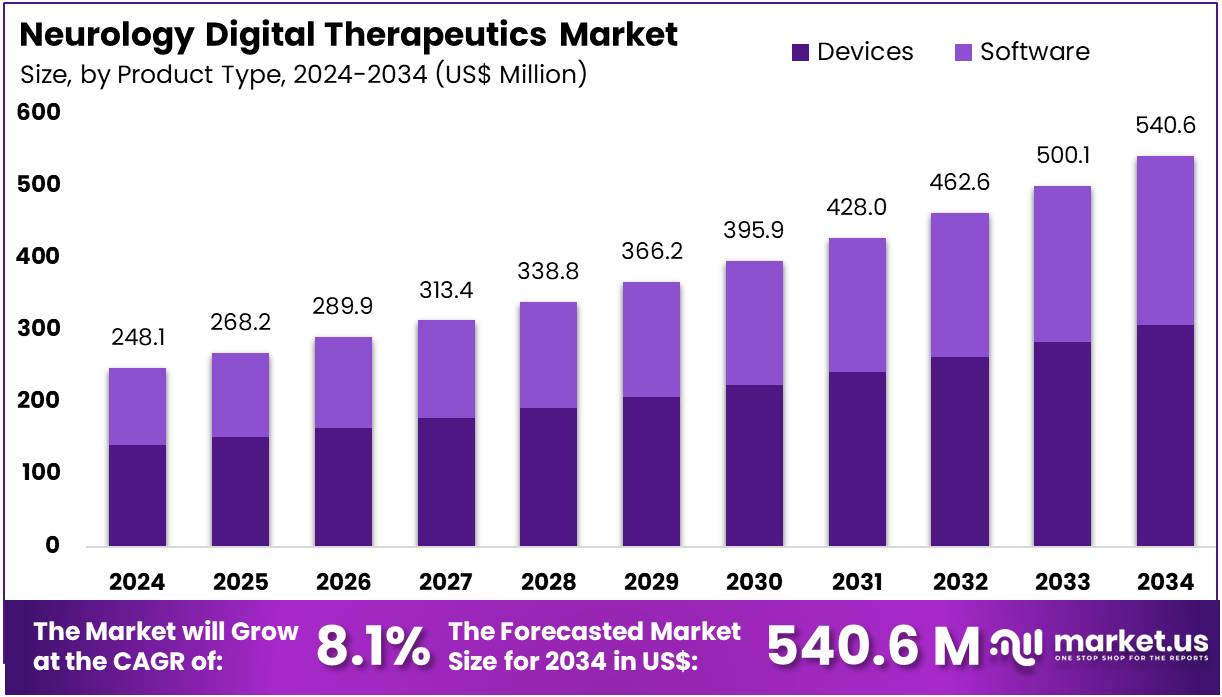
Key Takeaways
- In 2024, the market generated US$ 248.1 million in revenue and is projected to grow at a CAGR of 8.1%, reaching approximately US$ 540.6 million by 2034.
- Based on product type, the market is segmented into devices and software. The devices segment dominated in 2023, accounting for a 56.7% market share.
- By application, the market is categorized into diabetes, cardiovascular disease (CVD), obesity, respiratory disease, central nervous system (CNS) disease, and others. Among these, diabetes represented the leading segment with a 38.5% share.
- Based on end users, the market is segmented into hospitals, clinics, and others. The hospitals segment held the largest revenue share of 50.0%, making it the dominant end-user category.
- Regionally, North America emerged as the leading market in 2023, capturing a 37.6% share of the overall market.
Statistical Information
- Neurological Disorders Are the Leading Cause of Global Disability: Neurological disorders are creating a significant healthcare burden and increasing demand for scalable digital treatment options. According to WHO-supported Global Burden of Disease data, more than 3 billion people worldwide were living with a neurological condition in 2021. Neurological diseases became the leading cause of disability and health loss globally, with neurological disability-adjusted life years increasing by 18% since 1990.
- Limited Access to Neurological Care Creates Demand for Digital Solutions: WHO reports that neurological healthcare access remains unequal worldwide. More than 80% of neurological deaths and health loss occur in low- and middle-income countries, while high-income countries have up to 70 times more neurological professionals per 100,000 people compared with lower-income regions. Digital therapeutics can help bridge gaps through remote, scalable interventions
- Alzheimer’s Disease and Dementia Burden Supporting Cognitive Digital Therapeutics: The growing prevalence of dementia is increasing demand for digital cognitive assessment and intervention tools. According to the World Health Organization, more than 55 million people worldwide live with dementia, with nearly 10 million new cases occurring every year. Digital cognitive therapies and monitoring platforms are being explored to support early detection and disease management.
- FDA Authorization Established Digital Therapeutics as Clinical Treatment Options: The U.S. FDA authorized EndeavorRx by Akili Interactive in 2020 as the first prescription video game-based digital therapeutic. The FDA decision was supported by clinical studies involving approximately 600 children aged 8–12 years with ADHD, demonstrating improved attention function measurements.
- EndeavorRx Clinical Outcomes Demonstrated Patient Improvement: Akili Interactive reported clinical outcomes showing that 73% of children using EndeavorRx reported improvement in attention, while 68% of parents reported improvement in ADHD-related impairments after two months of treatment. These outcomes highlight the importance of clinically validated software-based therapies.
- Digital Connectivity Expansion Supports Smartphone-Based DTx Adoption: Digital therapeutics depend on widespread internet and mobile access. According to the International Telecommunication Union (ITU), approximately 5.5 billion people worldwide were using the internet in 2024, representing 68% of the global population. This expanding digital infrastructure supports wider delivery of app-based healthcare interventions.
- Increasing Smartphone-Based Healthcare Adoption Among Patients: Consumer adoption of digital healthcare tools continues to increase as patients seek convenient healthcare access. ITU data shows global internet users increased to 5.5 billion in 2024, adding approximately 227 million new users compared with revised 2023 estimates, expanding the potential reach of digital healthcare platforms.
- Epilepsy Management Creates Opportunities for Digital Monitoring Platforms: The CDC estimates that approximately 3.4 million people in the United States have active epilepsy, including about 3 million adults and 470,000 children. Digital solutions that track seizures, medication adherence, and patient-reported symptoms are gaining importance for improving disease management.
Regional Analysis
North America led the market by securing a market share of 37.6% in 2023.
North America remains a leading region for Neurology Digital Therapeutics adoption due to strong digital healthcare infrastructure, regulatory support, and increasing demand for technology-enabled neurological care. The region faces a significant neurological disease burden, with the CDC reporting that millions of Americans are affected by conditions such as stroke, epilepsy, and ADHD, increasing the need for scalable digital interventions.
The U.S. FDA’s Digital Health Center of Excellence continues to support innovation in software-based medical technologies, improving pathways for digital therapeutic approvals and clinical adoption. FDA authorization of Akili Interactive’s EndeavorRx in 2020 established a major milestone as the first prescription digital therapeutic using video game technology for children with ADHD.
Growth is further supported by NIH-funded neuroscience innovation programs, including the BRAIN Initiative, which has invested billions of dollars since launch to accelerate development of advanced neurotechnologies. Increasing telehealth adoption, wearable monitoring, artificial intelligence integration, and reimbursement initiatives from CMS are strengthening the use of digital therapeutics for neurological disease management across North America.
Emerging Trends
- Artificial Intelligence Integration for Personalized Neurological Care: Artificial intelligence is becoming a major trend in neurology DTx by enabling personalized treatment plans, symptom prediction, and adaptive therapies. The FDA supports AI/ML-based software medical devices, focusing on safe and effective digital healthcare innovation. AI tools help analyze patient data for customized neurological interventions.
- Growth of Smartphone-Based Cognitive and Behavioral Therapies: Mobile applications are increasingly used to deliver evidence-based cognitive training, behavioral therapy, and symptom monitoring for neurological disorders. The FDA recognizes mobile health applications, wearable technologies, and software-based solutions as important components of digital healthcare. More than 5.5 billion people globally used the internet in 2024, expanding access to digital treatment platforms.
- Increasing Use of Digital Biomarkers and Wearable Monitoring: Digital biomarkers collected through wearable devices, sensors, and connected platforms are becoming important for tracking neurological conditions such as Parkinson’s disease, epilepsy, and stroke recovery. These technologies enable continuous monitoring of movement, sleep, and cognitive changes, supporting personalized care decisions and remote patient management.
- Regulatory Support and Clinical Validation Strengthening Market Adoption: Regulatory agencies are increasing focus on clinically validated digital therapeutics. The FDA Digital Health Center of Excellence provides guidance for Software as a Medical Device (SaMD), artificial intelligence, cybersecurity, and real-world evidence. FDA authorization of Akili’s EndeavorRx in 2020 established digital therapeutics as clinically supported treatment options for ADHD.
- Expansion of Remote Neurological Rehabilitation Programs: Remote rehabilitation is emerging as a key use case for neurological DTx, especially for stroke recovery, cognitive impairment, and movement disorders. Digital platforms allow patients to perform guided exercises at home while clinicians monitor progress. The CDC reports approximately 795,000 strokes occur annually in the United States, increasing demand for accessible rehabilitation solutions.
Use Cases
- ADHD Attention Improvement and Cognitive Training: ADHD is one of the leading applications for neurological digital therapeutics. The CDC estimates around 7 million U.S. children aged 3–17 years have received an ADHD diagnosis. FDA-authorized EndeavorRx uses game-based digital exercises to improve attention function in children aged 8–12 years, demonstrating clinical application of DTx.
- Digital Cognitive Support for Alzheimer’s Disease and Dementia: Digital therapeutics are increasingly applied for cognitive assessment, brain training, and daily symptom monitoring in dementia care. WHO reports more than 55 million people worldwide live with dementia, with nearly 10 million new cases annually, creating demand for scalable digital cognitive support solutions.
- Remote Monitoring for Parkinson’s Disease Management: Neurology DTx platforms are being used for Parkinson’s disease through movement tracking, symptom recording, and wearable-based monitoring. The National Institute of Neurological Disorders and Stroke estimates around 500,000 Americans live with Parkinson’s disease, supporting demand for continuous digital disease management tools.
- Epilepsy Seizure Tracking and Prediction Applications: Digital therapeutics are being explored for epilepsy management through seizure diaries, wearable sensors, and remote monitoring systems. The CDC estimates approximately 3.4 million people in the United States have active epilepsy, creating opportunities for digital platforms that improve symptom tracking and treatment adherence.
- Stroke Rehabilitation and Recovery Support: Digital therapeutics are increasingly used for stroke rehabilitation through virtual physical therapy, cognitive exercises, and remote patient monitoring. With nearly 800,000 strokes occurring annually in the U.S., digital rehabilitation platforms provide scalable solutions that help patients continue recovery outside hospitals while enabling clinician oversight.
Frequently Asked Questions on Neurology Digital Therapeutics
- What is driving the growth of the Neurology Digital Therapeutics Market?
The Neurology Digital Therapeutics Market is growing due to the increasing burden of neurological disorders, rising adoption of digital healthcare solutions, improved smartphone accessibility, regulatory approvals, and demand for remote patient monitoring. These factors are encouraging healthcare providers to adopt software-based treatment approaches. - Which neurological conditions can be treated using digital therapeutics?
Neurology digital therapeutics are being developed for conditions including ADHD, Alzheimer’s disease, Parkinson’s disease, epilepsy, stroke rehabilitation, multiple sclerosis, sleep disorders, and cognitive impairment. These solutions support symptom management, behavioral modification, cognitive training, rehabilitation, and continuous patient monitoring. - How do Neurology DTx solutions improve patient care?
Neurology DTx solutions improve patient care by providing personalized treatment plans, continuous monitoring, behavioral support, and remote access to therapies. These digital platforms help patients follow treatment routines, enable clinicians to track progress, and support early intervention through real-time health data. - What role does artificial intelligence play in Neurology Digital Therapeutics?
Artificial intelligence enhances Neurology DTx by analyzing patient data, identifying disease patterns, predicting symptoms, and personalizing treatment programs. AI-powered platforms can adapt interventions based on patient responses, improving treatment effectiveness and supporting clinicians with data-driven neurological care decisions. - Are Neurology Digital Therapeutics approved by regulatory authorities?
Yes, several Neurology DTx products have received regulatory recognition. For example, the U.S. FDA authorized Akili Interactive’s EndeavorRx in 2020 as the first prescription video game-based digital therapeutic designed to improve attention function in children with ADHD. - How do smartphones and wearable devices support Neurology DTx adoption?
Smartphones and wearable devices enable convenient delivery of neurological therapies through applications, sensors, and connected platforms. These technologies allow continuous monitoring of symptoms, physical activity, sleep patterns, and cognitive performance, helping patients receive personalized care outside traditional healthcare facilities. - What are the major applications of the Neurology Digital Therapeutics Market?
Major applications include ADHD management, cognitive training, dementia support, Parkinson’s disease monitoring, epilepsy tracking, stroke rehabilitation, and behavioral therapy. These applications focus on improving patient outcomes through digital interventions, remote monitoring, and personalized treatment strategies supported by clinical evidence. - What is the future outlook for the Neurology Digital Therapeutics Market?
The future of the Neurology Digital Therapeutics Market is expected to be shaped by artificial intelligence, wearable technology, personalized medicine, remote care models, and increasing regulatory acceptance. Growing healthcare digitization will support wider integration of software-based neurological treatments into clinical practice.
Conclusion
The Neurology Digital Therapeutics Market is advancing as healthcare systems increasingly adopt digital solutions for managing neurological disorders. Rising disease prevalence, regulatory support, clinical validation, and growing acceptance of remote healthcare are strengthening market opportunities. Technologies such as artificial intelligence, wearable devices, and smartphone-based platforms are enabling personalized, accessible, and continuous neurological care.
Increasing reimbursement initiatives and collaborations between technology companies, healthcare providers, and pharmaceutical organizations are further supporting adoption. As demand grows for non-pharmacological and scalable treatment approaches, neurology digital therapeutics are expected to become an important component of future neurological disease management and patient-centered healthcare delivery.
Discuss your needs with our analyst
Please share your requirements with more details so our analyst can check if they can solve your problem(s)




