


Overview
New York, NY – Aug 13, 2026 – The Global Real-Time E-Healthcare System Market Size is expected to be worth around US$ 63.6 billion by 2034 from US$ 35.2 billion in 2024, growing at a CAGR of 6.1% during the forecast period 2025 to 2034. North America held a dominant market position, capturing more than a 43.7% share and holding a US$ 15.4 billion market value for the year.
The real-time e-healthcare system market is growing significantly due to the rising prevalence of chronic diseases, increasing adoption of digital health solutions, and demand for continuous patient monitoring. According to the Centers for Disease Control and Prevention (CDC), 6 in 10 U.S. adults live with at least one chronic disease, while 4 in 10 adults have two or more chronic conditions, including diabetes, hypertension, and heart disease. These conditions require regular monitoring and timely interventions.
Real-time e-healthcare systems use remote patient monitoring (RPM), wearable devices, artificial intelligence (AI), and cloud-based platforms to collect and analyze health data continuously. The CDC states that chronic diseases account for nearly 90% of the US$4.1 trillion annual healthcare expenditure in the United States, increasing demand for cost-efficient digital care solutions that reduce hospital visits and improve outcomes.
Telehealth adoption has accelerated market growth. The American Medical Association (AMA) reported that physician telemedicine use increased from 14% in 2016 to nearly 80% in 2022, highlighting the shift toward virtual and connected healthcare models. AI-powered analytics further enhance these systems by analyzing real-time patient data, predicting health risks, and supporting personalized treatment decisions.
Integration of electronic health records (EHRs), IoMT devices, and communication platforms is creating connected healthcare ecosystems. In September 2023, Abbott acquired Bigfoot Biomedical to strengthen smart insulin management and personalized diabetes care solutions. With rising chronic disease burden, healthcare digitalization, and demand for proactive monitoring, real-time e-healthcare systems are becoming a key technology in modern healthcare delivery.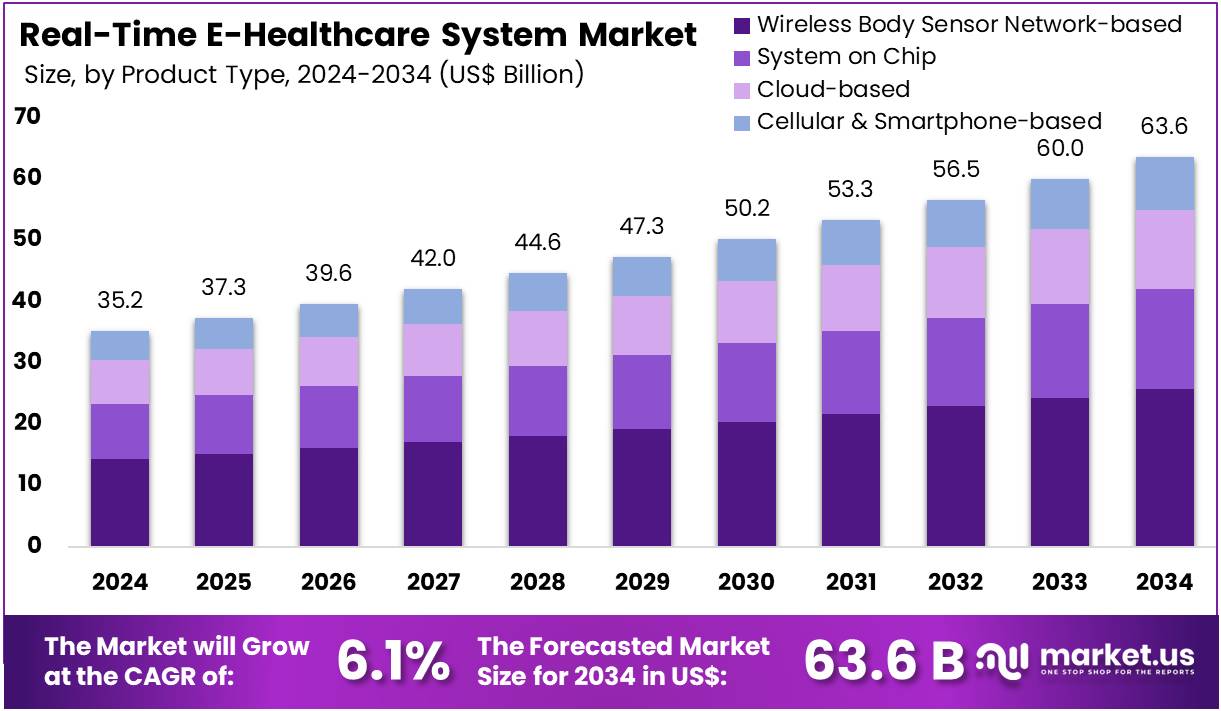
Key Takeaways
- In 2024, the real-time e-healthcare system market generated revenue of US$ 35.2 billion and is projected to reach US$ 63.6 billion by 2034, expanding at a CAGR of 6.1% during the forecast period.
- Based on product type, the market is segmented into wireless body sensor network-based, system-on-chip, cloud-based, and cellular & smartphone-based solutions. The wireless body sensor network-based segment dominated in 2023, accounting for a 40.5% market share.
- By technology, the market is categorized into IoT, cloud computing, blockchain, big data analytics, and AI & machine learning. The IoT segment held a leading position in 2023, capturing a significant 50.3% market share.
- Based on application, the market is segmented into various healthcare uses, with patient monitoring emerging as the dominant application segment, holding the largest revenue share of 35.8% in 2023.
- By end user, the market is divided into hospitals, homecare settings, diagnostic centers, and clinics. The hospital segment led the market in 2023, accounting for a 40.4% revenue share.
- Regionally, North America dominated the global real-time e-healthcare system market in 2023, securing a 43.7% market share due to advanced healthcare infrastructure, high digital health adoption, and increasing demand for remote monitoring solutions.
Statistical Information
- Rising Chronic Disease Burden Driving Demand for Real-Time Healthcare Monitoring: The increasing prevalence of chronic diseases is creating a strong need for continuous health monitoring solutions such as remote patient monitoring (RPM), wearable sensors, and connected healthcare platforms. According to the Centers for Disease Control and Prevention (CDC), 6 in 10 U.S. adults live with at least one chronic disease, and 4 in 10 adults have two or more chronic conditions. Chronic and mental health conditions account for approximately 90% of the US$5.3 trillion annual U.S. healthcare expenditure, increasing demand for technologies that support early detection and preventive care.
- Rapid Growth of Telemedicine Increasing Need for Real-Time Data Platforms: The expansion of telemedicine has increased demand for healthcare systems capable of collecting, transferring, and analyzing patient information instantly. According to the American Medical Association (AMA) Digital Health Research, physician adoption of tele-visits increased from 14% in 2016 to 80% in 2022. During the same period, physician use of remote monitoring devices increased from 12% to 30%.
- Remote Patient Monitoring Adoption Increasing Across Healthcare Systems: Remote patient monitoring (RPM) is becoming an important component of real-time e-healthcare systems by enabling continuous collection of patient information through connected devices, sensors, and wearable technologies. According to the American Medical Association (AMA), physician adoption of remote monitoring devices increased from 12% in 2016 to 30% in 2022, showing growing acceptance of connected monitoring solutions
- Telemedicine Growth Accelerating Need for Real-Time Healthcare Platforms: The rapid adoption of telemedicine has increased demand for healthcare platforms that can manage real-time patient information exchange. The AMA reported that physician use of tele-visits and virtual visits increased from 14% in 2016 to 80% in 2022. Additionally, 57% of physicians expressed strong interest in tele-visits, while 53% showed interest in remote monitoring devices as part of future healthcare delivery.
- Physicians Show Strong Interest in Remote Monitoring Technologies: Healthcare professionals are showing increasing confidence in digital monitoring solutions. According to AMA research, 57% of physicians expressed interest in tele-visits, while 53% showed interest in remote monitoring devices. The average number of digital health tools used by physicians increased from 2.2 tools in 2016 to 3.8 tools in 2022.
- Artificial Intelligence Adoption Growing in Healthcare Practices: AI adoption is increasing among healthcare professionals. The AMA Digital Health Study found that nearly 1 in 5 physicians were already using augmented intelligence tools, while 2 in 5 physicians planned to adopt AI-based solutions within one year. AI capabilities are supporting clinical decision-making, predictive analytics, and personalized treatment.
- Electronic Health Record (EHR) Integration Supporting Real-Time Healthcare Ecosystems: Integration of electronic health records (EHRs) with real-time healthcare platforms is improving data sharing between hospitals, clinicians, and connected devices. According to the Office of the National Coordinator for Health Information Technology (ONC), 70% of U.S. hospitals engaged in all four domains of interoperable health information exchange in 2023, increasing from 46% in 2018. This growth supports the use of connected healthcare systems that require continuous access to patient information.
- Healthcare Interoperability Increasing Across Hospitals: Interoperability between healthcare systems is becoming essential for real-time e-healthcare platforms. ONC data shows that the percentage of hospitals participating in all four interoperability activities increased by 52% between 2018 and 2023, reaching 70% of U.S. hospitals in 2023. Improved interoperability enables connected devices, EHR systems, and healthcare applications to exchange patient information efficiently.
- Digital Health Adoption Increasing Due to Improved Clinical Efficiency: Healthcare professionals are increasingly adopting digital technologies because of their impact on care quality and operational efficiency. AMA research reported that 76% of physicians considered reducing stress and burnout an important factor for adopting digital health tools in 2022, compared with 66% in 2016. Digital solutions that automate monitoring and improve workflows are becoming more valuable for healthcare providers.
- AI-Based Healthcare Tools Moving Toward Clinical Adoption: Artificial intelligence is becoming an important component of real-time healthcare platforms. AMA research found that nearly 20% of physicians were already using augmented intelligence tools, while 40% planned to adopt these technologies within one year. AI-based systems are increasingly used for healthcare analytics, decision support, and personalized patient management.
Regional Analysis
North America led the market by securing a market share of 43.7% in 2023.
North America dominates the real-time e-healthcare system market due to advanced healthcare infrastructure, strong digital health adoption, and rising demand for chronic disease monitoring. The CDC reports that 6 in 10 U.S. adults live with at least one chronic disease, increasing the need for remote patient monitoring and connected care solutions.
The region benefits from widespread adoption of telehealth, wearable devices, AI-based healthcare analytics, and electronic health records. The Centers for Medicare & Medicaid Services (CMS) continues to support telehealth access through expanded reimbursement policies, encouraging virtual care adoption among patients and providers.
Asia Pacific is projected to grow rapidly due to increasing healthcare digitization, government investments, and rising demand for remote healthcare services. Countries including Japan, South Korea, China, and Singapore are adopting AI, IoT-based monitoring, and smart healthcare platforms. Government-led telemedicine initiatives, such as India’s eSanjeevani platform, demonstrate growing digital healthcare adoption across the region.
Emerging Trends
- AI-Powered Predictive Healthcare and Real-Time Analytics: Artificial intelligence (AI) is becoming a major trend in real-time e-healthcare systems by helping providers analyze patient data, predict health risks, and support personalized treatment decisions. The FDA recognizes AI and machine learning as key digital health technologies that can improve diagnosis and healthcare delivery. AMA research found that 2 in 5 physicians planned to adopt augmented intelligence tools, while nearly 1 in 5 were already using them.
- Growth of Wearable Sensors for Continuous Patient Monitoring: Wearable healthcare devices such as smartwatches, patches, rings, and biosensors are becoming important tools for continuous health monitoring. The FDA recognizes sensor-based digital health devices designed for continuous or spot-check monitoring in non-clinical settings, including homes. These devices help track vital signs, glucose levels, heart activity, and other health parameters in real time.
- Expansion of Remote Patient Monitoring (RPM) Adoption: Remote patient monitoring is rapidly becoming a core application of real-time e-healthcare systems as healthcare providers seek continuous patient data outside hospitals. According to the American Medical Association (AMA), physician adoption of remote monitoring devices increased from 12% in 2016 to 30% in 2022. Tele-visit adoption also increased from 14% to 80% during the same period, showing strong acceptance of remote care models.
- Integration of IoT and Connected Healthcare Devices: Internet of Things (IoT)-based healthcare systems are enabling real-time collection and exchange of patient information through connected sensors, medical devices, and cloud platforms. The FDA states that digital health technologies use computing platforms, connectivity, software, and sensors to support healthcare applications. These technologies help shift healthcare from hospital-based monitoring toward continuous patient management.
- Cloud-Based Healthcare Platforms Improving Data Management: Cloud computing is becoming an essential trend in real-time e-healthcare systems because it allows healthcare organizations to store, process, and share large volumes of patient information. FDA highlights that digital health solutions combine connectivity and computing platforms to collect healthcare data outside traditional clinical environments. Cloud-based systems support faster access to patient information and improved care coordination.
Use Cases
- Chronic Disease Management and Remote Monitoring: Real-time e-healthcare systems are increasingly used for managing chronic conditions such as diabetes, cardiovascular diseases, and hypertension. The CDC reports that 6 in 10 U.S. adults live with at least one chronic disease, while 4 in 10 adults have two or more chronic conditions. Remote monitoring enables continuous tracking of patient health data and supports early intervention.
- Virtual Care and Telemedicine Services: Telemedicine platforms are becoming a major use case for real-time healthcare systems by enabling remote consultations and digital communication between patients and healthcare providers. AMA research showed that physician use of tele-visits increased from 14% in 2016 to 80% in 2022. These platforms support healthcare access for rural and underserved populations.
- Remote Monitoring in Clinical Trials and Drug Development: Real-time healthcare technologies are being used in clinical research to collect patient data remotely through wearable devices, sensors, and digital platforms. The FDA supports digital health technologies for remote data acquisition in clinical investigations, helping researchers collect continuous patient information and improve decentralized clinical trial models.
- Hospital Patient Monitoring and Early Warning Systems: Hospitals are adopting real-time monitoring systems to track patient conditions, detect deterioration, and improve clinical decision-making. Connected devices provide continuous information on vital signs and patient status, helping healthcare teams respond faster. FDA highlights that digital health technologies can enable earlier therapeutic interventions through continuous data collection.
- Personalized Healthcare Through Data Analytics: Real-time e-healthcare platforms support personalized medicine by analyzing patient-specific information from wearable devices, electronic health records, and monitoring systems. FDA notes that digital health technologies can improve the ability to diagnose and treat diseases by using software, sensors, and advanced analytics. These solutions help create individualized care plans based on real-time health information.
Frequently Asked Questions on Real-Time E-Healthcare System
- What factors are driving the growth of the real-time e-healthcare system market?
The market growth is driven by increasing chronic disease cases, rising adoption of telemedicine, demand for remote patient monitoring, healthcare digitization, AI integration, and the need for continuous health tracking to improve patient outcomes and reduce unnecessary hospital visits. - How do real-time e-healthcare systems improve patient care?
Real-time e-healthcare systems improve patient care by continuously monitoring vital health data, identifying early warning signs, supporting timely medical intervention, improving medication management, and enabling healthcare providers to deliver personalized treatment using accurate and updated patient information. - What technologies are used in real-time e-healthcare systems?
Real-time e-healthcare systems use technologies including Internet of Things (IoT), artificial intelligence, machine learning, cloud computing, wearable sensors, electronic health records, mobile healthcare applications, and advanced analytics to collect, process, and exchange healthcare information efficiently. - Why is remote patient monitoring important in real-time healthcare?
Remote patient monitoring allows healthcare providers to track patients outside hospitals using connected devices and sensors. It is especially useful for managing chronic diseases such as diabetes, cardiovascular disorders, and hypertension by enabling continuous monitoring and early healthcare intervention. - How are hospitals using real-time e-healthcare systems?
Hospitals use real-time e-healthcare systems for patient monitoring, emergency response, clinical decision support, remote consultations, and electronic health record integration. These technologies help healthcare teams access real-time information, improve workflow efficiency, and provide better coordinated patient care. - How does telemedicine contribute to real-time e-healthcare growth?
Telemedicine supports market growth by enabling virtual consultations, remote diagnosis, and continuous communication between patients and healthcare providers. Increasing adoption of digital healthcare services has created demand for platforms capable of managing real-time patient information and connected care delivery. - Which regions are leading the real-time e-healthcare system market?
North America leads the real-time e-healthcare system market due to advanced healthcare infrastructure, strong adoption of digital health technologies, and supportive reimbursement policies. Asia Pacific is expected to witness significant growth due to increasing healthcare digitization and government-supported telemedicine initiatives. - What is the future outlook of the real-time e-healthcare system market?
The future of the real-time e-healthcare system market will focus on AI-driven healthcare, connected devices, predictive analytics, personalized medicine, and integrated digital platforms. Increasing demand for preventive care and remote monitoring will continue supporting market expansion.
Conclusion
The real-time e-healthcare system market is transforming modern healthcare by enabling continuous monitoring, faster diagnosis, and personalized treatment through advanced digital technologies. Rising chronic disease prevalence, increasing telemedicine adoption, and growing use of wearable devices, AI, IoT, and cloud platforms are driving market expansion.
Healthcare providers are increasingly adopting connected solutions to improve patient outcomes, reduce hospital visits, and support value-based care. North America remains a leading region due to advanced healthcare infrastructure, while Asia Pacific shows strong growth potential through digital healthcare investments. With continued innovation and integration of real-time data analytics, these systems will play a vital role in the future of healthcare delivery.
Discuss your needs with our analyst
Please share your requirements with more details so our analyst can check if they can solve your problem(s)




