


Overview
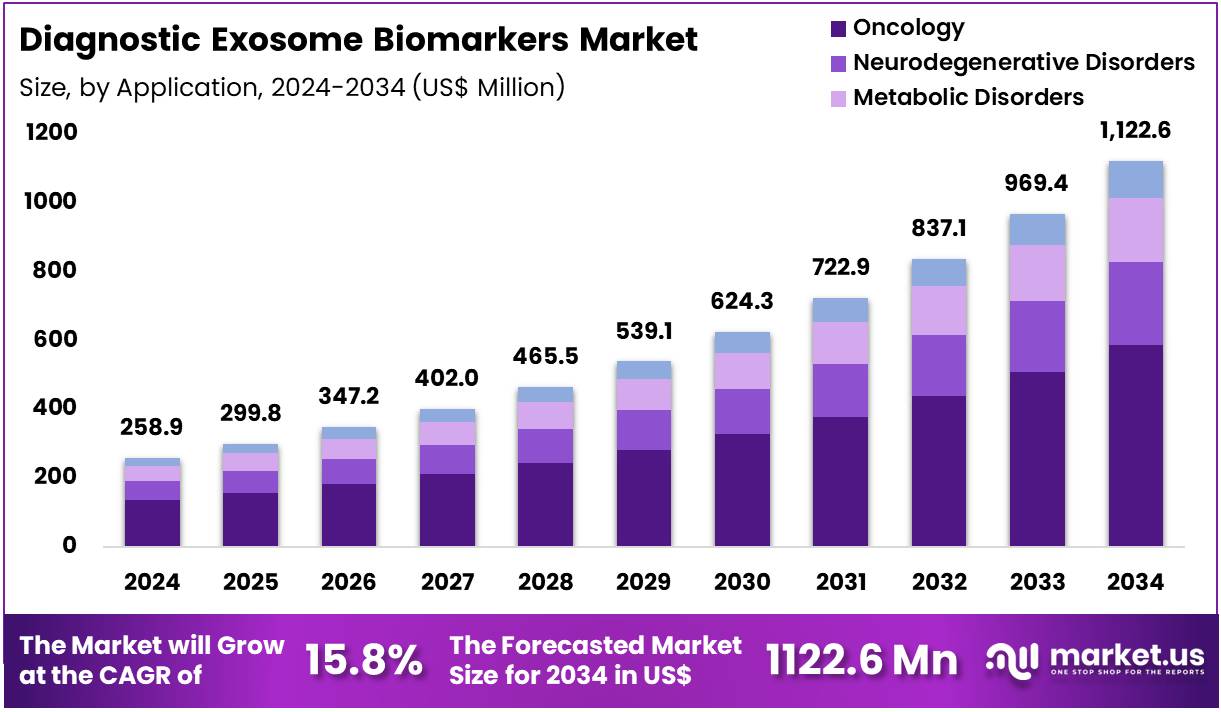
New York, NY – Sep 04, 2026 – The Global Diagnostic Exosome Biomarkers Market size is expected to be worth around US$ 1122.6 Million by 2034 from US$ 258.9 Million in 2024, growing at a CAGR of 15.8% during the forecast period 2025 to 2034. In 2024, North America led the market, achieving over 38.4% share with a revenue of US$ 99.4 Million.
The Global Diagnostic Exosome Biomarkers Market is emerging as a critical segment of precision diagnostics, driven by the growing need for non-invasive disease detection and personalized healthcare. Exosomes are nanosized extracellular vesicles, typically ranging from 30 to 150 nanometers, that carry proteins, RNA, DNA, and lipids reflecting the biological condition of their cells of origin.
These biomarkers are increasingly used in cancer, neurological disorders, cardiovascular diseases, and infectious disease diagnostics due to their high stability in blood, urine, saliva, and other body fluids. The rising burden of chronic diseases, coupled with increasing investments in liquid biopsy technologies, is accelerating market growth.
According to global cancer estimates, more than 20 million new cancer cases and 9.7 million cancer deaths were reported worldwide in 2024, highlighting the need for earlier and more accurate diagnostic solutions. Advances in next-generation sequencing (NGS), polymerase chain reaction (PCR), and microfluidics have significantly improved exosome isolation and analysis.
Hospitals, diagnostic laboratories, and research institutes are expanding the adoption of exosome-based assays to support precision medicine initiatives. North America remains a leading regional market due to strong biotechnology research, favorable regulatory support, and high healthcare spending, while Asia-Pacific is witnessing rapid growth through expanding clinical research and healthcare infrastructure.
Continuous collaborations between biotechnology companies and academic institutions, along with increasing funding for biomarker discovery and validation, are expected to strengthen commercialization efforts.
As demand for minimally invasive diagnostics continues to rise, diagnostic exosome biomarkers are positioned to play a transformative role in the future of disease detection and clinical decision-making.
Key Takeaways
- In 2024, the global Diagnostic Exosome Biomarkers market was valued at US$ 258.9 million and is projected to reach US$ 1,122.6 million by 2034, expanding at a CAGR of 15.8% during the forecast period.
- By product type, the market is segmented into reagents, urine kits, software, serum/plasma kits, and kits. Among these, reagents dominated the market in 2023, accounting for a 44.8% share.
- Based on application, the market is categorized into oncology, neurodegenerative disorders, metabolic disorders, and others. Oncology emerged as the leading application segment, capturing 52.4% of the market share.
- In terms of end users, the market is divided into cancer institutes, diagnostic centers, hospitals, and others. The cancer institute segment held the largest share, contributing 46.7% of the total market revenue.
- North America dominated the global Diagnostic Exosome Biomarkers market in 2023, accounting for 38.4% of the overall market share.
Market Segmentation
- Product Type Analysis: Reagents accounted for 44.8% of the market and are expected to maintain their leading position due to increasing demand for exosome isolation, purification, and biomarker analysis. Growing liquid biopsy research, precision medicine initiatives, and advancements in multiplex assays continue to drive reagent consumption across oncology, neurology, and other diagnostic applications.
- Application Analysis: Oncology held a 52.4% market share and is projected to remain the dominant application due to rising adoption of exosome biomarkers for early cancer detection, prognosis, and treatment monitoring. Expanding liquid biopsy programs, increasing cancer incidence, and advances in genomic profiling continue to support strong demand for oncology-focused diagnostic solutions.
- End-User Analysis: Cancer institutes captured 46.7% of the market and are expected to remain the leading end users owing to their extensive biomarker research and clinical testing activities. Increased investment in precision oncology, large-scale clinical studies, and collaborations with diagnostic companies continue to drive adoption of exosome-based diagnostic technologies.
Statistical Information
- A 2025 Frontiers in Oncology meta-analysis found that exosomal non-coding RNA biomarkers for gastric cancer achieved an overall AUC of 0.89 (95% CI: 0.86–0.92), indicating strong diagnostic performance.
- The same 2025 meta-analysis reported an overall diagnostic odds ratio (DOR) of 26.35 (95% CI: 22.76–30.51) for exosomal non-coding RNA biomarkers in gastric cancer diagnosis.
- In 2025, exosomal miRNA biomarkers demonstrated an overall AUC of 0.83 (95% CI: 0.79–0.86) for gastric cancer detection.
- Studies using serum-derived exosomes reported pooled sensitivity of 72% and specificity of 80% for gastric cancer diagnosis in the 2025 meta-analysis.
- Plasma-derived exosome biomarkers achieved 74% sensitivity, 80% specificity, and an AUC of 0.84 in the same 2025 analysis.
- A 2025 Scientific Reports study showed that the plasma-derived exosomal biomarker tRF-3004a achieved an AUC of 0.819, with 69.1% sensitivity and 86.1% specificity for colorectal cancer diagnosis.
- Combining exosomal tRF-3004a with conventional biomarkers (CEA + CA19-9) increased diagnostic performance to an AUC of 0.867 in colorectal cancer during the 2025 study.
- A 2025 Frontiers in Immunology review reported pooled validation studies where exosomal miR-21 achieved approximately 75% sensitivity and 85% specificity for cancer detection across multiple malignancies.
Regional Analysis
North America Diagnostic Exosome Biomarkers Market Analysis
North America dominated the Diagnostic Exosome Biomarkers Market, accounting for 38.4% of the global market share. The region’s leadership is supported by strong investments in precision medicine, liquid biopsy research, and molecular diagnostics across the United States and Canada.
Organizations such as the National Institutes of Health (NIH) continue to fund extracellular vesicle and exosome research, accelerating biomarker discovery for cancer, neurological disorders, and cardiovascular diseases.
The U.S. Food and Drug Administration (FDA) has also encouraged innovation through regulatory pathways for liquid biopsy and companion diagnostics, supporting clinical adoption of exosome-based assays. Major academic institutions and biotechnology companies are advancing next-generation sequencing, proteomics, and microfluidic technologies to improve exosome isolation and biomarker analysis.
Growing collaborations between research centers, diagnostic developers, and pharmaceutical companies are expanding clinical validation studies. Rising cancer incidence, increasing demand for minimally invasive diagnostics, and well-established healthcare infrastructure continue to strengthen North America’s leading position in the diagnostic exosome biomarkers market.
Asia Pacific Diagnostic Exosome Biomarkers Market Analysis
Asia Pacific is expected to register the fastest growth in the Diagnostic Exosome Biomarkers Market during the forecast period, supported by expanding biotechnology research, increasing healthcare investments, and wider adoption of precision diagnostics. Countries including China, Japan, South Korea, and India are strengthening genomic medicine programs and investing in advanced molecular diagnostic technologies.
Government initiatives are encouraging translational research in extracellular vesicles and liquid biopsy for early disease detection. Academic institutions and biotechnology companies are increasing collaborations to develop cost-effective exosome isolation methods and biomarker validation studies.
The region is also witnessing rapid expansion of hospital laboratories and diagnostic centers equipped with next-generation sequencing and PCR platforms.
Rising prevalence of cancer, neurodegenerative disorders, and metabolic diseases is driving demand for non-invasive diagnostic solutions. Continuous improvements in healthcare infrastructure, research funding, and regulatory support are expected to accelerate the commercialization and clinical adoption of diagnostic exosome biomarker technologies across Asia Pacific.
Business Opportunities
The Diagnostic Exosome Biomarkers market offers substantial business opportunities as healthcare systems increasingly adopt non-invasive diagnostic technologies for early disease detection and precision medicine. Rising demand for liquid biopsy in oncology is creating strong prospects for companies developing exosome-based assays capable of detecting cancer at early stages and monitoring treatment response.
Advances in exosome isolation technologies, microfluidics, and next-generation sequencing are improving test accuracy and scalability, enabling wider clinical adoption. Opportunities are also expanding in neurological, cardiovascular, metabolic, and inflammatory disease diagnostics, where exosome biomarkers provide valuable insights through minimally invasive blood samples.
Integration of artificial intelligence and multi-omics platforms enhances biomarker analysis, supporting personalized treatment decisions and creating opportunities for software and data analytics providers. Pharmaceutical companies are increasingly partnering with diagnostic developers to create companion diagnostics for targeted therapies, further accelerating market growth.
In addition, expanding molecular diagnostic infrastructure across emerging economies presents opportunities for affordable testing solutions, regional manufacturing, and strategic distribution partnerships.
Growing investments in biomarker research by academic institutions, biotechnology firms, and healthcare organizations continue to support innovation, clinical validation, and commercialization of next-generation exosome-based diagnostic products, strengthening long-term market potential.
Emerging Trends
- Rapid Growth of Liquid Biopsy Research: Exosome biomarkers are becoming a key part of liquid biopsy because they can be detected in blood, urine, and saliva without surgery. NIH continues to support extracellular RNA research, while exosomes typically measure 30–150 nanometers, making them useful for early disease detection.
- Improved Standardization of Exosome Testing: Clinical laboratories are focusing on standardized exosome measurement to improve test accuracy. In 2025, NIST demonstrated calibration methods using 25 flow cytometers and established reference ranges from 224 healthy individuals, helping laboratories generate more consistent diagnostic results.
- Integration of Multi-Omics and Artificial Intelligence: Researchers increasingly combine exosomal RNA, proteins, lipids, and DNA with AI-driven analysis to identify disease-specific biomarker patterns. This trend improves diagnostic precision and supports personalized healthcare by analyzing multiple biological signals from a single patient sample.
- Growing Clinical Validation Across Diseases: Exosome biomarkers are expanding beyond cancer into neurological, cardiovascular, infectious, and metabolic diseases. By May 2025, more than 200 clinical trials involving extracellular vesicles were registered in the U.S. NIH clinical trials database, showing increasing clinical interest.
- Increasing Regulatory Focus on Biomarker Development: Regulatory agencies are encouraging the use of validated biomarkers in medical product development. The FDA continues developing scientific standards that help translate biomarker discoveries into approved in-vitro diagnostic tests, supporting faster and more reliable clinical adoption.
Use Cases
- Early Cancer Detection: Hospitals and diagnostic laboratories use exosome biomarkers to identify cancer-related molecular changes from blood samples before symptoms become severe. CDC-supported research reported 95% sensitivity and 90% specificity for certain extracellular vesicle protein-based cancer detection models.
- Selecting Patients for Precision Cancer Treatment: Clinicians use exosome-based biomarker tests to identify genetic mutations that guide targeted therapies. FDA recognizes biomarkers as important tools that improve treatment selection and can reduce the time and cost of developing personalized medical products.
- Monitoring Disease Progress During Treatment: Doctors can repeatedly collect blood samples to monitor exosome biomarker levels throughout treatment. Regular testing helps evaluate therapy response, detect disease progression earlier, and reduce the need for repeated invasive tissue biopsies.
- Diagnosis of Neurological Disorders: Researchers are exploring exosome biomarkers for diseases affecting the brain because these vesicles can carry molecular information from the nervous system. Blood-based testing may support earlier diagnosis and ongoing monitoring of neurodegenerative diseases using minimally invasive sampling.
- Clinical Research and Drug Development: Biotechnology companies and pharmaceutical researchers use exosome biomarkers to evaluate treatment response, discover new biomarkers, and support clinical trials. These biomarkers improve patient selection and help generate stronger clinical evidence during therapeutic development.
Recent Development
- In January 2025, Thermo Fisher Scientific Inc. announced that the UK Biobank Pharma Proteomics Project selected its Olink Explore platform to analyze more than 600,000 human samples for large-scale protein biomarker discovery, strengthening precision diagnostics and biomarker research capabilities.
- In June 2025, Thermo Fisher Scientific Inc. announced that the Regeneron Genetics Center selected the Olink Explore platform for proteomics analysis across nearly 200,000 patient samples, supporting biomarker discovery and precision medicine research.
- In August 2025, Bio-Techne Corporation announced an agreement to divest Exosome Diagnostics Inc. to MDxHealth SA, including the ExoDx Prostate (EPI) test, its CLIA-certified laboratory, and related assets, while retaining access to proprietary exosome technology for future diagnostic kit development.
- In January 2026, Capricor Therapeutics Inc. announced an FDA regulatory update for its Deramiocel Biologics License Application (BLA) after the agency requested the complete HOPE-3 clinical study report, supporting continued regulatory review of its cell and exosome-based therapeutic platform.
Frequently Asked Questions on Diagnostic Exosome Biomarkers
- Which diseases are commonly diagnosed using exosome biomarkers?
Exosome biomarkers are widely studied for detecting cancers, neurological disorders, cardiovascular diseases, kidney diseases, and infectious diseases. Their ability to reflect cellular changes through blood or other body fluids makes them valuable for early diagnosis and disease monitoring. - Why are exosome biomarkers important in cancer diagnostics?
Exosome biomarkers provide genetic and protein information released by tumor cells without requiring invasive tissue biopsies. They support early cancer detection, treatment selection, monitoring of therapy response, and identification of disease recurrence through simple blood-based testing. - Which end users contribute most to the Diagnostic Exosome Biomarkers Market?
Hospitals, diagnostic laboratories, academic research institutes, pharmaceutical companies, and biotechnology firms are the primary end users. These organizations use exosome biomarker technologies for clinical diagnostics, biomarker discovery, drug development, and precision medicine research. - Which region leads the Diagnostic Exosome Biomarkers Market?
North America leads the Diagnostic Exosome Biomarkers Market because of advanced healthcare infrastructure, strong biotechnology research, increasing clinical adoption of liquid biopsy, and significant investments in biomarker development supported by leading academic and healthcare institutions. - What technologies are used in exosome biomarker analysis?
Common technologies include next-generation sequencing, PCR, flow cytometry, ELISA, mass spectrometry, nanoparticle tracking analysis, and microfluidic platforms. These technologies help isolate exosomes and accurately identify disease-related proteins, nucleic acids, and other molecular biomarkers. - What is the future outlook for the Diagnostic Exosome Biomarkers Market?
The market is expected to grow steadily as demand for non-invasive diagnostics increases worldwide. Continued innovation in exosome isolation, artificial intelligence, multi-omics analysis, and precision medicine will create new opportunities for clinical diagnostics and pharmaceutical research.
Conclusion
The Diagnostic Exosome Biomarkers Market is positioned for strong long-term growth as healthcare providers increasingly adopt non-invasive diagnostic technologies for early disease detection and precision medicine. Rising use of liquid biopsy, continuous advancements in exosome isolation and molecular analysis, and expanding clinical applications in oncology, neurology, and metabolic disorders are driving market expansion.
Research collaborations, biomarker validation, and regulatory support are accelerating commercialization of exosome-based diagnostic assays. In addition, investments in artificial intelligence, multi-omics platforms, and automated laboratory workflows are improving test accuracy and efficiency.
As clinical evidence continues to grow and healthcare systems prioritize personalized diagnostics, the market is expected to create significant opportunities for biotechnology companies, diagnostic laboratories, and research institutions worldwide.
Discuss your needs with our analyst
Please share your requirements with more details so our analyst can check if they can solve your problem(s)




