


Overview
New York, NY – August 21, 2026 – The Global Branded Generics Market size is expected to be worth around US$ 492.8 Billion by 2034 from US$ 280.5 Billion in 2024, growing at a CAGR of 5.8% during the forecast period from 2025 to 2034. In 2024, North America led the market, achieving over 38.4% share with a revenue of US$ 107.69 Billion.
The branded generics market is growing steadily as healthcare systems worldwide focus on reducing medicine costs while maintaining effective treatment options. Branded generics are off-patent medicines marketed under a specific brand name by pharmaceutical companies.
These products provide an affordable alternative to innovator drugs and are widely used for chronic diseases, infectious conditions, cardiovascular disorders, diabetes, and oncology care. The increasing prevalence of chronic diseases is creating significant demand for affordable medicines.
According to the World Health Organization (WHO), noncommunicable diseases are responsible for nearly 41 million deaths every year, accounting for approximately 74% of global deaths. This rising disease burden is encouraging governments and healthcare providers to improve access to cost-effective therapies. Generic medicines play a major role in reducing healthcare expenses.
In the United States, generic drugs represent around 90% of all prescription fills, helping patients and healthcare systems save billions of dollars annually. These medicines contribute to lower treatment costs while maintaining strict regulatory quality standards.
The pharmaceutical industry is also benefiting from continuous patent expirations of major branded medicines. More than 100 billion doses of generic medicines are supplied globally each year, supporting broader patient access. Increasing investments in complex generics, combination therapies, and specialty formulations are creating new growth opportunities for manufacturers.
Emerging markets are witnessing higher adoption due to expanding healthcare infrastructure and government programs supporting affordable medicines. Regulatory approvals, improved manufacturing capabilities, and rising demand for cost-efficient treatments are expected to strengthen the branded generics sector in the coming years. The market will continue to play a critical role in improving global medicine accessibility and affordability.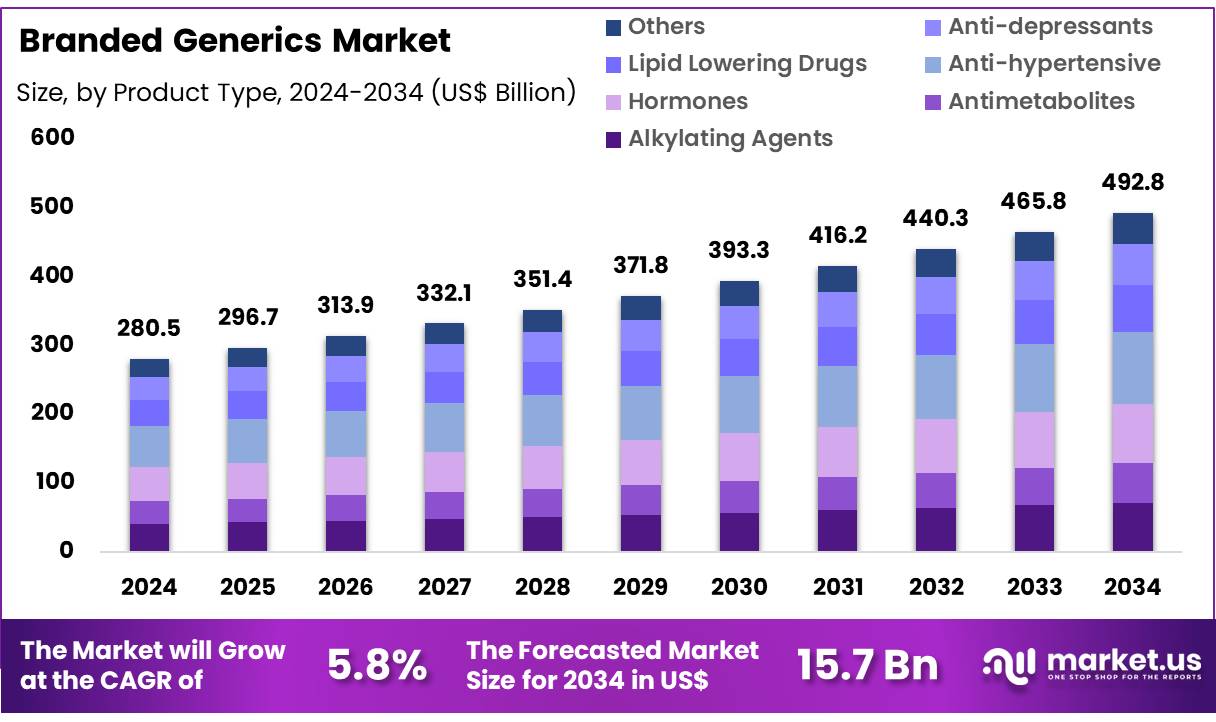
Key Takeaways
- Market Size: The global branded generics market is projected to reach approximately US$ 492.8 billion by 2034, increasing from US$ 280.5 billion in 2024.
- Market Growth: The branded generics market is expected to expand at a CAGR of 5.8% during the forecast period from 2025 to 2034..
- Product Analysis: Based on product type, anti-hypertensive medicines held the leading position in 2024, contributing approximately 21.3% of the global branded generics market share.
- Application Analysis: Cardiovascular disorders emerged as the largest therapeutic area in 2024, representing nearly 24.5% of the global branded generics market share.
- Route of Administration Analysis: Oral formulations dominated the branded generics market in 2024, accounting for approximately 64.2% of the total market share.
- Regional Analysis: North America dominated the global branded generics market in 2024, accounting for more than 38.4% of the market share with revenue of around US$ 107.69 billion
Statistical Information
- High Adoption of Generic Medicines in the United States: Generic medicines have become a major component of prescription healthcare due to their affordability and regulatory approval standards. In the United States, generic medicines account for more than 90% of prescriptions dispensed, while representing less than 13% of total prescription drug spending. FDA data also shows that generic medicines have generated more than US$3 trillion in savings over the past decade.
- Increasing Healthcare Cost Pressure Drives Demand for Affordable Medicines: Rising healthcare expenditure is encouraging greater use of cost-effective medicines, including branded generics. The CDC reports that the United States spends approximately US$5.3 trillion annually on healthcare, and around 90% of healthcare expenditures are associated with people living with chronic and mental health conditions.
- Chronic Disease Growth Supports Long-Term Branded Generic Demand: The increasing prevalence of chronic diseases is creating continuous demand for affordable maintenance therapies. WHO reports that noncommunicable diseases (NCDs) cause approximately 41 million deaths annually, representing 74% of global deaths. Around 17 million people die prematurely from NCDs before age 70 every year.
- Share of branded vs unbranded generics in India: Indian regulators and policy analysis note that generics account for about 97% of drug consumption in value terms. Of this, only around 10% are unbranded generics, sold purely by molecule name and mostly used in public facilities. Branded generics account for roughly 87% of all drugs prescribed in India, dominating the retail prescription market.
- Branded generics share of total pharma market: Policy briefs emphasize that the Indian pharmaceutical business is well‑known for its dominance in branded generics, which make up more than 70% of the market by value. Generics overall constitute 97% of consumption, but most of that is branded; truly unbranded commodity generics are a small subset, mainly confined to government or public procurement channels.
- Diabetes Prevalence Increases Demand for Long-Term Generic Therapies: Diabetes is a major chronic disease requiring continuous medication management, supporting demand for affordable therapies. The International Diabetes Federation reports that approximately 537 million adults aged 20–79 years were living with diabetes in 2021, and this number is projected to reach 643 million by 2030.
- Cancer Treatment Costs Encourage Affordable Medicine Adoption: High treatment costs are increasing interest in affordable pharmaceutical alternatives. The National Cancer Institute reports that cancer remains one of the leading health challenges, with approximately 20 million new cancer cases and 9.7 million cancer deaths globally in 2022, creating demand for accessible treatment options.
- Ageing Population Supports Chronic Disease Medicine Demand: The global ageing population is increasing demand for medicines used in cardiovascular, diabetes, and neurological conditions. The United Nations reports that the number of people aged 65 years and older is expected to increase from 761 million in 2021 to 1.6 billion by 2050, supporting long-term pharmaceutical demand.
Regional Analysis
North America held the largest share of the global branded generics market, representing over 38.4%.
North America dominated the branded generics market in 2024, supported by high healthcare expenditure, strong prescription medicine demand, and widespread generic medicine adoption. In the United States, generic medicines account for approximately 90% of prescription fills, supported by FDA policies promoting competition, affordability, and faster generic approvals.
The region’s ageing population and rising chronic disease prevalence continue to increase demand for long-term therapies.Europe maintains strong adoption due to government healthcare systems focused on cost-effective treatment and improved access to essential medicines. Regulatory frameworks encourage the use of affordable pharmaceutical alternatives.
Asia-Pacific is expanding due to increasing healthcare investment, rising chronic disease cases, and government initiatives supporting affordable medicines. WHO emphasizes improving access to quality-assured essential medicines as a healthcare priority. Latin America, the Middle East, and Africa are experiencing gradual growth through healthcare reforms, improved medicine access programs, and increasing public-sector healthcare investments.
Emerging Trends
- Increasing Focus on Affordable Healthcare and Generic Adoption: Healthcare systems worldwide are increasing the use of branded generics to reduce medicine costs and improve patient access. In the United States, generic medicines represent around 90% of prescription fills, helping reduce healthcare expenses while maintaining treatment quality. FDA continues supporting generic competition through regulatory programs.
- Growth of Complex Generics and Specialty Formulations: Pharmaceutical companies are increasingly developing complex generic medicines, including modified-release tablets, combination therapies, and difficult-to-manufacture products. The FDA prioritizes first generic approvals to improve competition and patient access. In 2025, the FDA continued approving first generic medicines across multiple therapeutic areas.
- Rising Demand Driven by Chronic Disease Management: The growing burden of chronic diseases is increasing demand for affordable long-term medicines, supporting branded generic adoption. CDC reports that chronic diseases account for approximately 90% of the US$5.3 trillion annual healthcare expenditure in the United States. Cardiovascular diseases, diabetes, and cancer remain major treatment areas.
- Expansion of Digital Healthcare and Prescription Accessibility: Digital healthcare platforms and electronic prescribing systems are improving medicine accessibility and supporting branded generic distribution. Increased online pharmacy adoption, prescription tracking, and healthcare digitization help patients compare affordable treatment options and improve medication adherence, especially for chronic disease therapies.
- Government Policies Supporting Generic Competition: Regulatory agencies are introducing policies to increase generic medicine availability and control healthcare costs. The FDA’s generic drug programs focus on reducing approval barriers and improving market competition. FDA maintains dedicated approval tracking systems for generic applications, including ANDAs and first generic approvals.
Use Cases
- Cardiovascular Disease Treatment and Long-Term Medication: Branded generics are widely used in cardiovascular disease management, including antihypertensive and cholesterol-lowering treatments. WHO identifies cardiovascular diseases as the leading global cause of death, responsible for approximately 17.9 million deaths annually, increasing demand for affordable long-term medicines.
- Diabetes Management Through Affordable Medicines: Branded generics support diabetes treatment by providing lower-cost options for patients requiring continuous therapy. The International Diabetes Federation estimates that approximately 537 million adults were living with diabetes in 2021, with the number expected to rise significantly by 2030, increasing demand for accessible medicines.
- Hospital and Outpatient Medication Supply: Hospitals and outpatient healthcare facilities use branded generics to manage treatment costs while maintaining medicine availability. Generic alternatives are commonly used across infectious diseases, cardiovascular care, respiratory disorders, and chronic conditions, helping healthcare providers optimize pharmaceutical budgets.
- Aging Population Healthcare Management: The ageing population is increasing demand for medicines used in chronic disease treatment, creating opportunities for branded generics. CDC reports that nearly one-quarter of the US population is expected to be aged 65 years or older by 2060, increasing healthcare requirements for age-related conditions.
- Essential Medicine Access in Developing Healthcare Systems: Branded generics support healthcare systems by improving access to essential medicines at affordable prices. WHO highlights that access to safe, effective, and affordable medicines is a key healthcare priority, with essential medicine availability playing an important role in achieving universal health coverage.
Frequently Asked Questions on Branded Generics
- Which therapeutic areas are driving branded generics demand?
Cardiovascular diseases, diabetes, oncology, respiratory disorders, and infectious diseases are major therapeutic areas supporting branded generics demand. Increasing cases of chronic conditions require continuous medication, encouraging healthcare providers and patients to adopt cost-effective branded generic treatment options. - How do branded generics differ from traditional generic medicines?
Traditional generic medicines are usually sold by their chemical names, while branded generics are marketed under specific brand identities. Both must meet regulatory requirements for quality and effectiveness, but branded generics often receive stronger marketing and physician recognition. - How does FDA support the branded generics market?
The U.S. FDA supports branded generics by reviewing generic drug applications, ensuring quality standards, and encouraging competition among manufacturers. These initiatives improve medicine affordability, increase treatment options, and help patients access safe and effective alternatives to brand-name drugs. - What role do generic medicines play in reducing healthcare costs?
Generic medicines significantly reduce healthcare expenses by providing lower-cost alternatives to brand-name drugs. In the United States, generic medicines account for around 90% of prescription fills, helping patients, insurers, and healthcare systems manage rising pharmaceutical spending. - Which region dominates the branded generics market?
North America leads the branded generics market due to strong healthcare infrastructure, high prescription volumes, favorable insurance coverage, and widespread generic medicine adoption. The United States plays a major role because of regulatory support and increasing demand for affordable healthcare solutions. - What are the major challenges affecting the branded generics market?
The branded generics market faces challenges such as pricing pressure, regulatory complexities, manufacturing quality requirements, and competition among pharmaceutical companies. Maintaining profitability while ensuring affordable medicine availability remains a key challenge for manufacturers worldwide. - How is technology influencing the branded generics market?
Technology is improving branded generics through advanced manufacturing processes, digital healthcare platforms, electronic prescriptions, and improved supply chain management. These developments help pharmaceutical companies enhance production efficiency, improve medicine availability, and support better patient access to affordable treatments. - What is the future outlook for the branded generics market?
The branded generics market is expected to expand as healthcare systems prioritize affordable medicines and chronic disease management. Increasing demand for cost-effective therapies, rising ageing populations, and continued regulatory support will create new opportunities for pharmaceutical manufacturers globally.
Conclusion
The branded generics market is becoming an important component of the global pharmaceutical industry by improving access to affordable and quality-assured medicines. Rising chronic disease prevalence, increasing healthcare costs, patent expirations, and supportive regulatory policies are driving market expansion. Strong adoption in cardiovascular, diabetes, respiratory, and other therapeutic areas highlights the growing need for cost-effective treatment solutions.
North America remains a key market due to advanced healthcare infrastructure and generic medicine acceptance, while emerging regions show significant growth potential. Continuous innovation in complex generics, combination therapies, and digital healthcare solutions will further strengthen the future development of the branded generics market.
Discuss your needs with our analyst
Please share your requirements with more details so our analyst can check if they can solve your problem(s)




