


Overview
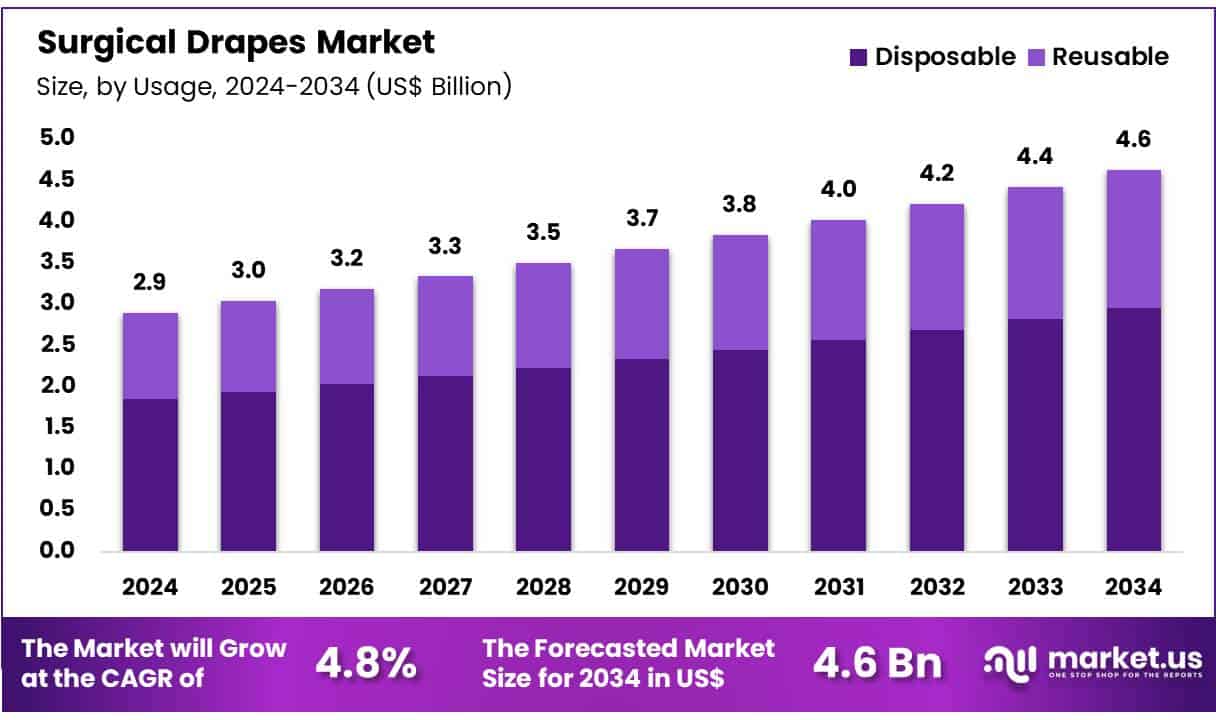
New York, NY – Aug 24, 2026 – The Global Surgical Drapes Market size is expected to be worth around US$ 4.6 Billion by 2034 from US$ 2.9 Billion in 2024, growing at a CAGR of 4.8% during the forecast period from 2025 to 2034. In 2024, North America led the market, achieving over 35.2% share with a revenue of US$ 1.0 Billion.
The global Surgical Drapes Market is witnessing steady growth as hospitals, ambulatory surgical centers, and healthcare facilities increasingly focus on infection prevention, surgical safety, and maintaining sterile operating environments.
Surgical drapes play a critical role in reducing the risk of microbial contamination by creating a protective barrier between the surgical field, healthcare professionals, and surrounding areas. Rising surgical procedures, increasing healthcare expenditure, and strict infection control standards are driving demand for advanced disposable and reusable draping solutions.
The market is projected to expand significantly during the forecast period, supported by the growing number of surgical interventions worldwide. According to healthcare organizations, millions of major surgical procedures are performed annually, creating continuous demand for sterile medical consumables.
Disposable surgical drapes are gaining preference due to their convenience, reduced cross-contamination risk, and improved workflow efficiency. In 2024, disposable products accounted for a major share of adoption as hospitals prioritized single-use infection prevention solutions.
Technological advancements are further transforming the market with the introduction of antimicrobial-coated drapes, fluid-resistant materials, and customized surgical draping systems. Increasing investments in operating room infrastructure and the rising prevalence of chronic diseases requiring surgical treatment are also contributing to market expansion.
Key applications include cardiovascular surgery, orthopedic procedures, general surgery, gynecological surgery, and other specialty procedures. With healthcare systems emphasizing patient safety and regulatory compliance, the Surgical Drapes Market is expected to experience consistent growth, supported by innovation, increasing surgical volumes, and expanding hospital networks globally.
Key Takeaways
- Market Size: Global Surgical Drapes Market size is expected to be worth around US$4.6 billion by 2034 from US$2.9 billion in 2024.
Market Growth: The market is growing at a CAGR of 4.8% during the forecast period from 2025 to 2034. - Usage Analysis: The dominance of disposable drapes has been reinforced in 2024, as this segment accounted for 63.7% of the total market share.
Product Analysis: In 2024, fenestrated drapes accounted for 28.5% of the global market share, establishing this segment as the leading product category. - Material/Fabric Analysis: The SMS (Spunbonded + Meltblown + Spunbonded) non-woven fabric segment accounted for 37.7% of the global market share in 2024.
- Risk/Barrier Protection Level Analysis: Moderate protection (AAMI Level 3) accounts for an estimated 39.0% of the global market in 2024.
- End-Use Analysis: Hospitals account for an estimated 58.3% share of the global market in 2024.
- Regional Analysis: In 2024, North America led the market, achieving over 35.2% share with a revenue of US$1.0 billion.
Statistical Information
- A 2025 randomized controlled trial evaluating long-fiber polyester surgical drapes in 400 urology surgery patients found that the polyester drapes achieved 835 ± 15.8 g/m² water absorption, compared with 225 ± 21.0 g/m² for conventional cotton surgical drapes.
- In the same 2025 clinical study involving 200 patients in each treatment group, long-fiber polyester surgical drapes reduced surgical site infection occurrence to 2.5%, compared with 8.0% for cotton drapes.
- The 2025 randomized study reported that long-fiber polyester surgical drapes reduced surgical device slip incidents to 7.5% compared with 17.0% for conventional cotton drapes.
- A 2025 surgical drape comparison study reported that the total cost per use was $0.83 for long-fiber polyester drapes compared with $0.96–$1.09 for conventional cotton drapes.
- A 2025 healthcare sustainability review reported that 23% of product types accounted for 80% of operating theatre carbon footprint, with single-use surgical items, including drapes, identified among major contributors.
- A 2025 operating theatre sustainability analysis reported that switching to reusable approaches and optimized processes could reduce carbon footprint by 23–42% in targeted surgical workflows.
- A 2025 surgical sustainability case study reported that operating theatres at one healthcare facility used approximately 11 tonnes of surgical gowns and drapes annually.
- A 2025 review of operating-room waste reported that each surgical procedure generated an average of 10.9 kg of waste, with 84.4% classified as clinical waste, highlighting the waste impact associated with single-use surgical materials such as drapes.
Regional Analysis
In 2024, North America maintained a leading position in the Surgical Drapes Market, accounting for more than 35.2% of the global share and reaching a market value of approximately US$ 1.0 billion. The region’s growth is supported by a high number of surgical procedures, advanced healthcare infrastructure, and strong adoption of infection-control practices across hospitals and ambulatory surgical centers.
The increasing preference for disposable surgical drapes, driven by the need to reduce contamination risks and improve operating room safety, has strengthened market demand. Healthcare facilities in the United States and Canada continue to adopt advanced draping solutions made from improved nonwoven and fluid-resistant materials. Supportive regulatory standards and emphasis on sterile surgical environments have further encouraged consistent procurement.
With rising surgical volumes, expanding outpatient care facilities, and continuous advancements in medical textile technologies, North America is expected to sustain its dominant position in the Surgical Drapes Market.
Emerging Trends
- Rising Adoption of Disposable Non-Woven Surgical Drapes: Hospitals are increasingly adopting disposable non-woven surgical drapes due to their high sterility, convenience, and reduced risk of contamination. These drapes support infection prevention practices by providing effective microbial barriers. WHO recommends sterile barrier methods as part of surgical site infection prevention strategies across healthcare facilities.
- Growth of Antimicrobial and Advanced Barrier Drapes: The demand for antimicrobial-coated and high-performance barrier surgical drapes is increasing, especially for complex procedures. These drapes are designed to improve fluid resistance and maintain sterile fields. WHO highlights that preventing moisture penetration is important because wet materials can increase the movement of microorganisms.
- Increasing Demand from Minimally Invasive Surgeries: The expansion of minimally invasive, robotic-assisted, orthopedic, and cardiovascular surgeries is creating demand for specialized surgical drapes. These procedures require customized openings, better flexibility, and improved protection. Increasing surgical volumes globally are encouraging hospitals to invest in procedure-specific draping solutions.
- Sustainability and Eco-Friendly Material Development: Healthcare providers are focusing on sustainable surgical drape solutions to reduce medical waste. Manufacturers are developing recyclable materials, biodegradable options, and reusable drapes. WHO recognizes both reusable woven and disposable non-woven sterile drapes as options, depending on healthcare facility requirements and infection control standards.
- Customized Procedure-Specific Surgical Drapes: A major trend is the adoption of customized drape kits designed for specific surgeries such as orthopedic, ophthalmic, cardiovascular, and general procedures. These kits improve operating room efficiency by reducing preparation time and organizing required accessories. Hospitals are increasingly selecting drapes based on procedure requirements.
Use Cases
- General Surgery Applications: Surgical drapes are widely used in general surgeries to create sterile barriers between surgical areas and surrounding environments. They protect patients and healthcare workers from contamination during procedures. Common applications include abdominal surgeries, hernia repair, and other routine operations performed in hospitals.
- Orthopedic and Joint Replacement Procedures: Orthopedic surgeries require highly durable and fluid-resistant drapes because procedures often involve extended operating times. Surgical drapes are used in knee replacement, hip replacement, and trauma surgeries to maintain sterile conditions. The growing number of orthopedic procedures is increasing demand for specialized draping systems.
- Cardiovascular Surgery Applications: Cardiac and vascular procedures require advanced drapes with strong barrier protection due to the critical nature of these operations. Surgical drapes are used during bypass surgeries, angioplasty-related procedures, and vascular interventions. Their ability to maintain a controlled sterile environment supports infection prevention during complex surgeries.
- Cesarean Section and Obstetric Procedures: Surgical drapes are commonly used during cesarean sections to provide a sterile operating area and improve procedural safety. Increasing global childbirth care requirements are supporting demand for obstetric-specific drapes. WHO recommends effective infection prevention practices during surgical procedures, including maternity-related operations.
- Ophthalmic and Specialized Surgical Procedures: Ophthalmic surgeries require precision drapes designed for small operating areas and sensitive procedures. Specialized eye surgery drapes include adhesive features and fluid management systems to improve workflow. These products are used in cataract surgeries, retinal procedures, and other ophthalmological interventions requiring strict sterility.
Frequently Asked Questions on Surgical Drapes
- What is driving the growth of the surgical drapes market?
The surgical drapes market is driven by increasing surgical procedures, rising hospital investments, growing awareness about healthcare-associated infections, and strict infection prevention guidelines. Demand for disposable and advanced draping solutions is increasing as healthcare facilities focus on improving patient safety. - What are the major types of surgical drapes?
Major types of surgical drapes include disposable drapes, reusable drapes, fenestrated drapes, incise drapes, laparoscopic drapes, and specialty drapes. These products are designed for different surgical applications, providing protection, fluid resistance, and customized coverage based on procedure requirements. - Which materials are used in surgical drape manufacturing?
Surgical drapes are commonly manufactured using polypropylene, polyethylene, polyester, and multilayer composite materials. These materials provide essential properties such as durability, breathability, liquid resistance, and microbial protection, helping healthcare professionals maintain sterile conditions throughout surgical procedures. - Why are disposable surgical drapes preferred in hospitals?
Disposable surgical drapes are preferred because they offer ready-to-use sterile protection, reduce contamination risks, and eliminate the need for washing and sterilization. Hospitals increasingly adopt disposable products to improve workflow efficiency and maintain consistent infection prevention standards. - How do surgical drapes help prevent infections?
Surgical drapes help prevent infections by creating a sterile barrier between the surgical site and external contaminants. They reduce exposure to microorganisms, body fluids, and environmental risks, supporting healthcare facilities in following surgical safety and infection control protocols. - What are the key trends in the surgical drapes market?
Key trends in the surgical drapes market include the adoption of antimicrobial technologies, the development of eco-friendly materials, customized procedure-specific drapes, and increased use of disposable products. Manufacturers are focusing on improving protection, sustainability, and performance for modern surgical environments. - Which healthcare facilities use surgical drapes?
Surgical drapes are used in hospitals, ambulatory surgical centers, specialty clinics, and operating rooms. Facilities performing orthopedic, cardiovascular, gynecological, ophthalmic, and general surgeries rely on surgical drapes to maintain sterile conditions and improve overall surgical safety. - What is the future outlook for the surgical drapes market?
The surgical drapes market is expected to grow steadily due to increasing surgical volumes, healthcare infrastructure expansion, and rising focus on infection control. Future growth will be supported by innovative materials, advanced protective features, and increasing demand for safer surgical solutions.
Conclusion
The global surgical drapes market is expected to witness steady growth, supported by rising surgical procedures, increasing focus on infection prevention, and the growing adoption of advanced sterile barrier solutions. Hospitals and healthcare facilities are prioritizing high-performance drapes with improved fluid resistance, filtration efficiency, and patient safety features.
Non-woven materials, especially SMS fabrics, are gaining preference due to their strength and protective properties. Continued improvements in healthcare infrastructure, regulatory standards, and operating room safety practices will further support market expansion. Surgical drapes will remain an essential component of modern surgical environments by helping maintain sterile conditions and reducing contamination risks.
Discuss your needs with our analyst
Please share your requirements with more details so our analyst can check if they can solve your problem(s)




