
Overview
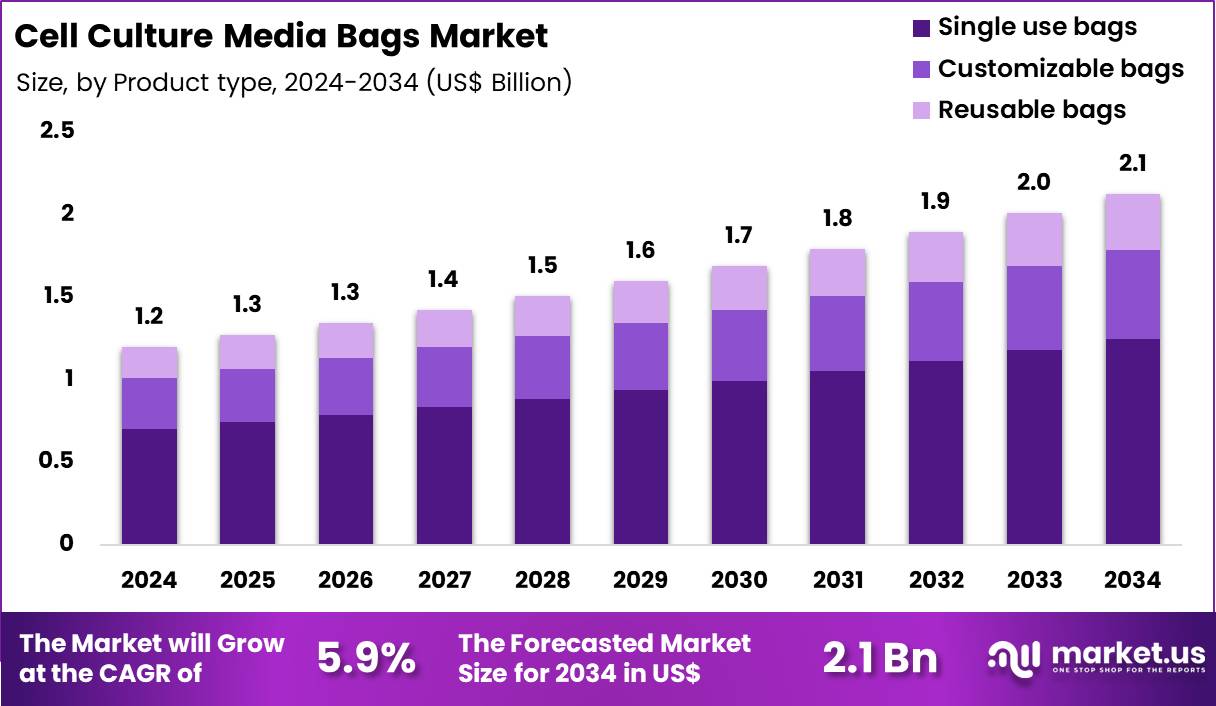
New York, NY – Oct 21, 2026 – Global Cell Culture Media Bags Market size is expected to be worth around US$ 2.1 Billion by 2034 from US$ 1.2 Billion in 2024, growing at a CAGR of 5.9% during the forecast period 2025 to 2034. In 2024, North America led the market, achieving over 38.9% share with a revenue of US$ 0.5 Billion.
The global Cell Culture Media Bags Market is gaining importance as biopharmaceutical manufacturers increasingly adopt advanced solutions for cell culture processing and liquid handling. Cell culture media bags are specialized containers used to store, transport, and handle culture media and other liquids required in biopharmaceutical production. These bags support contamination control, operational flexibility, and efficient handling across various stages of cell culture operations.
Market growth is supported by the rising demand for biopharmaceuticals, including vaccines, monoclonal antibodies, and cell and gene therapies. The growing adoption of single-use technologies in biopharmaceutical manufacturing is also contributing to market development. Compared with traditional reusable systems, single-use bags can help reduce cleaning requirements, minimize cross-contamination risks, and improve manufacturing efficiency.
Furthermore, advancements in bioprocessing technologies and the expansion of biologics manufacturing facilities are creating opportunities for market participants. Manufacturers are focusing on developing durable, sterile, and high-performance bags that meet the quality and safety requirements of pharmaceutical production.
However, concerns related to plastic waste, material compatibility, and regulatory compliance may influence market adoption. Despite these challenges, continued investment in biopharmaceutical research and development is expected to support demand for cell culture media bags over the coming years.
Key Takeaways
- In 2024, the global Cell Culture Media Bags Market was valued at US$ 2 Billion and is projected to reach US$ 2.1 Billion by 2034, expanding at a CAGR of 5.9% during the forecast period.
- By product type, the market includes single-use bags, customizable bags, and reusable bags, with single-use bags dominating the segment with a 58.6% market share.
- Based on material, the market is categorized into polyethylene, ethylene vinyl acetate (EVA), polypropylene, and other materials. Polyethylene led the segment, accounting for 44.7% of the market.
- By application, the market covers monoclonal antibody production, vaccine production, stem cell research, cell therapy, and other applications. Monoclonal antibody production held the leading position, with a 36.9% revenue share.
- By capacity, the market is segmented into medium-sized, small-sized, and large-sized bags. Medium-sized bags dominated the segment, accounting for 47.8% of the market revenue.
- By end-user, the market comprises pharmaceutical and biotechnology companies, academic and research institutions, and other users. Pharmaceutical and biotechnology companies held the largest share at 52.3%.
- Regionally, North America dominated the global Cell Culture Media Bags Market in 2024, accounting for 38.9% of the total market share.
Key Market Segments
- Product Type Analysis: Single-use bags dominate the cell culture media bags market, accounting for 58.6% of growth within the product type segment. Their adoption is driven by reduced cleaning requirements, lower cross-contamination risks, and faster batch changeovers. Growing use of single-use bioreactors, flexible manufacturing systems, and contract development services further supports demand, while simplified operations and scalable production strengthen their market position.
- Material Analysis: Polyethylene leads the material segment, accounting for 44.7% of growth, supported by its durability, flexibility, and cost efficiency. Its reliable sealing properties and compatibility with multilayer film designs make it suitable for various bioprocessing applications. Increasing demand for standardized single-use systems, consistent material quality, and scalable manufacturing is expected to sustain polyethylene adoption across cell culture operations.
- Application Analysis: Monoclonal antibody production accounts for 36.9% of growth within the application segment, driven by increasing demand for biologics used in oncology and immunology. Cell culture media bags support media preparation, storage, and transfer throughout upstream manufacturing. Growing antibody pipelines, expanded biopharmaceutical production capacity, and increasing adoption of single-use processing technologies are expected to sustain demand across commercial and clinical manufacturing facilities.
- Capacity Analysis: Medium-sized bags account for 47.8% of growth within the capacity segment, supported by their suitability for routine media preparation, seed train expansion, and replenishment activities. Their manageable size facilitates handling, mixing, and storage in cleanroom environments. Increasing adoption of flexible manufacturing processes and standardized bag capacities is expected to support continued demand across pharmaceutical production and bioprocessing facilities.
- End-User Analysis: Pharmaceutical and biotechnology companies account for 52.3% of growth within the end-user segment, driven by extensive clinical and commercial biomanufacturing activities. These organizations require media bags for seed trains, production bioreactors, and media preparation. Rising investment in biologics, expanding manufacturing capacity, and growing adoption of single-use technologies are expected to support recurring procurement and strengthen demand across production facilities.
Regional Analysis
North America Leads the Cell Culture Media Bags Market
North America accounted for 38.9% of the global cell culture media bags market in 2024, supported by strong biopharmaceutical manufacturing capabilities and increasing demand for vaccines and monoclonal antibodies. The widespread adoption of single-use technologies has improved operational efficiency, reduced contamination risks, and lowered cleaning requirements.
Investments in regenerative medicine, stem cell research, and cell and gene therapies further support regional demand. Additionally, technological advancements, regulatory compliance requirements, and capacity expansions by contract development and manufacturing organizations are strengthening market growth.
Asia Pacific Expected to Register the Highest CAGR
Asia Pacific is expected to record the highest CAGR during the forecast period, driven by expanding biotechnology industries, government initiatives, and increasing investments in biopharmaceutical manufacturing. China is strengthening domestic production capabilities, while India is expanding vaccine manufacturing and biotechnology infrastructure.
Japan continues to advance bioprocessing materials and technologies. Growing adoption of single-use systems, research collaborations, and regulatory improvements are creating opportunities for market participants. Government support for biotechnology research and biomanufacturing is expected to accelerate regional market expansion.
Emerging Trends
- Growing adoption of single-use technology: Biopharmaceutical manufacturers are increasingly using disposable media bags to reduce cleaning and sterilization requirements between production batches. These systems can shorten equipment changeover time and support flexible manufacturing operations.
- Increasing demand for cell and gene therapies: The development of advanced therapies is increasing the need for closed, sterile fluid-handling systems. Media bags can support the preparation, storage, and transfer of culture media used during cell expansion and therapy manufacturing.
- Development of improved bag materials: Manufacturers are focusing on polymer films that provide better strength, chemical compatibility, and protection against leakage. Material testing is important because substances released from plastic components can affect product quality and patient safety.
- Expansion of large-scale biomanufacturing: The growth of biologics production is increasing demand for media bags in larger capacities. These products help manufacturers prepare and store substantial volumes of culture fluids while supporting production processes that require consistent handling conditions.
- Greater focus on process monitoring and automation: Media bags are increasingly used within automated, closed manufacturing systems. Integration with suitable sensors, pumps, and fluid-transfer equipment can improve process control, reduce manual handling, and support consistent production quality.
Use Cases
- Culture media storage: Sterile bags are used to store prepared culture media before it is supplied to cell culture systems. Appropriate bag materials and storage conditions help maintain media quality and reduce the risk of contamination during handling.
- Biopharmaceutical production: Media bags are used to hold and transfer nutrient solutions required for growing cells that produce therapeutic proteins, including monoclonal antibodies. They support fluid management across different stages of commercial biologics manufacturing.
- Vaccine manufacturing: Bags can supply culture media and other compatible process fluids to cell-based vaccine production systems. Their use depends on the manufacturing process, selected cell substrate, fluid compatibility, and required sterility controls.
- Cell and gene therapy research: Research laboratories and therapy manufacturers use media bags to prepare, store, and transfer fluids during cell isolation, expansion, washing, and related processing steps. Closed configurations can help reduce exposure to environmental contaminants.
- Contract development and manufacturing services: Contract development and manufacturing organizations use media bags to manage different production volumes and product requirements. Disposable formats can simplify changeovers between customer batches and reduce dependence on cleaning reusable vessels.
Frequently Asked Questions About Cell Culture Media Bags
- What materials are used to manufacture cell culture media bags?
Cell culture media bags are commonly manufactured using polyethylene, polyolefin, and other suitable polymer films. Material selection depends on chemical compatibility, strength, flexibility, sterility requirements, and the potential release of substances into the stored fluid. - What are the main types of cell culture media bags?
The main designs include two-dimensional (2D) and three-dimensional (3D) bags. Two-dimensional bags are suitable for many storage and fluid-handling tasks, while three-dimensional designs can support larger volumes and specific bioprocessing equipment requirements. - What are the major benefits of using cell culture media bags?
Cell culture media bags can reduce cleaning requirements, simplify fluid transfer, and support flexible production volumes. When properly selected and used in closed systems, they can also reduce contamination risks and improve operational efficiency across manufacturing workflows. - How should cell culture media bags be selected?
Selection should consider bag capacity, film composition, fluid compatibility, connector design, sterilization method, and storage conditions. Extractables and leachables data should also be reviewed to assess potential effects on process performance and final product quality. - Can cell culture media bags be reused?
Most commercial single-use media bags are intended for one-time use and should not be reused unless a validated, applicable procedure and relevant requirements permit it. Reuse may introduce contamination, material damage, and product-quality risks. - What quality checks are important for cell culture media bags?
Important quality checks include sterility assurance, leak resistance, seal integrity, material compatibility, and documentation of manufacturing controls. Depending on the application, extractables and leachables assessments are also needed to protect process consistency and product quality. - What factors are driving the cell culture media bags market?
Market growth is supported by expanding biopharmaceutical production, increased investment in cell-based therapies, and wider adoption of disposable manufacturing systems. Demand for flexible production capacity and reduced cleaning requirements also supports product adoption.
Conclusion
The global cell culture media bags market is expected to benefit from the growing demand for biopharmaceuticals, including vaccines, monoclonal antibodies, and cell and gene therapies. Increasing adoption of single-use technologies is supporting efficient manufacturing, improved contamination control, and reduced cleaning requirements.
North America remains a key regional market, while Asia Pacific is expected to offer strong growth opportunities through expanding biotechnology infrastructure and manufacturing investments. However, plastic waste, material compatibility, and regulatory requirements remain important challenges. Continued innovation in bag materials, automation, and bioprocessing technologies is expected to support market expansion over the coming years.
Discuss your needs with our analyst
Please share your requirements with more details so our analyst can check if they can solve your problem(s)