


Overview
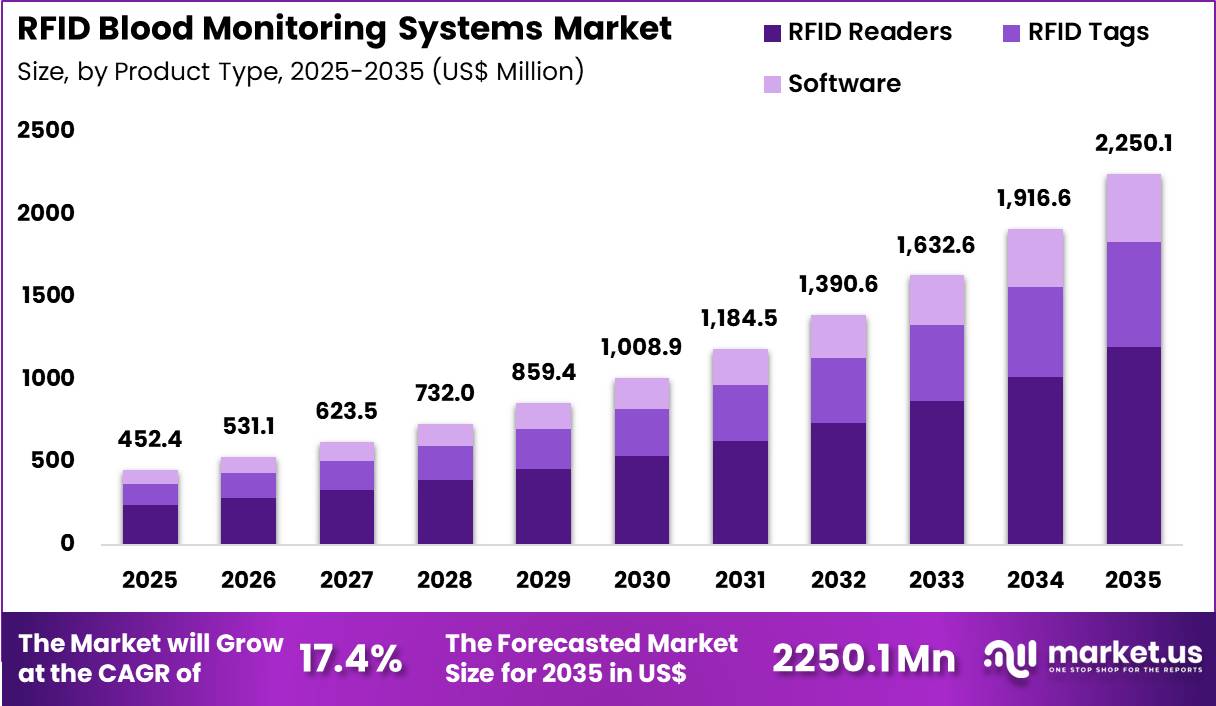
New York, NY – Nov 04 2026 – The Global RFID Blood Monitoring Systems Market size is expected to be worth around US$ 2250.1 Million by 2035 from US$ 452.4 Million in 2025, growing at a CAGR of 17.4% during the forecast period 2026-2035. In 2025, North America led the market, achieving over 42.1% share with a revenue of US$ 190.5 Million.
RFID Blood Monitoring Systems use Radio Frequency Identification (RFID) technology to track, monitor, and manage blood products throughout the healthcare supply chain. These systems use RFID tags, readers, and software to identify blood bags and maintain accurate records. They help hospitals, blood banks, and transfusion centers improve inventory management and ensure safe blood handling.
The technology enables real-time tracking of blood collection, storage, transportation, and distribution. It also helps monitor important parameters such as storage temperature, handling conditions, blood unit identification, and expiration dates. Automated alerts can notify healthcare staff about temperature changes, misplaced blood units, and products nearing their expiry dates.
Rising demand for safe blood transfusions is increasing the adoption of RFID-based monitoring solutions. Hospitals and blood banks are focusing on reducing manual errors, preventing blood wastage, and improving operational efficiency. In addition, growing investments in healthcare digitalization and smart hospital infrastructure are supporting market growth.
RFID Blood Monitoring Systems also improve traceability and transparency across blood management operations. These benefits make the technology valuable for maintaining blood quality, supporting regulatory compliance, and strengthening patient safety. As healthcare facilities adopt advanced tracking technologies, demand for RFID-based blood monitoring solutions is expected to increase.
Key Takeaways
- In 2025, the RFID Blood Monitoring Systems Market reached US$ 452.4 million and is projected to grow at a CAGR of 17.4%, reaching US$ 2,250.1 million by 2035.
- By product type, the market is segmented into RFID readers, RFID tags, and software. Among these, RFID readers dominated the market, accounting for a 53.2% share.
- Based on function, the market is categorized into inventory & supply chain control, quality & condition monitoring, and transfusion safety & patient matching. Inventory & supply chain control led the segment, capturing a 46.7% market share.
- By end user, the market is divided into blood banks and hospitals. Blood banks held the leading position, accounting for the largest revenue share of 78.5%.
- Regionally, North America dominated the RFID Blood Monitoring Systems Market, securing a 42.1% market share.
Key Market Segments
- Product Type Analysis: RFID readers dominated the product type segment, accounting for 53.2% of the market. Their leadership is driven by their role in scanning, identifying, and tracking blood units. Blood banks use fixed and handheld readers to improve inventory accuracy and reduce manual errors. Integration with laboratory information systems improves real-time visibility. Advancements in multi-tag scanning and reader sensitivity further support adoption.
- Function Analysis: Inventory and supply chain control held a leading 46.7% market share. RFID solutions help blood banks track stock levels, monitor expiry dates, and reduce blood wastage. Real-time inventory visibility improves distribution and storage management. Growing focus on cost efficiency and cold-chain monitoring further supports segment growth.
- End-User Analysis: Blood banks dominated the end-user segment with a 78.5% market share. Their large-scale blood collection, processing, storage, and distribution activities increase demand for automated tracking. RFID systems improve traceability, inventory control, and quality assurance. Growing investments in digital infrastructure are expected to strengthen adoption.
Regional Analysis
North America dominated the RFID Blood Monitoring Systems Market in 2024, capturing a 42.1% market share. This leadership is supported by stringent transfusion safety regulations, advanced healthcare infrastructure, and growing RFID adoption across hospitals and blood banks. Healthcare facilities increasingly use RFID-enabled solutions to track blood bags in real time, improve inventory accuracy, and reduce labeling and storage errors.
Integration with laboratory information systems further improves traceability throughout the transfusion process. Rising surgical procedures, trauma cases, and investments in smart hospitals also support regional growth. The American Red Cross collects approximately 4.5 million blood donations annually, highlighting the importance of efficient blood tracking and inventory management.
Asia Pacific is expected to register the highest CAGR during the forecast period. This growth is driven by expanding healthcare infrastructure, government initiatives, and rising demand for blood transfusions. Increasing investments in digital hospital systems, automated inventory management, and standardized traceability solutions are further accelerating RFID adoption across the region.
Emerging Trends
- Growing Adoption of Real-Time Blood Tracking: Hospitals and blood banks are increasingly adopting RFID technology to track blood units throughout the supply chain. RFID tags allow healthcare staff to identify and monitor blood bags without scanning each label manually. This improves visibility during collection, transportation, storage, and distribution. India’s Directorate General of Health Services has highlighted Tamil Nadu’s implementation of RFID-based, real-time blood inventory management and donor-to-recipient traceability.
- Integration with Hospital Information Systems: Integration with laboratory information management systems (LIMS) and hospital information systems is becoming an important trend. Connected platforms allow healthcare professionals to access blood unit details, patient records, and transfusion information from a central system. This improves data sharing and reduces manual entry. The British Society for Haematology also emphasizes interoperability between laboratory and electronic blood management systems.
- Smart Storage and Automated Expiry Alerts: Blood banks are adopting smart refrigerators, RFID readers, and automated inventory monitoring tools. These technologies help staff identify blood units, check their storage locations, and monitor expiry dates. Automated alerts can highlight units approaching expiration or those unsuitable for transfusion. This trend supports better stock rotation and reduces avoidable blood wastage.
- Increased Focus on Bedside Transfusion Safety: Healthcare facilities are strengthening patient identification procedures through RFID-enabled bedside monitoring systems. These solutions can connect patient identification details with blood bag information before transfusion. They help verify whether the correct blood component is being administered to the intended patient. Real-time verification also reduces manual recording errors and supports safer transfusion practices.
- Greater Focus on Data Security and Standardized Identification: Blood monitoring systems are increasingly focusing on secure digital records and standardized product identification. Hospitals need reliable information about blood groups, donation numbers, product types, and expiry dates. Standards such as ISBT 128 support consistent identification, while stronger cybersecurity measures help protect sensitive blood bank information and maintain operational continuity.
Use Cases
- Blood Donation Collection and Identification: Blood collection centers can attach RFID tags to blood bags during donation. These tags help assign unique identification details to each collected unit. Staff can access donor-related records, collection information, and blood component details. This supports accurate identification and improves traceability from the beginning of the blood management process.
- Transportation and Cold Chain Monitoring: RFID systems can help track blood bags during transportation between collection centers, testing laboratories, and hospitals. When combined with suitable temperature sensors, these systems can provide information about storage conditions during transit. This supports cold chain management and helps identify potential handling problems before blood reaches patients.
- Blood Processing and Laboratory Management: Blood banks can use RFID technology to identify units during component separation, testing, labeling, and processing. Automated identification helps staff maintain accurate records as whole blood is converted into components such as red blood cells, plasma, and platelets. It also supports the management of individual blood components throughout laboratory operations.
- Blood Bank Inventory and Stock Management: Hospitals and blood banks can use RFID-enabled readers and smart storage systems to monitor available blood units. The technology helps staff locate specific blood groups, identify low-stock levels, and prioritize units approaching expiry. This improves inventory visibility and supports timely replenishment and better distribution of available blood supplies.
- Hospital Bedside Blood Transfusion: RFID-enabled bedside systems can help healthcare professionals verify blood bags against patient identification details before starting transfusions. The system can record recipient information, transfusion time, and patient observations. This creates an electronic record of blood administration and helps reduce identification errors during critical hospital procedures.
Frequently Asked Questions About RFID Blood Monitoring Systems
- How do RFID Blood Monitoring Systems improve blood safety?
These systems help healthcare professionals identify blood units and verify patient details before transfusion. They also improve inventory visibility, reduce manual identification errors, and provide electronic records of blood movements and administration activities. - What information can RFID tags store for blood monitoring?
RFID tags can store or link to information such as donation identification numbers, blood groups, component types, collection details, and expiry dates. This information helps healthcare staff identify blood units and maintain accurate tracking records. - Can RFID technology monitor blood storage temperatures?
RFID tags alone do not measure temperature. However, RFID systems can integrate with temperature sensors and monitoring devices to track storage conditions, identify temperature deviations, and support proper blood cold chain management. - What factors are driving the RFID Blood Monitoring Systems Market?
Growing demand for transfusion safety, increasing blood bank automation, and the need for accurate inventory management are supporting market growth. Healthcare digitalization and government initiatives to improve blood traceability are also encouraging adoption. - Which healthcare facilities use RFID Blood Monitoring Systems?
Hospitals, blood banks, diagnostic laboratories, blood collection centers, and transfusion service providers use these systems. They support blood identification, inventory control, transportation tracking, and patient verification across different stages of blood management. - How does RFID technology help reduce blood wastage?
RFID systems improve stock visibility by identifying available blood units and highlighting products approaching expiry. This allows blood bank staff to prioritize stock rotation, plan redistribution, and reduce the chances of blood components becoming unusable. - What is the future outlook for the RFID Blood Monitoring Systems Market?
The market is expected to benefit from increasing hospital automation, digital transfusion management, and demand for end-to-end blood traceability. Integration with smart storage equipment and healthcare information systems may further support adoption.
Conclusion
The RFID Blood Monitoring Systems Market is expected to experience strong growth, driven by increasing demand for safe blood transfusions, improved inventory management, and healthcare digitalization. RFID readers continue to lead the product segment, while inventory and supply chain control remains the major functional application.
Blood banks account for the largest end-user share due to their extensive blood handling activities. North America maintains regional leadership, while Asia Pacific offers significant growth opportunities. Rising investments in smart hospitals, automated tracking, and real-time monitoring will further support market expansion. Overall, technological advancements and patient safety priorities will strengthen future market demand.
Discuss your needs with our analyst
Please share your requirements with more details so our analyst can check if they can solve your problem(s)



