


Overview
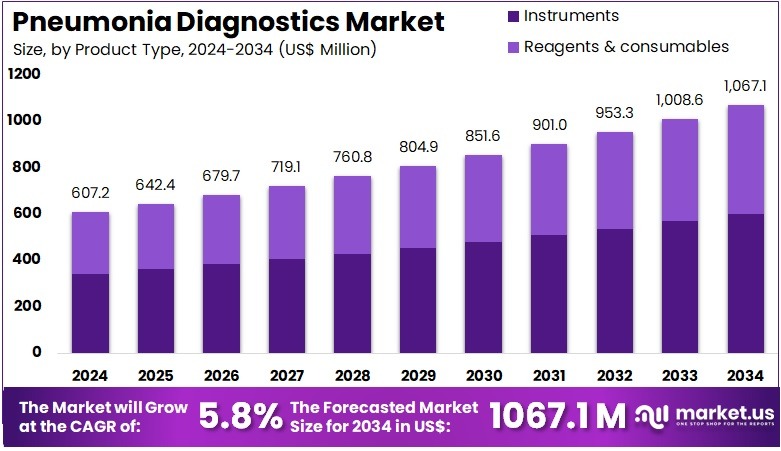
The Pneumonia Diagnostics Market size is expected to be worth around US$ 1067.1 million by 2034 from US$ 607.2 million in 2024, growing at a CAGR of 5.8% during the forecast period 2025 to 2034. North America held a dominant market position, capturing more than a 40.6% share and holding US$246.5 Million market value for the year.
The global pneumonia diagnostics landscape is witnessing significant advancements as healthcare systems focus on early detection, accurate classification, and rapid treatment of respiratory infections.
Pneumonia remains a major public health concern, with the World Health Organization (WHO) estimating that pneumonia causes around 740,000 deaths annually among children under 5 years, accounting for approximately 14% of all deaths in this age group. Rising cases among elderly populations, immunocompromised patients, and individuals with chronic respiratory diseases are increasing demand for advanced diagnostic solutions.
Pneumonia diagnostics include chest X-rays, computed tomography (CT) scans, blood tests, sputum analysis, molecular diagnostic tests, and artificial intelligence (AI)-based imaging tools. Molecular testing technologies, including polymerase chain reaction (PCR)-based assays, enable faster identification of bacterial and viral pathogens, helping clinicians select appropriate therapies. AI-powered diagnostic platforms are also improving interpretation of chest imaging by enhancing detection accuracy and reducing diagnostic delays.
Healthcare institutions are increasingly adopting rapid diagnostic methods as pneumonia management requires timely intervention. According to global health estimates, pneumonia contributes to millions of hospitalizations each year, with approximately 1.4 million children requiring hospital care annually due to severe pneumonia complications. The growing prevalence of respiratory infections, including influenza and respiratory syncytial virus (RSV), is further supporting investments in diagnostic innovation.
Future growth in pneumonia diagnostics is expected to be driven by portable testing devices, multiplex molecular platforms, digital health integration, and point-of-care technologies that enable faster diagnosis in hospitals, clinics, and remote healthcare settings.
Key Takeaways
- In 2024, the market recorded revenue of US$ 607.2 million and is projected to grow at a CAGR of 5.8%, reaching approximately US$ 1,067.1 million by 2034.
- Based on product type, the market is categorized into instruments and reagents & consumables. The instruments segment dominated in 2023, accounting for a 56.3% market share.
- By technology, the market is segmented into streptococcus-based, viral pneumonia-based, mycoplasma pneumonia-based, legionella-based, and chlamydophila-based technologies. Among these, the streptococcus-based segment held a leading position with a 38.9% share.
- Based on end users, the market is divided into hospitals & clinics, diagnostic centers, and others. The hospitals & clinics segment emerged as the largest contributor, capturing a 49.5% revenue share.
- Regionally, North America dominated the market in 2023, accounting for a 40.6% share due to strong healthcare infrastructure, advanced diagnostic adoption, and increased demand for pneumonia testing solutions.
Statistical Information
- An artificial intelligence (AI) chest X-ray pneumonia detection meta-analysis published in 2025 evaluated 15 studies involving approximately 12,000 chest X-rays and reported pooled pneumonia detection performance of 88% sensitivity and 90% specificity.
- In 2025, individual AI algorithms for pneumonia detection from chest radiographs demonstrated sensitivity ranges of 70%–97% and specificity ranges of 85%–95%, showing measurable variation in automated diagnostic performance.
- The same 2025 AI chest radiography analysis found that using AI as a second reader improved radiologist sensitivity by approximately 9–10 percentage points during pneumonia and lung abnormality interpretation.
- A 2025 deep-learning pneumonia classification study using a convolutional neural network (CNN) trained on 5,856 chest X-ray images achieved an AUROC of 0.96 on the test set and 0.99 on validation data for distinguishing pneumonia, COVID-19, and normal radiographs.
- A 2025 CNN-based pneumonia classification system reported 91.02% accuracy, 97.73% precision, 98.03% recall, and 97.88% F1-score when separating pneumonia cases from non-pneumonia cases using chest X-ray images.
- A 2025 systematic review and meta-analysis of lung ultrasound (LUS) for pneumonia diagnosis analyzed 53 studies covering 13,847 patients and reported pooled diagnostic performance of 93.9% sensitivity and 84.9% specificity.
- A 2025 comparison of pulmonary ultrasound versus chest radiography for community-acquired pneumonia found ultrasound achieved 90.0% sensitivity and 90.8% specificity, while chest X-ray showed 72.6% sensitivity and 82.0% specificity.
- The 2025 NICE pneumonia evidence review identified lung ultrasound as a diagnostic option for pneumonia with the capability for rapid point-of-care diagnosis, while recommending hospital pneumonia diagnostic processes, including chest X-ray access, within 4 hours of presentation.
Regional Analysis
North America Leads the Pneumonia Diagnostics Market
North America remains a leading region in the pneumonia diagnostics market due to strong respiratory disease surveillance programs, advanced molecular testing infrastructure, and high adoption of multiplex diagnostic platforms. Healthcare institutions increasingly use PCR-based panels to rapidly differentiate bacterial and viral pneumonia causes, supporting timely treatment decisions and antibiotic stewardship.
Government-supported laboratory networks, including pathogen monitoring initiatives, have strengthened resistance tracking and improved diagnostic accuracy in hospitals. Growing demand for rapid pathogen identification, especially among elderly and immunocompromised patients, continues to support market expansion.
Asia Pacific Shows Strong Growth Potential
Asia Pacific is expected to register the fastest growth during the forecast period, driven by rising pneumonia incidence, expanding healthcare access, and increasing investments in molecular diagnostics. Countries such as India, China, and South Korea are enhancing respiratory surveillance systems and adopting multiplex PCR technologies in hospitals and regional laboratories.
Government initiatives focused on infectious disease monitoring, antimicrobial resistance control, and early diagnosis are expected to accelerate adoption of advanced pneumonia testing solutions across the region.
Emerging Trends
- Artificial Intelligence (AI) Integration in Pneumonia Diagnosis: Artificial intelligence is becoming an important trend in pneumonia diagnostics by improving chest X-ray interpretation and supporting faster clinical decisions. AI-based systems analyze lung images to identify infection patterns. Studies using thousands of chest X-rays have reported AI accuracy levels above 90%, supporting radiologists in disease detection.
- Increasing Adoption of Multiplex Molecular Testing: Multiplex PCR respiratory panels are gaining importance because they can detect multiple pneumonia-causing pathogens from a single sample. These tests help identify bacterial and viral infections within hours instead of waiting several days for traditional culture results, improving antibiotic management and patient outcomes.
- Growth of Point-of-Care Pneumonia Diagnostics: Point-of-care testing is expanding across emergency departments, rural clinics, and community healthcare centers. Portable diagnostic devices enable faster pneumonia detection without requiring centralized laboratories. These systems are particularly valuable in regions with limited healthcare infrastructure, helping clinicians provide treatment decisions within shorter timeframes.
- Expansion of Digital Health and Remote Diagnostics: Digital health solutions are transforming pneumonia diagnosis through telemedicine, electronic health records, and remote monitoring platforms. These technologies improve access to specialists and support early diagnosis. Healthcare organizations are increasingly integrating digital tools to manage respiratory infections and improve clinical workflow efficiency.
- Focus on Differentiating Viral and Bacterial Pneumonia: Modern pneumonia diagnostics are increasingly focused on identifying whether infections are caused by bacteria, viruses, or other pathogens. Accurate pathogen identification helps reduce unnecessary antibiotic use. Advanced molecular tests and biomarker-based approaches are supporting more targeted treatment strategies and improved antimicrobial stewardship.
Use Cases
- Hospital Emergency Department Diagnosis: Pneumonia diagnostic technologies are widely used in emergency departments for rapid evaluation of patients with respiratory symptoms. Molecular tests, chest imaging, and biomarker analysis help physicians confirm infections quickly. Faster diagnosis supports immediate treatment decisions, especially for elderly and critically ill patients.
- Pediatric Pneumonia Screening and Management: Pneumonia diagnostics play a major role in identifying infections among children. WHO reports that pneumonia remains responsible for approximately 700,000 deaths annually among children under five years. Rapid testing, chest imaging, and clinical assessment tools support early intervention and reduce severe disease risks.
- Intensive Care Unit (ICU) Patient Monitoring: ICUs use advanced pneumonia diagnostics to monitor critically ill patients, including those requiring ventilation support. Rapid molecular testing helps identify pathogens responsible for hospital-acquired and ventilator-associated pneumonia. Early detection enables targeted therapy and improves infection control practices within healthcare facilities.
- Rural and Low-Resource Healthcare Applications: Portable pneumonia diagnostic solutions are increasingly used in rural and underserved regions where laboratory access is limited. Mobile X-ray systems, AI-assisted imaging, and point-of-care tests help healthcare workers detect pneumonia earlier and improve access to respiratory disease management.
- Antimicrobial Stewardship Programs: Pneumonia diagnostics support antimicrobial stewardship by helping doctors select appropriate treatments based on infection type. Rapid pathogen identification reduces unnecessary antibiotic prescriptions and helps address antibiotic resistance challenges. Healthcare systems are increasingly adopting diagnostic-guided treatment approaches to improve patient care and medication efficiency.
Frequently Asked Questions on Pneumonia Diagnostics
- What are the major technologies used in pneumonia diagnostics?
Major technologies used in pneumonia diagnostics include polymerase chain reaction (PCR), immunoassays, chest X-rays, CT scans, blood tests, and sputum analysis. These technologies help healthcare professionals identify pathogens quickly and provide appropriate treatment strategies for pneumonia patients. - Why is early pneumonia diagnosis important?
Early pneumonia diagnosis helps reduce disease complications, supports timely treatment, and improves patient recovery outcomes. Rapid identification of bacterial or viral infections allows doctors to select suitable therapies and avoid unnecessary antibiotic use, helping control antimicrobial resistance. - What factors are driving the pneumonia diagnostics market growth?
The pneumonia diagnostics market is driven by rising respiratory infections, increasing elderly populations, technological advancements, growing healthcare awareness, and demand for rapid testing solutions. Increased adoption of molecular diagnostics and point-of-care testing is also supporting market expansion. - How does molecular testing improve pneumonia diagnosis?
Molecular testing improves pneumonia diagnosis by detecting pathogen DNA or RNA with high accuracy and speed. Multiplex PCR platforms can identify multiple respiratory pathogens in a single test, enabling faster clinical decisions and improving infection management. - What role does artificial intelligence play in pneumonia diagnostics?
Artificial intelligence plays an important role in pneumonia diagnostics by analyzing chest X-rays and CT images to detect infection patterns. AI-based systems assist healthcare professionals by improving diagnostic accuracy, reducing interpretation time, and supporting large-scale respiratory disease screening. - Which factors are influencing the adoption of point-of-care pneumonia diagnostics?
Point-of-care pneumonia diagnostics adoption is influenced by the need for faster results, reduced laboratory dependency, and improved healthcare access. Portable diagnostic devices enable testing in emergency departments, clinics, and remote locations, supporting rapid patient management. - What are the future trends in the pneumonia diagnostics market?
Future trends in the pneumonia diagnostics market include AI-based imaging solutions, advanced molecular testing platforms, digital health integration, portable diagnostic devices, and personalized treatment approaches. These innovations aim to improve diagnostic speed, accuracy, and accessibility worldwide. - How does pneumonia diagnostics help in reducing antibiotic resistance?
Pneumonia diagnostics helps reduce antibiotic resistance by accurately identifying bacterial infections and preventing unnecessary antibiotic prescriptions. Rapid pathogen detection enables targeted therapy, supports antibiotic stewardship
Conclusion
The Pneumonia Diagnostics Market is poised for steady growth as rising pneumonia incidence, increasing demand for rapid pathogen identification, and advancements in molecular and point-of-care diagnostics accelerate adoption. Hospitals, diagnostic centers, and research facilities are increasingly integrating multiplex PCR, AI-enabled imaging, and automated testing platforms to improve treatment decisions and antimicrobial stewardship.
North America maintains market leadership due to advanced healthcare infrastructure and strong diagnostic adoption, while Asia Pacific presents significant growth opportunities through expanding healthcare access and respiratory disease surveillance programs. Continuous innovation, strategic partnerships, and improved diagnostic accessibility will remain key factors shaping future market expansion.
Discuss your needs with our analyst
Please share your requirements with more details so our analyst can check if they can solve your problem(s)




