


Overview
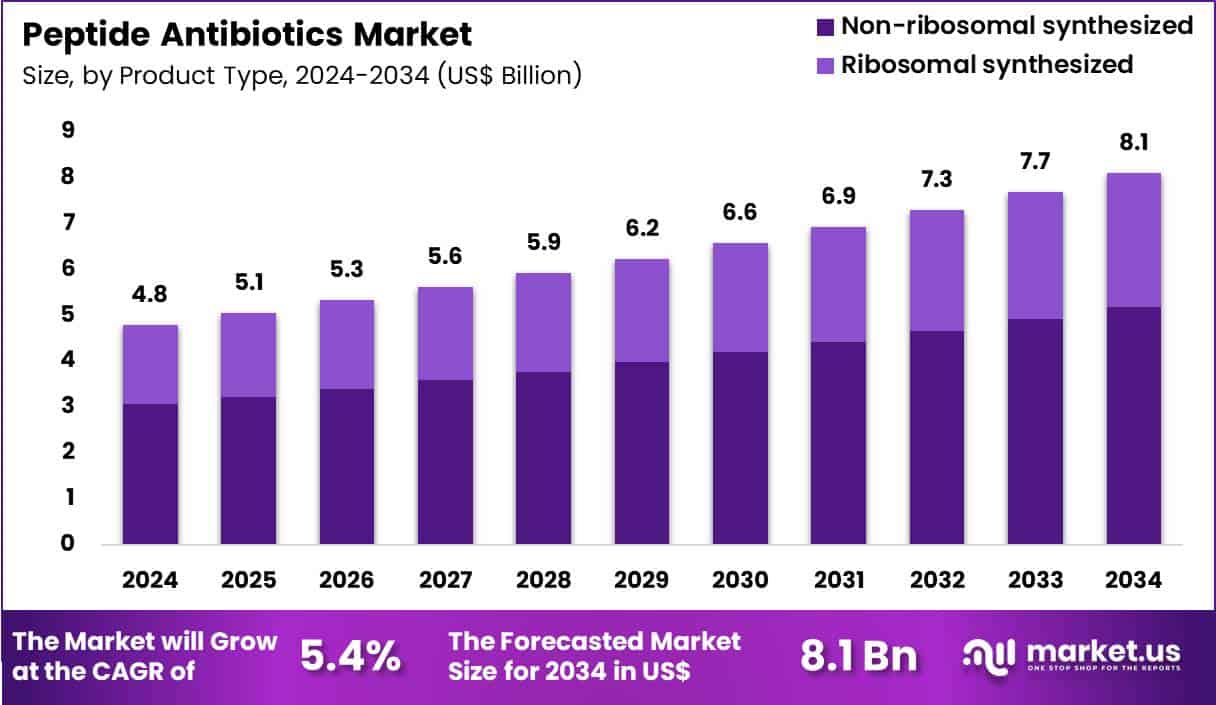
New York, NY – Oct 07, 2026 – Global Peptide Antibiotics Market size is expected to be worth around US$ 8.1 Billion by 2034 from US$ 4.8 Billion in 2024, growing at a CAGR of 5.4% during the forecast period 2025 to 2034. In 2024, North America led the market, achieving over 41.3% share with a revenue of US$ 2.0 Billion.
The global peptide antibiotics market is gaining significant attention as the healthcare industry seeks effective solutions to address the growing burden of antimicrobial resistance (AMR). Peptide antibiotics are antimicrobial compounds that can target bacterial pathogens through mechanisms that differ from many conventional antibiotics, supporting their potential application against drug-resistant infections.
Market growth is being supported by the increasing prevalence of bacterial infections, rising concerns regarding multidrug-resistant organisms, and continued investment in the development of novel antimicrobial therapies.
Growing research activities in peptide engineering, drug delivery systems, and synthetic biology are also contributing to the expansion of the market. In addition, advances in biotechnology are enabling the identification and development of new peptide-based candidates with improved antimicrobial activity and stability.
North America and Europe are expected to remain important markets due to established pharmaceutical research capabilities, healthcare expenditure, and strong focus on antimicrobial resistance. Meanwhile, Asia-Pacific is projected to offer substantial growth opportunities, supported by expanding healthcare infrastructure, increasing research investments, and the rising incidence of infectious diseases.
Key participants are focusing on research collaborations, product development, clinical evaluation, and strategic partnerships to strengthen their market positions. Overall, increasing demand for innovative anti-infective therapies and the urgent need for alternatives to conventional antibiotics are expected to create favorable opportunities for the peptide antibiotics market.
Key Takeaways
- In 2024, the peptide antibiotics market generated US$ 4.8 billion in revenue and is projected to grow at a CAGR of 5.4%, reaching US$ 8.1 billion by 2034.
- Based on product type, the market is segmented into ribosomal synthesized and non-ribosomal synthesized peptides. The non-ribosomal synthesized segment dominated in 2024, accounting for a 63.8% market share.
- By route of administration, the market is categorized into injectable and oral. The injectable segment held the leading position in 2024, with a 71.4% market share.
- By application, the market is segmented into skin infections, bloodstream infections, HABP/VABP, and others. The skin infection segment dominated the market, accounting for the largest revenue share of 39.7%.
- Based on distribution channel, the market is divided into hospital pharmacies, online pharmacies, and retail pharmacies. Hospital pharmacies led the market in 2024, capturing a 58.6% revenue share.
- Regionally, North America dominated the peptide antibiotics market in 2024, accounting for a 41.3% market share.
Key Market Segments
- Product Type Analysis: Non-ribosomal synthesized peptides dominated the product type segment, accounting for 63.8% of the market. Their broad-spectrum activity, structural diversity, enhanced potency, and ability to target resistant pathogens support adoption. Advanced fermentation technologies are improving manufacturing scalability, while growing antimicrobial resistance concerns strengthen demand.
- Route of Administration Analysis: Injectable formulations led the route of administration segment with a 71.4% market share. Their rapid systemic exposure, precise dosing, and high bioavailability make them suitable for severe bacterial infections. Increasing hospital use, intensive care requirements, and limited oral bioavailability of peptides further support segment growth.
- Application Analysis: Skin infections represented the largest application segment, accounting for 39.7% of the market. Rising resistant skin pathogens, surgical-site infections, and complicated infections are driving demand. Targeted antimicrobial activity, treatment effectiveness, and increasing antimicrobial resistance awareness are encouraging greater adoption across dermatology and hospital settings.
- Distribution Channel Analysis: Hospital pharmacies dominated the distribution channel segment with a 58.6% market share. High utilization of injectable antibiotics, centralized procurement, controlled dispensing, and antimicrobial stewardship programs support their leading position. Hospitals also provide necessary infrastructure for patient monitoring, complex infection management, and appropriate peptide antibiotic administration.
Regional Analysis
North America is leading the Peptide Antibiotics Market
North America accounted for 41.3% of the global peptide antibiotics market in 2024, supported by rising antimicrobial resistance and increasing demand for therapies targeting multidrug-resistant infections. Greater use of advanced antibiotics in hospitals, particularly for severe skin and bloodstream infections, has strengthened regional demand.
Antimicrobial stewardship programs, improved peptide formulations, and growing investment in innovative antibiotic development are further supporting market expansion. The increasing prevalence of chronic conditions, including diabetes and obesity, is also raising susceptibility to serious infections.
Enhanced surveillance and research into resistant bacterial strains are encouraging the development and adoption of peptide-based therapies.
Asia Pacific is expected to experience the highest CAGR
Asia Pacific is projected to register the highest CAGR during the forecast period, driven by the growing burden of antimicrobial resistance and increasing healthcare needs. Rising hospital admissions, expanding healthcare infrastructure, local pharmaceutical production, and biotechnology investments are supporting regional growth.
Government initiatives, clinical research, and improved access to advanced antimicrobial therapies are further expected to accelerate adoption. In 2021, Asia accounted for more than half of the global 4.71 million deaths associated with antimicrobial resistance, highlighting the region’s significant unmet treatment needs.
Emerging Trends
- Growing focus on antimicrobial resistance: The increasing spread of multidrug-resistant bacteria is strengthening interest in peptide antibiotics. WHO’s 2024 bacterial priority pathogens list identifies 24 important resistant pathogens, creating a strong need for antibiotics with new mechanisms of action. Peptide-based drugs are being investigated as one potential response to this challenge.
- Development of engineered and synthetic peptides: Research is moving beyond naturally occurring antimicrobial peptides toward engineered and synthetic molecules. Peptide sequences can be modified to improve stability, antibacterial activity, safety, and selectivity. These improvements are intended to overcome some limitations that have historically slowed the clinical development of peptide antibiotics.
- Greater interest in novel mechanisms of action: New peptide antibiotics are increasingly being designed to attack bacterial targets that are different from those used by many traditional antibiotics. Examples under research include compounds targeting bacterial membranes, lipid II, LptD, the ribosome, and signal peptidase. This creates opportunities for first-in-class antibacterial therapies.
- Combination therapy is gaining importance: Peptide antibiotics are increasingly being studied alongside existing antibacterial drugs. Combining peptides with conventional antibiotics may improve antibacterial activity and help address resistant organisms or bacterial biofilms. Such approaches are particularly relevant where treatment options are limited because of multidrug resistance.
- Better delivery and formulation technologies: Improved delivery systems are becoming an important development area because many antimicrobial peptides can face stability, toxicity, and bioavailability problems. Research is therefore examining peptide modification, conjugation, targeted delivery, and other formulation approaches to improve their performance as therapeutic products.
Use Cases
Treatment of multidrug-resistant bacterial infections: A major potential use of peptide antibiotics is the treatment of infections caused by bacteria that no longer respond well to existing medicines. WHO’s latest antibacterial target profiles specifically highlight the need for new treatments against severe multidrug-resistant Gram-negative infections and resistant Gram-positive infections.
Hospital-acquired and severe infections: Peptide antibiotics can have potential applications in serious hospital infections where resistant pathogens are frequently encountered. Their development is particularly relevant for critically ill and immunosuppressed patients, populations identified by WHO as important targets for new antibacterial therapies.
Treatment of bacterial biofilms: Biofilms can make bacterial infections more difficult to treat because microorganisms within these structures can show increased tolerance to conventional antibiotics. Antimicrobial peptides are being investigated for their ability to disrupt bacterial membranes and biofilms, creating opportunities in difficult-to-treat infections.
Gram-negative bacterial infections: Gram-negative bacteria represent an important area for peptide antibiotic development because several major pathogens have developed resistance to multiple antibiotic classes. Research is examining peptides that directly interact with bacterial membranes or specific outer-membrane targets, including approaches directed at Pseudomonas aeruginosa.
Development of next-generation antibiotics: Peptide antibiotics are being investigated as a platform for developing next-generation antibacterial medicines. Natural peptides, synthetic peptides, peptide conjugates, and engineered molecules can provide different structures and mechanisms, supporting discovery programs aimed at overcoming limitations of conventional antibiotic classes.
Frequently Asked Questions About Peptide Antibiotics.
- How do peptide antibiotics work?
Peptide antibiotics can work in several ways, depending on their structure. Some attach to bacterial membranes and disturb their integrity, while others bind to important bacterial targets. This diversity provides opportunities to develop medicines that work differently from conventional antibiotics. - Can peptide antibiotics treat resistant bacteria?
Yes, peptide antibiotics are being investigated for resistant bacterial infections because several peptides use mechanisms that differ from traditional antibiotics. Their potential is particularly relevant against multidrug-resistant pathogens, although resistance can still develop and clinical effectiveness must be demonstrated through appropriate trials. - Are peptide antibiotics already used in healthcare?
Yes. Several peptide-based antibacterial medicines are already used clinically, although the overall number remains limited. Their applications include treatment of serious bacterial infections and, in some cases, topical infections. The broader peptide antibiotic pipeline remains an active research area. - What are the main advantages of peptide antibiotics?
Their main potential advantages include diverse antibacterial mechanisms, strong activity against selected pathogens, and opportunities for structural engineering. Some peptides may also offer activity against organisms resistant to conventional drugs. However, these benefits must be balanced against safety and delivery limitations. - Are peptide antibiotics effective against Gram-negative bacteria?
Some peptide antibiotics show activity against Gram-negative bacteria, making this an important development area. Researchers are studying molecules that target bacterial membranes and outer-membrane components. This is particularly relevant because resistant Gram-negative infections represent a major global treatment challenge. - Can bacteria develop resistance to peptide antibiotics?
Yes. Although some peptide mechanisms may make resistance more difficult, bacteria can still develop resistance through changes in membrane properties, target modification, efflux mechanisms, or other biological adaptations. Responsible use and continued surveillance therefore remain important for peptide antibiotics. - What role does peptide engineering play in market development?
Peptide engineering is being used to improve antibacterial activity, stability, selectivity, safety, and delivery characteristics. Synthetic biology, structural modification, and rational design can create new molecules from natural peptide structures, potentially expanding the number of commercially viable therapeutic candidates. - What is the future outlook for the peptide antibiotics market?
The outlook is supported by rising resistance, new peptide-engineering technologies, and continued demand for antibiotics with novel mechanisms. However, market expansion will depend on clinical success, safety, scalable manufacturing, regulatory approval, appropriate antibiotic stewardship, and affordable access to successful products.
Conclusion
The global peptide antibiotics market is expected to witness steady growth, driven by the increasing burden of antimicrobial resistance, rising bacterial infections, and the need for innovative anti-infective therapies. Non-ribosomal synthesized peptides, injectable formulations, skin infection applications, and hospital pharmacies are currently prominent market segments.
North America remains the leading regional market, while Asia Pacific is expected to record the fastest growth due to rising healthcare needs, AMR prevalence, and expanding biotechnology capabilities. Continued advances in peptide engineering, drug delivery, synthetic biology, and combination therapies are expected to strengthen the development pipeline. However, safety, stability, manufacturing costs, and regulatory challenges remain important considerations.
Discuss your needs with our analyst
Please share your requirements with more details so our analyst can check if they can solve your problem(s)




