


Overview
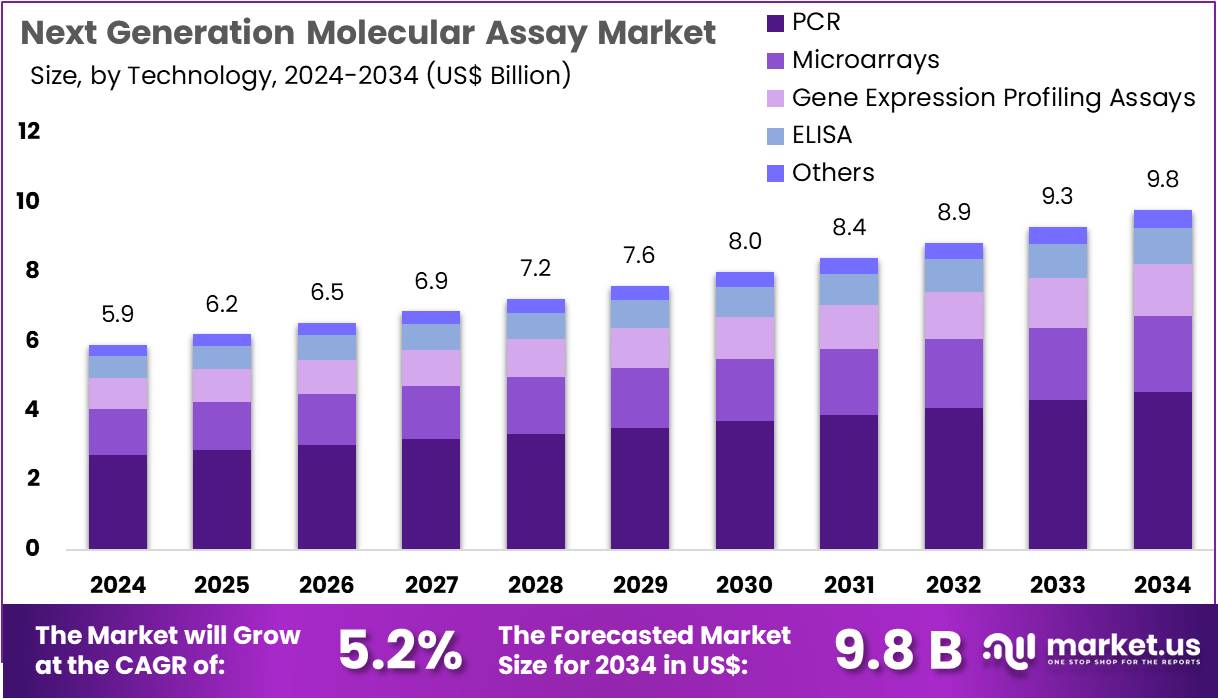
New York, NY – Sep 04, 2026 –The Global Next Generation Molecular Assay Market Size is expected to be worth around US$ 9.8 Billion by 2034 from US$ 5.9 Billion in 2024, growing at a CAGR of 5.2% during the forecast period 2025 to 2034. North America held a dominant market position, capturing more than a 41.1% share and holds US$ 2.4 Billion market value for the year.
The Global Next Generation Molecular Assay Market is witnessing strong growth as healthcare systems increasingly adopt advanced molecular diagnostics for the rapid detection of infectious diseases, cancer biomarkers, and genetic disorders. These assays combine high sensitivity, automation, and multiplexing capabilities, enabling laboratories to detect multiple targets from a single sample while reducing turnaround time.
Growing demand for precision medicine, personalized treatment strategies, and companion diagnostics is accelerating market expansion across hospitals, diagnostic laboratories, pharmaceutical companies, and research institutions. The market is projected to expand steadily through 2034, supported by rising investments in genomic research, increasing clinical adoption of molecular testing, and continuous technological advancements.
Next-generation molecular assays can achieve analytical sensitivity above 95% in many validated applications and detect numerous genetic targets simultaneously, improving diagnostic accuracy and clinical decision-making. Automated molecular platforms also reduce manual processing by up to 70%, enhancing laboratory efficiency and workflow.
North America currently accounts for the largest share of the market due to its advanced healthcare infrastructure, high healthcare expenditure, and strong presence of biotechnology and molecular diagnostics companies.
Europe follows with significant adoption in clinical laboratories, while the Asia-Pacific region is expected to register the fastest growth owing to expanding healthcare infrastructure, increasing government support for molecular diagnostics, and rising awareness of early disease detection.
Continuous product innovation, integration of artificial intelligence into molecular diagnostics, and growing use of next-generation assays in oncology, infectious disease testing, and pharmacogenomics are expected to create substantial opportunities for market participants during the forecast period.
Key Takeaways
- The global Next Generation Molecular Assay Market was valued at US$ 5.9 billion in 2024 and is projected to reach US$ 9.8 billion by 2034, expanding at a CAGR of 5.2% during the forecast period.
- By test type, the market is segmented into HPV testing, virus testing, STD testing, oncological testing, influenza testing, HIV testing, HCV testing, genetic testing, blood testing, and others. Among these, HPV testing dominated the market in 2024, accounting for a 22.6% share.
- Based on technology, the market includes PCR, microarrays, gene expression profiling assays, ELISA, and others. PCR emerged as the leading technology segment, capturing a 46.3% market share in 2024.
- In terms of end users, the market is categorized into biopharmaceutical companies, hospitals, academic & research centers, and others. Biopharmaceutical companies held the largest share, contributing 49.7% of the total market revenue in 2024.
- North America maintained its leading position in the global market, accounting for a 41.1% market share in 2024.
Market segmentation
- Test Type Analysis: HPV testing dominated the market with a 22.6% share in 2024, driven by increasing cervical cancer screening, rising awareness of HPV-related diseases, and growing adoption of molecular diagnostic assays. Expanding self-sampling programs, improved genotyping technologies, and supportive screening guidelines are expected to sustain strong demand worldwide.
- Technology Analysis: PCR accounted for 46.3% of the market in 2024 due to its exceptional sensitivity, rapid detection capabilities, and wide use in infectious disease, oncology, and genetic testing. Continuous advancements in multiplex and digital PCR, along with increasing laboratory automation, are expected to maintain its leading market position.
- End-User Analysis: Biopharmaceutical companies held the largest revenue share of 49.7% in 2024, supported by growing investments in drug discovery, biomarker research, clinical trials, and biologics development. Rising demand for precision medicine, gene therapies, and molecular-based quality control continues to increase the adoption of next-generation molecular assays.
Statistical Information
- Roche’s next-generation cobas® 6800 system (2025) can process up to 2,112 molecular tests per day after adding a second analytical unit, significantly increasing laboratory throughput without expanding the instrument footprint.
- Roche’s 2025 software upgrade increased the number of unique molecular assays per run from 3 to 6, enabling laboratories to perform a wider range of tests in a single workflow.
- Roche’s upgraded system now supports running up to 6 different assays on a single patient sample, improving workflow flexibility and reducing repeat processing.
- QIAGEN’s QIAcuity Digital PCR platform (2025) increased multiplexing capacity from 5 targets to 12 targets per biological sample, representing more than a two-fold improvement in assay capability.
- QIAsymphony Connect (2025) can automatically process up to 96 samples in one run, improving molecular assay throughput for oncology, infectious disease, and genomics laboratories.
- Illumina’s TruSight Oncology 500 v2 assay (2025) reduced tissue sample input requirements while delivering faster turnaround times for comprehensive tumor profiling, improving operational efficiency in oncology laboratories.
- QIAGEN reported more than 4,000 QIAcube Connect instrument placements worldwide by October 2025, reflecting broad adoption of automated molecular sample preparation workflows.
- The global installed base of the QIAcube instrument family exceeded 13,000 systems by 2025, demonstrating widespread utilization of automated molecular assay preparation technologies.
- QIAGEN reported over 29,900 cumulative placements of sample technology instruments since 2019, highlighting continued adoption of automated molecular testing platforms through 2025.
Regional Analysis
North America dominated the Next Generation Molecular Assay Market, accounting for 41.1% of the global market share in 2024. The region’s leadership is driven by strong adoption of molecular diagnostics, advanced healthcare infrastructure, and significant investments in genomic medicine.
The widespread use of PCR and next-generation sequencing (NGS) technologies for oncology, infectious disease, and genetic disorder testing continues to fuel demand. Government support from organizations such as the National Institutes of Health (NIH) and the U.S. Centers for Medicare & Medicaid Services (CMS) has accelerated the adoption of precision medicine and companion diagnostics.
Leading biotechnology and diagnostics companies continue to introduce automated molecular testing platforms, improving laboratory efficiency and diagnostic accuracy. Meanwhile, the Asia-Pacific region is expected to register the fastest growth during the forecast period due to expanding healthcare infrastructure, increasing government investments in genomics, rising prevalence of infectious and chronic diseases, and growing adoption of advanced molecular diagnostics across China, India, Japan, and South Korea.
Business opportunities
The Next Generation Molecular Assay Market offers significant business opportunities as healthcare systems increasingly adopt precision medicine, molecular diagnostics, and personalized treatment approaches. Rising demand for companion diagnostics in oncology, infectious disease testing, and genetic disorder screening is encouraging pharmaceutical and diagnostic companies to develop advanced molecular assay platforms.
Growing investments in laboratory automation, high-throughput testing systems, and artificial intelligence-based data analysis are improving workflow efficiency and diagnostic accuracy, creating opportunities for technology providers.
Expanding use of liquid biopsy, next-generation sequencing (NGS), and multiplex PCR assays is further driving innovation in cancer diagnosis and disease monitoring. Emerging economies in Asia-Pacific, Latin America, and the Middle East are investing in molecular diagnostic infrastructure, supported by government healthcare initiatives and increasing awareness of early disease detection.
In addition, the rapid expansion of clinical trials, biomarker research, and biopharmaceutical R&D is increasing demand for reliable molecular assays. Strategic collaborations between diagnostic manufacturers, biotechnology companies, and research institutions are expected to accelerate product development and global commercialization, making the market highly attractive for both established companies and new entrants.
Emerging Trends
- Expansion of multi-cancer early detection research:The U.S. National Cancer Institute (NCI) is accelerating multi-cancer early detection (MCED) research. In 2025, the Vanguard Study selected 2 blood-based assays and plans to enroll up to 24,000 participants, driving demand for advanced molecular assays capable of detecting multiple cancer biomarkers from a single blood sample.
- Growing adoption of genomic sequencing in healthcare:The Centers for Disease Control and Prevention (CDC) continues expanding pathogen genomic surveillance through the National SARS-CoV-2 Strain Surveillance program. In 2025, thousands of viral genomes are routinely sequenced each week, encouraging laboratories to adopt next-generation molecular assays with higher throughput and faster turnaround.
- Higher laboratory automation for molecular testing:Modern molecular laboratories are increasingly using automated extraction and PCR workflows to improve testing efficiency. In 2025, Roche introduced upgrades enabling the cobas 6800 system to perform up to 2,112 molecular tests per day, supporting growing clinical testing volumes and reducing manual laboratory processes.
- Expansion of high-order multiplex testing:In 2025, QIAGEN expanded its QIAcuity Digital PCR platform from 5 to 12 targets per sample, allowing laboratories to detect more biomarkers simultaneously. This trend supports precision oncology, infectious disease diagnosis, and genetic testing while improving laboratory productivity.
- Growing use of AI in molecular diagnostics:Government-supported precision medicine programs increasingly integrate artificial intelligence for genomic data interpretation. The NCI continues supporting AI-assisted biomarker analysis to improve molecular testing accuracy, accelerate result interpretation, and reduce analysis time for complex sequencing datasets in clinical laboratories.
Use Cases
- Cancer biomarker testing: Next-generation molecular assays are widely used to identify genetic mutations that guide targeted cancer therapies. The National Cancer Institute (NCI) recommends molecular biomarker testing for several cancers, helping clinicians select personalized treatments and improve patient outcomes through precision medicine.
- Infectious disease diagnosis: Hospitals and public health laboratories use molecular assays to rapidly detect viruses, bacteria, and antimicrobial resistance genes. The CDC’s Advanced Molecular Detection program supports genomic technologies that strengthen surveillance of influenza, COVID-19, foodborne illnesses, and emerging infectious diseases.
- Rare disease diagnosis: Next-generation molecular assays help identify inherited genetic disorders through comprehensive DNA analysis. According to the National Institutes of Health (NIH), approximately 25–30 million Americans are affected by rare diseases, increasing the demand for accurate molecular genetic testing.
- Companion diagnostics for drug development: Biopharmaceutical companies use molecular assays to identify patients most likely to benefit from targeted therapies. These assays support biomarker discovery, patient selection, treatment monitoring, and regulatory approval, improving the success of precision medicine clinical trials.
- Transplant compatibility testing: Molecular assays are used for high-resolution HLA typing to improve donor-recipient matching before organ and stem cell transplantation. Accurate genetic matching reduces transplant rejection risk, supports long-term graft survival, and improves overall clinical outcomes in transplant medicine.
Recent Development
- In February 2025, Hoffmann-La Roche Ltd unveiled its proprietary Sequencing by Expansion (SBX) technology, introducing a new class of next-generation sequencing that reduces the time from sample to genome from days to hours, supporting faster molecular diagnostics and genomic research.
- In April 2025, QIAGEN N.V. announced plans to launch three new sample preparation instruments during 2025–2026, including the QIAsymphony Connect, to improve laboratory automation and enhance oncology and genomics molecular assay workflows.
- In February 2026, Illumina Inc. launched TruPath™ Genome, a whole-genome analysis solution that delivers comprehensive genomic insights with a simplified workflow, supporting higher accuracy for rare disease research and next-generation molecular testing.
- In April 2026, Thermo Fisher Scientific Inc. launched the Applied Biosystems™ PowerFlex™ Thermal Cycler, a new PCR platform designed to improve flexibility, productivity, and performance for molecular biology and diagnostic laboratories.
Frequently Asked Questions on Next Generation Molecular Assay
- Which technologies are commonly used in Next Generation Molecular Assays?
Common technologies include polymerase chain reaction (PCR), next-generation sequencing (NGS), digital PCR, microarrays, gene expression profiling, and ELISA. These technologies enable sensitive detection of genetic mutations, pathogens, and biomarkers for clinical diagnosis and biomedical research. - What are the major applications of Next Generation Molecular Assays?
Next Generation Molecular Assays are used for cancer biomarker testing, infectious disease detection, genetic disorder diagnosis, pharmacogenomics, companion diagnostics, transplant compatibility testing, and drug development. They help clinicians make faster and more accurate treatment decisions. - Which region dominates the Next Generation Molecular Assay Market?
North America leads the market due to its advanced healthcare infrastructure, strong biotechnology industry, significant investments in genomic research, and widespread adoption of precision medicine. Government funding and favorable reimbursement policies further strengthen regional market leadership. - What challenges affect the Next Generation Molecular Assay Market?
Major challenges include high instrument and reagent costs, complex regulatory requirements, limited reimbursement in some regions, and the need for skilled laboratory professionals. Standardization of testing procedures and data interpretation also remains an important industry focus. - What business opportunities exist in the Next Generation Molecular Assay Market?
Growing demand for liquid biopsy, companion diagnostics, laboratory automation, artificial intelligence, and personalized medicine is creating new business opportunities. Expanding healthcare infrastructure in emerging economies also supports increased adoption of advanced molecular diagnostic technologies. - What is the future outlook for the Next Generation Molecular Assay Market?
The market is expected to experience steady long-term growth as healthcare providers increasingly adopt precision diagnostics, genomic medicine, and automated molecular testing. Continuous innovation, expanding clinical applications, and rising research investments will further strengthen market development worldwide.
Conclusion
The Next Generation Molecular Assay Market is positioned for sustained growth, driven by increasing demand for precision medicine, molecular diagnostics, and genomic testing across oncology, infectious diseases, and genetic disorder applications.
Continuous advancements in PCR, digital PCR, next-generation sequencing, and automated laboratory platforms are improving testing accuracy, speed, and efficiency. Biopharmaceutical companies remain the leading end users due to their extensive use of molecular assays in drug discovery and clinical research, while HPV testing continues to lead among test types.
North America maintains market leadership owing to its advanced healthcare infrastructure and strong research ecosystem. Ongoing innovation, expanding biomarker research, and greater adoption of personalized medicine are expected to create significant opportunities for industry participants throughout the forecast period.
Discuss your needs with our analyst
Please share your requirements with more details so our analyst can check if they can solve your problem(s)




