


Overview
New York, NY – Aug 12, 2026 – The Global Neuroprosthetics Market size is expected to be worth around US$ 52.8 Billion by 2034 from US$ 14.5 Billion in 2024, growing at a CAGR of 13.8% during the forecast period from 2025 to 2034. In 2024, North America led the market, achieving over 42.4% share with a revenue of US$ 6.1 billion.
The global neuroprosthetics market is witnessing significant growth due to the rising prevalence of neurological disorders, ageing populations, and increasing demand for advanced assistive technologies. According to the World Health Organization (WHO), more than 3 billion people worldwide were affected by neurological conditions in 2021, making neurological disorders a leading cause of disability globally. This growing disease burden is accelerating demand for devices that restore sensory, motor, and cognitive functions.
An ageing population is another major growth factor. The United Nations estimates that the global population aged 65 years and above will reach approximately 1.6 billion by 2050, increasing the prevalence of age-related neurological conditions such as Parkinson’s disease, stroke, hearing loss, and vision impairment. Neuroprosthetic solutions, including cochlear implants, brain-computer interfaces, and neural stimulation devices, are gaining importance in improving patient independence and quality of life.
Hearing and vision restoration represent key application areas. WHO reports that more than 1.5 billion people currently experience hearing loss, including around 430 million people with disabling hearing loss, while global vision impairment affects at least 2.2 billion people. These unmet healthcare needs are creating opportunities for advanced neuro-enabled implants.
Growing investments in neuroscience research, rehabilitation technologies, and regulatory support are further strengthening market development. Initiatives such as the NIH BRAIN Initiative and programs like the FDA Breakthrough Devices Program are supporting innovation in neural interfaces and implantable technologies. Increasing adoption of spinal cord stimulators, cochlear implants, retinal implants, and brain-computer interfaces is expected to drive the future expansion of the neuroprosthetics industry.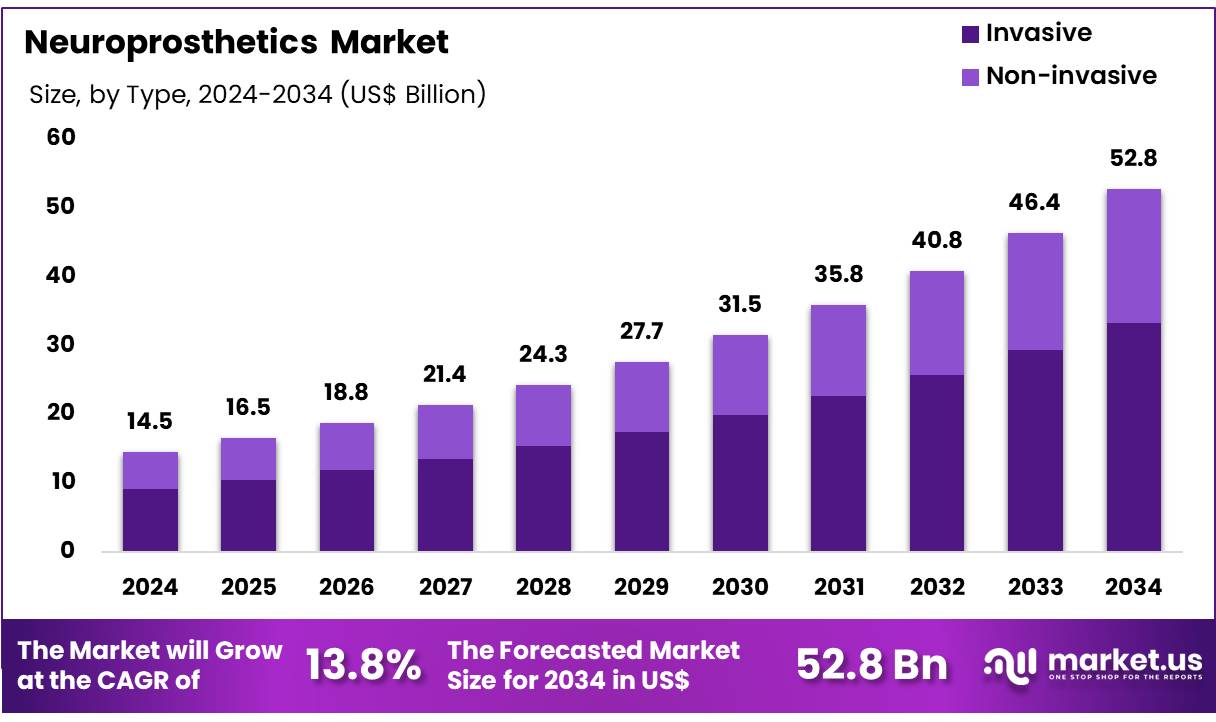
Key Takeaways
- Market Size: The global neuroprosthetics market is projected to reach approximately US$ 52.8 billion by 2034, increasing from US$ 14.5 billion in 2024.
- Market Growth: The market is expected to expand at a CAGR of 13.8% during the forecast period from 2025 to 2034.
- Product Type Analysis: The motor prosthetics segment held the leading position in 2024, capturing around 43.0% of the total market share.
- Type Analysis: The invasive neuroprosthetics segment dominated the market in 2024, representing approximately 63.1% share.
- Technology Analysis: Neural stimulation interfaces led the technology segment in 2024, accounting for nearly 55.6% of the market share.
- Application Analysis: The hearing loss application segment is expected to dominate in 2024, contributing around 31.2% of the overall market share.
- End-Use Analysis: Hospitals emerged as the leading end-user segment in 2024, holding approximately 54.7% market share.
- Regional Revenue Analysis: North America maintained its leading market position in 2024, with a market value of approximately US$ 6.1 billion and a share exceeding 42.4%.
Statistical Information
- Ageing Population Increasing Need for Neuroprosthetic Solutions: The global ageing trend is expected to increase demand for neuroprosthetic devices because older adults face higher risks of hearing loss, stroke, Parkinson’s disease, dementia, and mobility-related neurological conditions. According to the United Nations, the global population aged 65 years and above is projected to reach around 1.6 billion by 2050, compared with about 761 million in 2021.
- Hearing Loss Creates Major Opportunity for Cochlear Implants and Auditory Neuroprosthetics: Hearing restoration remains one of the largest neuroprosthetics applications. WHO reports that approximately 1.5 billion people globally live with some degree of hearing loss, including around 430 million people requiring rehabilitation for disabling hearing loss. By 2050, nearly 2.5 billion people are expected to experience hearing loss, with more than 700 million requiring hearing rehabilitation.
- Vision Impairment Supports Development of Visual Neuroprosthetics: Visual neuroprosthetics are gaining attention due to the high global burden of vision impairment. WHO estimates that at least 2.2 billion people worldwide have vision impairment, and at least 1 billion cases could have been prevented or remain unaddressed. These unmet needs are encouraging research into retinal implants and neural visual restoration technologies.
- Brain-Computer Interface Research Is Expanding Through Government Funding: Government-supported neuroscience programs are accelerating the development of next-generation neural interfaces. The U.S. National Institutes of Health (NIH) BRAIN Initiative has invested more than US$3 billion since 2014 and supported over 1,300 research projects focused on understanding brain circuits and developing advanced neurotechnologies.
- Dementia Growth Supports Development of Advanced Neural Technologies: Increasing dementia prevalence is creating demand for technologies that support neurological care and patient independence. WHO estimates that more than 55 million people worldwide are living with dementia, with nearly 10 million new cases occurring each year. The growing need for cognitive support solutions is encouraging research into brain-computer interfaces and neural monitoring technologies.
- Rehabilitation Technology Demand Is Rising Due to Disability Burden: Assistive technologies are becoming increasingly important as disability rates rise globally. WHO estimates that more than 2.5 billion people need one or more assistive products, and this number could increase to 3.5 billion by 2050 due to ageing populations and chronic health conditions. Neuroprosthetic devices represent an advanced category of assistive technology.
- Clinical Research Growth Supports Brain-Computer Interface Innovation: Government-funded neuroscience programs are accelerating brain-computer interface research. The NIH BRAIN Initiative has supported more than 1,300 research projects with over US$3 billion in funding since 2014, helping researchers develop advanced neural recording, stimulation, and decoding technologies.
- Regulatory Pathways Encourage Faster Neurotechnology Development: The FDA Breakthrough Devices Program supports faster development of innovative medical devices addressing serious health conditions. As of March 31, 2026, the FDA reported 1,284 Breakthrough Device designations and 198 marketing authorizations under the program, demonstrating increased regulatory focus on advanced medical technologies.
Regional Analysis
North America held a dominant market position, capturing more than a 42.4% share
North America maintained a leading position in the neuroprosthetics market in 2024, supported by advanced healthcare infrastructure, strong research capabilities, and early adoption of innovative medical technologies. The region benefits from major investments in neuroscience research, including the U.S. NIH BRAIN Initiative, which has invested more than US$3 billion since 2014 to support over 1,300 research projects focused on advanced brain technologies and neural circuits.
The presence of leading universities, hospitals, and medical technology companies has accelerated the development and clinical adoption of neuroprosthetic solutions such as cochlear implants, deep brain stimulation systems, and brain-computer interfaces. Government-supported research programs continue to strengthen innovation by improving understanding of neurological functions and developing next-generation neurotechnologies.
Growing cases of neurological disorders, including stroke, Parkinson’s disease, and hearing impairment, are increasing demand for advanced rehabilitation and assistive devices. Additionally, favorable healthcare systems, reimbursement support, and collaboration between research institutions and technology developers are helping expand access to neuroprosthetic treatments across the United States and Canada.
Emerging Trends
- Growth of Brain-Computer Interfaces (BCIs) for Restoring Communication and Movement: Brain-computer interfaces are becoming a major trend in neuroprosthetics by converting brain signals into commands for computers, prosthetic limbs, and communication systems. NIH-supported research is advancing these technologies, with the BRAIN Initiative receiving US$402 million in FY2024 funding to accelerate neurotechnology development.
- AI Integration Improving Neural Signal Processing: Artificial intelligence is increasingly being combined with neuroprosthetic devices to improve interpretation of complex brain signals and provide personalized stimulation. AI-enabled systems are helping researchers develop more accurate brain-controlled devices for communication, movement restoration, and rehabilitation. NIH research has demonstrated BCI systems capable of helping individuals with paralysis communicate through decoded brain activity.
- Advanced Cochlear Implants Expanding Hearing Restoration: Cochlear implants remain one of the most successful neuroprosthetic applications, supporting people with severe-to-profound hearing loss. FDA-approved cochlear implant systems use electrical stimulation of the auditory nerve to create hearing sensations. With WHO reporting 430 million people requiring rehabilitation for disabling hearing loss, demand for improved auditory implants continues increasing.
- Miniaturized and Less Invasive Neural Interfaces: A key trend in neuroprosthetics is the development of smaller, safer, and less invasive neural interfaces. Researchers are focusing on flexible electrodes, improved implant materials, and minimally invasive approaches to reduce surgical risks. FDA continues supporting neurological device innovation, including guidance for implanted brain-computer interface technologies.
- Expansion of Neuroprosthetics for Stroke and Spinal Injury Rehabilitation: Neuroprosthetic devices are increasingly used in rehabilitation programs for patients affected by stroke and spinal cord injuries. Technologies such as functional electrical stimulation and neural interfaces aim to restore movement and improve independence. WHO estimates that around 15.4 million people globally live with spinal cord injury, creating significant demand for advanced rehabilitation solutions.
Use Cases
- Hearing Restoration Through Cochlear Implant Systems: Cochlear implants are widely used to restore hearing ability in individuals with severe nerve-related hearing loss. These devices convert sound into electrical signals that stimulate the auditory nerve, allowing the brain to recognize sound. FDA regulates cochlear implants to ensure safety and effectiveness before market approval.
- Brain-Controlled Communication for Paralysis Patients: Brain-computer interfaces are being developed to help people with paralysis communicate without relying on muscle movement. NIH researchers demonstrated a brain-computer device that enabled a person with paralysis to produce speech through neural signals, highlighting potential applications for ALS and severe neurological disorders.
- Motor Function Restoration Using Neural Stimulation: Neuroprosthetics are being applied to restore movement by stimulating nerves, muscles, or spinal pathways. FDA recognizes neurological devices as important tools for conditions including spinal cord injury, Parkinson’s disease, epilepsy, and limb loss. These technologies support improved mobility and rehabilitation outcomes.
- Deep Brain Stimulation for Movement Disorders: Deep brain stimulation (DBS) is an established neuroprosthetic application for managing symptoms of neurological disorders such as Parkinson’s disease. Advanced adaptive stimulation technologies are being developed to adjust therapy based on real-time brain activity, improving personalized treatment approaches.
- Vision Restoration Using Retinal Neuroprosthetic Technologies: Retinal implants and visual neuroprosthetics are emerging applications designed to support individuals with severe vision impairment. These systems attempt to convert visual information into electrical signals that stimulate remaining neural pathways. WHO reports that at least 2.2 billion people worldwide experience vision impairment, creating a large unmet healthcare need.
Frequently Asked Questions on Neuroprosthetics
- What factors are driving the growth of the neuroprosthetics market?
The neuroprosthetics market is expanding due to the rising prevalence of neurological disorders, ageing populations, increasing hearing loss cases, growing demand for rehabilitation technologies, government research funding, and advancements in neural interface technologies. - Which application segment dominates the neuroprosthetics market?
Hearing restoration is one of the leading application areas in the neuroprosthetics market due to increasing adoption of cochlear implants. Rising global hearing impairment cases and technological improvements in auditory implants are supporting wider clinical acceptance. - How do neuroprosthetic devices work?
Neuroprosthetic devices work by capturing, stimulating, or replacing neural signals using electrodes and advanced electronic systems. These devices translate biological signals into electrical responses to support functions such as hearing, movement, communication, and neurological rehabilitation. - What are the major types of neuroprosthetic devices?
Major neuroprosthetic device types include cochlear implants for hearing loss, retinal implants for vision support, deep brain stimulation systems for neurological disorders, spinal cord stimulators for pain management, and brain-computer interfaces for movement and communication assistance. - Why is North America leading the neuroprosthetics market?
North America leads due to advanced healthcare infrastructure, strong neuroscience research capabilities, high healthcare investments, favorable reimbursement policies, and the presence of leading academic institutions, hospitals, and medical device companies developing advanced neuroprosthetic solutions. - How is artificial intelligence influencing neuroprosthetics?
Artificial intelligence is improving neuroprosthetic technologies by enhancing neural signal processing, increasing device accuracy, enabling personalized treatments, and supporting real-time communication between the brain and external devices such as robotic limbs and communication systems. - What challenges affect neuroprosthetics market growth?
The adoption of neuroprosthetics faces challenges including high treatment costs, complex implantation procedures, regulatory requirements, limited accessibility, device maintenance issues, and technical difficulties in achieving accurate and reliable neural signal interpretation. - What are the applications of brain-computer interfaces in neuroprosthetics?
Brain-computer interfaces are used to help individuals with paralysis communicate, control assistive devices, operate robotic limbs, and restore certain motor functions. These technologies are being developed to improve independence and quality of life for patients with severe neurological conditions. - What is the future outlook of the neuroprosthetics market?
The future of the neuroprosthetics market is expected to benefit from advances in artificial intelligence, neural engineering, minimally invasive implants, personalized healthcare, and increasing investments in neurological research. These developments will expand applications in sensory, motor, and cognitive restoration.
Conclusion
The neuroprosthetics market is experiencing significant growth due to the increasing burden of neurological disorders, ageing populations, and rising demand for advanced rehabilitation solutions. Technologies such as cochlear implants, brain-computer interfaces, neural stimulation devices, and motor prosthetics are transforming patient care by restoring lost sensory and motor functions.
Strong government support, research investments, and advancements in artificial intelligence are accelerating innovation in this field. North America remains a key region due to its advanced healthcare infrastructure and research ecosystem. With continuous technological improvements and growing unmet medical needs, neuroprosthetics are expected to play an important role in the future of neurological healthcare.
Discuss your needs with our analyst
Please share your requirements with more details so our analyst can check if they can solve your problem(s)




