


Overview
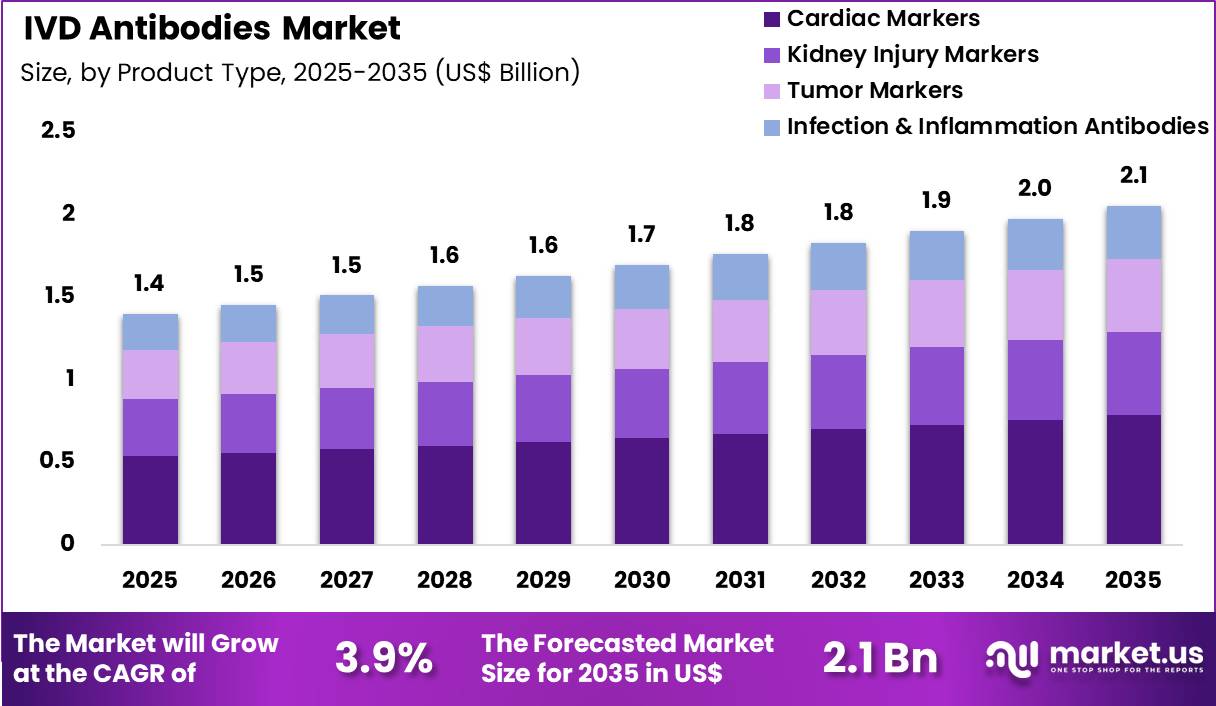
New York, NY – Nov 06 2026 – The Global IVD Antibodies Market size is expected to be worth around US$ 2.1 Billion by 2035 from US$ 1.4 Billion in 2025, growing at a CAGR of 3.9% during the forecast period 2026-2035. In 2025, North America led the market, achieving over 42.2% share with a revenue of US$ 0.6 Billion.
The In Vitro Diagnostics (IVD) Antibodies Market plays an important role in modern healthcare by supporting the accurate detection and diagnosis of various diseases. IVD antibodies are specialized proteins used in diagnostic tests to identify specific antigens, biomarkers, and disease-related substances in patient samples such as blood, urine, and tissue. These antibodies help detect infectious diseases, cancer, autoimmune disorders, and other medical conditions.
Growing demand for early disease detection and accurate diagnostic testing is increasing the use of IVD antibodies across healthcare settings. Hospitals, diagnostic laboratories, research institutes, and biotechnology companies rely on antibody-based testing methods to improve diagnostic accuracy and support clinical decisions. Techniques such as enzyme-linked immunosorbent assays (ELISA), immunohistochemistry, immunofluorescence, and rapid diagnostic tests depend on high-quality antibodies.
Technological advancements in antibody development, including monoclonal and recombinant antibody production, are improving test sensitivity, specificity, and consistency. In addition, rising healthcare expenditure, increasing infectious disease testing, and expanding personalized medicine are supporting market growth.
As healthcare systems focus more on timely diagnosis and reliable laboratory results, IVD antibodies are expected to remain essential components of clinical diagnostics and medical research.
Key Takeaways
- In 2025, the market was valued at US$ 1.4 Billion and is projected to reach US$ 2.1 Billion by 2035, growing at a CAGR of 3.9% during the forecast period.
- By product type, the market is segmented into cardiac markers, kidney injury markers, tumor markers, and infection & inflammation antibodies. Among these, cardiac markers dominated the market with a 38.2% share.
- Based on application, the market is categorized into cancer, immunology, and cardiovascular diseases. Cancer emerged as the leading application segment, accounting for 41.8% of the market.
- By end user, the market is classified into hospitals, homecare settings, diagnostic laboratories, and others. Hospitals held the largest share, contributing 52.6% of total market revenue.
- Regionally, North America dominated the market, capturing a leading revenue share of 42.2%.
Key Market Segments
- Product Type Analysis: Cardiac markers dominated the IVD antibodies market with a 38.2% share, driven by the rising prevalence of cardiovascular diseases. Increasing cases of heart attacks and heart failure boost demand for accurate diagnostic tests. Growing adoption of rapid testing, improved assay sensitivity, and early cardiac risk detection further support segment growth.
- Application Analysis: Cancer led the application segment with a 41.8% market share, supported by rising cancer cases and growing demand for early diagnosis. Antibody-based tests help identify tumor markers and monitor treatment responses. Increasing oncology research, personalized medicine, and preventive screening further strengthen the adoption of IVD antibodies in cancer diagnostics.
- End-User Analysis: Hospitals dominated the end-user segment with a 52.6% market share due to their extensive diagnostic facilities and patient testing requirements. Rising hospital admissions and demand for accurate disease detection support antibody-based testing. Advanced laboratory infrastructure, automated immunoassay systems, and skilled healthcare professionals further drive segment growth.
Regional Analysis
North America is leading the IVD Antibodies Market
North America dominated the IVD antibodies market with a 42.2% share in 2024, supported by advanced diagnostic infrastructure and rising demand for accurate disease detection. Hospitals and laboratories increasingly adopt antibody-based tests for cancer, cardiovascular diseases, and autoimmune conditions.
Strong healthcare spending, research investments, and improved reimbursement support further strengthen regional growth. Government initiatives promoting disease screening and early diagnosis also increase testing demand. Collaborations between research institutions and diagnostic companies encourage innovation in antibody development.
Asia Pacific is expected to register the highest CAGR
Asia Pacific is projected to experience the fastest growth during the forecast period due to expanding healthcare infrastructure and increasing demand for diagnostic services. Rising cases of infectious and chronic diseases in China and India are driving antibody-based testing.
Government screening programs, growing laboratory networks, and investments in local reagent manufacturing are improving diagnostic access. Additionally, partnerships between global diagnostic companies and regional healthcare providers support technology adoption and market expansion.
Emerging Trends
- Growing Demand for High-Sensitivity Antibody Tests: The demand for highly sensitive antibody tests is increasing as healthcare providers focus on early and accurate disease detection. Improved antibody technologies help identify low levels of disease-related biomarkers, supporting better diagnosis and patient monitoring.
- Increasing Adoption of Multiplex Immunoassays: Multiplex immunoassays are gaining attention because they can detect multiple antibodies or biomarkers in a single test. This approach reduces testing time, saves laboratory resources, and supports the diagnosis of complex diseases, including infectious and autoimmune conditions.
- Development of Point-of-Care Antibody Testing: Healthcare providers are increasingly adopting point-of-care antibody tests for faster results outside traditional laboratories. These tests support timely clinical decisions in emergency departments, clinics, and remote healthcare settings, particularly where access to advanced laboratory facilities is limited.
- Integration of Automation in Diagnostic Laboratories: gnostic laboratories are investing in automated immunoassay platforms to improve testing speed, consistency, and accuracy. Automated systems reduce manual work, minimize handling errors, and help laboratories manage growing volumes of antibody-based diagnostic tests.
- Expansion of Companion Diagnostics and Personalized Medicine: The growing use of personalized medicine is creating opportunities for antibody-based diagnostic testing. Companion diagnostics help identify patients who may benefit from specific treatments by detecting relevant biomarkers, supporting more targeted treatment decisions in areas such as cancer care.
- Increasing Use of Recombinant Antibodies: Recombinant antibodies are gaining importance in diagnostic development because they offer consistent quality and reliable production. They help manufacturers reduce batch-to-batch variations and develop more specific antibody reagents for immunoassays, laboratory testing, and advanced diagnostic applications.
Use Cases
- Infectious Disease Diagnosis: IVD antibodies are widely used in diagnostic assays to identify antibodies or antigens associated with infectious diseases such as HIV, hepatitis, malaria, and other infections. These tests help laboratories support disease screening, confirmation, and public health monitoring.
- Cancer Detection and Monitoring: Antibody-based diagnostic reagents are used in cancer testing to identify specific proteins and biomarkers in tissue or blood samples. Immunohistochemistry and related testing methods help pathologists classify tumors and support treatment selection and disease monitoring.
- Autoimmune Disease Diagnosis: IVD antibodies are used in laboratory tests to detect autoantibodies associated with conditions such as lupus and rheumatoid arthritis. These tests help doctors identify immune system abnormalities, distinguish disease types, and support clinical assessment.
- Allergy Testing: Antibody-based diagnostic assays help detect allergen-specific IgE antibodies in patient samples. These tests support the identification of sensitivities to foods, dust mites, pollen, and other allergens, helping healthcare professionals evaluate allergic conditions and plan appropriate care.
- Blood Screening and Transfusion Testing: Antibody reagents support blood group testing, antibody screening, and compatibility assessments before transfusions. These applications help laboratories identify potentially harmful blood group antibodies and reduce the risk of transfusion-related complications.
Frequently Asked Questions About IVD Antibodies
- What is the IVD Antibodies Market?
The IVD Antibodies Market covers the development, manufacturing, and distribution of antibody-based reagents used in diagnostic testing. These products support disease detection, biomarker identification, laboratory research, and clinical testing across healthcare settings. - What are the key growth drivers of the IVD Antibodies Market?
Rising demand for early disease diagnosis, increasing infectious disease testing, growing cancer screening activities, and advancements in immunoassay technologies are important factors supporting demand for IVD antibodies across diagnostic laboratories and healthcare facilities. - Which applications create demand for IVD antibodies?
Major applications include infectious disease testing, cancer diagnostics, autoimmune disease detection, allergy testing, and blood grouping. Increasing laboratory testing volumes and demand for accurate diagnostic results support their use across these applications. - What challenges affect the IVD Antibodies Market?
High development costs, strict regulatory requirements, antibody cross-reactivity, and batch-to-batch quality variations can affect market growth. Manufacturers must maintain product consistency, validate performance, and meet diagnostic standards to strengthen market adoption. - What role does technology play in the IVD Antibodies Market?
Technological advancements improve antibody development, diagnostic sensitivity, and laboratory efficiency. Recombinant antibody production, automated testing platforms, and multiplex immunoassays are helping manufacturers develop reliable products for different diagnostic applications. - What is the future outlook for the IVD Antibodies Market?
The market is expected to benefit from growing demand for precision diagnostics, personalized medicine, and advanced laboratory testing. Continued investment in antibody engineering and diagnostic technologies will create opportunities for product innovation and wider clinical applications.
Conclusion
The IVD Antibodies Market is expected to witness steady growth, driven by increasing demand for early disease detection, accurate diagnostic testing, and advanced healthcare technologies. The rising use of antibody-based tests in cancer, cardiovascular, and infectious disease diagnosis will further support market expansion.
North America remains a leading region due to its advanced healthcare infrastructure, while Asia Pacific offers strong growth opportunities through expanding diagnostic facilities and healthcare investments. Additionally, advancements in monoclonal and recombinant antibodies, automated testing, and personalized medicine are creating new opportunities. Overall, growing diagnostic needs will strengthen the market’s long-term growth potential.
Discuss your needs with our analyst
Please share your requirements with more details so our analyst can check if they can solve your problem(s)



