


Overview
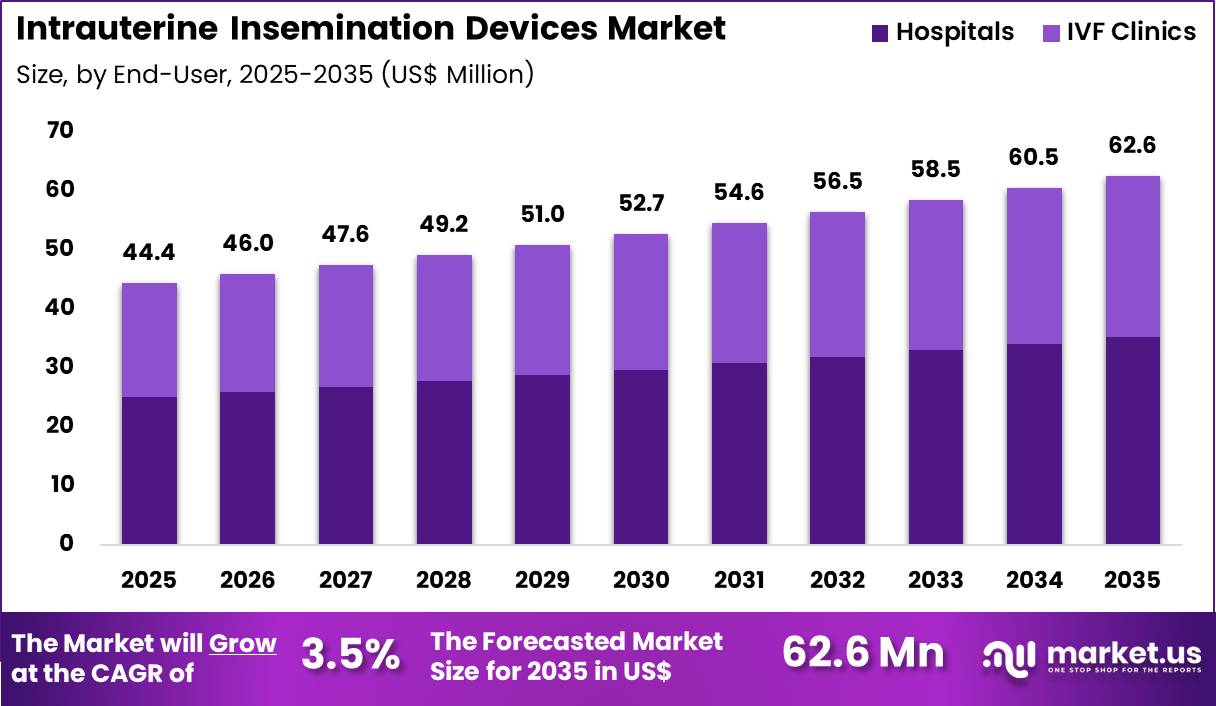
New York, NY – Nov 06 2026 – The Global Intrauterine Insemination Devices Market size is expected to be worth around US$ 62.6 Million by 2035 from US$ 44.4 Million in 2025, growing at a CAGR of 3.5% during the forecast period 2026-2035. In 2025, North America led the market, achieving over 35.8% share with a revenue of US$ 15.9 Billion.
The Intrauterine Insemination (IUI) Devices Market is growing due to the rising demand for fertility treatments and increasing awareness of assisted reproductive technologies. Intrauterine insemination is a fertility procedure in which specially prepared sperm is directly placed into a woman’s uterus to improve the chances of pregnancy. IUI devices play an important role in this process by supporting safe, controlled, and accurate sperm delivery.
These devices mainly include insemination catheters, sperm preparation equipment, syringes, and related accessories used during fertility procedures. The growing number of couples experiencing infertility, delayed pregnancies, and changing lifestyle patterns is increasing the adoption of IUI treatments. In addition, improvements in catheter design, flexible materials, and minimally invasive procedures are supporting market development.
Fertility clinics, hospitals, and reproductive medicine centers are the major end users of IUI devices. Increasing access to fertility services, rising healthcare expenditure, and growing acceptance of assisted reproductive treatments are creating new growth opportunities.
Furthermore, technological advancements and improved fertility treatment facilities are encouraging healthcare providers to adopt reliable insemination devices. Overall, the market is expected to expand as demand for accessible, cost-effective, and less invasive fertility solutions continues to increase.
Key Takeaways
- In 2025, the Intrauterine Insemination Devices Market generated US$ 44.4 Million in revenue and is projected to reach US$ 62.6 Million by 2035, growing at a CAGR of 3.5% during the forecast period.
- By product type, the market includes curved catheters, flexible catheters, straight catheters, and media/sperm wash. Among these, curved catheters dominated with a market share of 34.7%.
- Based on end-user, the market is segmented into hospitals and IVF clinics, with hospitals accounting for the largest share of 56.4%.
- Regionally, North America dominated the market, capturing a leading share of 35.8%.
Key Market Segments
- Product Type Analysis: Curved catheters dominated the product type segment with a 34.7% share, driven by their improved anatomical adaptability and precise placement. Their flexible design supports smoother insertion, reduces patient discomfort, and improves procedural accuracy. Rising infertility cases and growing adoption of minimally invasive fertility treatments further support segment growth.
- End-User Analysis: Hospitals dominated the end-user segment with a 56.4% share, supported by integrated fertility services and advanced healthcare infrastructure. Their access to skilled specialists, diagnostic facilities, and comprehensive reproductive care encourages device adoption. Rising demand for fertility treatments and strong patient referral networks further strengthen the segment’s leading position.
Regional Analysis
North America is leading the Intrauterine Insemination Devices Market
North America held a leading share of 35.8% in the Intrauterine Insemination Devices market in 2024, driven by advanced reproductive healthcare infrastructure and rising demand for fertility treatments. Increasing maternal age and infertility cases have encouraged couples to seek early medical assistance.
The United States reported 389,993 ART cycles in 2022, highlighting strong fertility treatment activity. Expanding fertility clinics, improved insurance coverage, and growing acceptance of assisted conception further support regional growth. Healthcare providers are also adopting advanced catheters and sperm preparation technologies to improve treatment outcomes.
Asia Pacific is expected to experience the highest CAGR during the forecast period
Asia Pacific is expected to record the highest CAGR due to declining fertility rates and rising awareness of reproductive healthcare. Delayed pregnancies, urbanization, and increasing infertility concerns are driving demand for fertility treatments across China, India, and Japan.
Government support, expanding fertility clinic networks, affordable treatment options, and improvements in catheter technologies are further encouraging adoption. Growing medical tourism in Thailand and Malaysia is also expected to create new market opportunities.
Emerging Trends
- Growing Demand for Flexible IUI Catheters: Fertility clinics are increasingly using soft and flexible IUI catheters to support easier sperm delivery into the uterus. These devices help clinicians navigate the cervical canal while improving patient comfort during the procedure.
- Development of Advanced Catheter Designs: Manufacturers are focusing on improved catheter designs with features such as adjustable positioning and controlled sperm delivery. These developments help healthcare professionals manage catheter placement and perform insemination with greater procedural control.
- Increasing Use of Sterile and Disposable Devices: Fertility centers are adopting sterile, single-use IUI devices to maintain hygiene and reduce the risk of contamination. Disposable catheters and related accessories support safe clinical procedures and simplify equipment handling.
- Integration of Fertility Monitoring with IUI Procedures: Fertility clinics are increasingly combining IUI procedures with ovulation monitoring, hormone testing, and ultrasound examinations. These methods help doctors identify the appropriate treatment window and improve the timing of insemination.
- Improved Sperm Preparation and Delivery Systems: There is growing attention to sperm preparation techniques and compatible delivery equipment. Laboratory washing methods help concentrate healthy, moving sperm before insemination, while specialized catheters and syringes support controlled delivery into the uterus.
Use Cases
- Treatment of Mild Male Factor Infertility: IUI devices are used when male partners have mildly reduced sperm count or movement. Specially prepared sperm is delivered directly into the uterus using an insemination catheter, helping shorten the distance sperm must travel.
- Donor Sperm Insemination: Fertility clinics use IUI devices to deliver screened and prepared donor sperm into the uterus. This procedure supports individuals and couples who require donor sperm to achieve pregnancy under medical supervision.
- Treatment of Ovulation-Related Fertility Problems: IUI devices are used in fertility treatments for women who experience irregular ovulation. Doctors may prescribe ovulation-inducing medicines and monitor egg development before using an insemination catheter to deliver prepared sperm.
- Management of Unexplained Infertility: IUI equipment supports fertility treatment for couples experiencing unexplained infertility when clinical assessments indicate that the procedure is appropriate. Prepared sperm is placed inside the uterus near ovulation to increase opportunities for fertilization.
- Fertility Treatment for Same-Sex Female Couples: IUI devices are used by same-sex female couples who choose donor sperm to conceive. Fertility specialists coordinate donor sperm preparation and ovulation timing before performing the insemination procedure in a clinical setting.
Frequently Asked Questions About Intrauterine Insemination Devices
- What are intrauterine insemination devices?
Intrauterine insemination devices are medical instruments used to place specially prepared sperm directly into the uterus. These devices generally include flexible catheters, syringes, and related accessories that help fertility specialists perform insemination procedures. - What is an IUI catheter used for?
An IUI catheter is a thin, flexible medical tube used to deliver prepared sperm into the uterus through the cervix. It helps fertility specialists complete insemination with controlled sperm placement during treatment. - Are intrauterine insemination devices disposable?
Most IUI catheters used in clinical procedures are designed for single use. Sterile disposable devices help maintain hygiene, reduce contamination risks, and support safe handling during fertility treatments in hospitals and specialized clinics. - Is intrauterine insemination a painful procedure?
IUI is generally a short and well-tolerated procedure. Some patients may experience mild discomfort or temporary cramping when the catheter passes through the cervix. Most patients can return home shortly after treatment. - Who needs intrauterine insemination treatment?
IUI may help individuals and couples experiencing certain fertility problems, including mild male factor infertility, ovulation difficulties, or unexplained infertility. It is also used when donor sperm is required for conception. - What are the major factors driving the IUI devices market
Growing awareness of infertility treatments, increasing demand for assisted conception, expanding fertility clinic services, and improvements in reproductive healthcare equipment are important factors supporting demand for intrauterine insemination devices. - Which healthcare facilities use intrauterine insemination devices?
Fertility clinics, reproductive medicine centers, hospitals, and specialized infertility treatment facilities are the primary users of IUI devices. These healthcare providers use the equipment to perform insemination procedures under professional medical supervision. - What role does technology play in the IUI devices market?
Technological improvements support better catheter flexibility, positioning, and sperm delivery. Developments in fertility monitoring and laboratory sperm preparation also help healthcare professionals coordinate insemination procedures more effectively and maintain consistent clinical practices.
Conclusion
The Intrauterine Insemination Devices Market is expected to witness steady growth, driven by rising infertility cases, increasing awareness of fertility treatments, and wider adoption of assisted reproductive technologies. Growing demand for flexible catheters, sterile disposable devices, and improved sperm delivery systems is supporting market development.
Hospitals remain the leading end-user segment, while curved catheters hold the largest product share. North America continues to dominate the market, whereas Asia Pacific is expected to register the highest CAGR. With advancements in reproductive healthcare and expanding fertility services, the market is likely to create new growth opportunities through 2035.
Discuss your needs with our analyst
Please share your requirements with more details so our analyst can check if they can solve your problem(s)



