


Overview
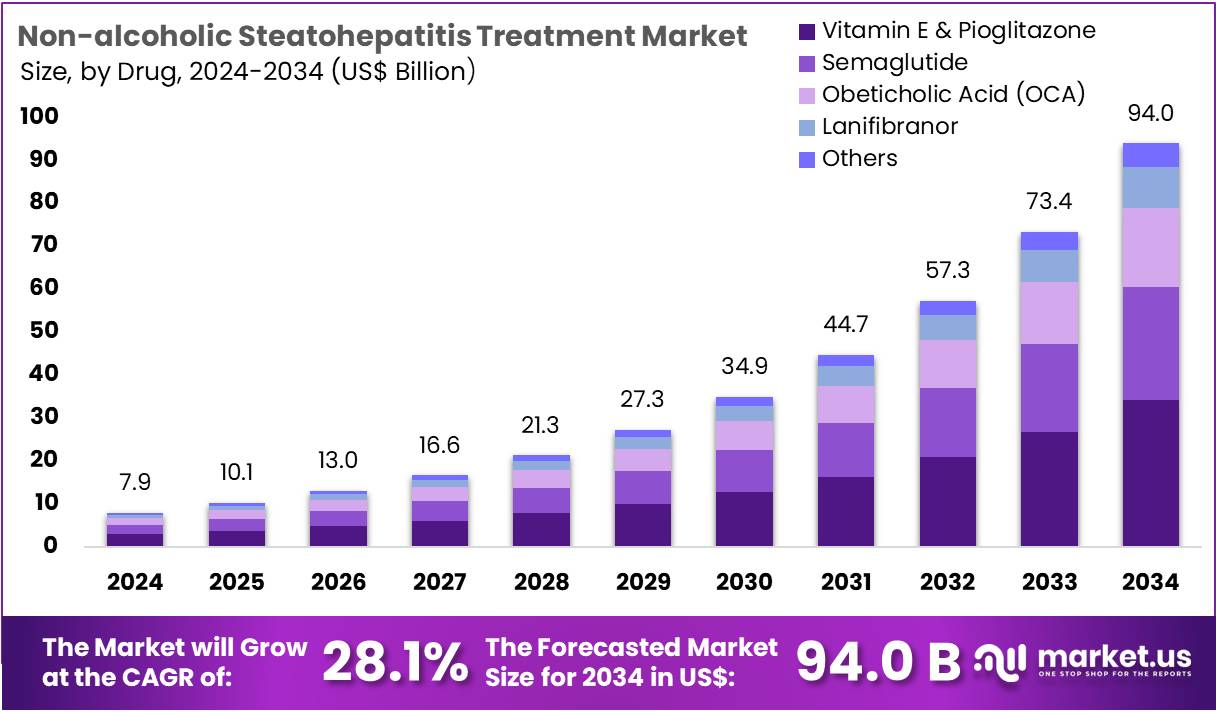
New York, NY – June 24, 2026 – The Non-alcoholic Steatohepatitis Treatment Market Size is expected to be worth around US$ 94.0 billion by 2034 from US$ 7.9 billion in 2024, growing at a CAGR of 28.1% during the forecast period 2025 to 2034. North America held a dominant market position, capturing more than a 71.1% share and holds US$ 5.6 Billion market value for the year.
Non-alcoholic steatohepatitis (NASH) is a progressive liver disease characterized by inflammation and liver cell damage caused by the accumulation of excess fat in the liver, occurring in individuals who consume little or no alcohol. NASH is considered the advanced form of non-alcoholic fatty liver disease (NAFLD) and is closely associated with obesity, type 2 diabetes, metabolic syndrome, and dyslipidemia.
If left untreated, NASH can progress to liver fibrosis, cirrhosis, liver failure, and hepatocellular carcinoma, creating a significant healthcare burden worldwide. The rising prevalence of obesity and metabolic disorders has contributed to a substantial increase in NASH cases across both developed and emerging economies.
The treatment landscape for NASH is evolving rapidly. While lifestyle modifications, including weight loss, dietary improvements, and regular physical activity, remain the cornerstone of disease management, increasing research efforts have led to the development of novel pharmacological therapies targeting liver inflammation, fibrosis, and metabolic dysfunction. Advances in drug development are expected to improve treatment outcomes and address the unmet medical needs of patients with advanced disease stages.
Growing awareness, improved diagnostic technologies, and ongoing clinical research are supporting market expansion and enhancing patient access to effective treatment options. As healthcare providers and regulatory authorities focus on early diagnosis and intervention, the NASH treatment sector is anticipated to witness significant growth, driven by innovation and increasing demand for targeted therapeutic solutions.
Key Takeaways
- The global non-alcoholic steatohepatitis (NASH) treatment market was valued at US$ 7.9 billion in 2024 and is projected to reach US$ 94.0 billion by 2034, expanding at a CAGR of 28.1% during the forecast period.
- Based on drug type, the market is segmented into vitamin E & pioglitazone, semaglutide, obeticholic acid (OCA), lanifibranor, and others. Among these, the vitamin E & pioglitazone segment accounted for the largest market share of 36.5% in 2023.
- By disease stage, the market is categorized into NASH stage F0, NASH stage F1, NASH stage F2, NASH stage F3, and NASH stage F4. The NASH stage F1 segment emerged as the leading category, capturing a revenue share of 32.4%.
- Based on distribution channel, the market is segmented into hospital pharmacies, retail pharmacies, and online pharmacies. Hospital pharmacies dominated the market, accounting for 52.2% of the total revenue share.
- North America held the dominant position in the global NASH treatment market in 2024, contributing 71.1% of the overall market revenue.
Regional Analysis
North America Dominates the Non-alcoholic Steatohepatitis Treatment Market
North America accounted for the largest share of the non-alcoholic steatohepatitis (NASH) treatment market in 2024, representing 71.1% of total revenue. Market growth in the region is primarily driven by the increasing prevalence of NASH and related metabolic disorders, including obesity and type 2 diabetes. The region also benefits from advanced healthcare infrastructure, strong research activity, and favorable regulatory support.
A significant milestone was achieved in March 2024 when the U.S. Food and Drug Administration (FDA) granted accelerated approval to Rezdiffra (resmetirom), the first oral therapy specifically approved for adults with NASH and moderate-to-advanced liver fibrosis. This approval has expanded treatment options, addressed a critical unmet need, and is expected to accelerate diagnosis rates and therapeutic adoption across the region.
Asia Pacific Expected to Register the Fastest Growth
Asia Pacific is projected to witness the highest CAGR during the forecast period, supported by the rising burden of metabolic diseases, growing awareness of liver health, and improving healthcare access. Countries such as India are experiencing increasing rates of NAFLD and NASH, prompting greater government attention toward liver disease management. In addition, rising healthcare expenditure, expanding diagnostic capabilities, and ongoing initiatives to address non-communicable diseases are expected to support the adoption of advanced NASH therapies across the region.
Emerging Trends
- Name Change Reflects Metabolic Connection: Non-alcoholic steatohepatitis is increasingly referred to as Metabolic Dysfunction-Associated Steatohepatitis (MASH), highlighting its strong association with obesity, diabetes, and metabolic disorders. The updated terminology supports improved disease understanding, more precise diagnosis, enhanced research efforts, and the development of personalized treatment approaches.
- Weight-Loss Medications Show Strong Potential: Weight-loss therapies, particularly GLP-1 receptor agonists, are emerging as promising treatment options for MASH. These medications help reduce body weight, liver fat accumulation, and inflammation while potentially slowing fibrosis progression, making them valuable candidates for future disease management strategies.
- Biologics and RNA-Based Drugs Enter the Scene: Advanced biologics and RNA-based therapies are gaining attention as next-generation MASH treatments. These innovative approaches target inflammation and fibrosis at the molecular level, offering greater precision, potentially improved efficacy, and reduced side effects compared with conventional therapeutic options.
- AI and Non-Invasive Tests Are Transforming Diagnosis: Artificial intelligence and non-invasive diagnostic technologies are reshaping MASH management. Advanced imaging techniques, blood-based biomarkers, and AI-driven analytics enable earlier diagnosis, improved disease monitoring, enhanced treatment decisions, and reduced reliance on invasive liver biopsy procedures.
Use Cases
- Treating NASH in People with Obesity: Patients with NASH frequently experience obesity-related complications. Modern weight-management therapies, including GLP-1 receptor agonists, help reduce liver fat, inflammation, and excess body weight simultaneously, improving liver function and lowering the risk of long-term disease progression.
- Managing Diabetes-Linked Liver Damage: NASH commonly occurs alongside type 2 diabetes, creating a need for integrated treatment approaches. Medications such as pioglitazone and GLP-1 receptor agonists help control blood glucose levels while reducing liver inflammation, supporting improved metabolic and hepatic health outcomes.
- Personalized Medicine for NASH: Personalized medicine is transforming NASH treatment by utilizing genetic, metabolic, and clinical data to guide therapy selection. Customized treatment plans improve effectiveness, minimize adverse effects, and address individual patient needs, resulting in better disease management and outcomes.
- Remote Monitoring for Long-Term Care: Remote monitoring solutions, including telehealth platforms and digital health tools, support continuous management of NASH patients. These technologies enable real-time health tracking, timely treatment adjustments, improved patient engagement, and expanded access to care, particularly in underserved regions.
Frequently Asked Questions on Non-alcoholic Steatohepatitis Treatment
- What is Non-alcoholic Steatohepatitis (NASH)?
Non-alcoholic steatohepatitis (NASH) is a progressive liver disease characterized by fat accumulation, inflammation, and liver cell damage in individuals who consume little or no alcohol. If left untreated, the condition may progress to fibrosis, cirrhosis, liver failure, or liver cancer. - What are the common treatment options available for NASH?
NASH treatment primarily focuses on lifestyle modifications, including weight loss, healthy dietary habits, and regular physical activity. In addition, emerging pharmacological therapies are being developed to target liver inflammation, fibrosis, and metabolic dysfunction associated with the disease. - What factors are driving the growth of the NASH treatment market?
The NASH treatment market is expanding due to the increasing prevalence of obesity, diabetes, and metabolic syndrome worldwide. Growing awareness, advancements in diagnostic technologies, rising healthcare expenditures, and the introduction of innovative therapies are further supporting market growth. - Which region currently dominates the NASH treatment market?
North America holds the largest share of the NASH treatment market, supported by advanced healthcare infrastructure, strong research activities, high disease awareness, and favorable regulatory frameworks. The availability of newly approved therapies has further strengthened the region’s market position. - Why is the Asia Pacific region expected to grow rapidly in the NASH treatment market?
Asia Pacific is anticipated to witness significant growth due to the rising prevalence of obesity and diabetes, improving healthcare infrastructure, increasing diagnostic rates, and greater government initiatives focused on addressing non-communicable diseases and liver-related health conditions. - What role do hospital pharmacies play in the NASH treatment market?
Hospital pharmacies play a vital role in the distribution of NASH therapies by ensuring access to prescription medications and specialized treatments. Their strong integration with healthcare providers supports effective patient management and contributes significantly to market revenue. - How does obesity influence the demand for NASH treatments?
Obesity is one of the leading risk factors associated with the development of NASH. As obesity rates continue to rise globally, the number of patients requiring diagnosis and treatment is increasing, creating substantial demand for effective therapeutic interventions.
Conclusion
The global non-alcoholic steatohepatitis (NASH), increasingly referred to as metabolic dysfunction-associated steatohepatitis (MASH), treatment market is poised for substantial growth, driven by the rising prevalence of obesity, diabetes, and metabolic disorders worldwide. Advancements in diagnostic technologies, increasing disease awareness, and the introduction of innovative therapies such as GLP-1 receptor agonists, biologics, and RNA-based treatments are transforming disease management.
North America currently leads the market due to strong regulatory support and recent therapeutic approvals, while Asia Pacific is expected to emerge as the fastest-growing region. Continued research, early diagnosis, and personalized treatment approaches are expected to significantly improve patient outcomes and expand market opportunities.
Discuss your needs with our analyst
Please share your requirements with more details so our analyst can check if they can solve your problem(s)




