


Overview
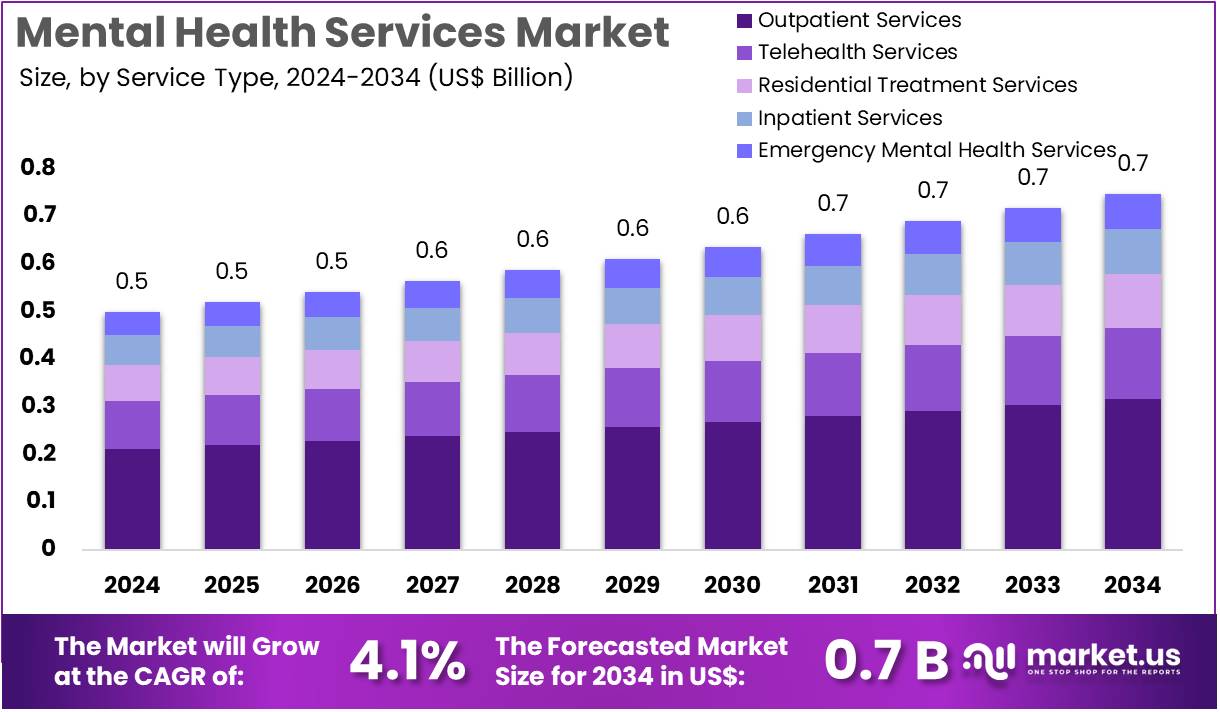
New York, NY – June 26, 2026 – The Mental health services Market size is expected to be worth around US$ 0.7 billion by 2034 from US$ 0.5 billion in 2024, growing at a CAGR of 4.1% during the forecast period 2025 to 2034.
Mental health services play a vital role in promoting emotional, psychological, and social well-being by helping individuals manage stress, mental health conditions, and life challenges. These services include counseling, psychotherapy, psychiatric care, crisis intervention, rehabilitation programs, and community-based support designed to improve quality of life across all age groups.
The growing awareness of mental health has encouraged more people to seek professional support for conditions such as anxiety, depression, stress-related disorders, and substance use disorders. Early diagnosis and timely intervention have been recognized as important factors in improving treatment outcomes and reducing the long-term impact of mental health conditions.
Healthcare providers, government organizations, and non-profit institutions continue to expand access to mental health services through hospitals, specialized clinics, telehealth platforms, and community outreach programs. Digital mental health solutions, including virtual counseling and mobile health applications, have further enhanced access to care, particularly in underserved and remote areas.
Efforts to reduce stigma, increase public awareness, and strengthen mental health infrastructure continue to support the adoption of these services worldwide. As mental well-being becomes an increasingly important component of overall healthcare, mental health services are expected to remain essential in fostering healthier individuals, stronger communities, and improved public health outcomes through accessible, patient-centered, and evidence-based care.
Key Takeaways
- The global mental health services market was valued at US$ 0.5 billion in 2024 and is projected to reach US$ 0.7 billion by 2034, expanding at a CAGR of 4.1% during the forecast period.
- Based on service type, the market is segmented into outpatient services, telehealth services, residential treatment services, inpatient services, and emergency mental health services. Among these, outpatient services accounted for the largest market share of 42.3%.
- By end user, the market is categorized into hospitals & clinics, home healthcare, educational institutions, corporate sector, and community centers. Hospitals & clinics emerged as the leading segment, holding a 48.6% market share.
- North America dominated the global mental health services market, accounting for the largest regional share of 38.5%.
Regional Analysis
North America accounted for the largest revenue share of 38.5% in the mental health services market, supported by high awareness levels, reduced stigma, and the rising prevalence of mental health conditions across diverse population groups. In the United States, approximately 18.2% of adults experienced anxiety symptoms and 21.4% reported depressive symptoms in 2022, according to the CDC, reflecting an increase compared with 2019.
In Canada, around 29% of adults reported depression, anxiety, or related mental health conditions in 2023, rising from 20% in 2016, as per Statistics Canada. This increasing disease burden has strengthened policy responses and funding allocations, including the US$ 8.1 billion budget of SAMHSA in 2024 dedicated to mental health and substance use disorder services. Demand has also accelerated the expansion of digital care platforms, with Teladoc Health’s BetterHelp segment generating US$ 1.04 billion in revenue in 2024, indicating strong adoption of virtual mental health services.
The Asia Pacific region is projected to register the highest CAGR during the forecast period, driven by rapid urbanization, changing perceptions of mental health, and expanding government initiatives. According to OECD data, mental and neurological disorders accounted for a significant share of the non-fatal disease burden in 2021, highlighting unmet care needs. Government programs such as India’s Tele MANAS initiative and China’s ongoing mental health infrastructure development are improving access. The expansion of digital health platforms is further expected to enhance service delivery across the region.
Emerging Trends
- Rising demand for online mental health support is driven by preference for digital care solutions. Teletherapy, mobile apps, and virtual counseling improve accessibility, privacy, and convenience. These services help remote users reduce waiting times and expand continuous mental health access.
- Integration of mental health into primary care enables patients to receive psychological support during routine medical visits. It improves early detection of conditions, reduces stigma, and enhances coordinated treatment. This approach ensures holistic care and strengthens long term health outcomes.
- Growing focus on youth and adolescent mental health is driven by rising academic pressure, social media influence, and emotional stress. Schools and healthcare providers are expanding counseling and early intervention programs to support emotional development prevent long term psychological challenges.
- Workplace mental health awareness is increasing as organizations implement employee wellness programs to reduce stress and improve productivity. Initiatives include counseling, mindfulness sessions, and flexible policies, helping create supportive environments and encouraging open discussion about mental well being diverse workplaces.
- Artificial intelligence and chatbots are increasingly used in mental health support to provide mood tracking, self assessment, and basic guidance. These tools offer instant responses, personalized suggestions, and continuous availability, supporting users who seek early emotional assistance before professional intervention.
- Preventive mental health care focuses on building emotional resilience before conditions develop. Programs include mindfulness, meditation, stress reduction workshops, and community support initiatives. These approaches encourage early intervention, promote well being, and reduce long term pressure on healthcare systems services.
Use Cases
- Mental health services provide essential support for anxiety and depression through therapy, medication management, and coping strategies. Early intervention improves quality of life, reduces symptoms, and strengthens emotional resilience. Patients of all ages benefit from structured and continuous professional care.
- Workplace mental wellness programs are implemented by organizations to improve employee well being and productivity. Services include counseling, stress management workshops, and employee assistance programs. These initiatives reduce burnout, promote work life balance, and create healthier organizational environments overall effectiveness.
- Post trauma counseling provides essential psychological support for individuals recovering from abuse, accidents, violence, or loss. Therapists use specialized approaches such as cognitive behavioral therapy and trauma focused therapy to help patients process emotions and rebuild stability through structured care.
- Substance use and addiction recovery services support individuals in overcoming dependency through therapy, group counseling, and structured rehabilitation programs. Treatment addresses underlying psychological factors, builds coping skills, and promotes long term recovery through coordinated care with medical and family support.
- School and college counseling services help students manage academic pressure, emotional challenges, and social issues. On campus counselors and online support systems provide safe spaces for discussion, early intervention, and development of coping skills to improve overall student well being.
- Elderly mental health support services address loneliness, depression, memory loss, and emotional challenges among older adults. Counseling, group therapy, and social programs improve well being. Support also extends to caregivers and families, enhancing quality of life and reducing isolation seniors.
- Support for chronic illness patients addresses emotional challenges associated with long term conditions such as cancer, diabetes, and heart disease. Mental health professionals provide counseling and stress management, working alongside medical teams to improve emotional resilience and overall treatment outcomes.
Frequently Asked Questions on Mental health services
- What are the major types of mental health services?
A variety of mental health services are available, including psychotherapy, psychiatric consultations, inpatient care, crisis intervention, rehabilitation programs, and community outreach services, aimed at addressing mild to severe mental health conditions across different population groups. - Why are mental health services important?
Mental health services are essential for improving emotional well-being, reducing stigma, preventing mental disorders, enhancing productivity, and supporting recovery, thereby contributing significantly to overall public health outcomes and societal stability. - Who provides mental health services?
Mental health services are provided by psychiatrists, psychologists, licensed counselors, social workers, and healthcare institutions, with delivery occurring through hospitals, private clinics, telehealth platforms, and community mental health organizations worldwide. - How is access to mental health services improving?
Access to mental health services has expanded through digital platforms, insurance coverage, and government initiatives, although barriers such as cost, awareness, and stigma still limit utilization in many developing and underserved regions globally. - What are the key drivers of market growth?
Key market growth drivers include increasing stress-related disorders, workplace mental health initiatives, supportive government policies, digital therapy adoption, and rising investments in psychiatric care infrastructure and telehealth platforms globally expanding. - What are the major challenges in this market?
Major challenges in the mental health services market include shortage of skilled professionals, limited access in rural areas, high treatment costs, social stigma, and fragmented reimbursement frameworks across different healthcare systems. - What are the emerging trends in the market?
Future trends in the mental health services market indicate strong digital transformation, increased integration of AI-based diagnostics, growth in telepsychiatry, and greater focus on preventive mental healthcare models globally adoption.
Conclusion
Mental health services are expected to witness steady expansion globally, supported by rising awareness, policy initiatives, and digital transformation across care delivery systems. The increasing prevalence of anxiety, depression, and stress-related conditions has strengthened demand for accessible and patient-centered care models.
Integration of telehealth platforms, artificial intelligence tools, and community-based programs is enhancing service accessibility and improving treatment outcomes across regions. Despite challenges such as workforce shortages and stigma, continuous investment from governments and private stakeholders is expected to improve global mental health infrastructure. Overall, sustained innovation and collaborative efforts will support long-term growth and improved well-being outcomes worldwide outlook.
Discuss your needs with our analyst
Please share your requirements with more details so our analyst can check if they can solve your problem(s)




